Learning number patterns Grade 2 Worksheets
3 filtered results
Difficulty Level
Grade
Age
-
From - To
Subject
Activity
Standards
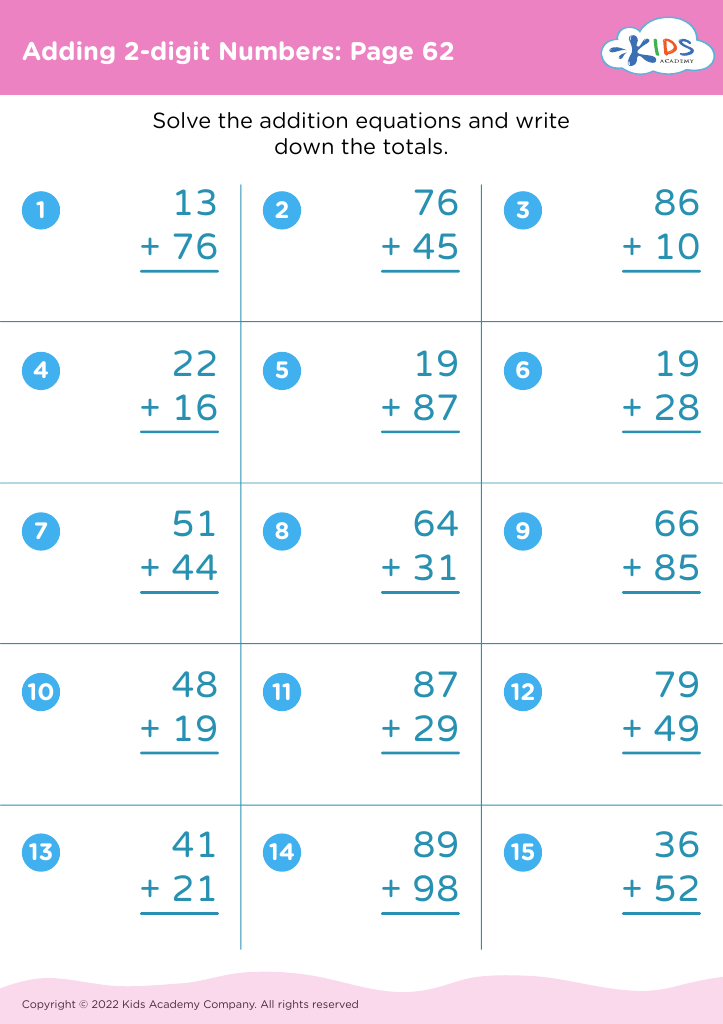
Discover our engaging Learning Number Patterns Grade 2 Worksheets, designed to enhance your child's understanding of number sequences and mathematical patterns. Perfect for young learners, these worksheets offer a variety of activities that encourage critical thinking and problem-solving skills. Students will practice identifying, creating, and extending number patterns while building a strong foundation in math. Our colorful and visually appealing designs make learning fun and interactive. Ideal for both classroom and home use, these worksheets provide ample opportunities for students to strengthen their number sense through enjoyable practice. Start exploring the world of number patterns today and watch your child thrive in math!
Favorites
With answer key
Interactive
Join Kids Academy for Free
Who is primarily going to use this learning content?






Understanding number patterns is crucial for second graders as it lays the foundation for their mathematical literacy. Parents and teachers should care about this topic because recognizing patterns enhances children's problem-solving skills and critical thinking abilities. When children learn to identify, create, and extend patterns, they develop a deeper understanding of numerical concepts that is vital for more complex mathematics later on.
Number patterns encourage students to think systematically. This skill translates into several areas beyond math, supporting skills like logic and reasoning, which are pertinent in everyday contexts. Engaging with patterns also helps students make connections between numbers, enabling them to grasp concepts such as addition, subtraction, and sequencing more effectively.
Moreover, fostering an environment that values pattern recognition ignites curiosity and enthusiasm for learning. When children discover patterns in numbers, they gain confidence in their abilities to tackle mathematical challenges. Encouraging this exploration can also enhance communication skills, as students articulate their thinking processes.
Ultimately, supporting learning in number patterns cultivates a love for math and prepares children not only for advanced mathematical concepts but also for real-world applications. This foundational block can lead to academic success and a greater appreciation for the interconnectedness of numbers in everyday life.