Reading clocks Grade 2 Worksheets
5 filtered results
Difficulty Level
Grade
Age
-
From - To
Subject
Activity
Standards
Enhance your second grader's understanding of time with our engaging "Reading Clocks Grade 2 Worksheets." These expertly designed worksheets provide a fun and interactive way for young learners to master reading analog and digital clocks. Students will practice telling time to the nearest hour, half-hour, and quarter-hour through various exercises, including activities that reinforce essential skills like understanding AM and PM. With colorful visuals and simple instructions, these worksheets cater to diverse learning styles, making time-telling an enjoyable and productive experience. Access our worksheets now and help your child develop confidence and accuracy in reading clocks!
Favorites
With answer key
Interactive
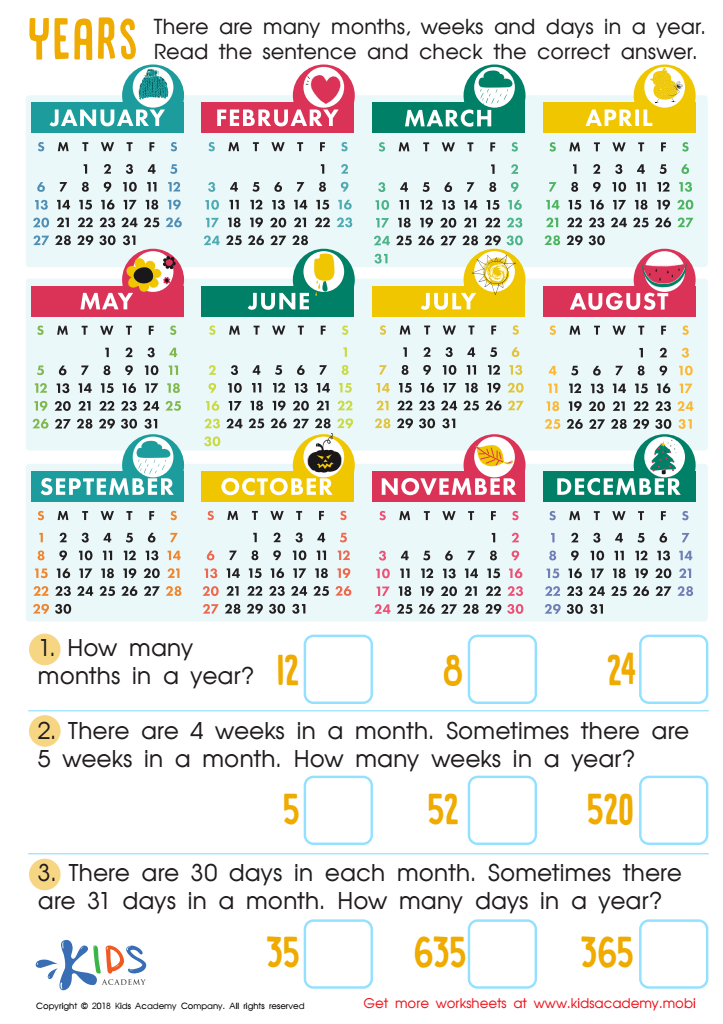
Years Worksheet
This worksheet is a great way to test your children's knowledge of the calendar. Ask them if they can name the days of the week and months in a year. Read and discuss the questions with them and help them find the right answers. Encourage them to check their answers.
 Assign to My Students
Years Worksheet
Worksheet
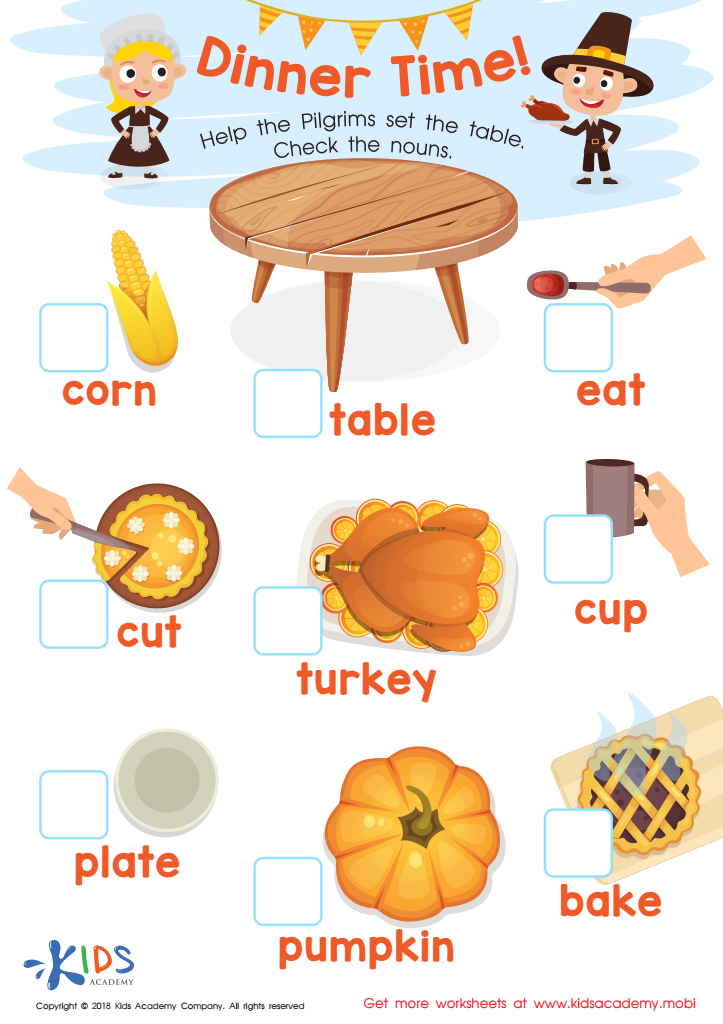
Dinner Time! Worksheet
Help your child learn about the Pilgrims by completing this worksheet! The Pilgrims set sail on the Mayflower in 1620 and colonized America, meeting the Native Americans already living there and picking up some of their traditions, like Thanksgiving dinner. Check the nouns in the picture and help your child set the table with the celebratory turkey!
Dinner Time! Worksheet
Worksheet
Join Kids Academy for Free
Who is primarily going to use this learning content?








Reading clocks is a fundamental skill that plays a crucial role in a child's overall development, making it essential for parents and teachers to prioritize its teaching in Grade 2. Mastering time-telling helps children build foundational math skills, promotes logical thinking, and enhances their understanding of daily routines. It establishes a sense of responsibility and independence, allowing children to manage their time effectively.
Additionally, learning to read both analog and digital clocks fosters cognitive development. It aids in recognizing patterns and developing spatial awareness, essential skills not only in mathematics but also in reading and problem-solving. Moreover, time management is a vital life skill—children who can tell time are better equipped to follow schedules, structure their homework, and engage in extracurricular activities productively.
For parents, helping children learn to read clocks can strengthen family routines, as it encourages cooperation in managing time for chores, play, and study. Teachers, on the other hand, play an instrumental role in reinforcing these skills within a supportive classroom environment, where consistent practice leads to mastery and confidence. Therefore, reading clocks isn’t just an academic goal; it's a life skill that deserves attention and encouragement in Grade 2.