Understand number relationships Grade 2 Worksheets
3 filtered results
-
From - To
Explore our "Understand Number Relationships Grade 2 Worksheets" designed to help young learners master essential math concepts. These engaging resources focus on teaching students how to identify and express numbers, understand relationships between them, and apply basic operations. With a variety of fun activities and exercises, students will practice comparing numbers, recognizing patterns, and using number lines. Our worksheets promote critical thinking and reinforce foundational math skills essential for their academic journey. Ideal for both classroom use and at-home practice, these materials will empower your child to develop confidence and proficiency in understanding number relationships. Start learning today!
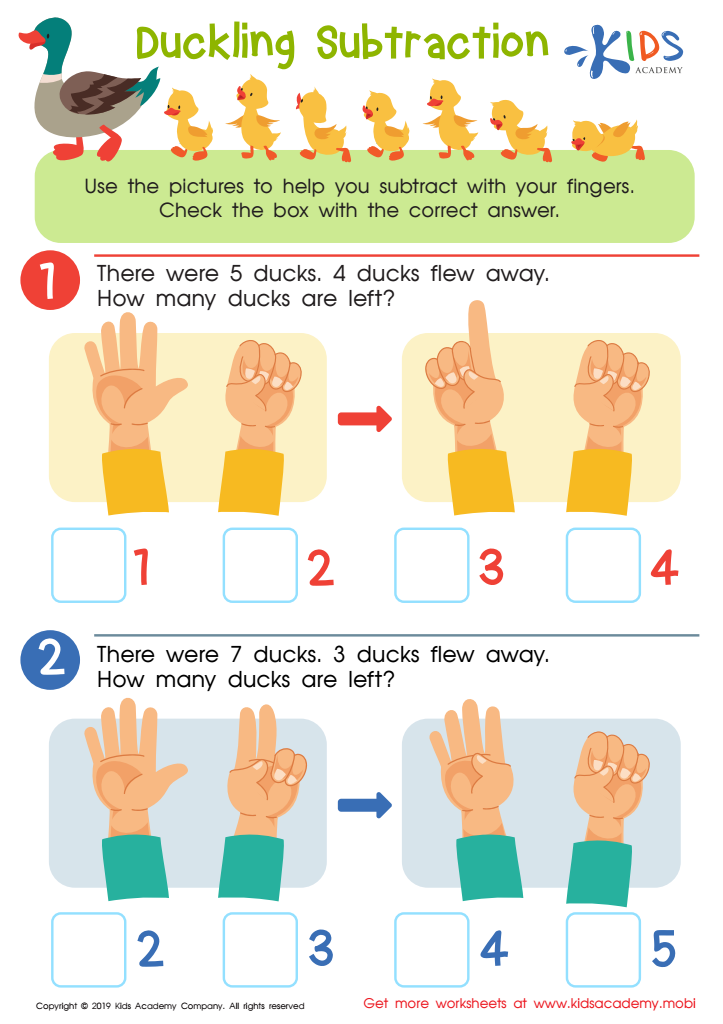
Duckling Subtraction Worksheet
 Assign to My Students







Understanding number relationships in Grade 2 is crucial for young learners as it lays the foundation for their mathematical future. At this stage, children begin to explore concepts such as addition and subtraction, number patterns, and place value, paving the way for more complex mathematical operations. By grasping these relationships, students develop critical thinking skills and the ability to analyze and solve problems effectively.
Parents and teachers should prioritize number relationships because they enhance a child's confidence in math. When children understand how numbers interact—like recognizing that adding two even numbers results in an even number—they can transfer these concepts to real-world situations, facilitating everyday problem-solving. Furthermore, fostering these connections early on contributes to a more profound comprehension of fractions, decimals, and even algebra in higher grades.
Additionally, promoting a positive math mindset can help alleviate anxiety associated with mathematics, encouraging a lifelong appreciation for the subject. Engaging children in discussions around number relationships, whether through games, hands-on activities, or discussions, supports cognitive development. Ultimately, by investing time and resources into ensuring students grasp number relationships, parents and teachers empower children to excel, making math a rewarding and enjoyable part of their learning journey.