Understanding plurals Grade 2 Worksheets
3 filtered results
-
From - To
Introduce your second graders to the exciting world of plurals with our engaging "Understanding Plurals Grade 2 Worksheets." Designed to bolster grammar skills, these printable worksheets help young learners grasp the rules of forming plurals in a fun and interactive way. Students will explore different pluralization methods, including adding -s, -es, changing letters, and irregular forms. Each worksheet is crafted to promote confidence and mastery through a blend of colorful activities, puzzles, and exercises. Perfect for classroom use or at-home practice, these resources support curriculum standards, helping your child to excel in their language skills. Download now and make learning plurals enjoyable!
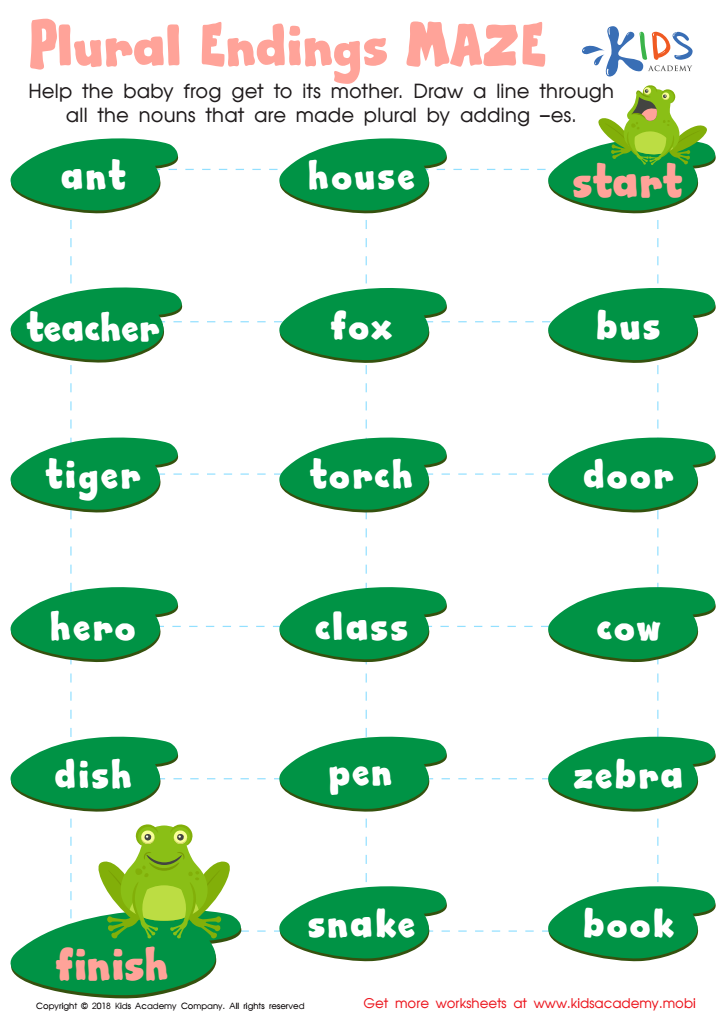
Plural Endings Maze Worksheet
 Assign to My Students
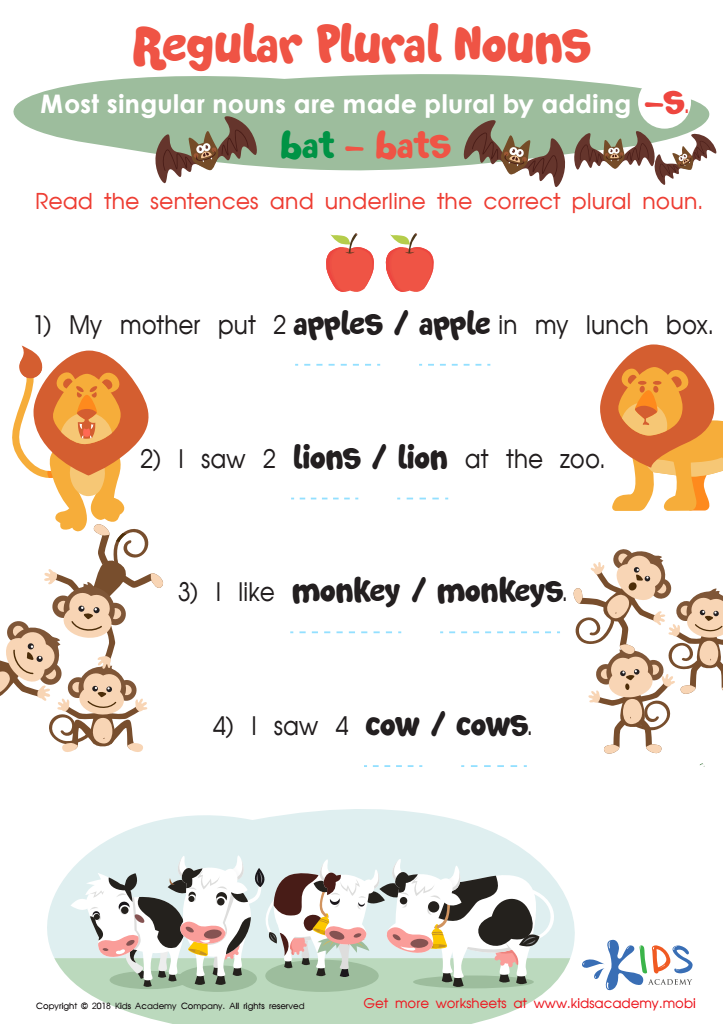
Regular Plural Nouns Worksheet






Understanding plurals is a fundamental aspect of language development crucial for Grade 2 students, and both parents and teachers should recognize its importance. At this stage, children are transitioning from basic language use to more complex forms of communication. Grasping plurals enriches their vocabulary and boosts their reading, writing, and comprehension skills. It allows them to describe quantities accurately, enhancing both their spoken and written communication.
Parents and teachers play a critical role in guiding children through this learning process. By understanding how plurals function, children are better equipped to follow along in classes, participate in conversations, and express their ideas more clearly. Teachers can create interactive and engaging lesson plans that make learning about plurals interesting and fun, thus fostering a positive learning environment.
Parents can support this learning at home by integrating simple activities that emphasize the use of plurals, such as reading books, playing word games, or even casual conversations. This reinforcement at home solidifies what is learned in school, creating a holistic and collaborative approach to education.
In summary, a solid foundation in understanding plurals is essential for overall language proficiency. Both parents and teachers must work together to ensure children grasp this concept, setting the stage for advanced language skills in the future.