Understanding pollination Grade 2 Worksheets
4 filtered results
-
From - To
Dive into the fascinating world of pollination with our Grade 2 worksheets from Kids Academy! Designed to captivate young minds, these resources provide engaging activities that help second graders grasp the concept of pollination and the role of bees and other pollinators in our ecosystem. Through fun illustrations, matching exercises, and fact-filled lessons, students will learn about the life cycle of plants, the importance of pollen transfer, and the different types of pollinators. These worksheets not only enrich their science knowledge but also enhance their critical thinking and observation skills. Perfect for classroom or at-home learning!
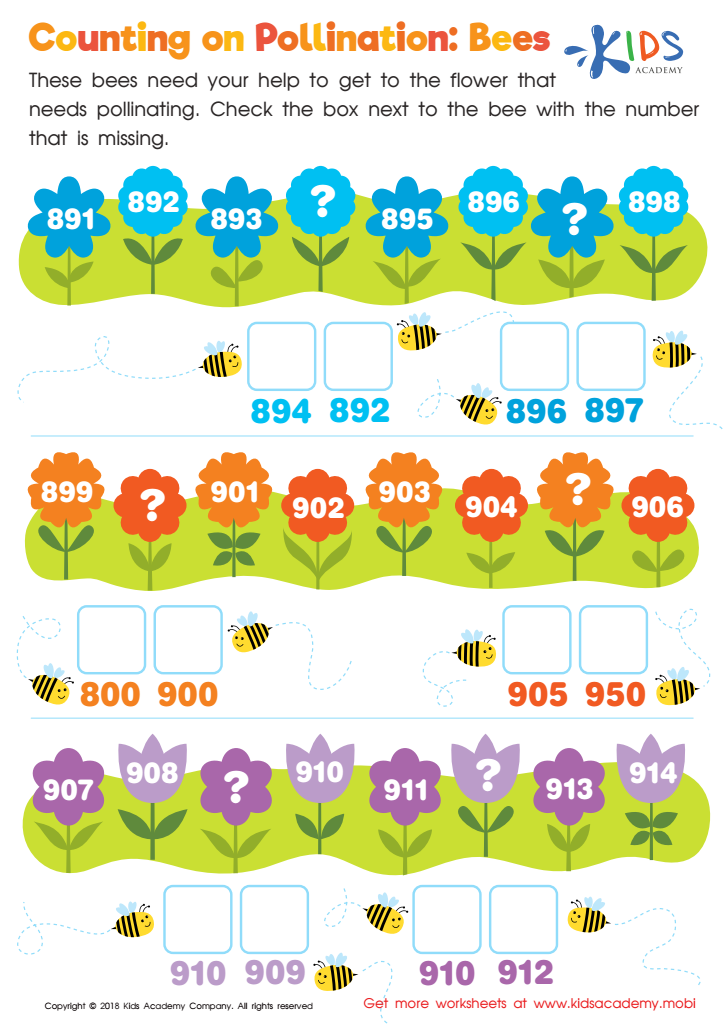
Counting on Pollination: Bees Worksheet
 Assign to My Students
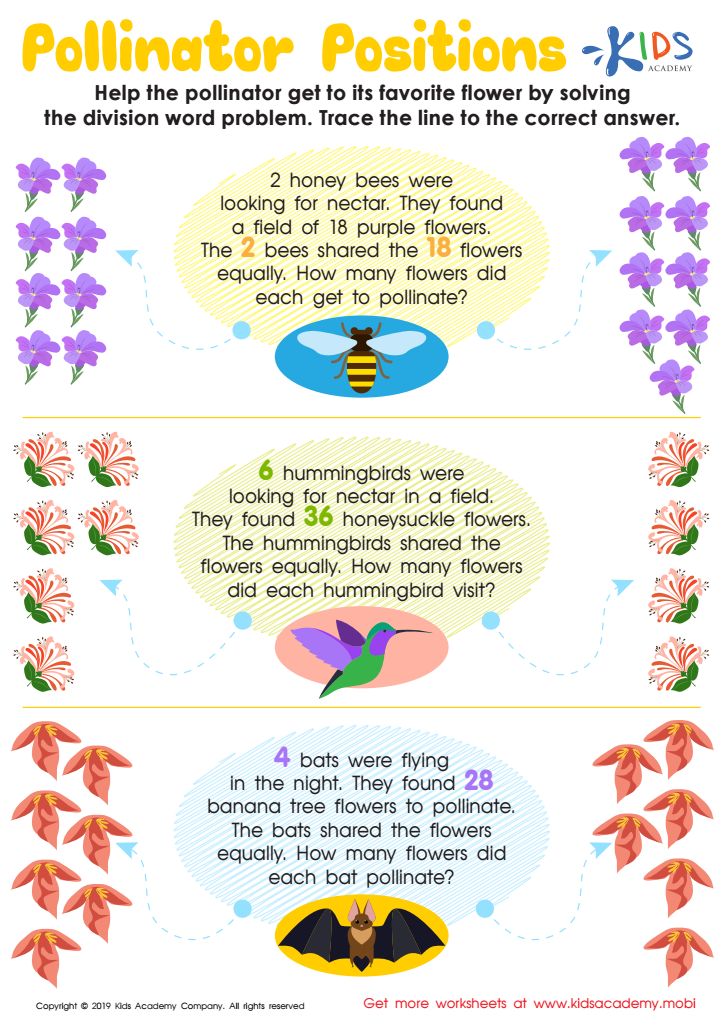
Pollinator Positions Worksheet
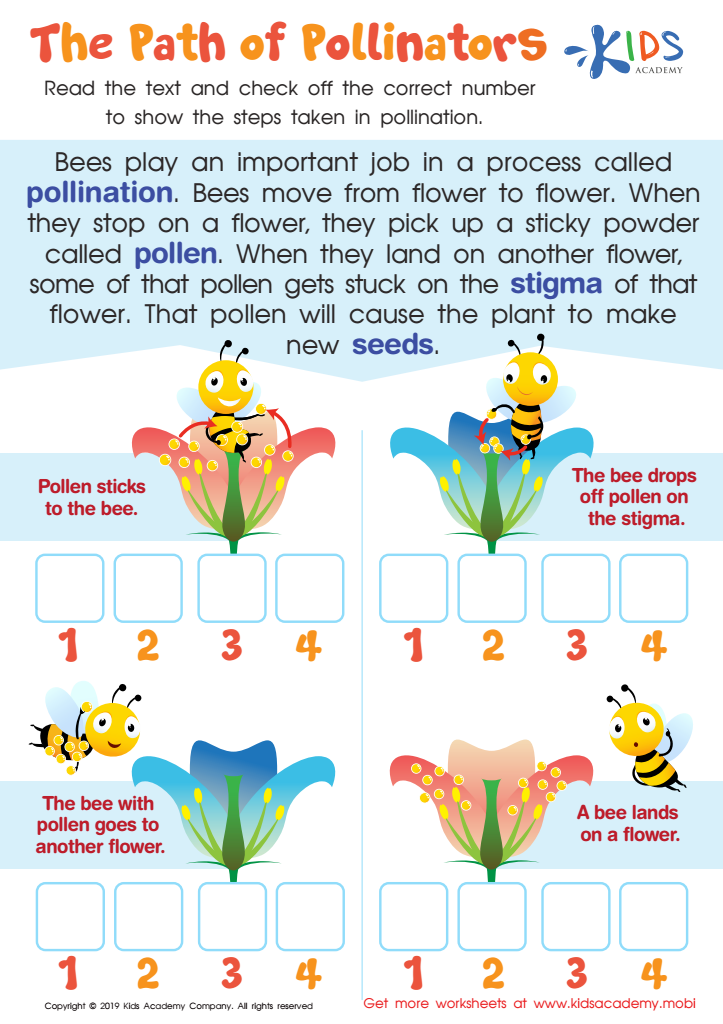
The Path of Pollinators Worksheet
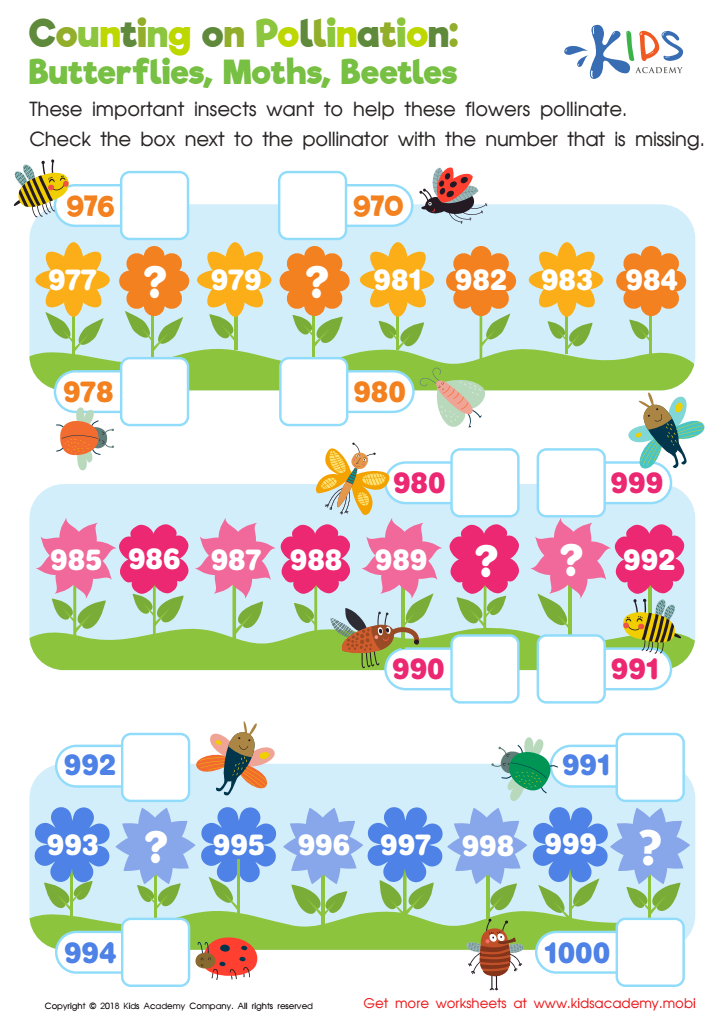
Counting on Pollination: Butterflies, Moths, Beetles Worksheet





Understanding pollination is important for second graders because it connects them with nature and helps them appreciate the life cycles of plants and the source of their food. Pollination is the process where pollen is transferred from the male part of the flower to the female part, enabling plants to produce fruits and seeds. Teaching young children about this process fosters an early appreciation for the environment and highlights the interdependence of different organisms.
For parents and teachers, emphasizing pollination encourages curiosity and scientific thinking. Through simple, hands-on activities like observing bees in a garden, children can see pollinators in action, bringing learning to life and beyond textbooks. This foundational knowledge sets the stage for more advanced topics in biology and ecology, promoting a more comprehensive understanding of science.
Moreover, understanding pollination underscores the importance of conservation. With habitats threatened by human activities, teaching children about the role of pollinators like bees, butterflies, and birds instills a sense of responsibility towards protecting these creatures. This awareness encourages eco-friendly behaviors and cultivates the next generation of environmental stewards. In essence, an early grasp of pollination not only educates but also inspires young minds to appreciate and care for their natural world.