Visual discrimination Grade 2 Worksheets
8 filtered results
Difficulty Level
Grade
Age
-
From - To
Subject
Activity
Standards
Our Visual Discrimination Grade 2 Worksheets are designed to sharpen your child's ability to recognize differences in shapes, patterns, letters, and numbers. These engaging activities enhance critical observation skills, necessary for reading, writing, and daily problem-solving. With playful themes and vibrant illustrations, our worksheets captivate second graders' attention while reinforcing key learning skills. Ideal for both home and classroom use, these tools ensure keen visual processing skills, paving the way for academic success. Help your child excel by incorporating our expertly crafted worksheets into their routine, making learning both fun and fundamental. Explore and elevate their educational journey today!
Favorites
With answer key
Interactive
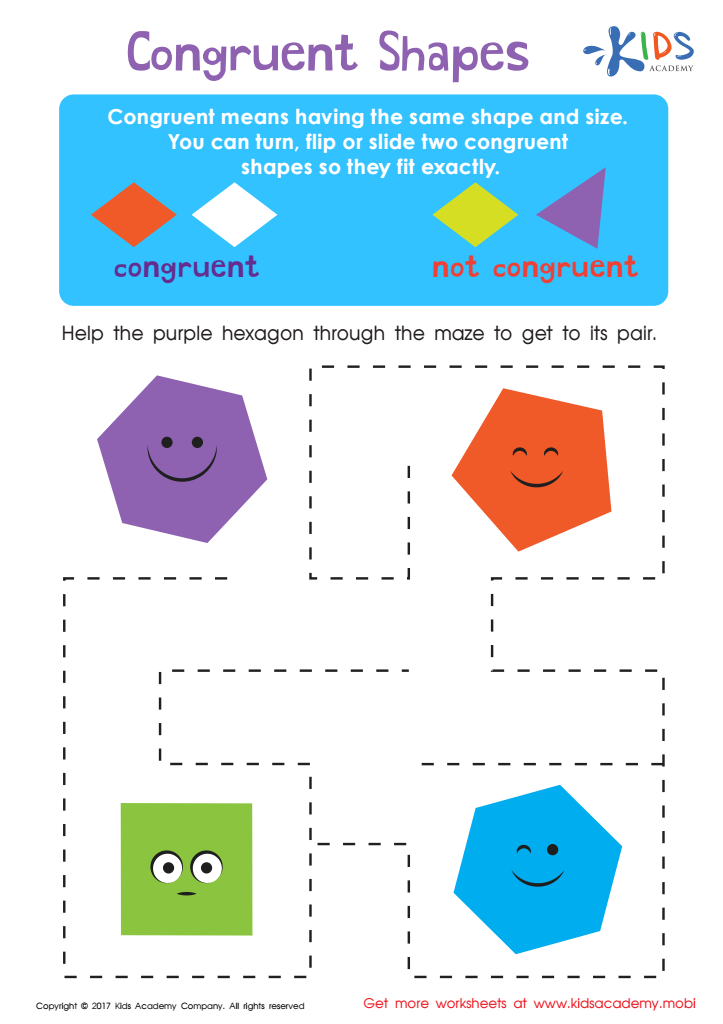
Congruent Shapes Worksheet
Help your child find the twin of the purple hexagon! This congruent shapes worksheet is great for increasing vocabulary while challenging mental rotation skills.
 Assign to My Students
Congruent Shapes Worksheet
Worksheet
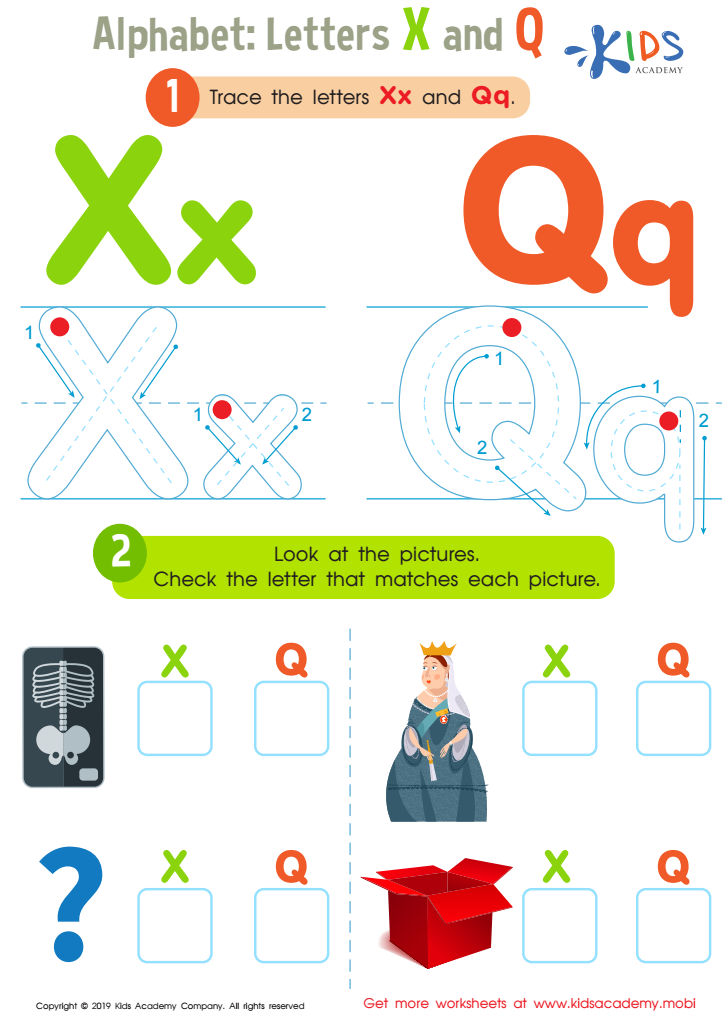
Letters X and Q Tracing Worksheet
Do you want your students to improve writing and letter recognition? This worksheet is a great place to start! Kids can trace the letters «X» and «Q» and identify pictures that match each letter. With a little encouragement, they'll do a great job!
Letters X and Q Tracing Worksheet
Worksheet
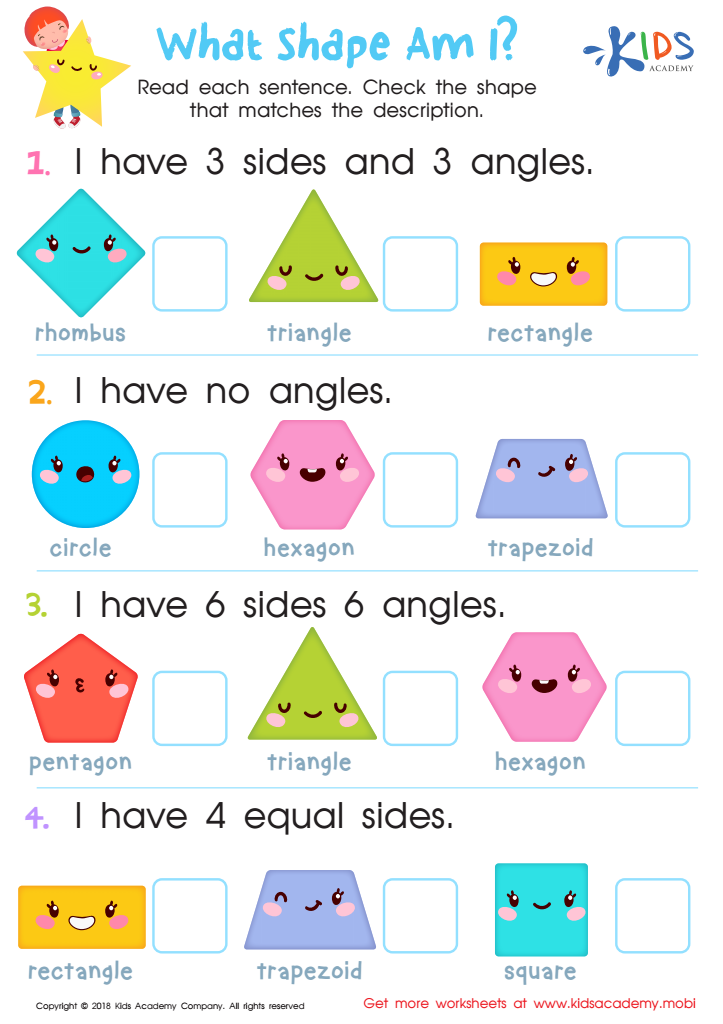
What Shape Am I? Worksheet
Help your child read each sentence in this colorful worksheet. Have them identify the shapes described and check the boxes. To prepare, ask simple questions like "How many sides does a triangle have?" and "Which shape has 4 equal sides?" Your child will become more skilled at shapes by the end of this activity.
What Shape Am I? Worksheet
Worksheet
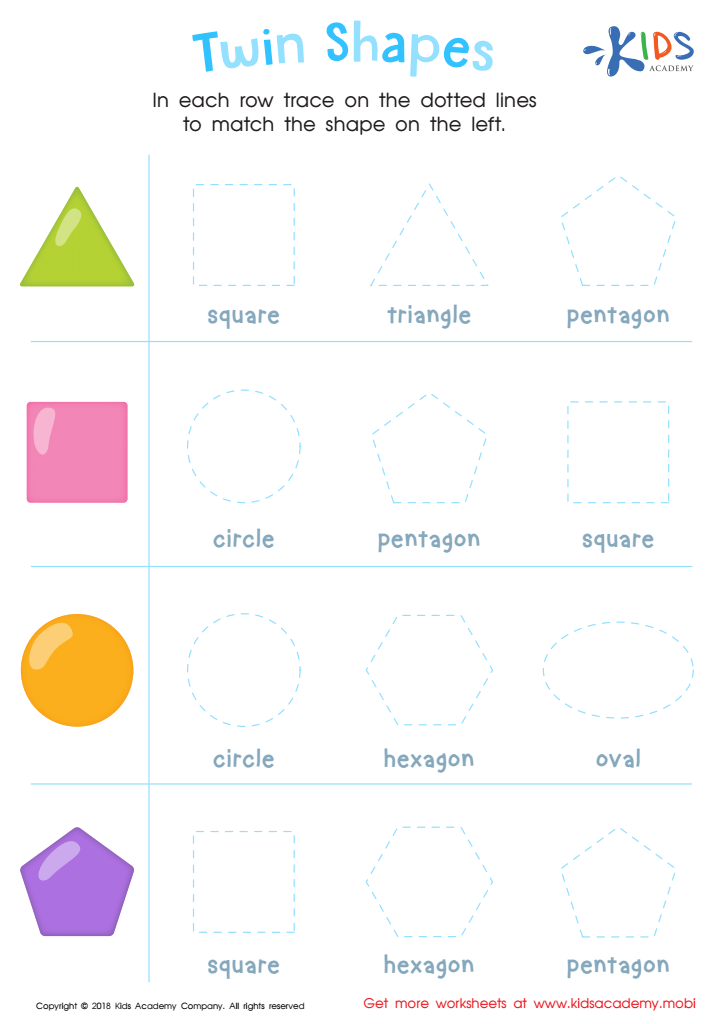
Twin Shapes Dot-to-Dot Worksheet
Test your child's ability to copy with this worksheet. Ask them to find and name the four shapes on the left. Then, they must match each with the dotted lines on the right. Help your child with all four shapes in this fun exercise.
Twin Shapes Dot-to-Dot Worksheet
Worksheet
Join Kids Academy for Free
Who is primarily going to use this learning content?








Visual discrimination is a crucial skill for Grade 2 students, and parents and teachers need to understand its importance to support children's development both academically and practically. Visual discrimination is the ability to notice and compare the features of different items to identify similarities and differences. This skill is foundational in reading and writing, as children need to distinguish between letters and words that may look similar, such as 'b' and 'd' or 'was' and 'saw'. Without strong visual discrimination, students may struggle with literacy, leading to frustration and hindrance in academic progress.
Moreover, visual discrimination extends beyond the classroom. It plays a pivotal role in everyday activities, such as distinguishing between different symbols on traffic signs, choosing clothing based on colors or patterns, and recognizing or matching objects. Enhancing this skill can boost children’s confidence and independence.
Incorporating activities that build visual discrimination, such as puzzles, matching games, or drawing, can be both fun and educational. By emphasizing the development of this skill, parents and teachers equip children with essential tools for interpreting and engaging with their world, setting the stage for success in school and beyond. Strong visual discrimination skills ultimately contribute to a child's cognitive development and ability to navigate complex visual information efficiently.