Basic arithmetic skills Grade 2 Addition & Subtraction Worksheets
9 filtered results
-
From - To
Discover our comprehensive collection of Grade 2 Basic Arithmetic Skills Addition & Subtraction Worksheets, designed to boost your child's math prowess! These engaging, printable activities, crafted by experienced educators, focus on developing essential arithmetic skills in young learners. With a variety of problems that reinforce addition and subtraction concepts, these worksheets ensure second graders build a solid foundation in math. Our user-friendly, visually appealing worksheets will make learning fun and effective, fostering confidence and proficiency in basic arithmetic. Achieve academic success and help your child excel in math with our Grade 2 Addition & Subtraction Worksheets!
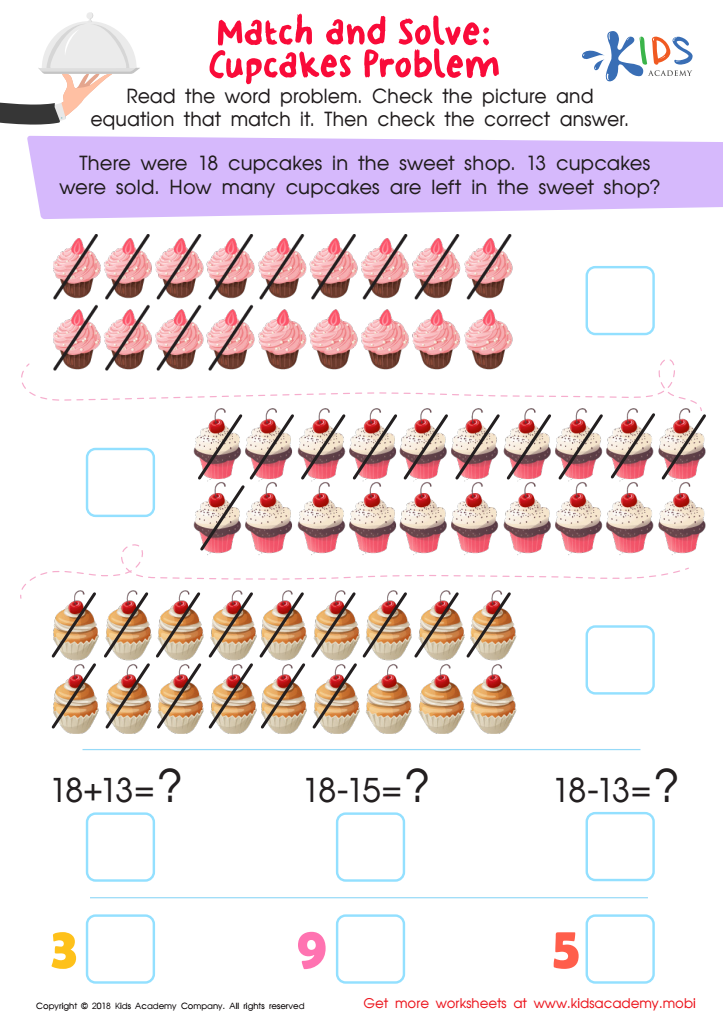
Match and Solve: Cupcakes Problem Worksheet
 Assign to My Students
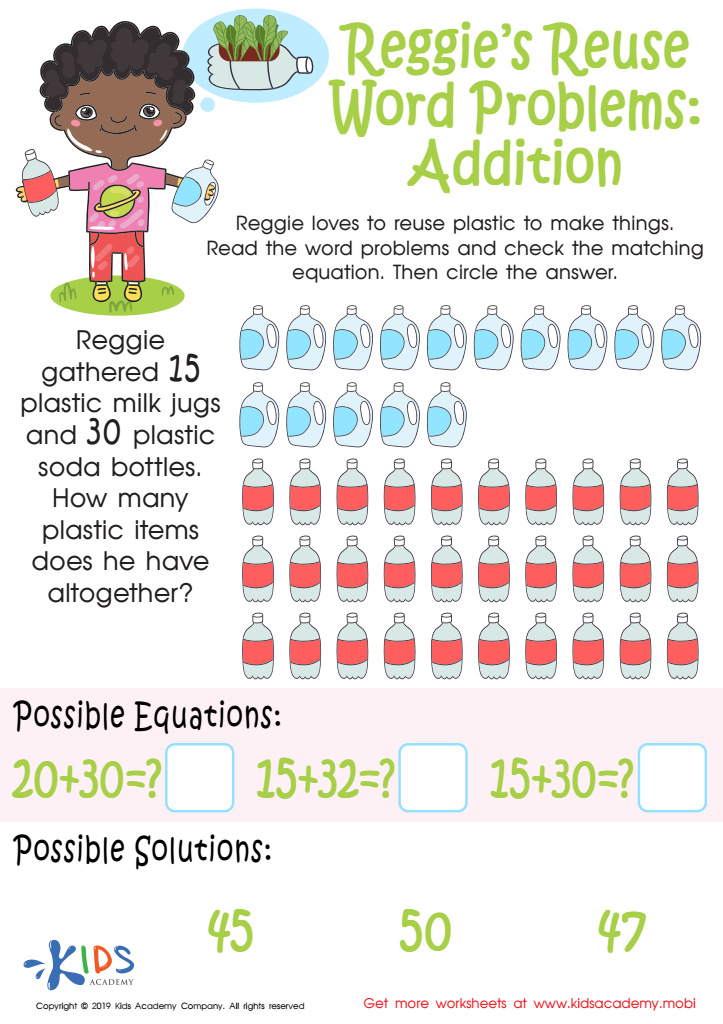
Reggie's Reuse Word Problems: Addition Worksheet
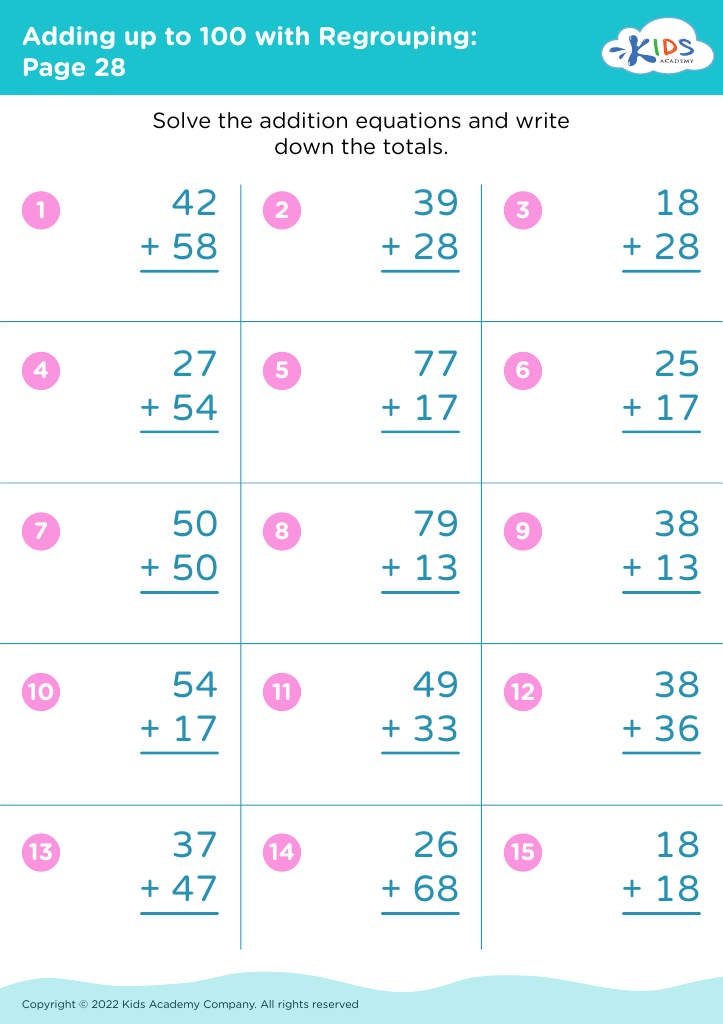








Basic arithmetic skills, particularly in Grade 2 Addition and Subtraction, form the cornerstone of a child's mathematical understanding. At this stage, young learners transition from merely recognizing numbers to engaging in fundamental operations that are integral parts of everyday life. Parents and teachers should prioritize these skills because they serve as building blocks for more complex mathematical concepts. Mastery of addition and subtraction establishes confidence and fosters a positive attitude toward mathematics.
Moreover, these operations are essential for problem-solving and logical thinking not only within academic settings but also in real-world situations. For instance, counting money, measuring ingredients in cooking, or arranging schedules intrinsically involve these basic skills. A strong foundation in early arithmetic aids in the comprehension of multiplication, division, and fractions, which will be encountered in subsequent grades.
Proficiency in early math skills also correlates with better performance in subjects like science, technology, and engineering, collectively known as STEM. As children excel in these areas, they develop critical thinking, perseverance, and analytical skills essential for long-term academic and professional success. By emphasizing Grade 2 Addition and Subtraction, parents and teachers can set children on a path to mathematical proficiency and lifelong learning.