Enhancing problem-solving abilities Grade 2 Addition Worksheets
8 filtered results
-
From - To
Boost your child's problem-solving skills with our Grade 2 Addition Worksheets! Designed for young learners, these worksheets offer engaging and fun exercises to enhance their mathematical abilities. Students will solve various addition problems using visual aids, word problems, and mixed drills, making math both challenging and entertaining. Each worksheet aims to strengthen critical thinking and reinforce fundamental concepts, ensuring a robust foundation for future learning. Perfect for home or classroom use, these resources support continuous growth and confidence in math. Equip your second grader with the tools they need for success—explore our Addition Worksheets today!
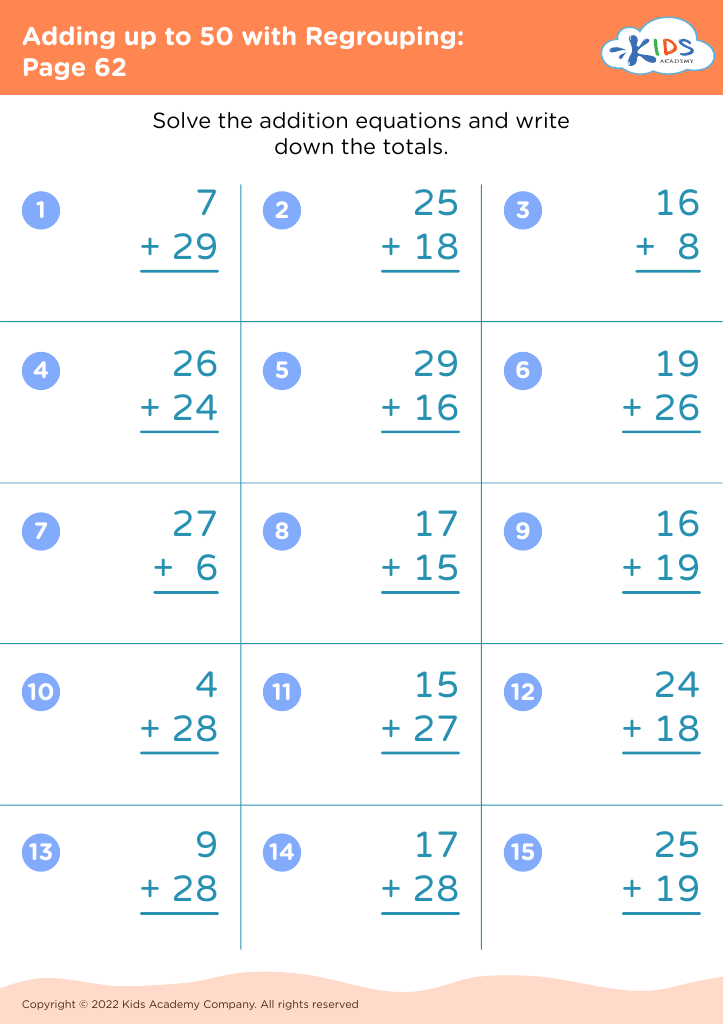
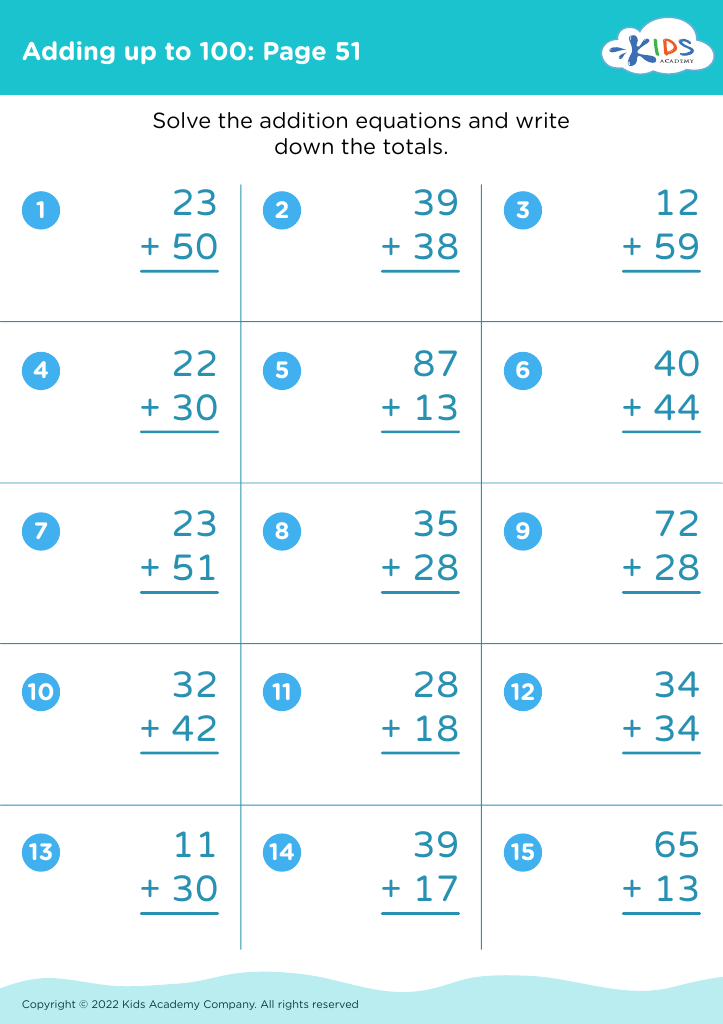
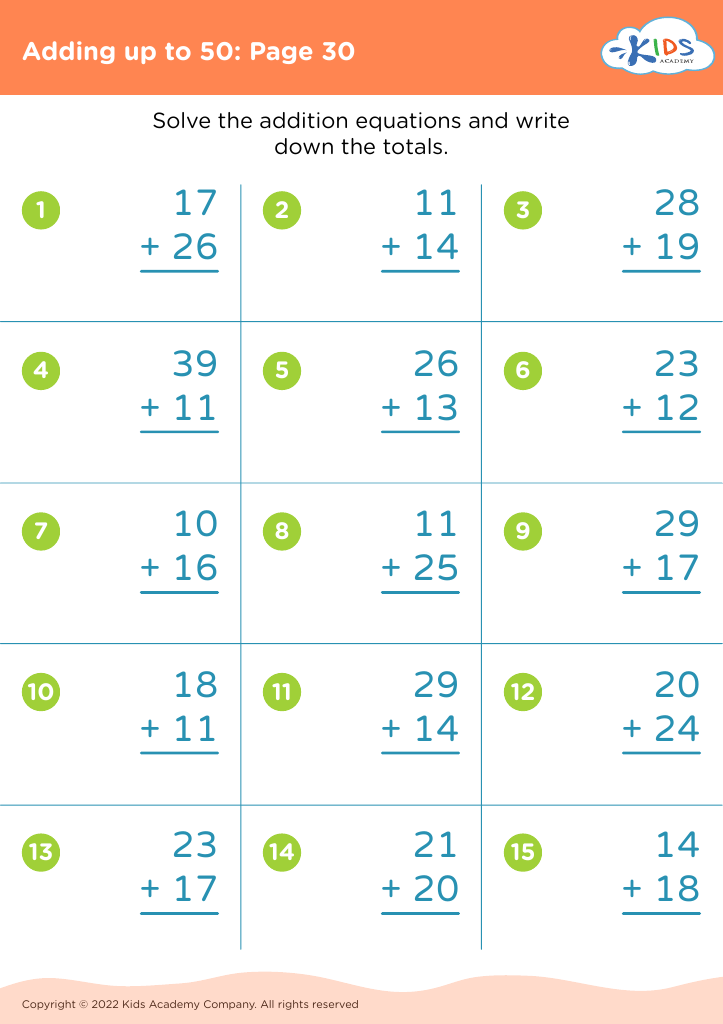
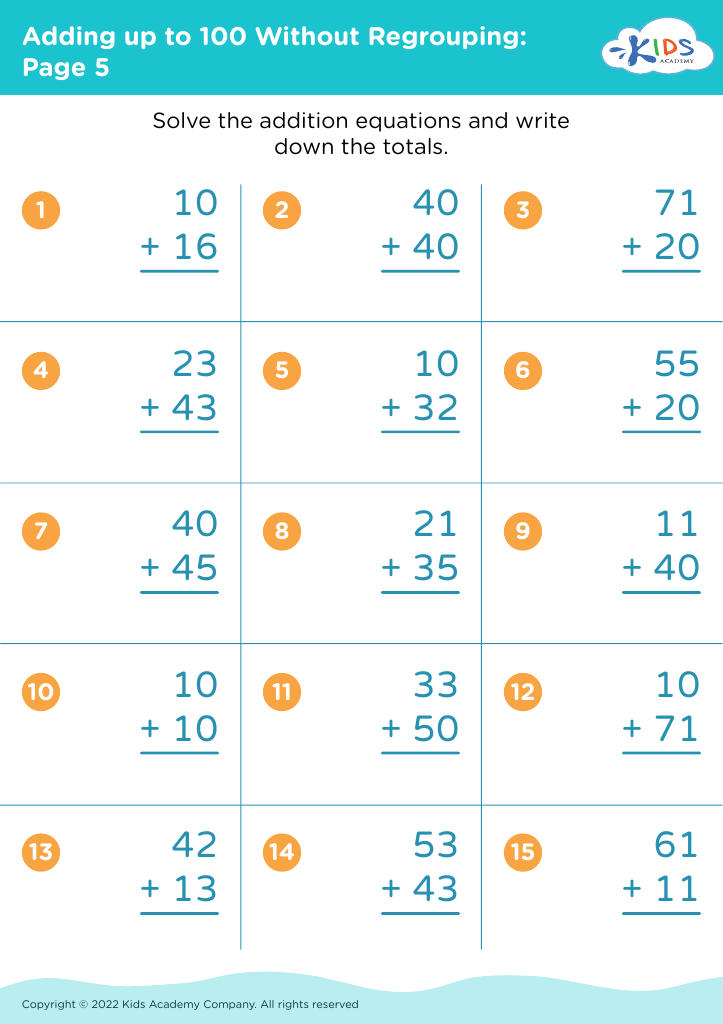
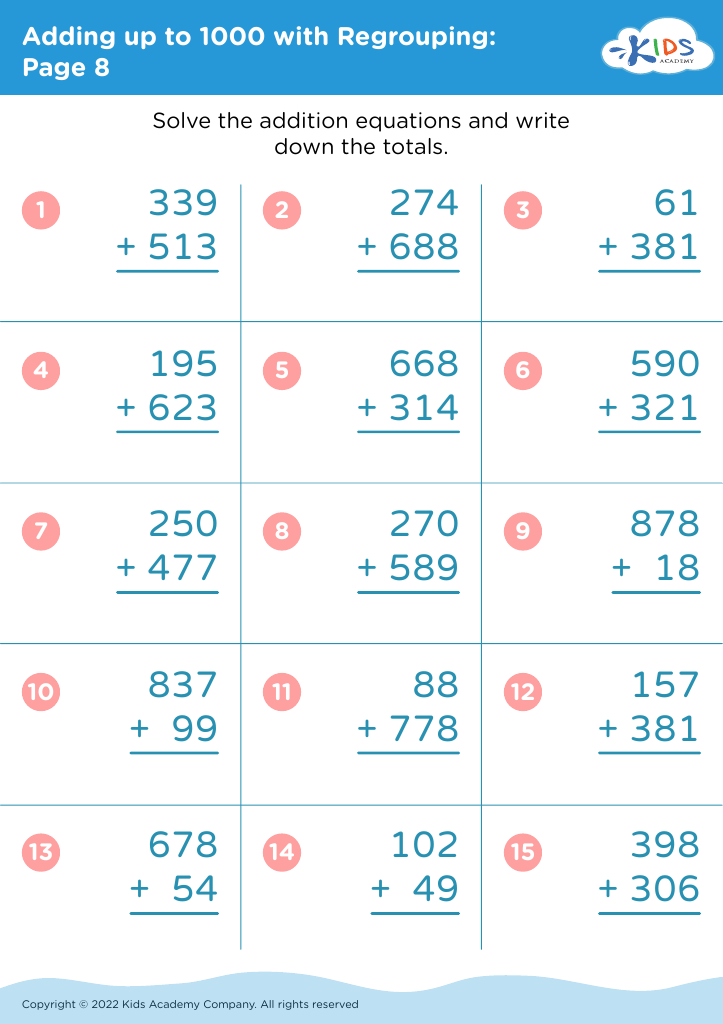
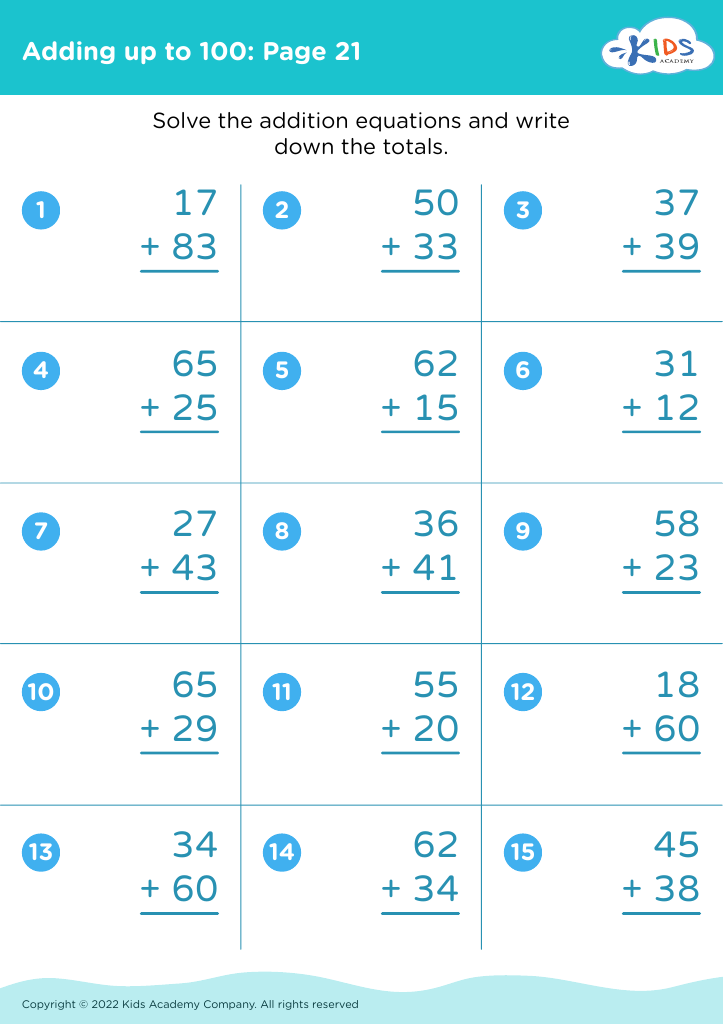
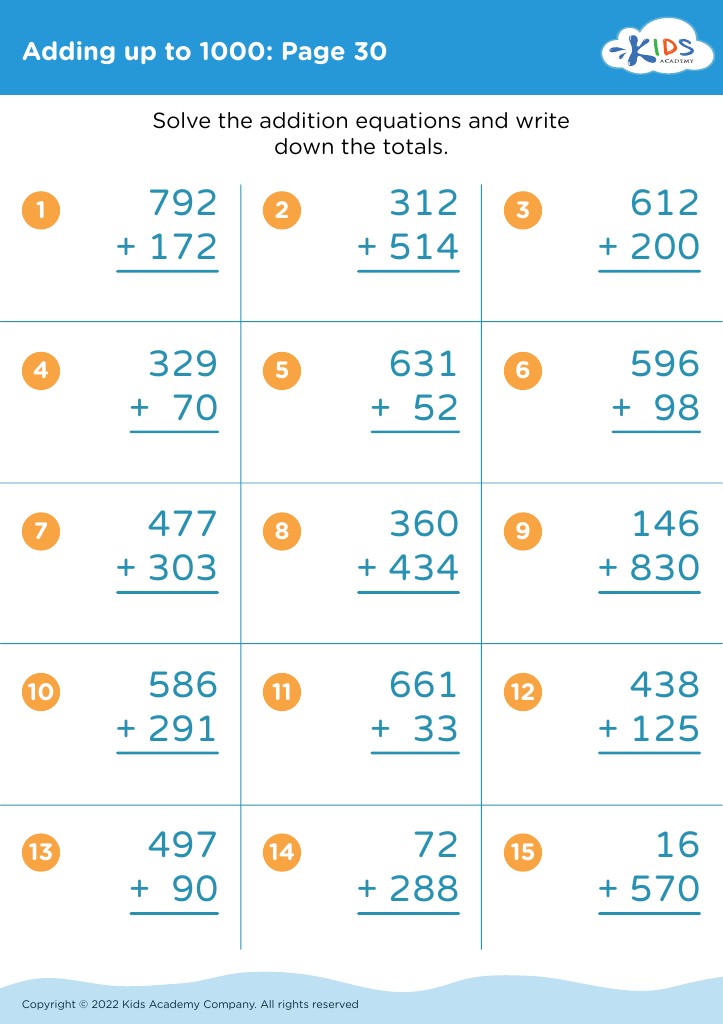
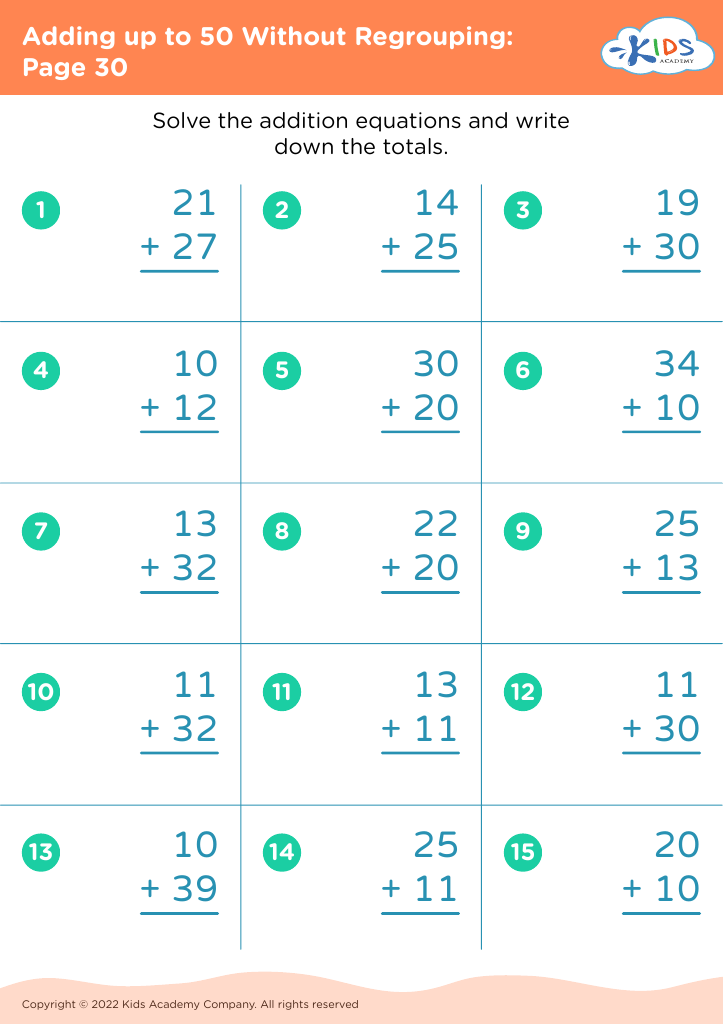








Enhancing problem-solving abilities in Grade 2, particularly through addition, is crucial for young learners' overall cognitive and academic development. At this formative stage, children are building foundational skills essential for future learning. Mastering addition and related problem-solving techniques is key to grasping more complex mathematical concepts in higher grades.
Firstly, problem-solving in addition teaches children logical thinking and critical reasoning. When faced with an addition problem, they need to understand the relationship between numbers, break down the problem, and determine the steps needed to find the solution. This process fosters analytical skills that are applicable beyond math, including reading comprehension, science, and daily decision-making.
Secondly, strong problem-solving abilities in addition enhance confidence and independence. As children learn to tackle and solve problems on their own, they build self-assurance. This confidence can translate to a positive mindset toward learning and a willingness to face challenges head-on.
Lastly, early proficiency in math is linked to better academic performance in later years. By focusing on easing students into effective problem-solving techniques through addition, teachers and parents lay a solid groundwork for advanced mathematical concepts and other subjects. This investment in early education ultimately broadens children's educational and career opportunities in the future.
In summary, prioritizing problem-solving in Grade 2 addition cultivates critical thinking, confidence, and long-term academic success.