Number Recognition Grade 2 Addition Worksheets - Page 6
128 filtered results
-
From - To
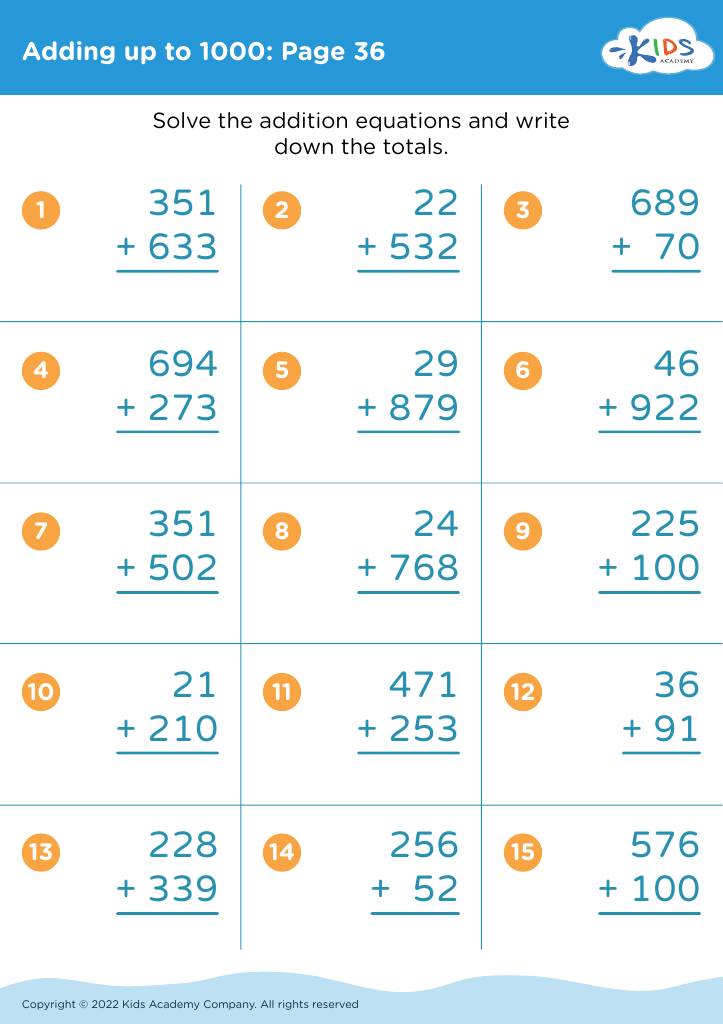
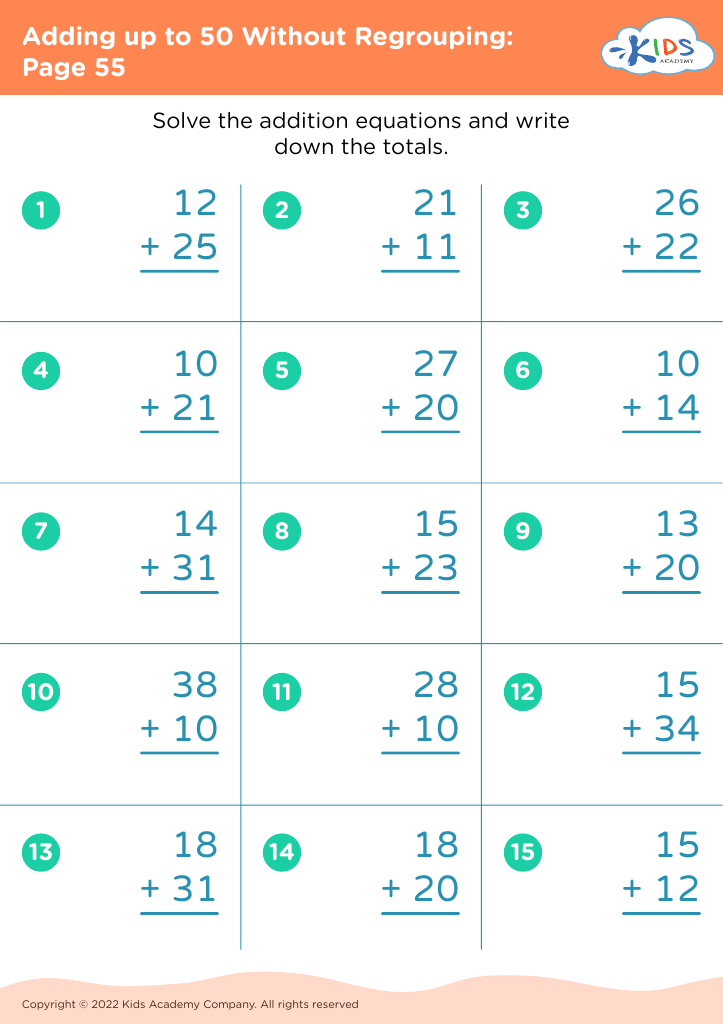
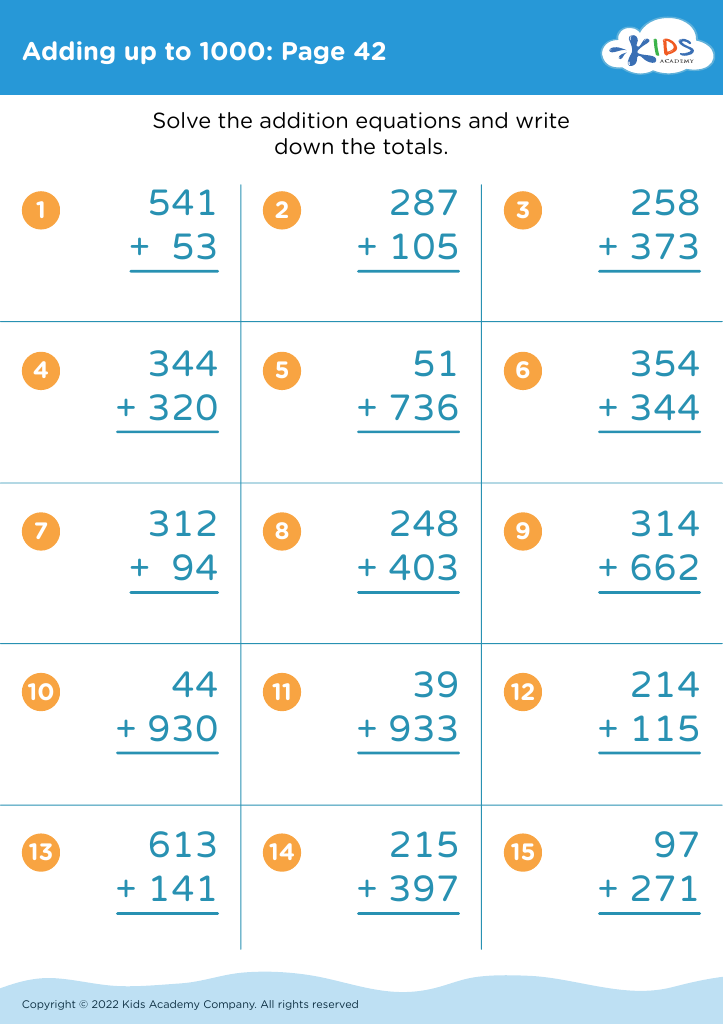
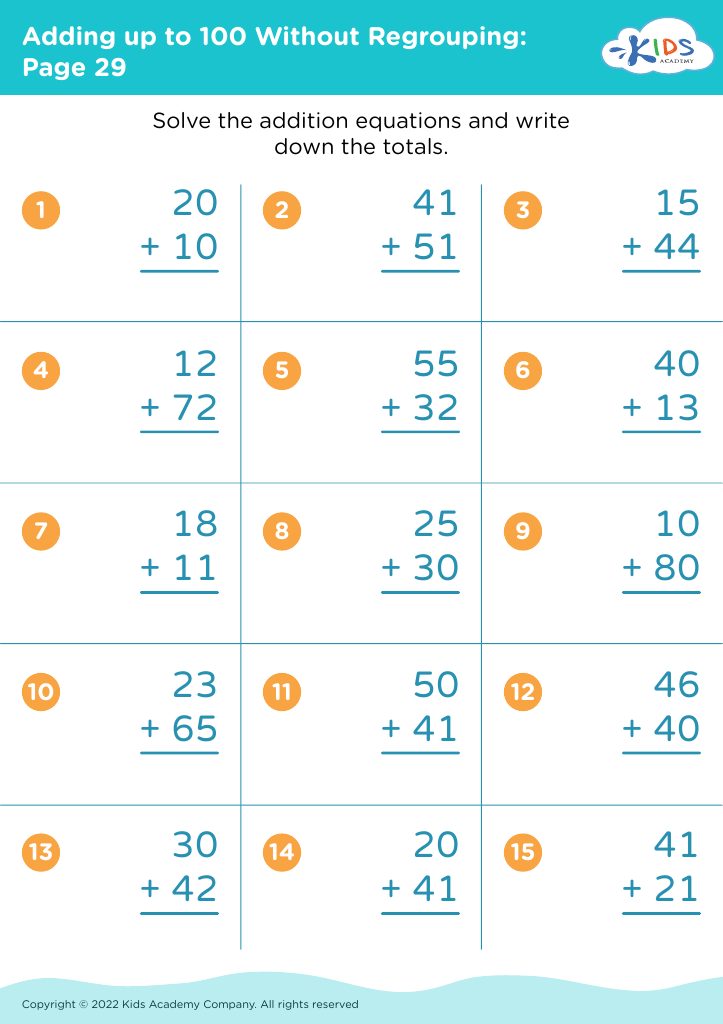
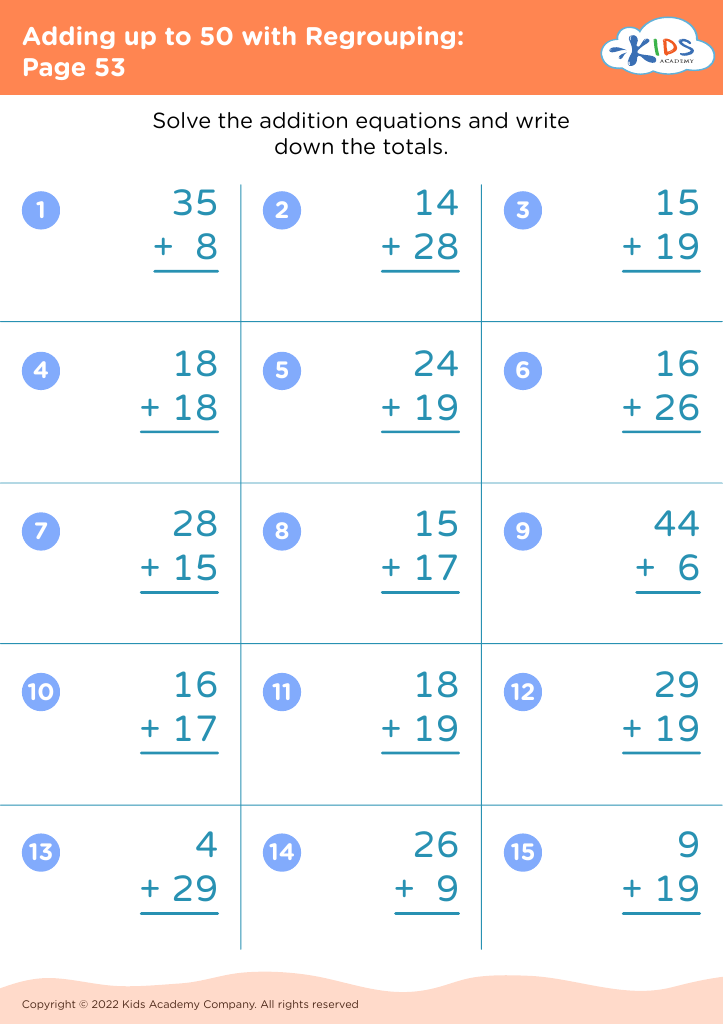
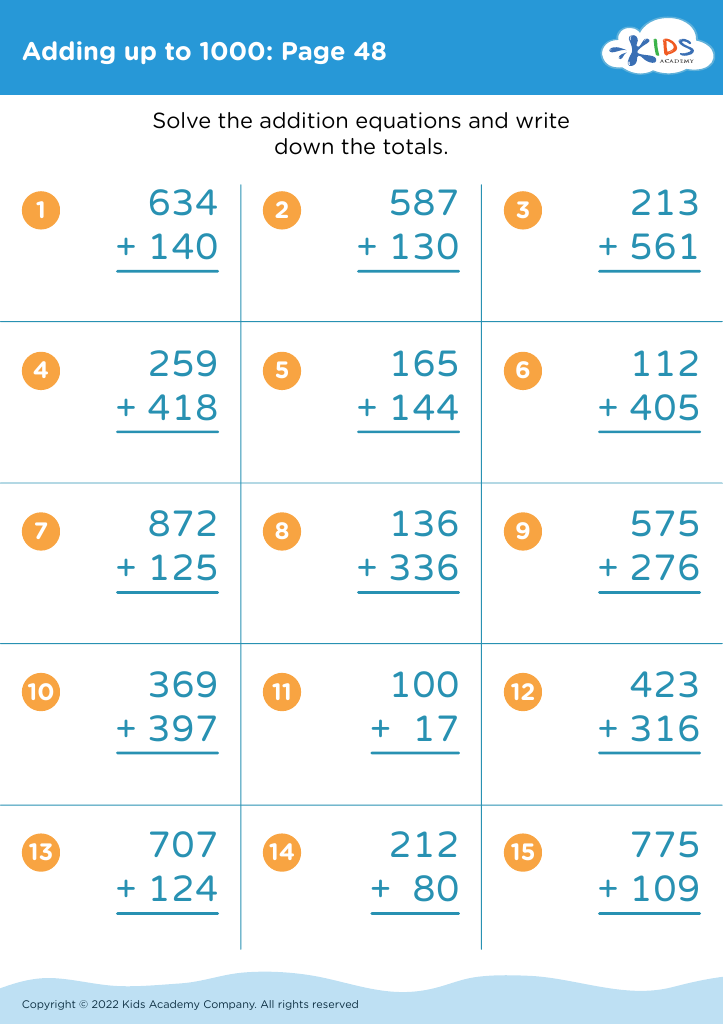
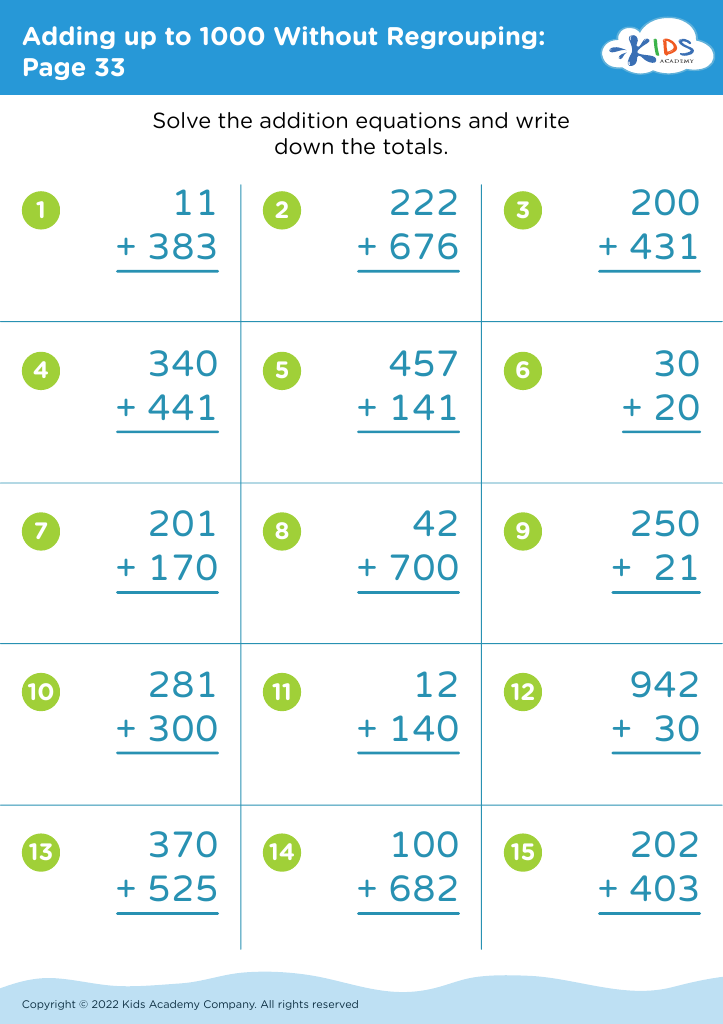
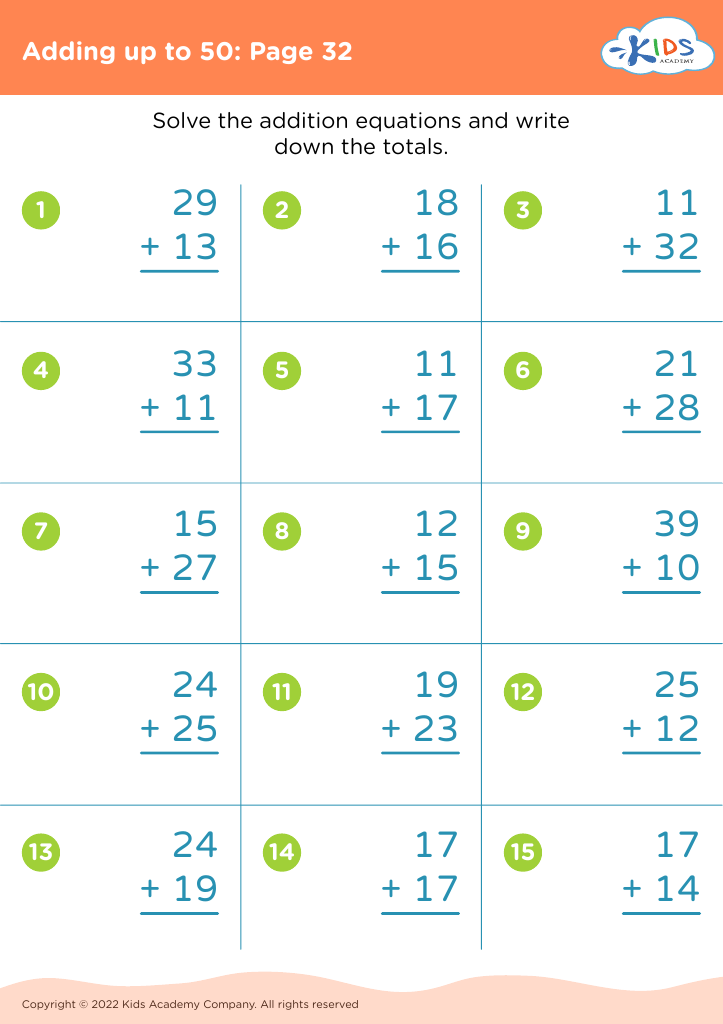








Number recognition and Grade 2 addition are foundational skills critical for a child's mathematical development. Parents and teachers should prioritize these aspects for several reasons.
Firstly, number recognition is the building block for all future math learning. It's essential for children to confidently identify and comprehend numbers up to 100, as this paves the way for understanding more complex math concepts. Strong number sense allows them to quickly grasp the relationship between numbers, fostering mental math skills and overall numeracy.
Secondly, mastering Grade 2 addition supports the development of arithmetic fluency. Addition is one of the four fundamental operations in math, and being proficient in it at an early stage sets the stage for future success in higher-level math, such as multiplication, division, and fractions. Children who are comfortable with basic addition are better equipped to handle word problems and complex equations later on.
Moreover, these skills extend beyond the classroom. Daily life requires math—whether shopping, cooking, or managing time. Early competence in number recognition and addition can boost a child’s confidence both academically and in everyday tasks, promoting a positive attitude towards learning.
In conclusion, ensuring proficiency in number recognition and Grade 2 addition provides a strong mathematical foundation, vital for academic success and everyday problem-solving. Parents and teachers investing time in these areas are supporting a child’s lifelong learning and critical thinking development.