Help your Grade 2 students master the concept of fractions with our engaging "Understand Fractions Addition Worksheets." These carefully crafted worksheets are designed to enhance students' understanding of fractions and improve their addition skills. With colorful illustrations and clear instructions, students will learn to add fractions with like denominators, making math fun and accessible. Perfect for classroom use or at-home practice, our worksheets cater to different learning styles and provide step-by-step guidance. Encourage your young learners to develop their math proficiency and confidence in working with fractions—explore our collection and watch them excel in their math journey today!
Check out this FREE Grade 2 Trial Lesson on Addition!

Suffixes

Favorites
With answer key
Interactive
  • Grade 2
  • Understand fractions
  • Addition
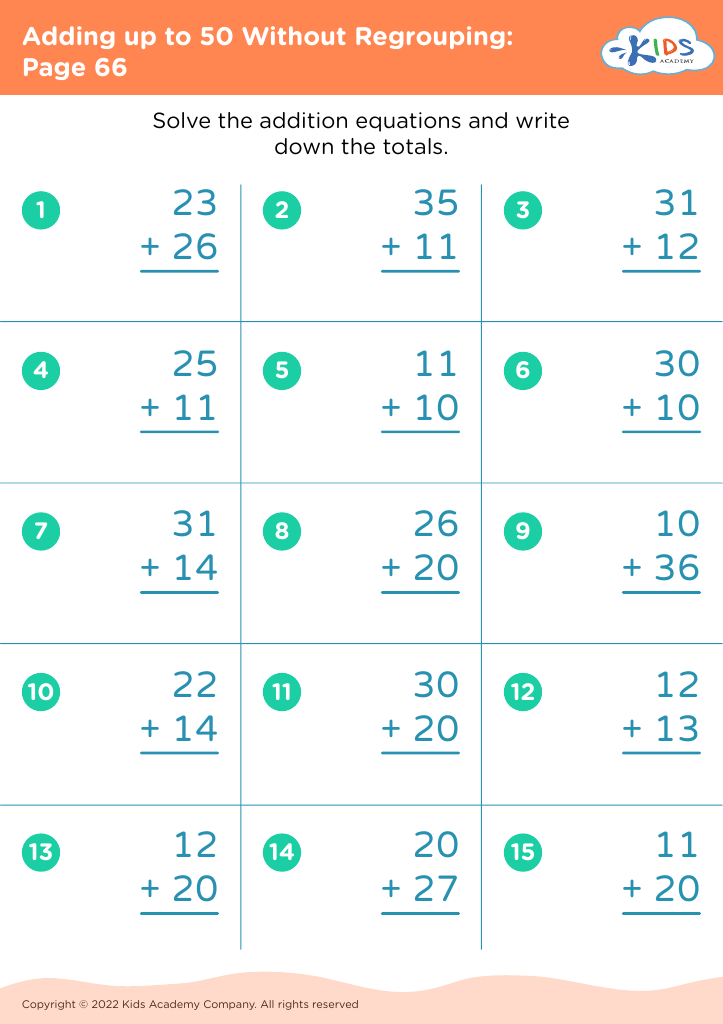
Adding up to 50 Without Regrouping: Page 66
Worksheet
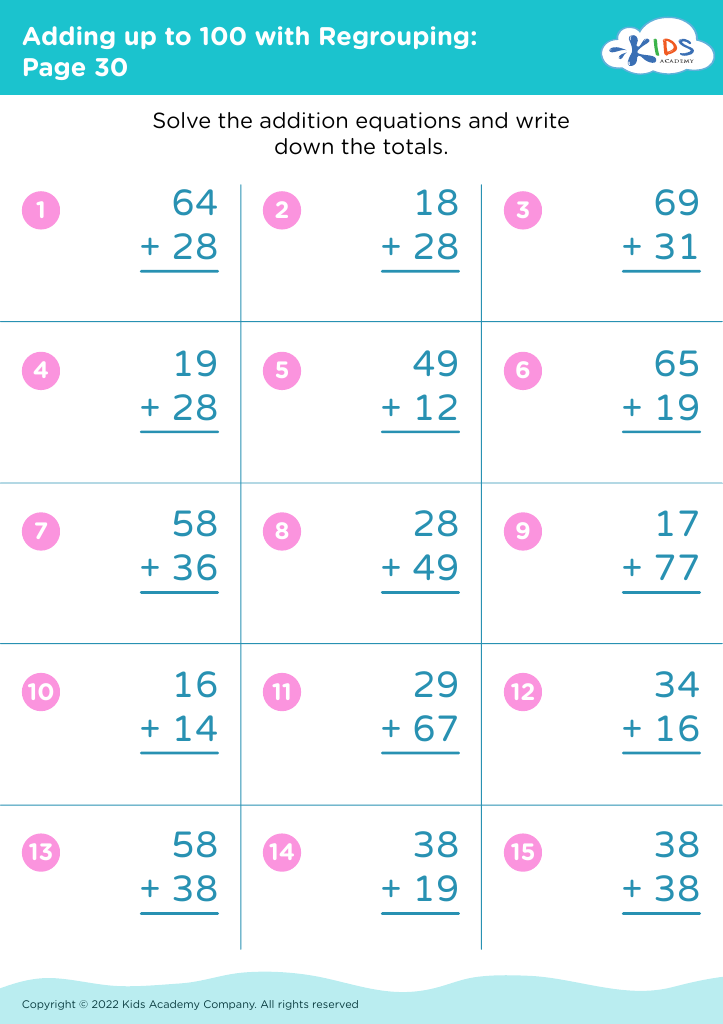
Adding up to 100 with Regrouping: Page 30
Worksheet
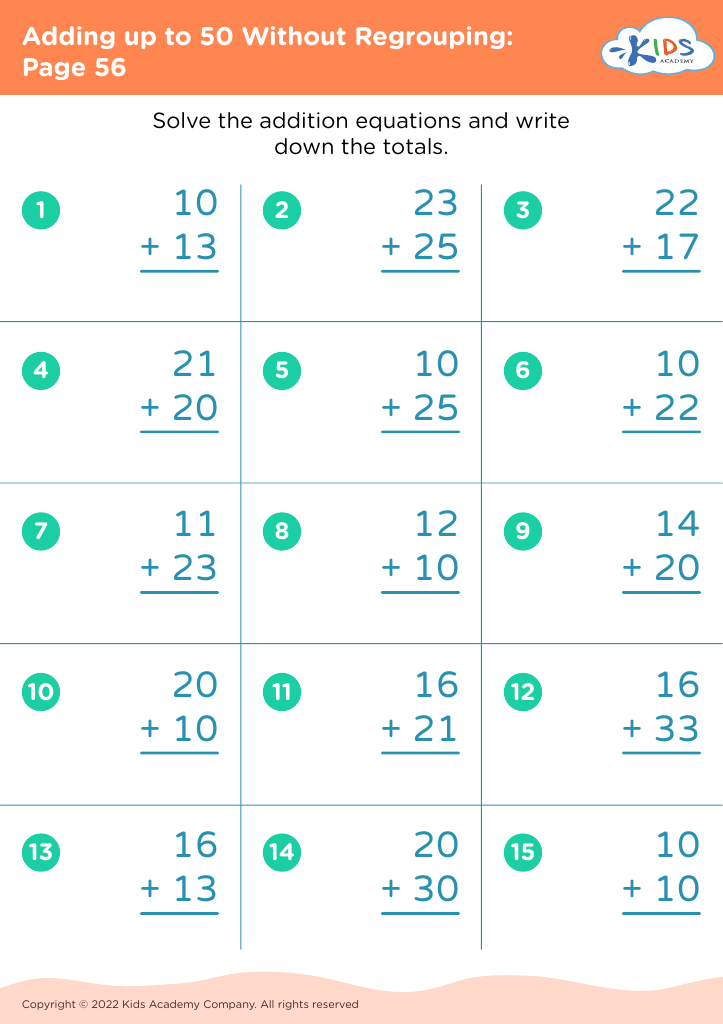
Adding up to 50 Without Regrouping: Page 56
Worksheet
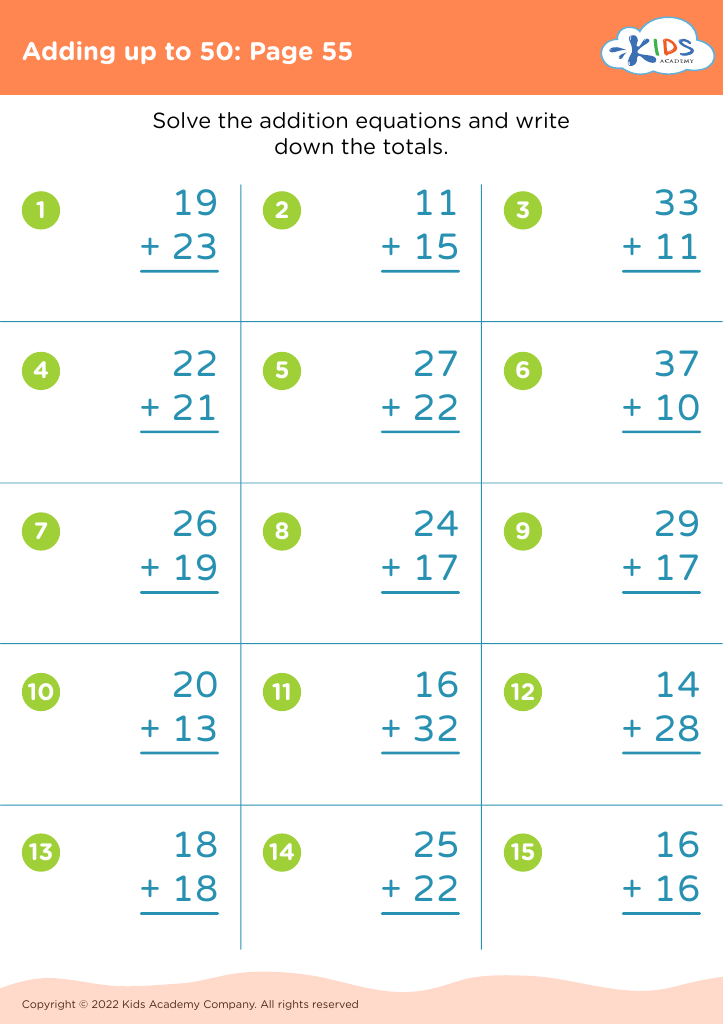
Adding up to 50: Page 55

Adding up to 50: Page 55

Adding up to 50: Page 55
Worksheet
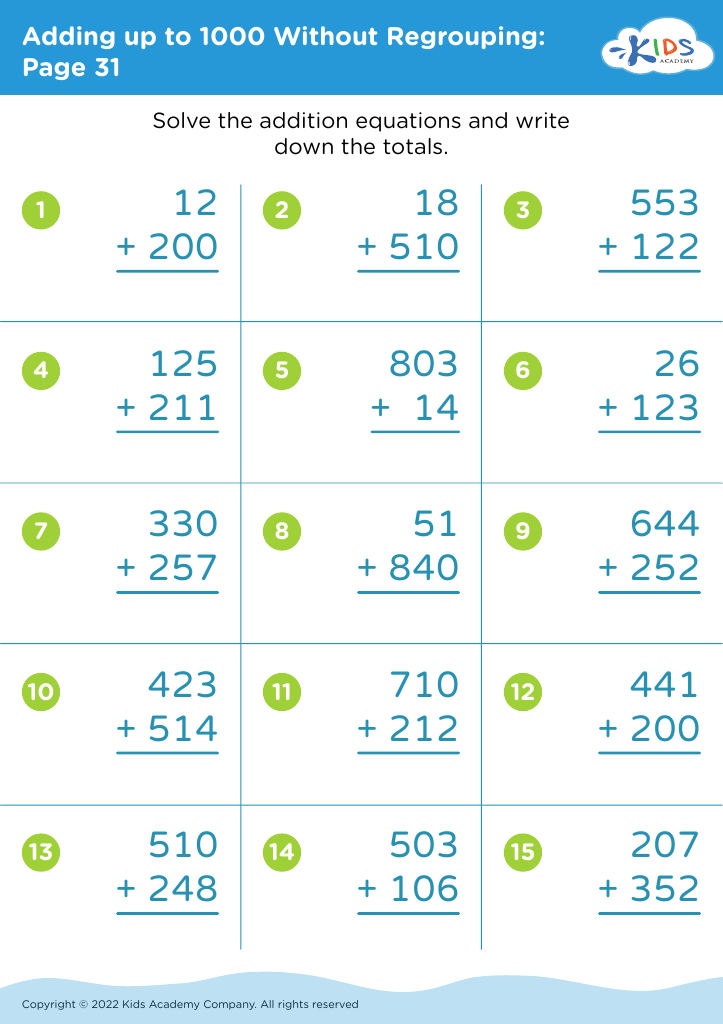
Adding up to 1000 Without Regrouping: Page 31
Worksheet
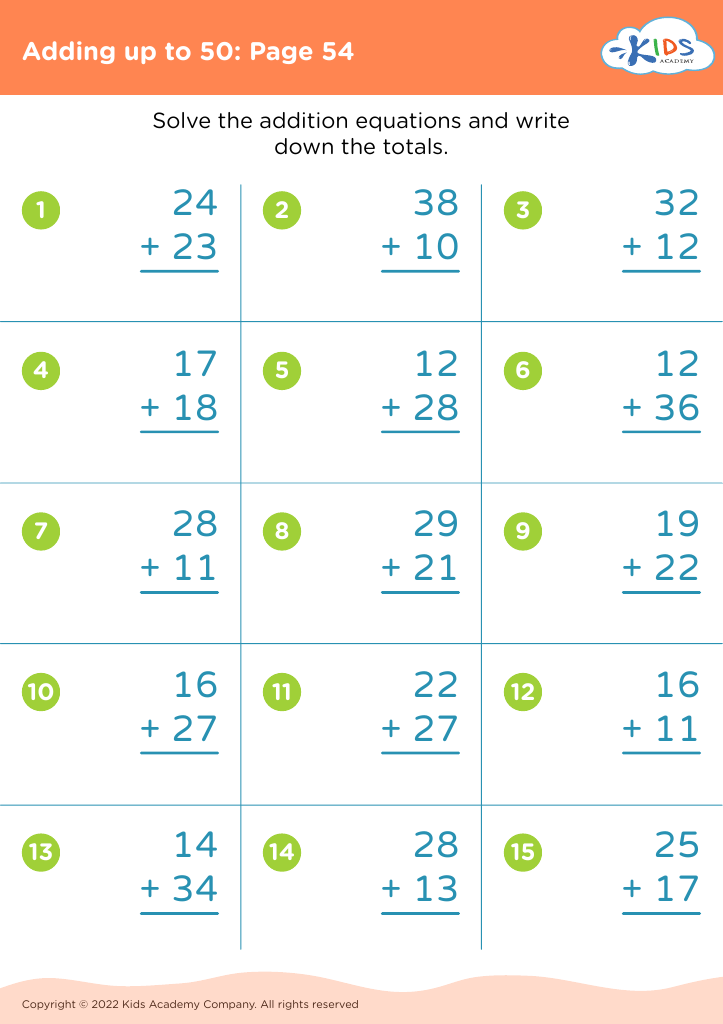
Adding up to 50: Page 54

Adding up to 50: Page 54

Adding up to 50: Page 54
Worksheet
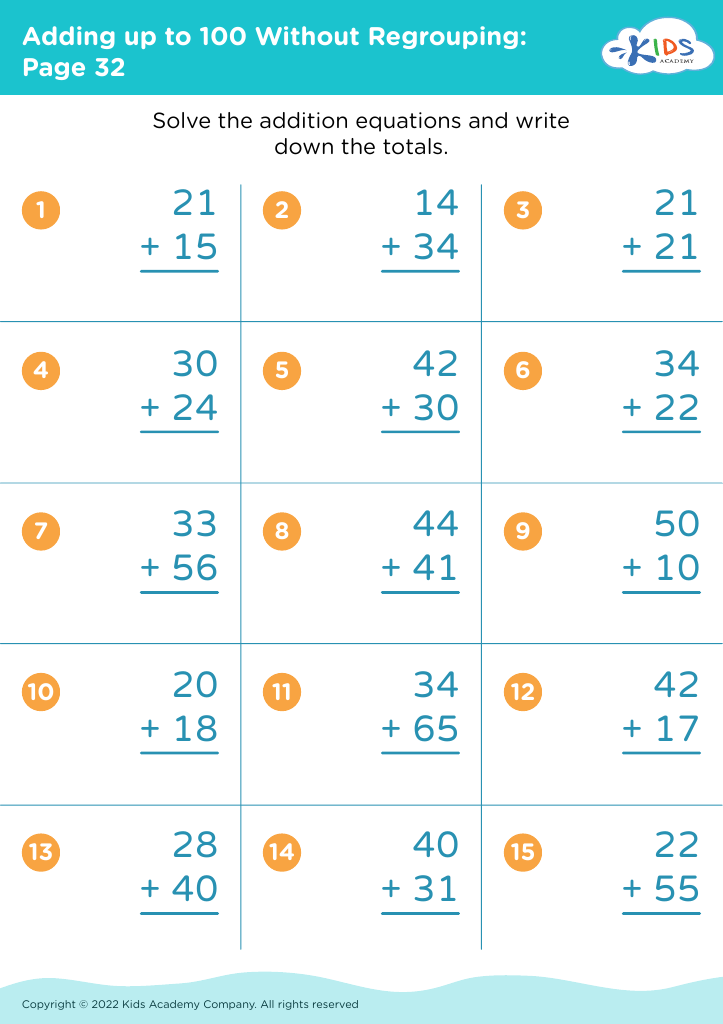
Adding up to 100 Without Regrouping: Page 32
Worksheet
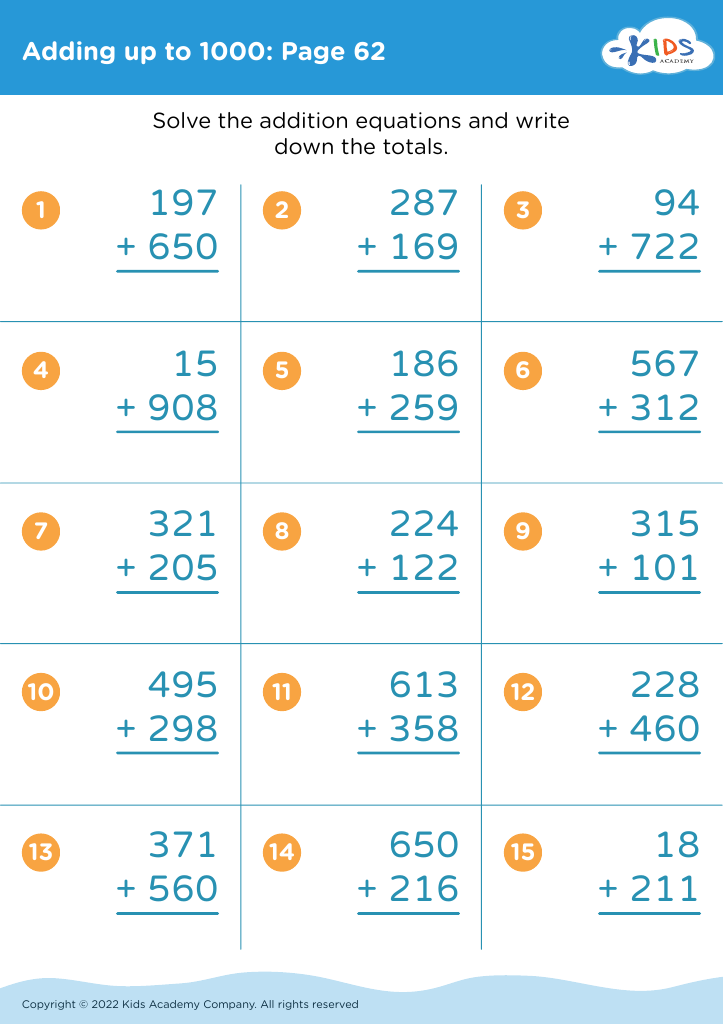
Adding up to 1000: Page 62

Adding up to 1000: Page 62

Adding up to 1000: Page 62
Worksheet
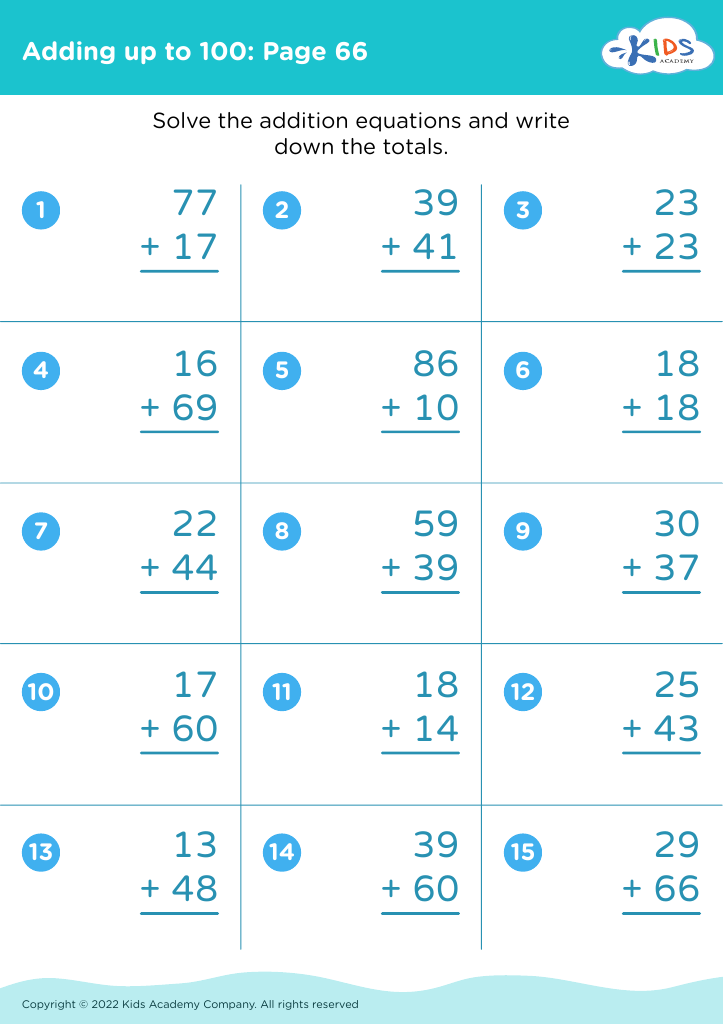
Adding up to 100: Page 66

Adding up to 100: Page 66

Adding up to 100: Page 66
Worksheet
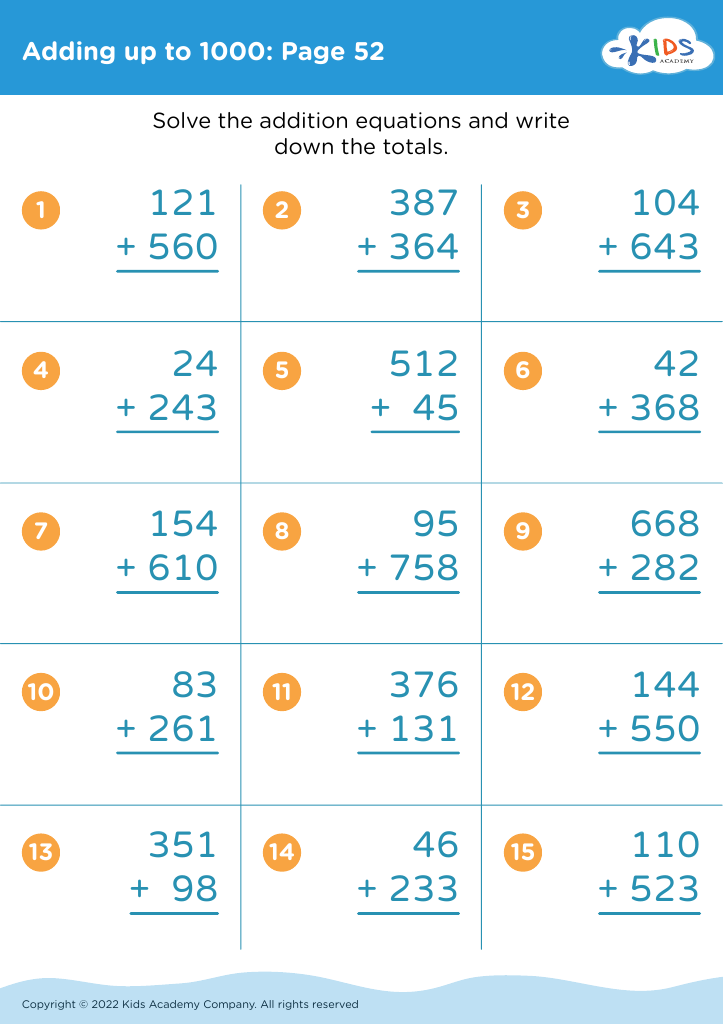
Adding up to 1000: Page 52

Adding up to 1000: Page 52

Adding up to 1000: Page 52
Worksheet
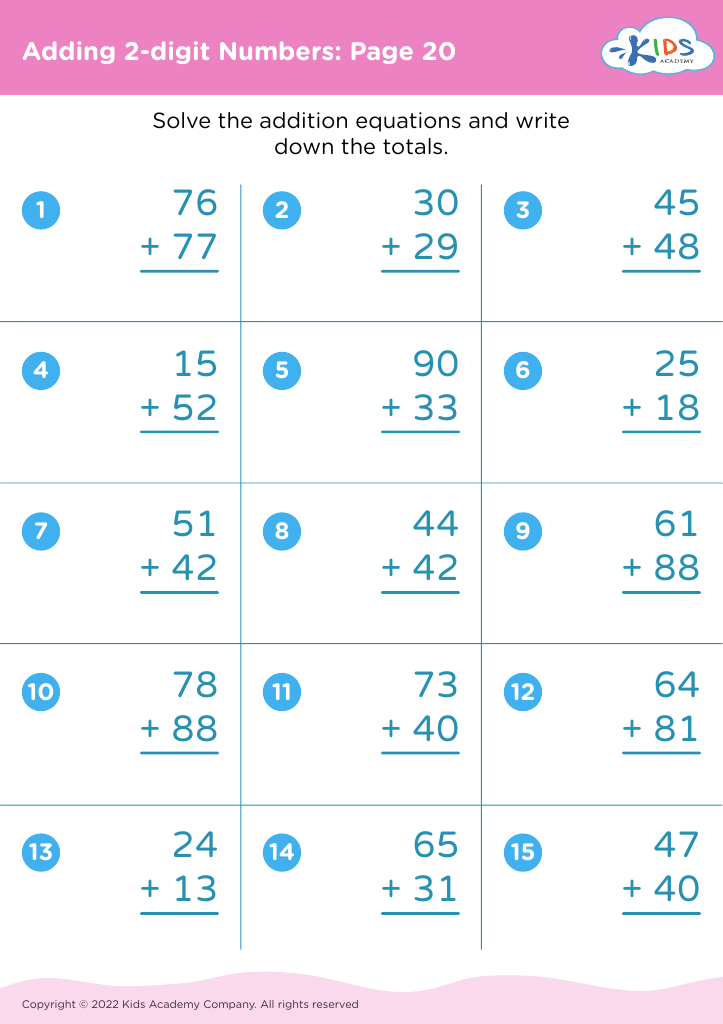
Adding 2-digit Numbers: Page 20

Adding 2-digit Numbers: Page 20

Adding 2-digit Numbers: Page 20
Worksheet
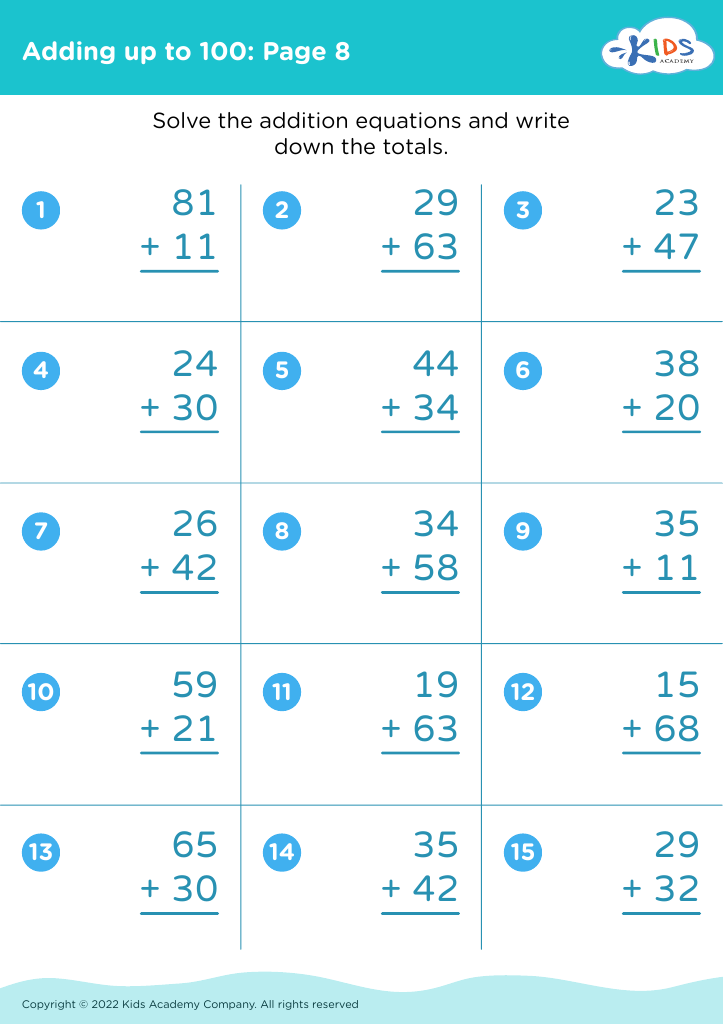
Adding up to 100: Page 8

Adding up to 100: Page 8

Adding up to 100: Page 8
Worksheet
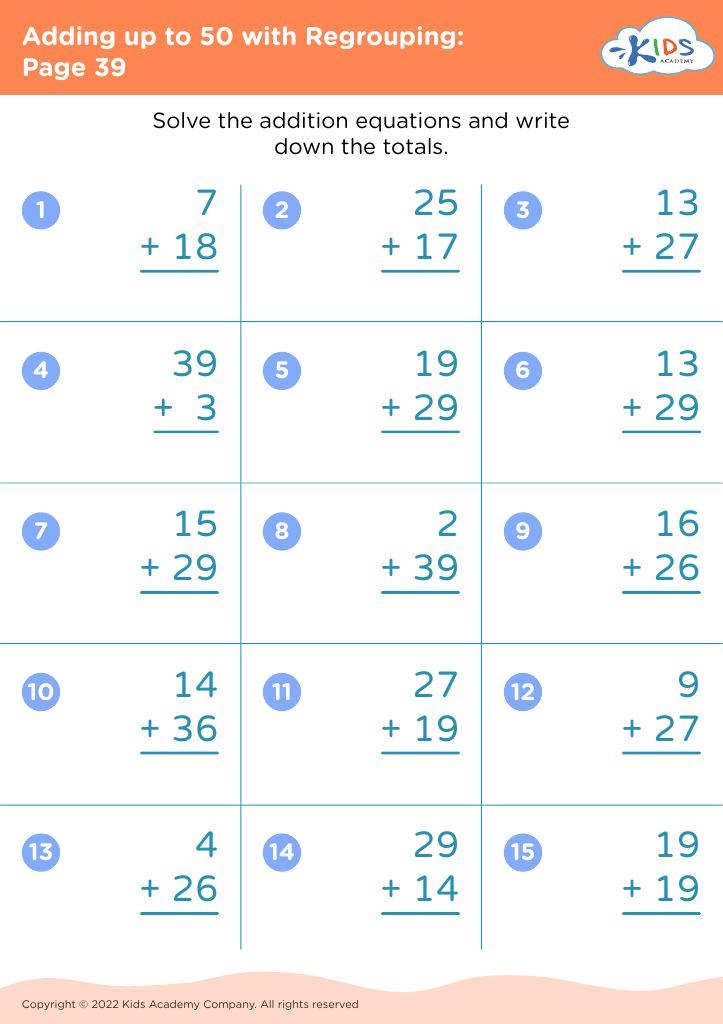
Adding up to 50 with Regrouping: Page 39
Worksheet
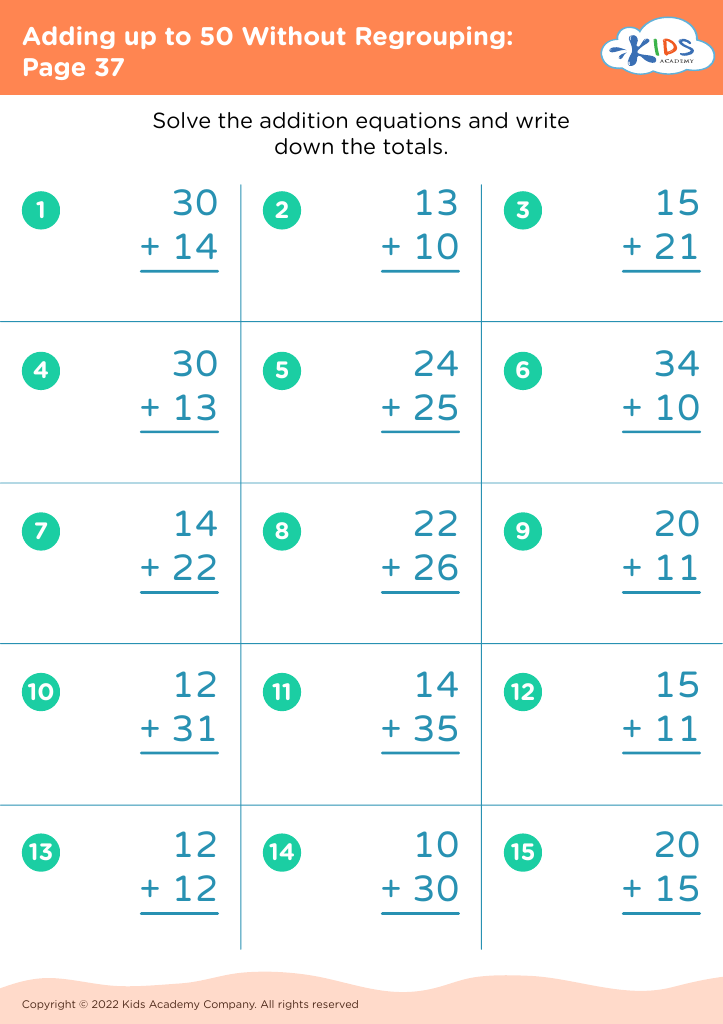
Adding up to 50 Without Regrouping: Page 37
Worksheet
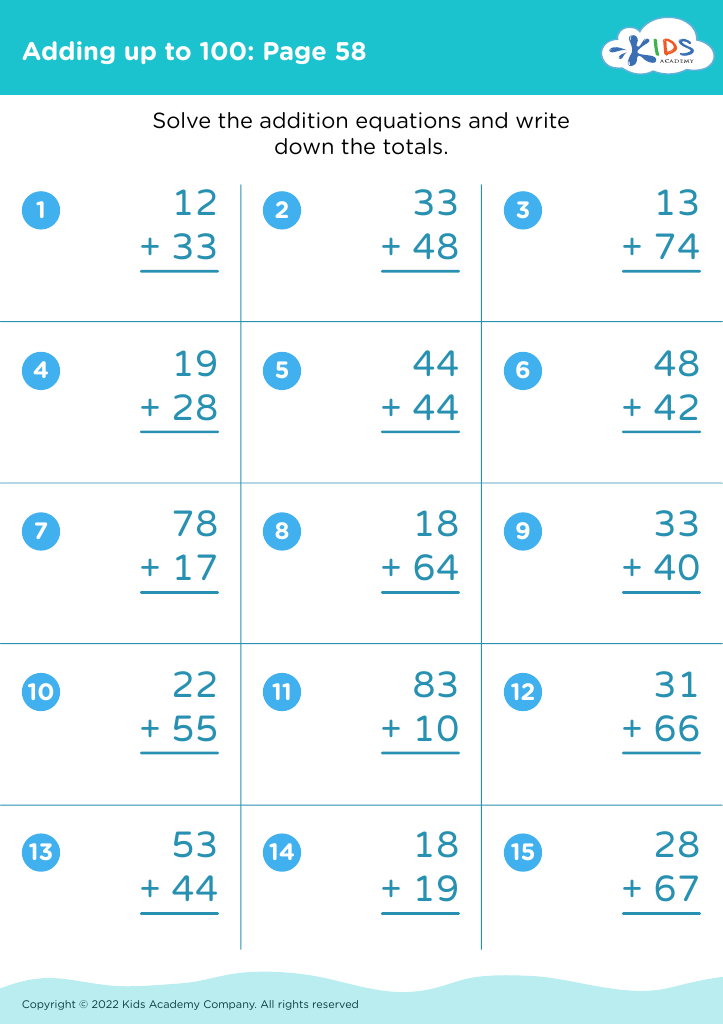
Adding up to 100: Page 58

Adding up to 100: Page 58

Adding up to 100: Page 58
Worksheet
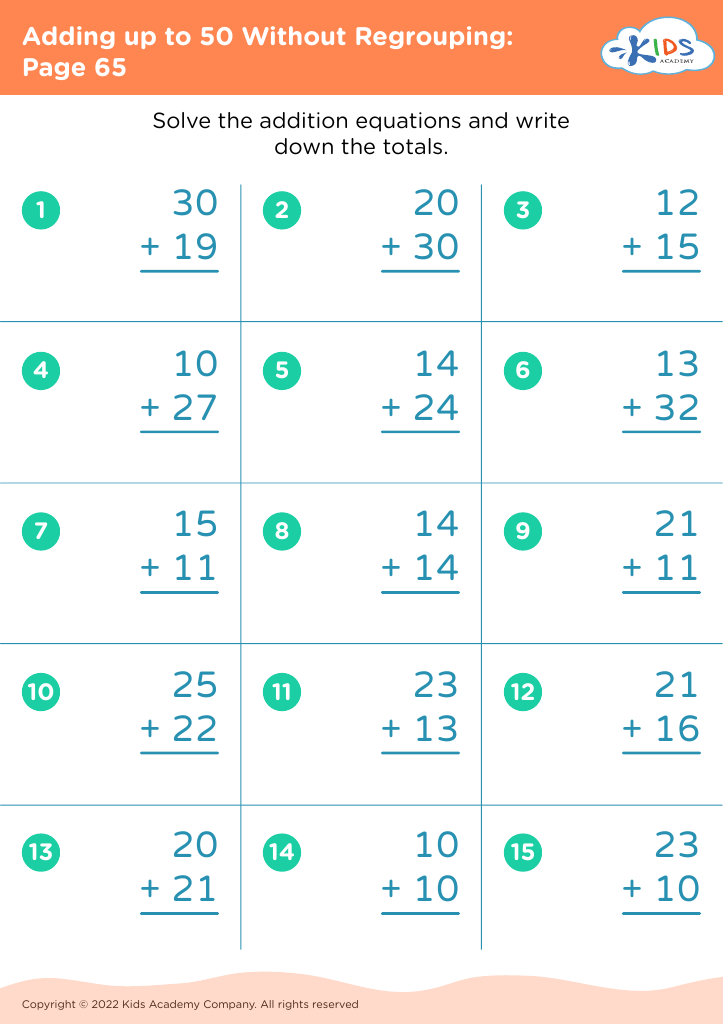
Adding up to 50 Without Regrouping: Page 65
Worksheet
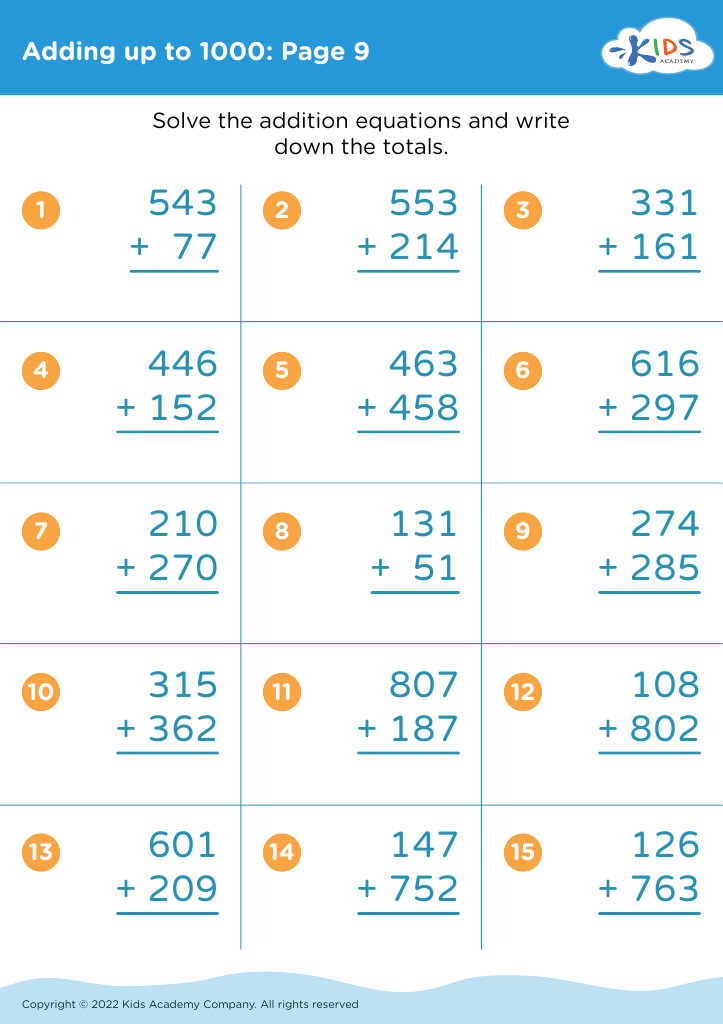
Adding up to 1000: Page 9

Adding up to 1000: Page 9

Adding up to 1000: Page 9
Worksheet
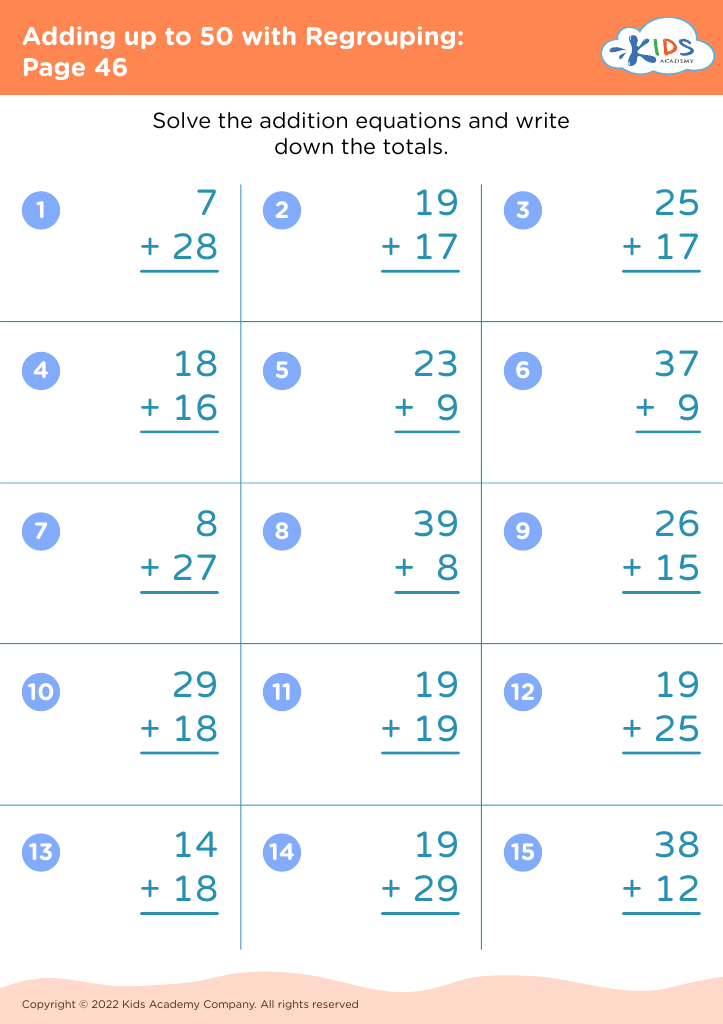
Adding up to 50 with Regrouping: Page 46
Worksheet
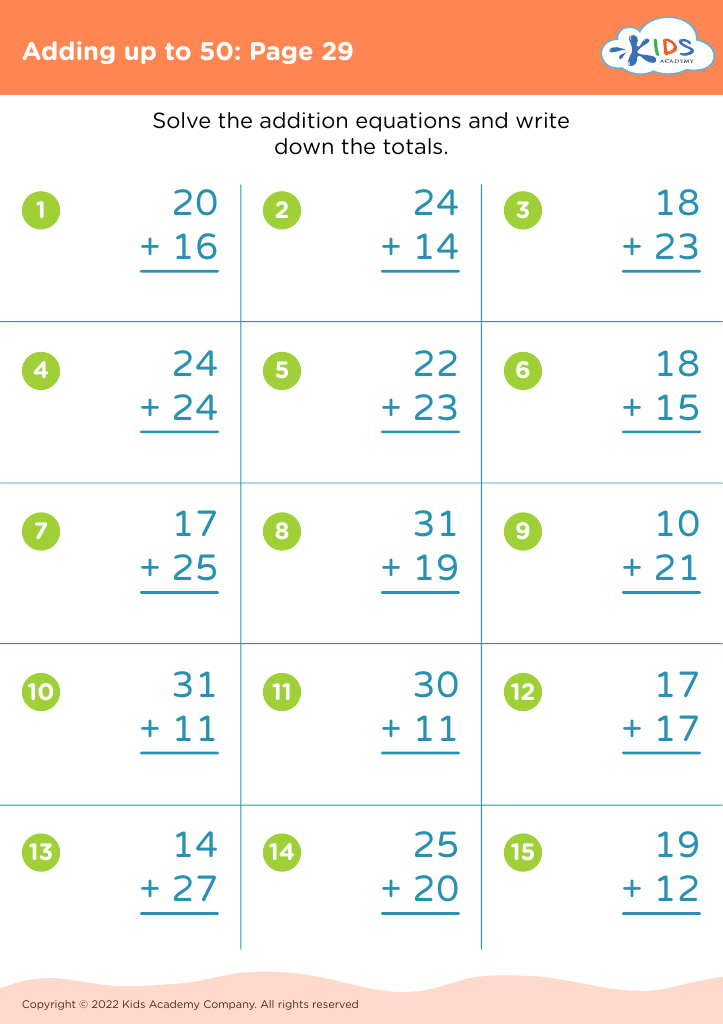
Adding up to 50: Page 29

Adding up to 50: Page 29

Adding up to 50: Page 29
Worksheet


Understanding fractions in Grade 2 is crucial for several reasons that significantly impact a child’s mathematical foundation and everyday life. First, fractions lay the groundwork for more complex math concepts. By grasping the idea of parts of a whole, students develop critical skills they will use in addition and subtraction of fractions in later grades, enhancing their overall math competency.

Moreover, mastery of fractions supports problem-solving skills. When teachers and parents help children understand how to compare, add, or subtract fractions, they nurture analytical thinking, making math relatable and fun. These skills not only apply in the classroom but also in real-world scenarios like cooking, budgeting, and dividing items fairly.

Additionally, when educators emphasize fraShowctions, they cultivate a growth mindset. Students learn persistence and resilience, as fractions often present challenges that encourage them to remain curious and engaged.

Lastly, when parents and teachers collaborate effectively in this area, they demonstrate the importance of math in everyday life, fostering a love for learning. Celebrating small successes with fractions empowers children, making them more confident in their abilities, and sets a positive trajectory for future learning experiences.