Mathematical reasoning Grade 2 Math Worksheets - Page 2
29 filtered results
-
From - To
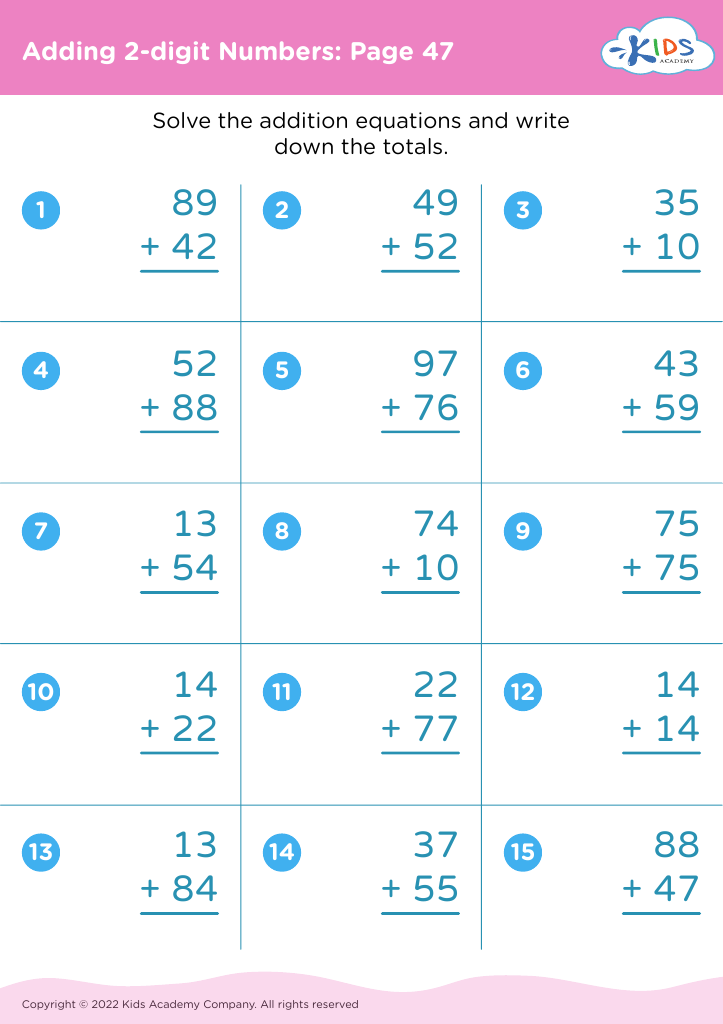
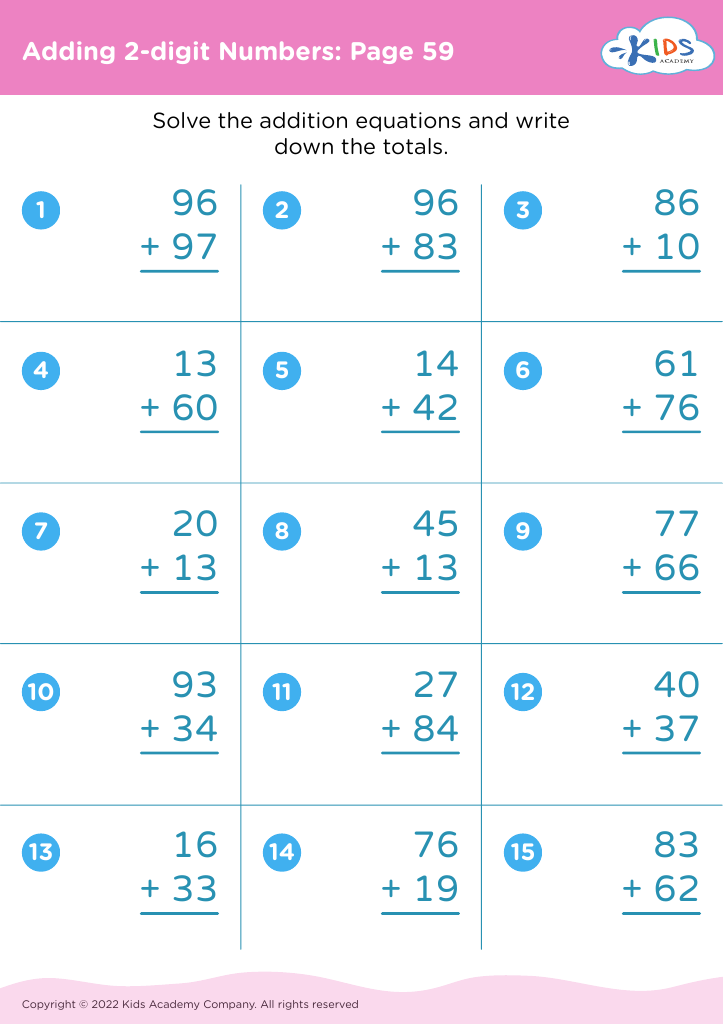
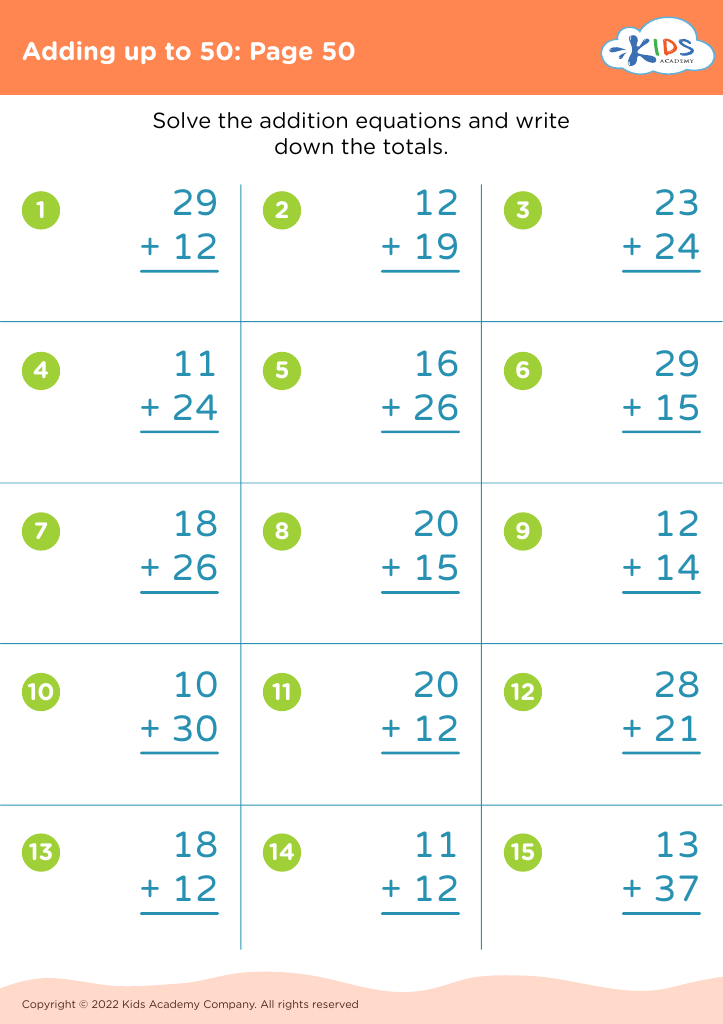
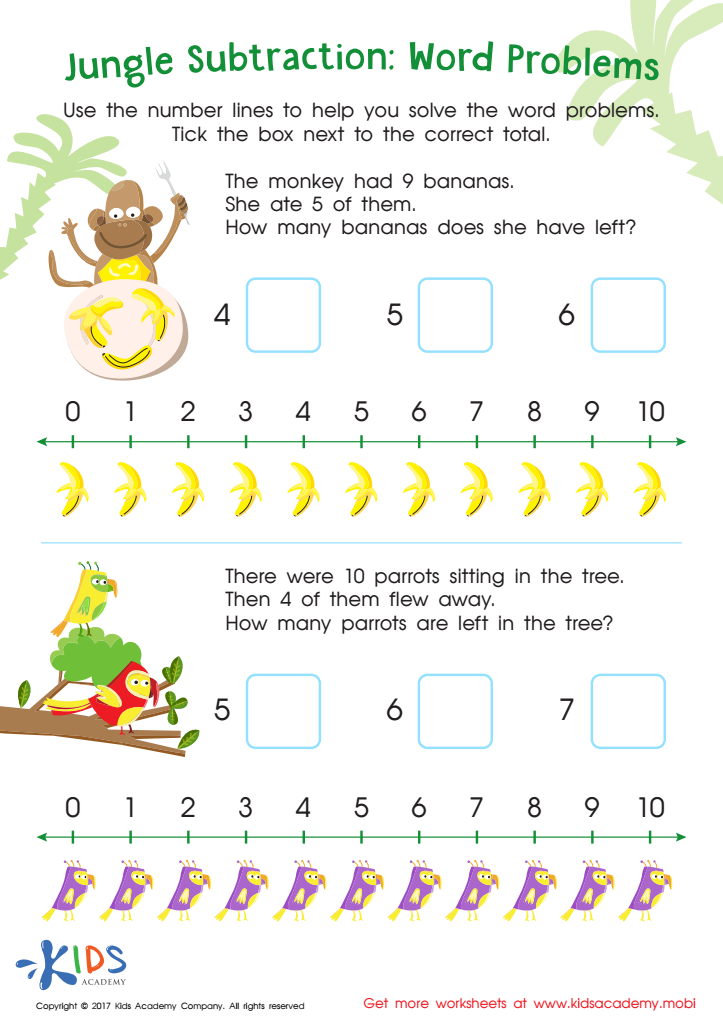
Jungle Subtraction Word Problems Substraction Worksheet
 Assign to My Students






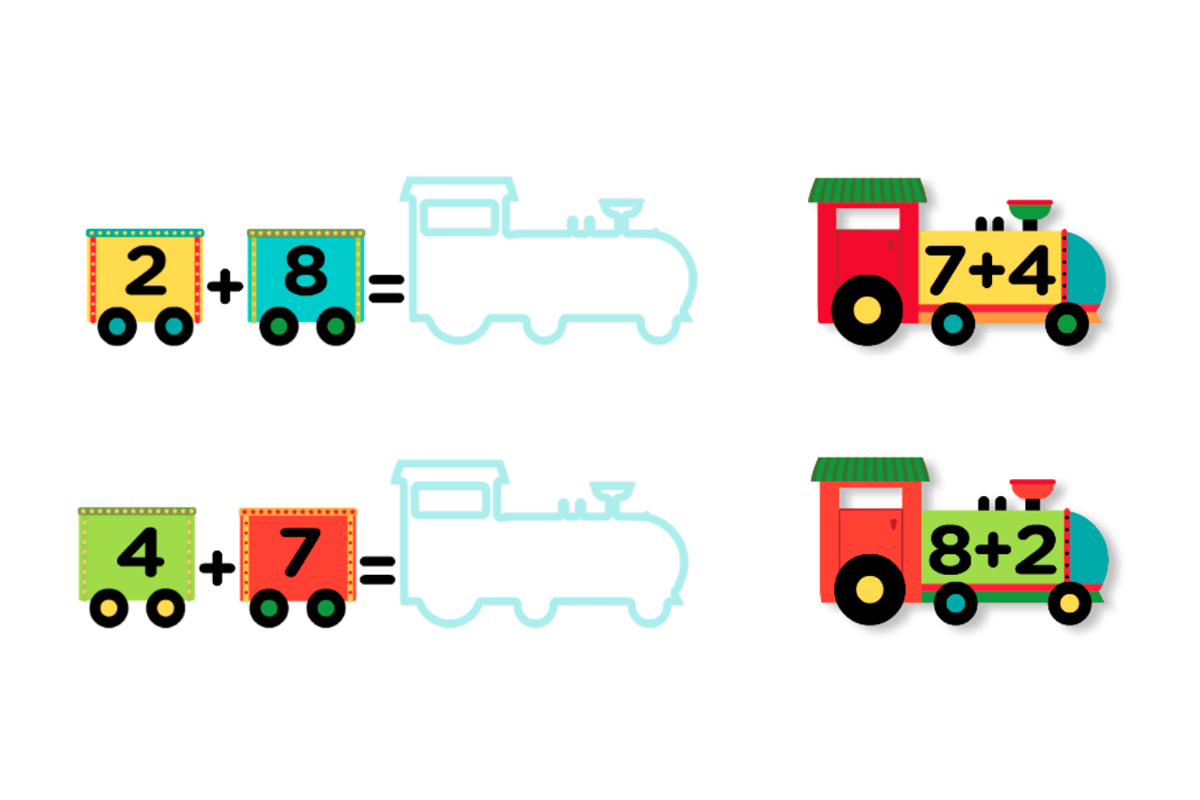

Mathematical reasoning is crucial in Grade 2 math as it provides the foundation for more complex problem-solving skills that students will encounter throughout their academic journey and in everyday life. At this stage, children begin to grasp fundamental concepts such as addition, subtraction, basic geometry, and measurement. Understanding mathematical reasoning helps students move beyond rote memorization and fosters a deeper comprehension of "why" and "how" math problems are solved.
Parents and teachers should care about nurturing mathematical reasoning because it encourages logical thinking and enhances critical thinking skills. For example, when a child understands the reasoning behind adding two numbers, they start to recognize patterns and relationships between numbers, which are valuable skills for tackling more advanced math topics, such as multiplication or fractions, in later grades.
Furthermore, proficiency in mathematical reasoning boosts students' confidence and promotes a positive attitude towards math. It helps them to see math as a set of manageable problems rather than a series of disconnected tasks. This positive mindset can reduce math anxiety and foster a willingness to engage with challenging material.
Beyond academics, these early math skills are essential for daily activities, such as managing money, telling time, and following instructions. Therefore, focusing on mathematical reasoning in Grade 2 sets the stage for lifelong learning and practical decision-making abilities.