Understanding biodiversity Grade 2 Math Worksheets
3 filtered results
-
From - To
Explore the fascinating world of biodiversity with our Grade 2 Math Worksheets! These engaging resources help young learners understand the variety of life in our ecosystems while practicing essential math skills. Through colorful activities and relatable examples, students will enhance their counting, addition, and problem-solving abilities while learning about different species, habitats, and the importance of preserving our environment. Our worksheets are designed to foster curiosity and develop critical thinking, making math an exciting exploration of nature. Transform lessons into fun adventures with our Understanding Biodiversity worksheets, perfect for classroom use or at-home learning! Dive into the math of nature today!
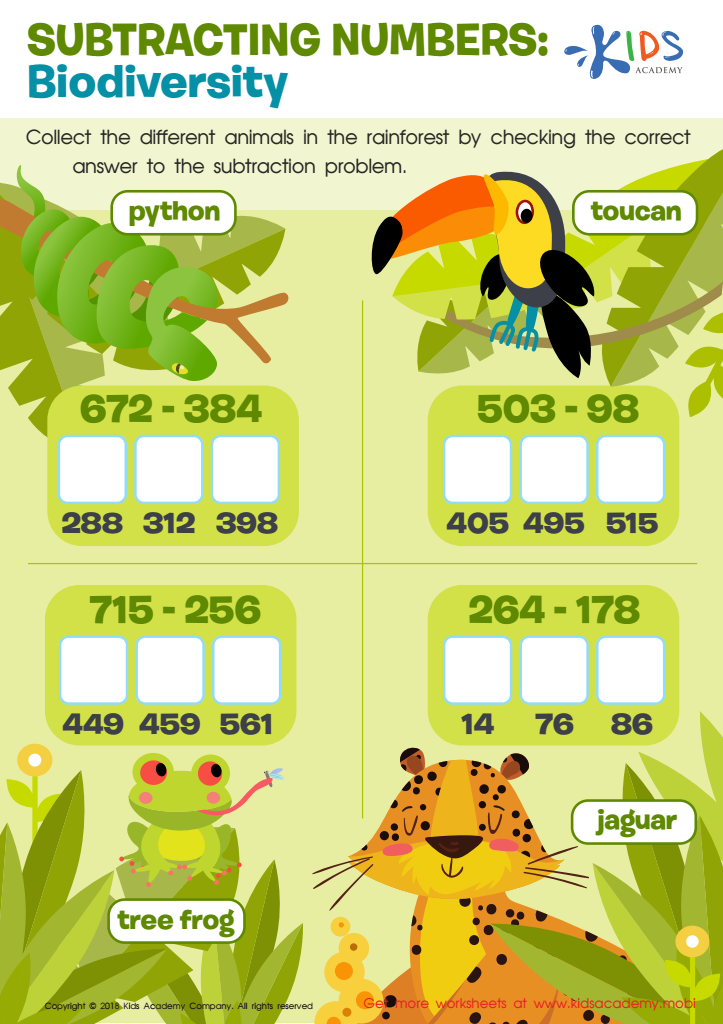
Subtracting Numbers: Biodiversity Worksheet
 Assign to My Students
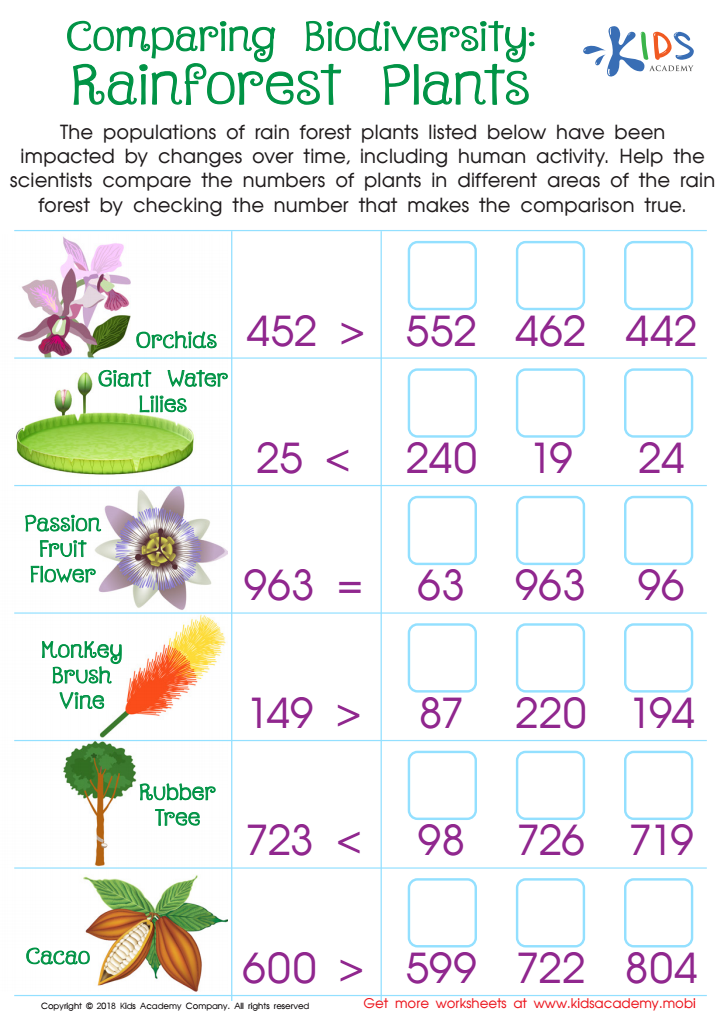
Comparing Biodiversity: Rainforest Plants Worksheet
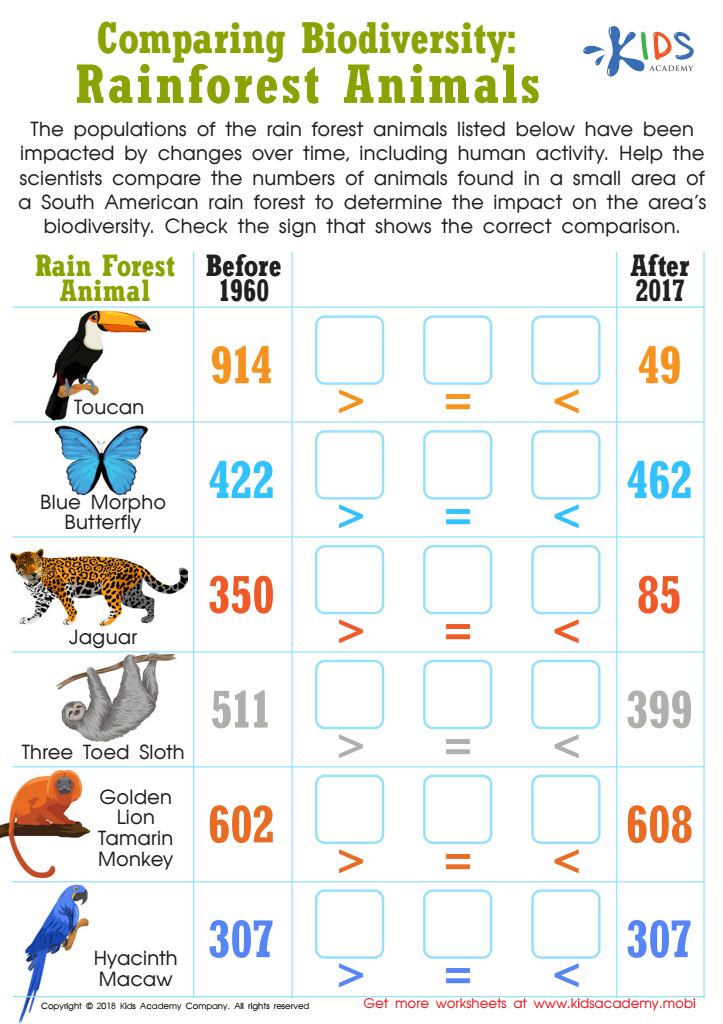
Comparing Biodiversity: Rainforest Animals Worksheet






Understanding biodiversity is crucial in the second-grade curriculum for several reasons. Firstly, it helps young learners appreciate the variety of life around them, fostering curiosity and encouraging exploration of nature. When students engage with biodiversity, they learn about different species, ecosystems, and how living things interact. This not only enhances their science knowledge but also contributes to critical thinking skills.
From a mathematical perspective, biodiversity can seamlessly integrate with math lessons. For example, teachers can incorporate counting exercises by having students count the number of different animals in a local habitat or tally unique plant species. Graphing activities can involve data collection on local biodiversity, enabling students to create charts that visualize their findings. These activities strengthen their understanding of essential math concepts such as addition, subtraction, and data organization.
Moreover, educating students about biodiversity instills a sense of environmental stewardship. As children understand the importance of every species, they develop a respect for nature that encourages thoughtful decisions that affect our ecosystem. Ultimately, nurturing a sense of responsibility towards biodiversity equips children with the knowledge and skills necessary for making informed choices in the future, making it essential for parents and teachers to prioritize this subject in education.