Visual discrimination Grade 2 Math Worksheets
7 filtered results
-
From - To
Introduce young learners to the fun of visual discrimination with our 2nd Grade Math Worksheets from Kids Academy! These engaging activities are expertly designed to help children enhance their ability to identify differences and similarities between objects, patterns, and shapes. With a focus on boosting critical thinking and attention to detail, our worksheets cover essential early math skills while keeping learning interactive and enjoyable. Perfect for home or classroom use, they offer a playful way to practice visual discrimination through tasks like grouping, matching, and sorting. Help your second grader build a solid foundation for future math success today!
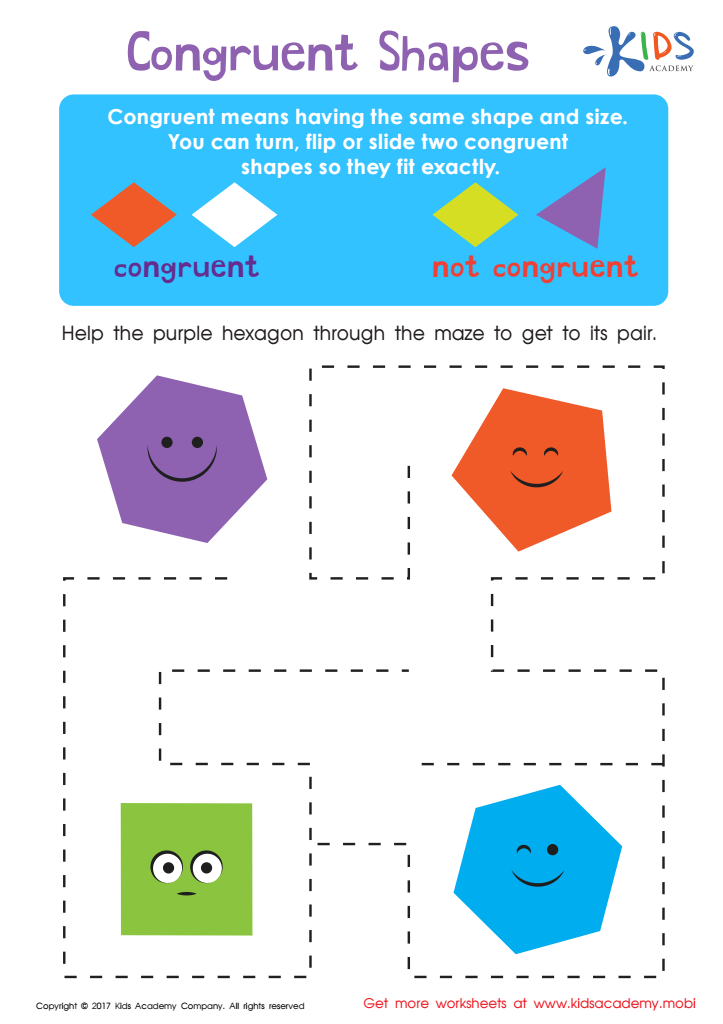
Congruent Shapes Worksheet
 Assign to My Students
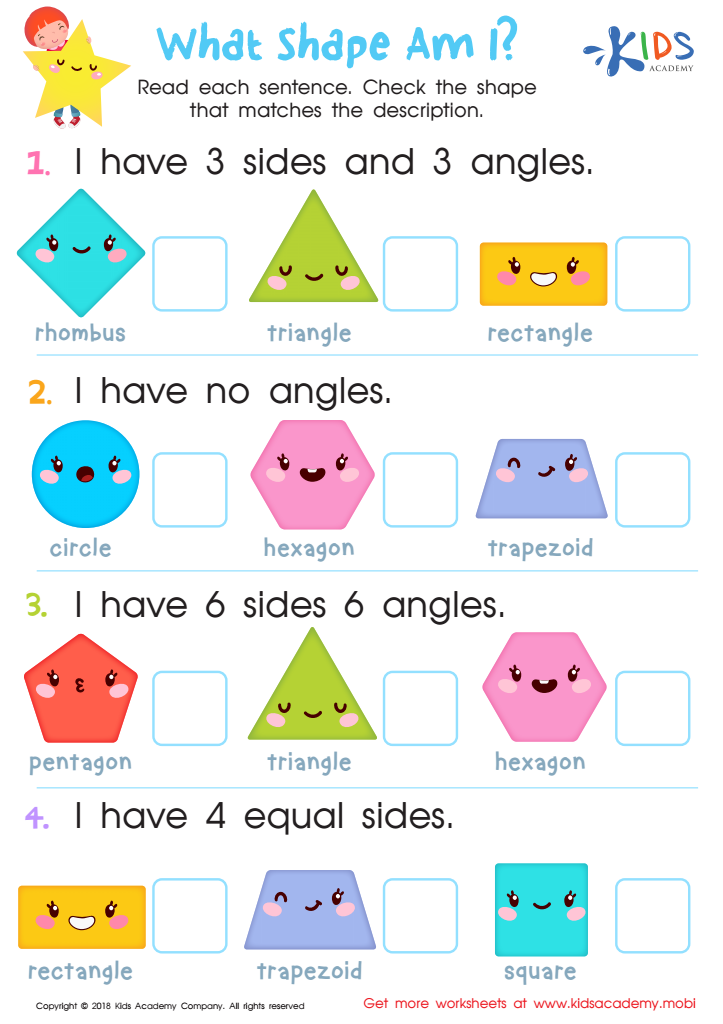
What Shape Am I? Worksheet
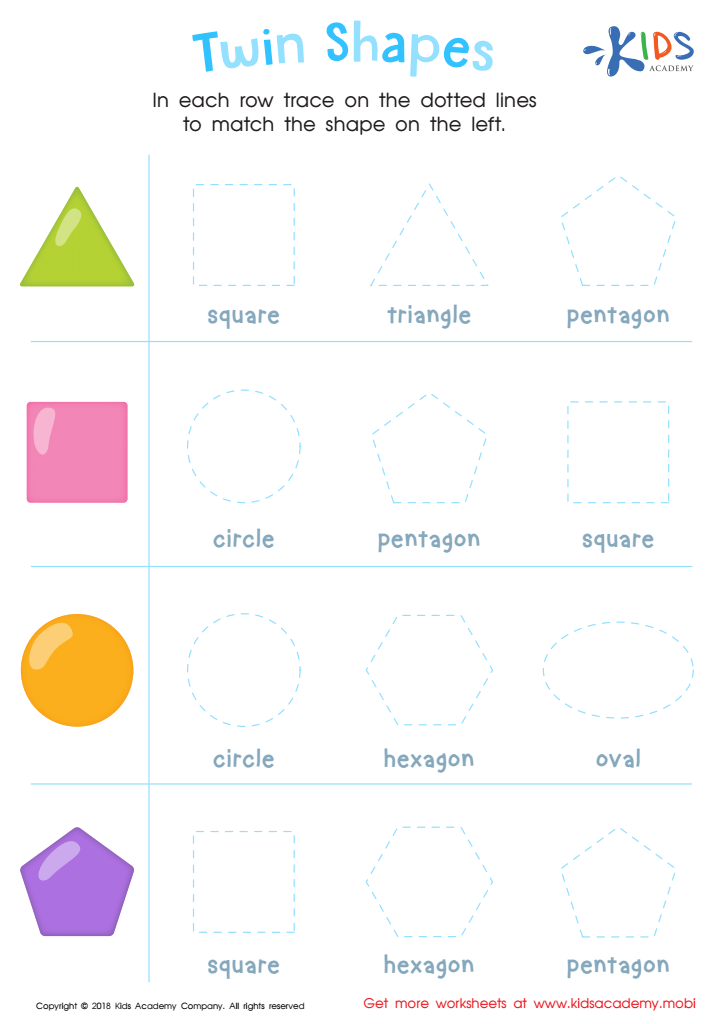
Twin Shapes Dot-to-Dot Worksheet








Visual discrimination is the ability to see and differentiate between objects, shapes, symbols, and patterns. For Grade 2 math students, fostering strong visual discrimination skills is critical for several reasons.
Firstly, mathematics often involves the use of numbers and symbols that may appear visually similar, such as distinguishing between '6' and '9' or '+' and 'x'. Ensuring students can accurately identify these symbols is foundational to performing basic calculations and avoiding errors in their work.
Secondly, visual discrimination supports the development of spatial reasoning, which is integral for understanding geometry concepts such as shape recognition, property comparison, and spatial awareness. Activities like identifying shapes, sorting objects, and understanding symmetry require children to discern fine visual details.
Thirdly, visual discrimination is linked to overall reading and writing development. Recognizing patterns and differences in numerals and written problems aids in comprehending math problems presented in textual formats, thus connecting to their literacy skills.
Finally, these skills impact overall academic confidence and success. Children who can effectively visually discriminate are better equipped to follow instructions, complete assignments correctly, and engage in problem-solving tasks, fostering a positive attitude toward learning math.
Thus, promoting strong visual discrimination skills helps build a solid foundation in math and supports students' broader cognitive development and academic achievements.