Problem-Solving Skills Grade 2 Subtraction Worksheets
9 filtered results
-
From - To
Discover engaging Problem-Solving Skills Grade 2 Subtraction Worksheets designed to enhance your child's mathematical thinking! Our thoughtfully crafted worksheets focus on developing essential problem-solving strategies through interactive subtraction exercises. Each activity encourages students to analyze, strategize, and solve diverse subtraction challenges, fostering critical thinking. Perfect for classroom or at-home learning, these worksheets align with educational standards, ensuring that your second grader builds a solid foundation in math. With clear instructions and captivating visuals, your child will enjoy mastering subtraction while honing their analytical skills. Explore our collection and empower your young learner today!
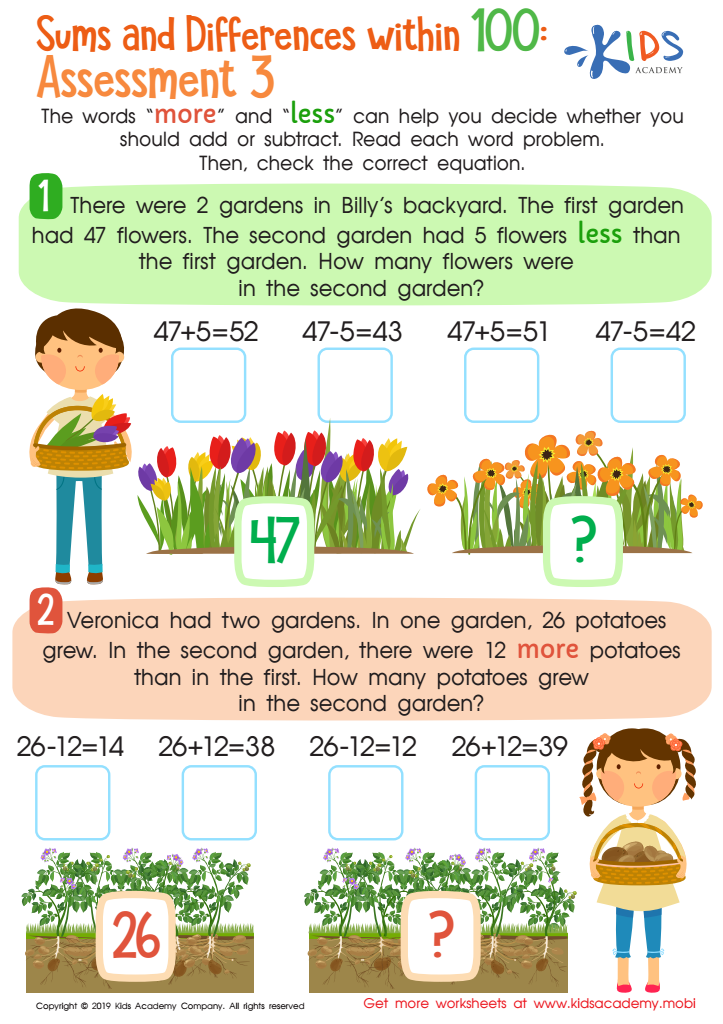
Sums and Differences Within 1 - Assessment 1 Worksheet
 Assign to My Students
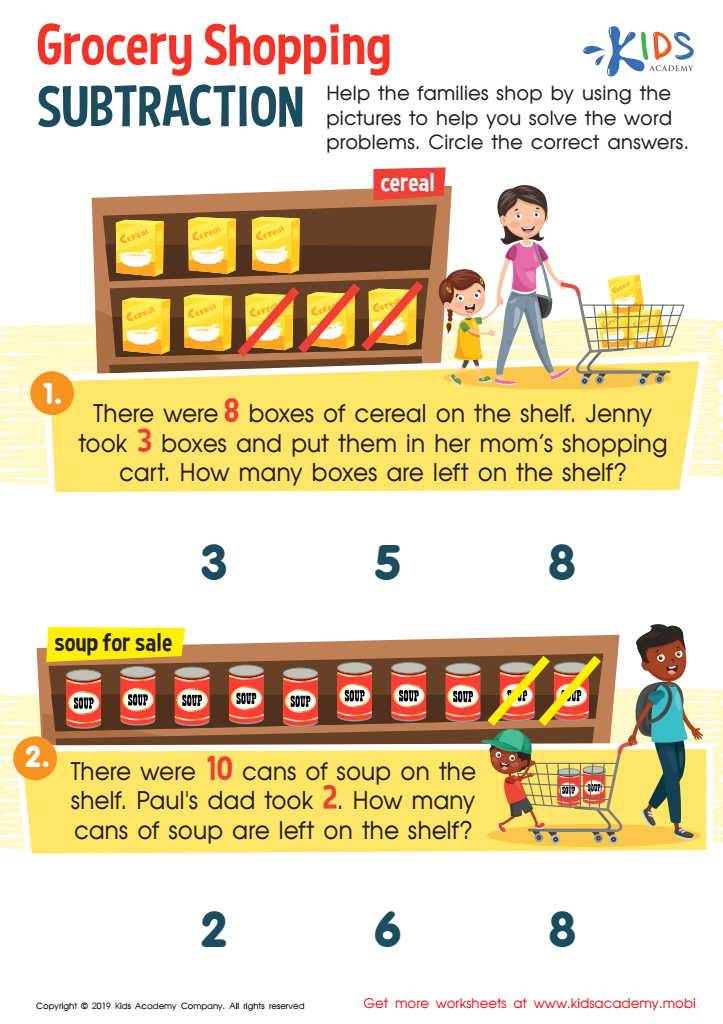
Grocery Shopping Subtraction Worksheet
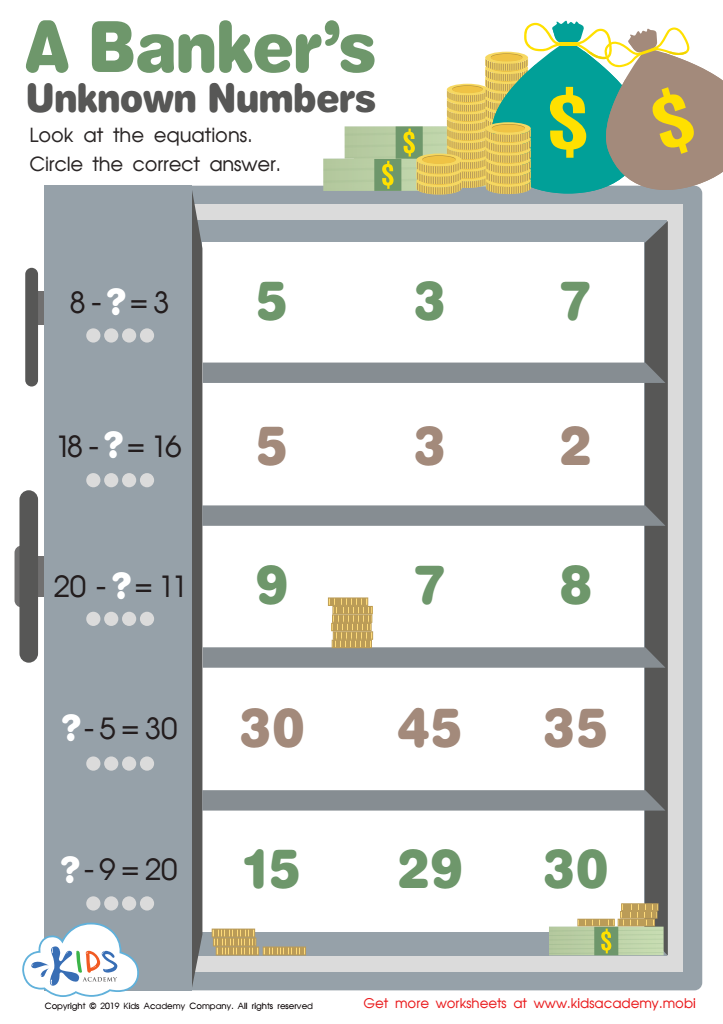
A Banker's Unknown Numbers Worksheet
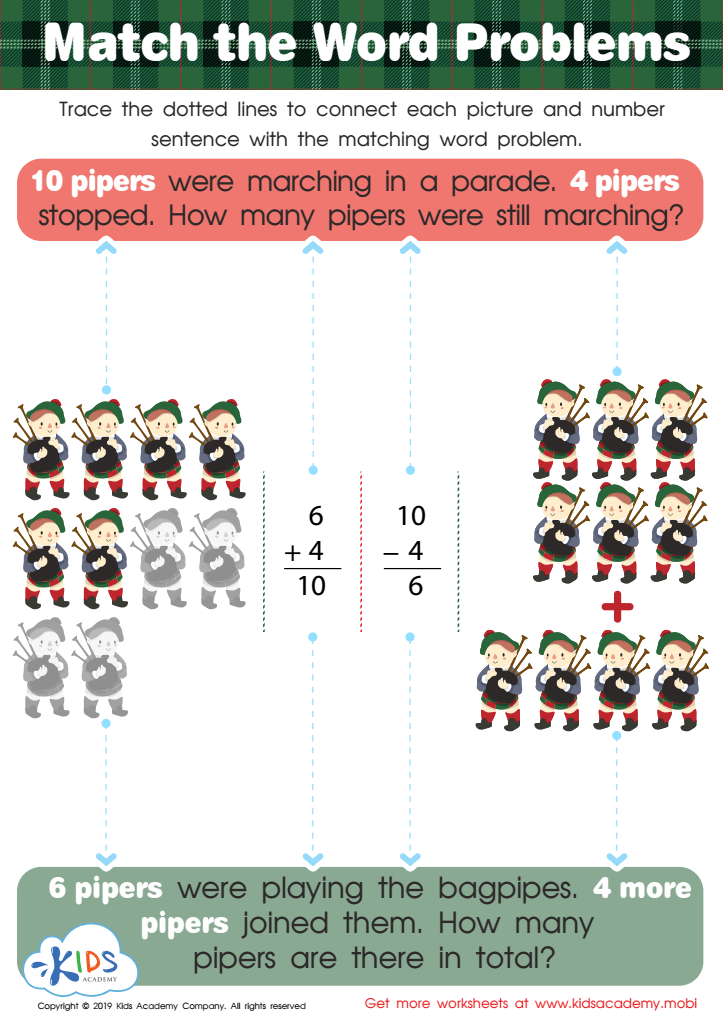
Match the Word Problems Worksheet
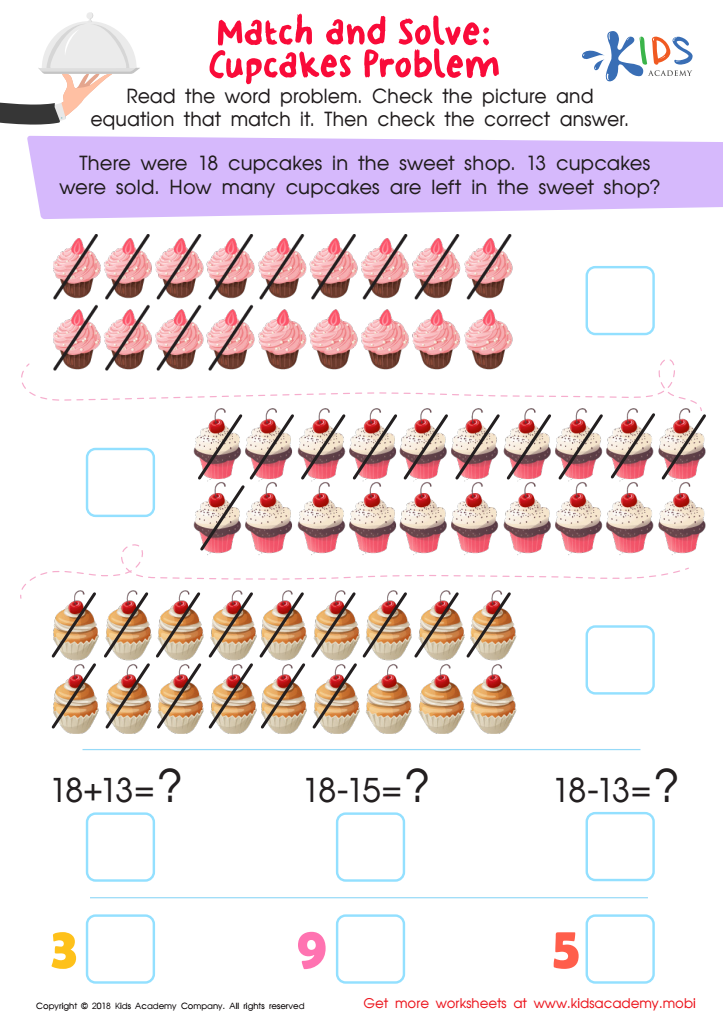
Match and Solve: Cupcakes Problem Worksheet
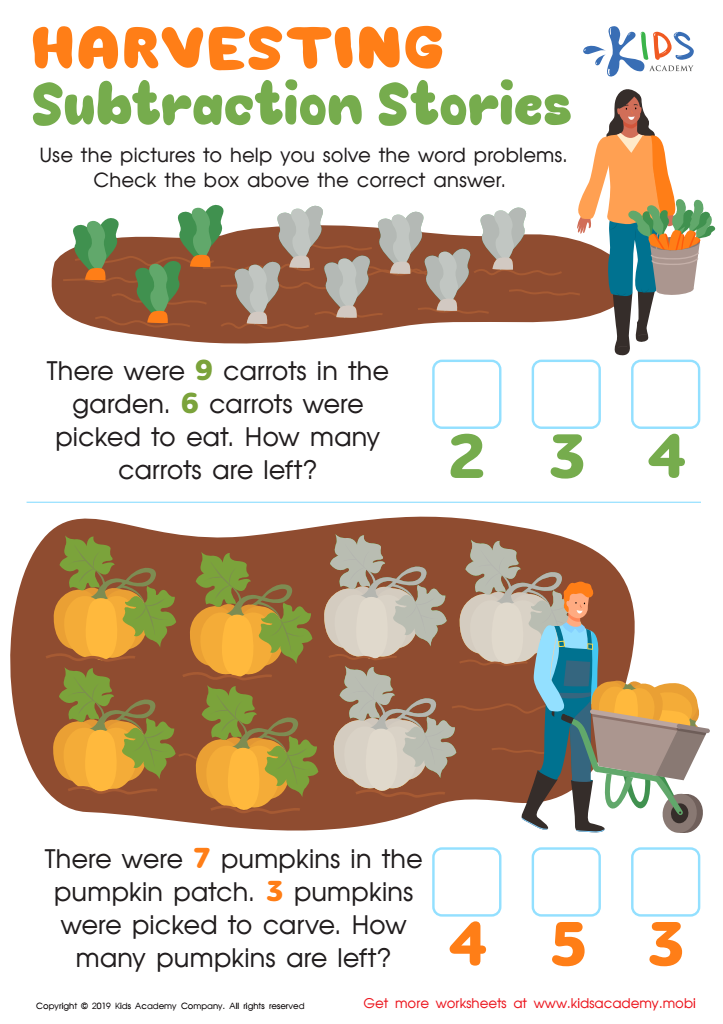
Harvesting Subtraction Stories Worksheet
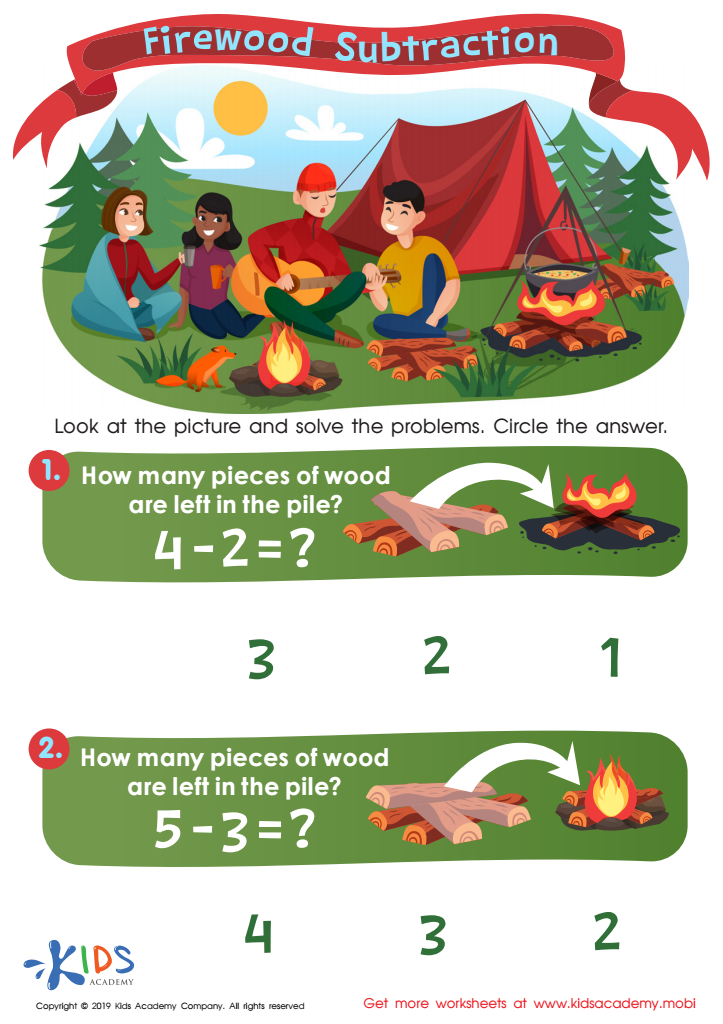
Firewood Subtraction Worksheet
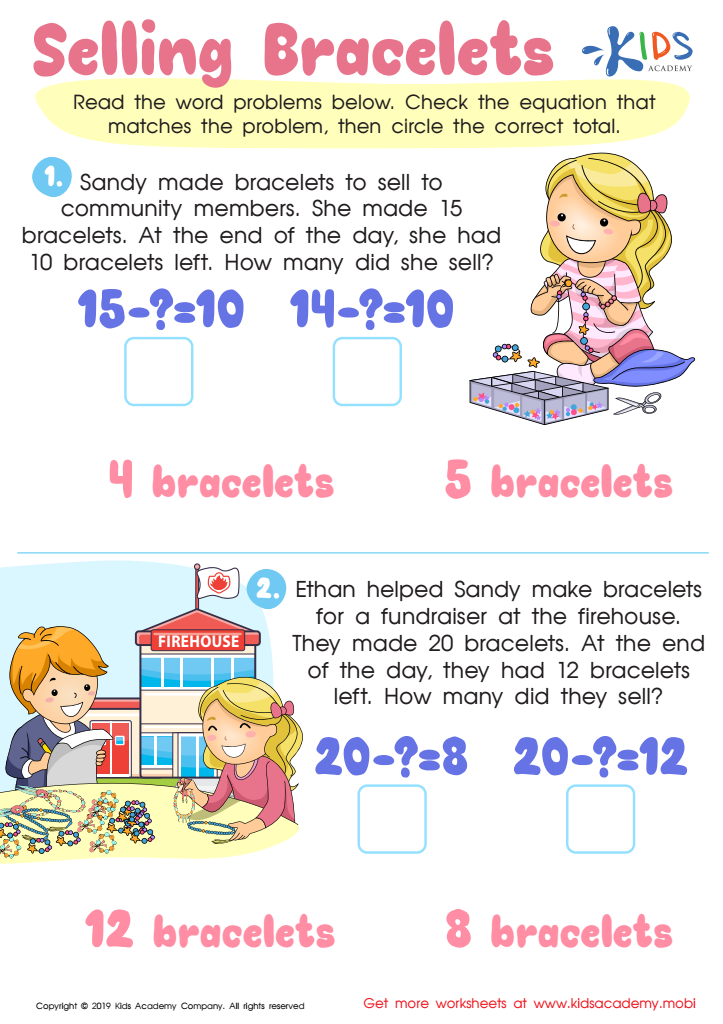
Selling the Bracelets Worksheet
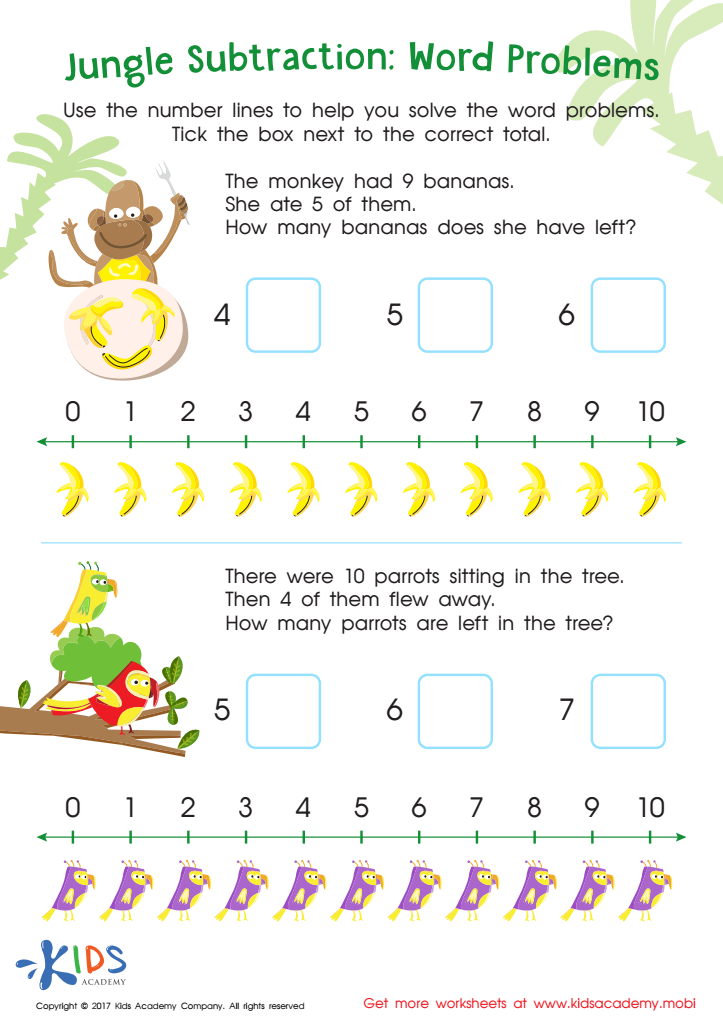
Jungle Subtraction Word Problems Substraction Worksheet








Parents and teachers play a vital role in fostering problem-solving skills in Grade 2, particularly when it comes to subtraction, because these skills are foundational to a child's overall mathematical competence. Understanding subtraction goes beyond mere calculation; it develops critical thinking, reasoning, and analytical abilities necessary for tackling more complex problems later in life.
At this stage, children are transitioning from concrete concepts to abstract thinking. Introducing them to various problem-solving methods—such as drawing diagrams, using counters, or breaking problems into smaller steps—enables them to grasp different strategies and choose what works best for them. This flexibility builds confidence and resilience, encouraging them to approach challenges without fear of failure.
Additionally, strong problem-solving skills in subtraction promote greater mathematical fluency. Children learn to identify relationships between numbers, which sets the groundwork for future academic pursuits in math and science.
By engaging in subtraction problem-solving, children gain a deeper understanding of their world, enhancing their capacity to communicate mathematical ideas and collaborate with peers. Therefore, fostering these skills should be a priority for both parents and educators, ensuring children become competent and confident learners now and in the future.