Enhancing Reading Comprehension Grade 2 Reading Worksheets
3 filtered results
-
From - To
Enhancing reading comprehension is essential for second graders as they build critical literacy skills. Our specially designed worksheets focus on improving understanding through engaging and age-appropriate content. Each activity encourages students to make connections, summarize texts, and answer questions that foster deeper analysis. With a variety of exercises that address different comprehension strategies, these worksheets are perfect for classroom or home use. They seamlessly blend fun with learning, allowing children to develop a love for reading while sharpening their analytical skills. Explore our collection to empower your child’s reading journey today!
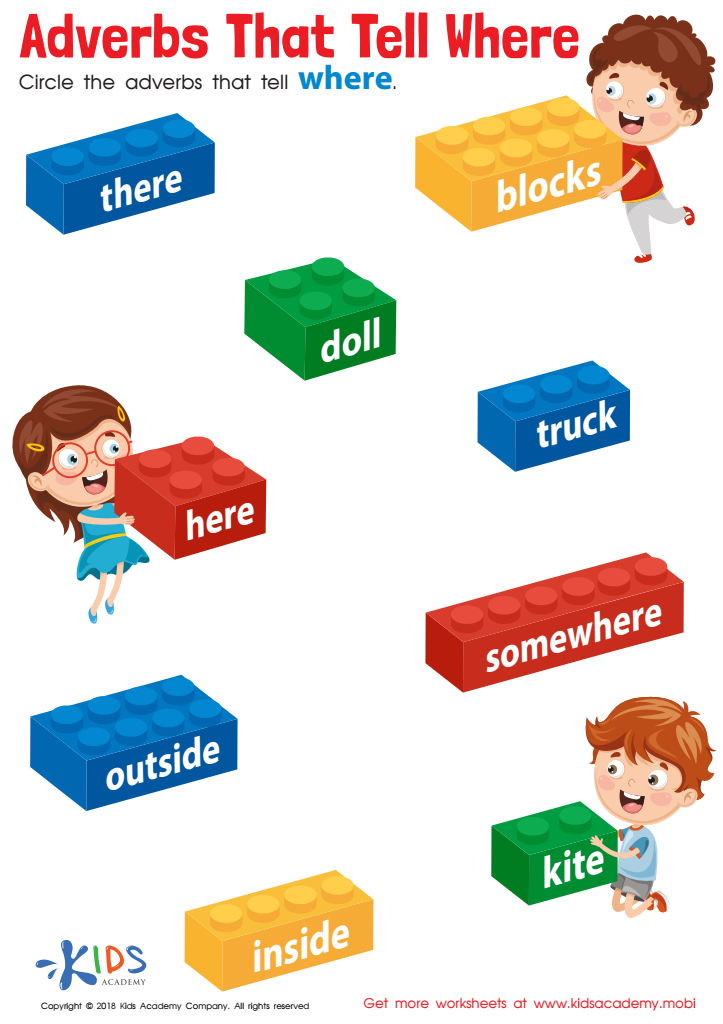
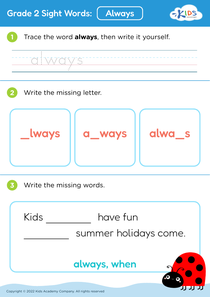
Adverbs That Tell Where Worksheet
 Assign to My Students

Author's Purpose Worksheet
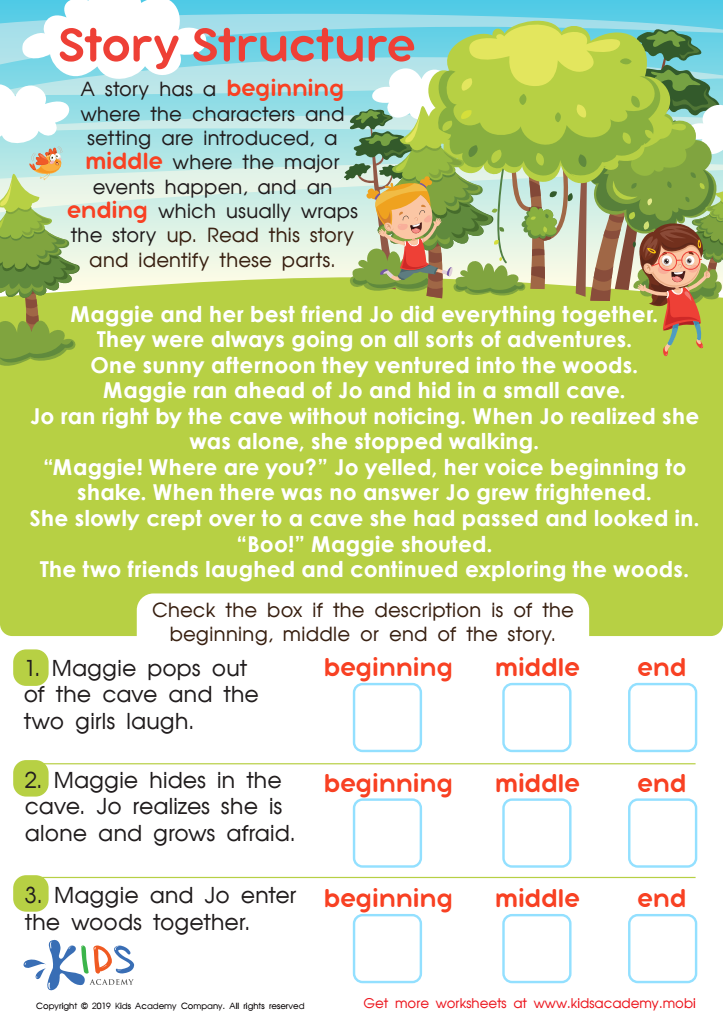
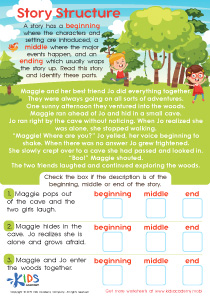
Story Structure Worksheet








Enhancing reading comprehension in Grade 2 is crucial for fostering a child's overall academic success and lifelong love of learning. At this stage, students transition from learning to read to reading to learn—establishing a foundational skill necessary for engaging with all subjects. Improved comprehension skills not only boost a child's ability to grasp stories, information, and concepts but also enhance their critical thinking, vocabulary, and ability to make connections between ideas.
Parents and teachers play a vital role in this development. By promoting strategies that enhance comprehension—such as asking open-ended questions, encouraging predictions, and summarizing stories—they can help children develop better analytical skills. A child who comprehends well in reading is likely to perform better in other subjects, notably math and science, where interpreting texts and instructions are essential.
Additionally, focusing on reading comprehension helps build a child's confidence and motivation. When children understand what they read, they are more likely to engage with texts, participate in discussions, and develop a deeper interest in literature and knowledge. Investing time and resources into reading comprehension techniques not only translates into better grades but also influences a child's social-emotional growth, laying the groundwork for success in school and beyond.