Fraction comparison Grade 2 Reading Worksheets
3 filtered results
-
From - To
Elevate your second grader's understanding of fractions with our engaging Fraction Comparison Reading Worksheets. Designed specifically for young learners, these worksheets make comparing fractions fun and accessible. Through a variety of activities, students will enhance their math and reading skills simultaneously. Each worksheet provides step-by-step instructions, colorful visuals, and relatable examples that help children grasp the concept of comparing fractions easily. Ideal for both classroom and home use, our resources encourage practice and mastery. Perfect for educators and parents alike, these Fraction Comparison Reading Worksheets will set a strong foundation for future math and reading proficiency.
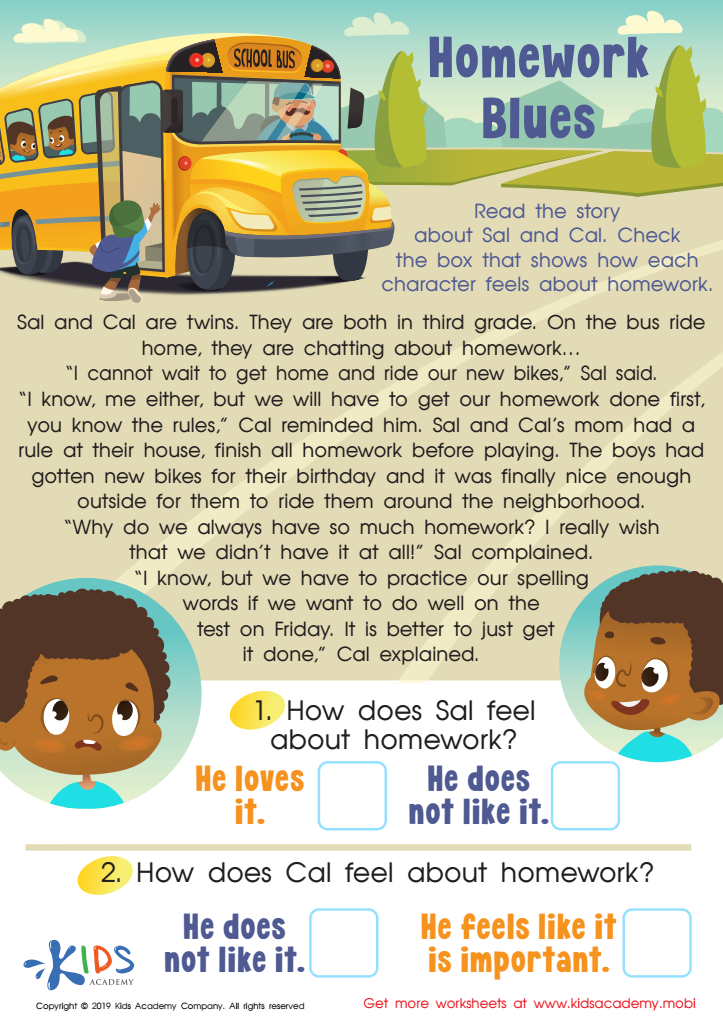
Homework Blues Worksheet
 Assign to My Students
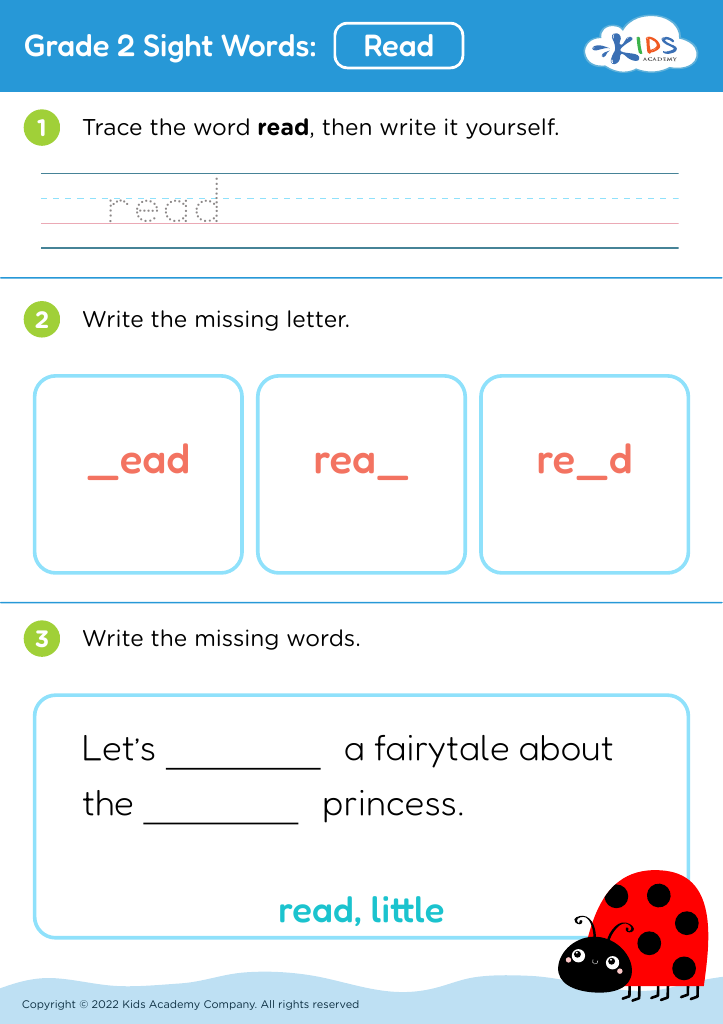
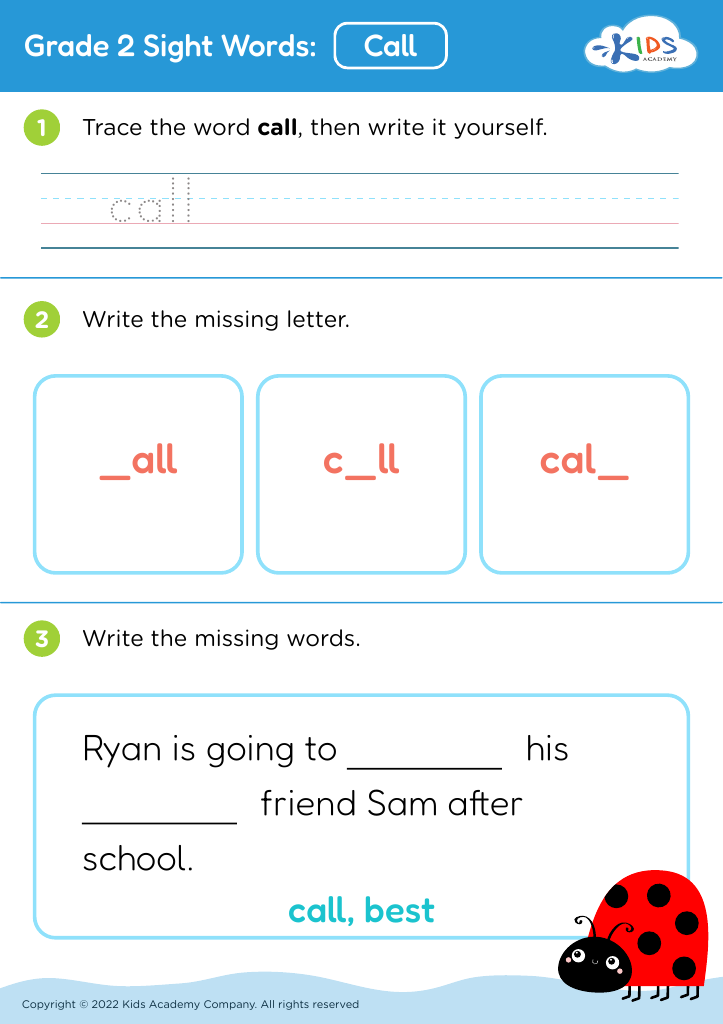






Understanding fraction comparison in Grade 2 is fundamental for several reasons. First, it lays the groundwork for future mathematics learning. Early exposure to concepts like fractions helps students develop a strong number sense, which is essential as they progress to more complex mathematical ideas. Learning to compare fractions enhances critical thinking, encouraging students to analyze and reason rather than just memorize procedures.
Parents and teachers should care because early proficiency in mathematical concepts directly influences a child’s confidence and interest in the subject. When students struggle with basic math early on, it can lead to anxiety and a negative attitude toward the subject. On the flip side, mastering these concepts early boosts self-esteem and fosters a love for math.
Moreover, comparing fractions ties into real-world applications. Whether it’s cutting a pizza, dividing a piece of cake, or sharing toys, children encounter fractions daily. Understanding fractions and their comparisons helps them make sense of these everyday situations.
Collaborative involvement from parents and teachers in the learning process supports the child's academic journey. When adults show interest and excitement about topics like fractions, it motivates children to engage more and perform better. Hence, fraction comparison isn’t just a mathematical exercise; it’s a stepping stone toward well-rounded educational development.