
Cultural awareness Governance and Civics Worksheets
3 filtered results
Difficulty Level
Grade
Age
-
From - To
Subject
Activity
Standards
Discover our engaging "Cultural Awareness Governance and Civics Worksheets," designed to foster an understanding of diverse cultures and civic responsibility among young learners. These worksheets encourage students to explore global perspectives, appreciate societal differences, and promote inclusivity. Each activity is tailored to enhance critical thinking and promote discussions around social justice, community involvement, and cultural appreciation. Perfect for classrooms, homeschooling, or supplementary learning, our resource empowers educators to instill values of respect, empathy, and awareness in students. Browse our collection today to enrich your social studies curriculum and help young minds become informed, responsible citizens of the world!
Favorites
With answer key
Interactive
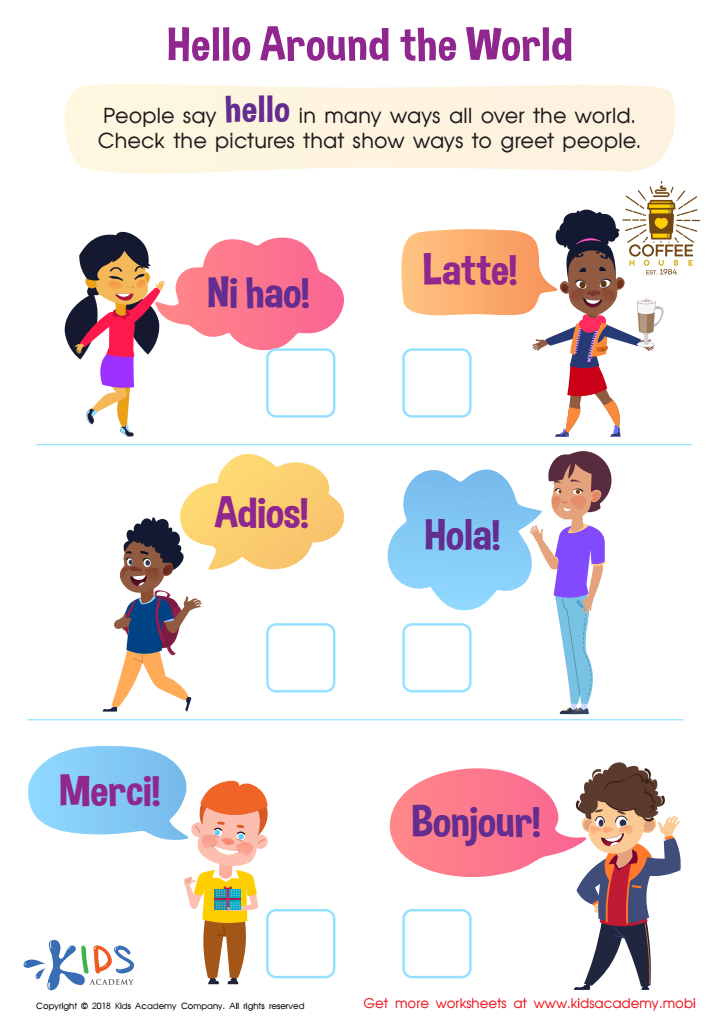
Hello Around the World Worksheet
This fun and cheery worksheet helps kids explore different cultures and how people greet each other around the world. With colorful pictures and clues, they'll check off greetings from different countries and learn more about the world.
 Assign to My Students
Hello Around the World Worksheet
Worksheet
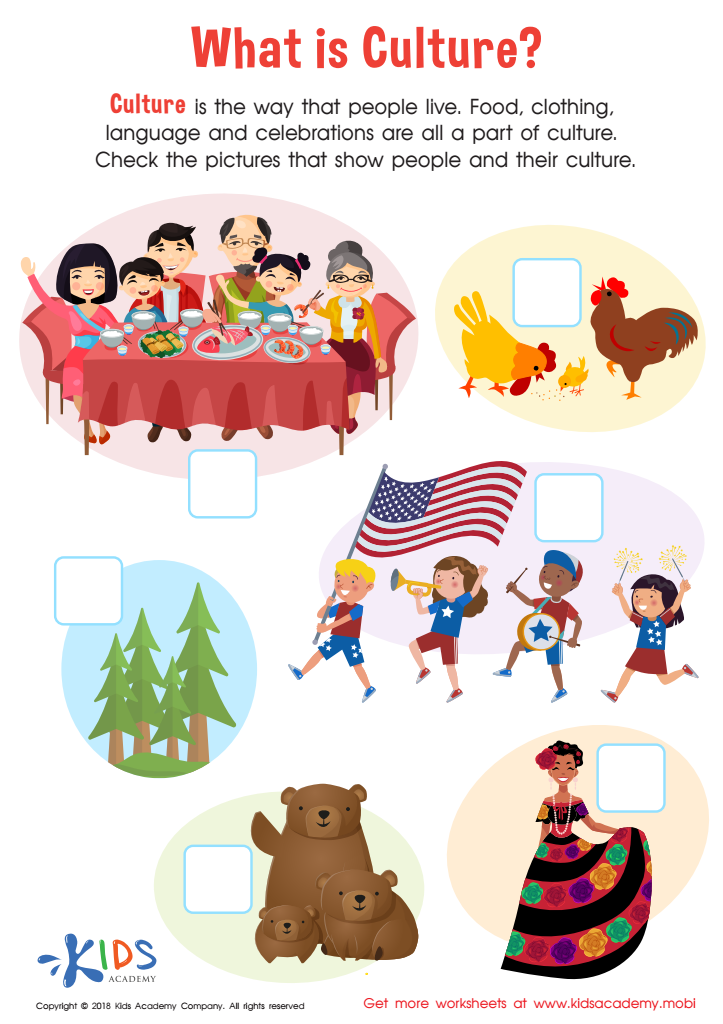
What Is Culture? Worksheet
Before beginning, talk to your kids about different cultures and how they may differ from yours. Explain that culture is the way of life and includes food, clothing, language and celebrations. Ask if they know any friends or classmates with a different culture and see if they can tell you about it. Then, help them look through this printout and check the pictures that show people and their culture.
What Is Culture? Worksheet
Worksheet
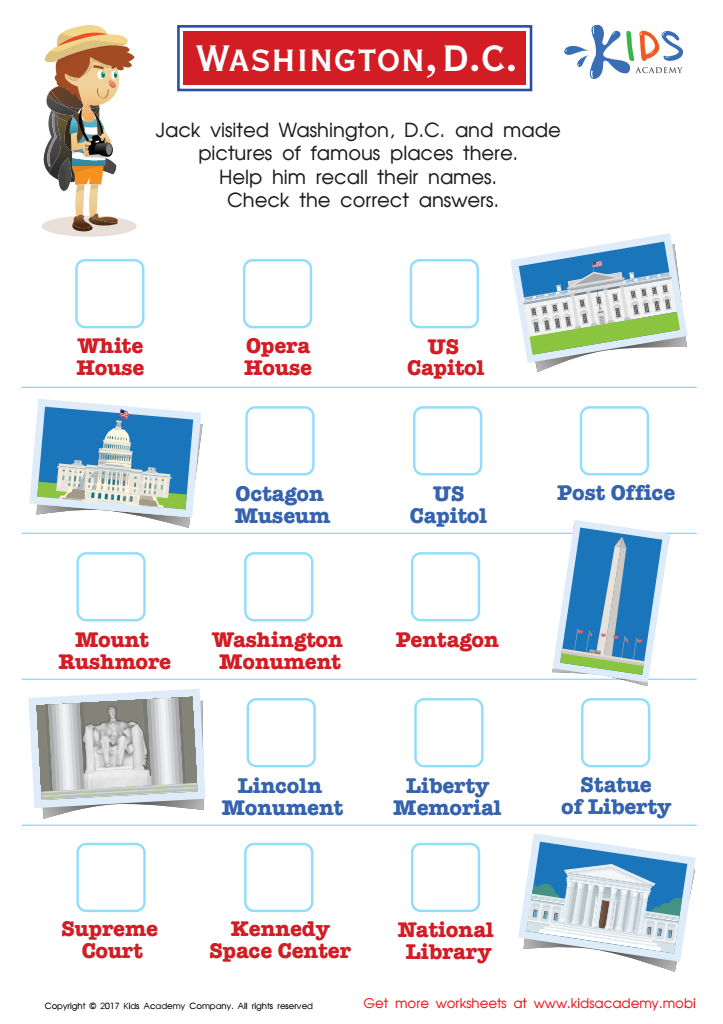
Washington D.C. Printable Worksheet
Join Jack on an adventure to explore the iconic attractions of Washington, D.C.! This printable worksheet helps kids learn about and recognize buildings and monuments that form part of the nation's history. It's a fun way to introduce children to the importance of these landmarks.
Washington D.C. Printable Worksheet
Worksheet
Join Kids Academy for Free
Who is primarily going to use this learning content?


Cultural awareness, governance, and civics are crucial topics for parents and teachers to embrace as they play a pivotal role in shaping well-rounded, informed citizens. First, cultural awareness fosters respect and understanding for diverse backgrounds, promoting inclusion and reducing prejudice. Educators and parents can instill values of empathy and respect in children, preparing them to thrive in a multicultural society.
Moreover, civics education is vital as it equips students with knowledge about their rights and responsibilities as citizens. Understanding governance and civic duties empowers young people to engage thoughtfully in community life and democratic processes. When children learn about democratic principles, they become more active and responsible members of society, contributing to informed decision-making and advocacy.
Incorporating these elements in education encourages critical thinking and promotes discussions on social issues, which are instrumental in fostering a sense of justice and equity. Furthermore, by collaborating on cultural understanding, parents and teachers can build a supportive environment where students feel valued and connected.
Ultimately, prioritizing cultural awareness, governance, and civics prepares students not just to react to the world around them, but to reshape it positively—ensuring a future of cooperative, informed, and engaged citizens.








