Analytical thinking History Worksheets
3 filtered results
Difficulty Level
Grade
Age
-
From - To
Subject
Activity
Standards
Explore our engaging "Analytical Thinking History Worksheets" designed to enhance critical thinking, problem-solving, and interpretation skills in young learners. These worksheets provide a variety of activities that encourage children to analyze historical events, understand cause-and-effect relationships, and draw connections between the past and present. Ideal for teachers and parents looking to enrich social studies curriculums, these resources promote independent thinking and foster a deeper understanding of history. Dive into fascinating age-appropriate content that helps students develop the analytical skills necessary for academic success and informed citizenship. Download and inspire future historians today!
Favorites
With answer key
Interactive
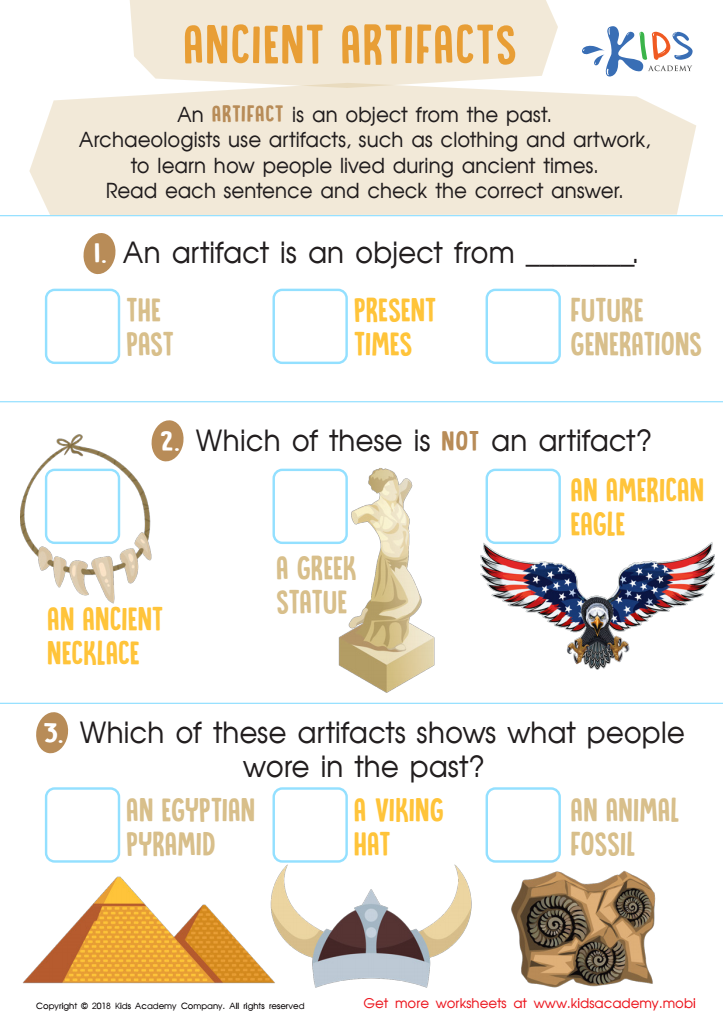
Ancient Artifacts Worksheet
This free worksheet helps kids understand ancient artifacts, from statues to necklaces to fossils. They'll read comprehension questions and select answers from multiple choice options, with pictures to help them grasp the concept. It's a great way for children to learn about artifacts and what they may look like.
 Assign to My Students
Ancient Artifacts Worksheet
Worksheet
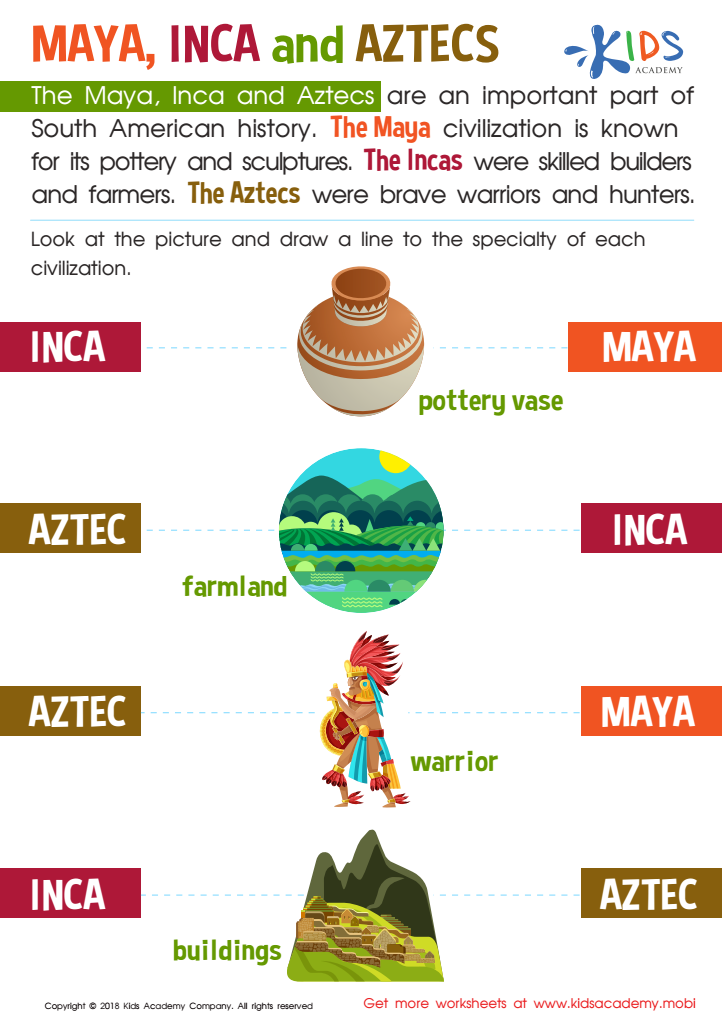
Maya, Inca and Aztecs Worksheet
This worksheet introduces your child to the thrilling histories of the Mayan, Incan and Aztec cultures, teaching them about their warriors, sculptors and farmers. With traceable lines and colorful imagery, they'll connect each culture with its correct associated picture - great for cementing concepts!
Maya, Inca and Aztecs Worksheet
Worksheet
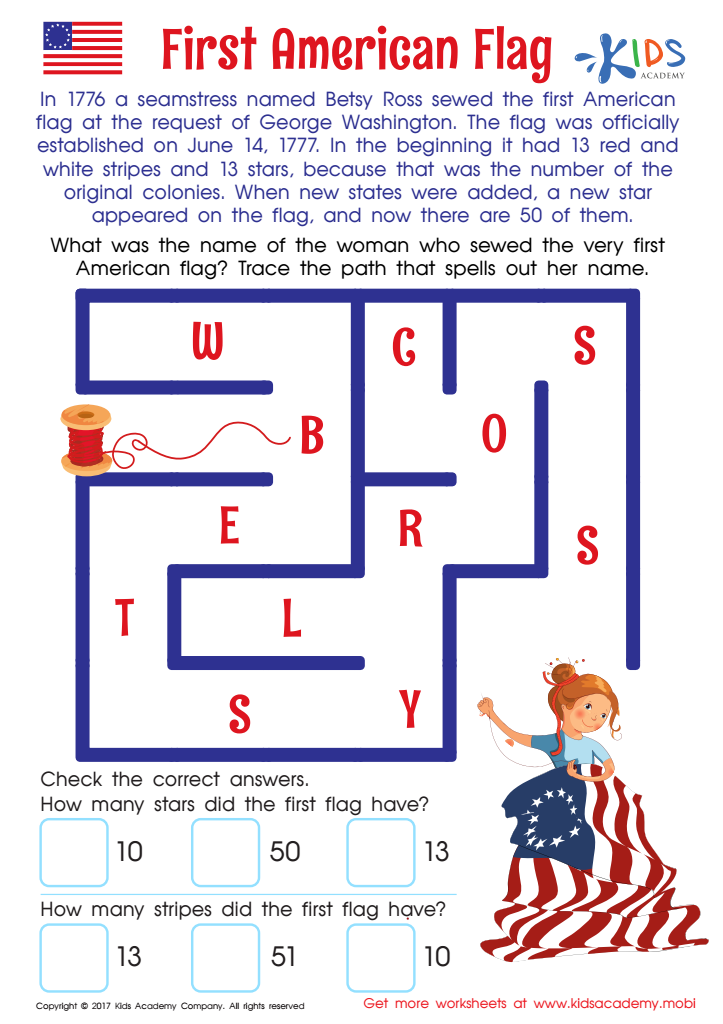
First American Flag Worksheet
Betsy Ross sewed the first American flag at the request of George Washington. This worksheet helps kids learn about this milestone in U.S. history, plus the design and origins of the flag.
First American Flag Worksheet
Worksheet
Join Kids Academy for Free
Who is primarily going to use this learning content?








Analytical thinking is a crucial skill that empowers students to assess information critically, identify patterns, and develop reasoned arguments. In the context of history, this type of thinking allows learners to not only understand past events but also analyze their causes and consequences. Parents and teachers should care about fostering analytical thinking in history for several reasons.
Firstly, it helps students draw connections between historical events and contemporary issues, enhanced by understanding context. This skill cultivates informed citizenship and encourages them to engage thoughtfully with current affairs. Secondly, analytical thinking promotes empathy by urging students to consider multiple perspectives. Understanding the motivations and experiences of various historical figures or groups helps build a diverse worldview.
Moreover, analytical thinking fosters collaboration and communication skills, as students learn to present their analyses clearly and engage in discussions. Lastly, these skills are invaluable in the workforce; employers seek individuals capable of innovative problem-solving and strategic thinking.
By actively promoting analytical thinking in history classes, parents and teachers can prepare students for success in school, make meaningful contributions to society, and navigate the complexities of an ever-changing world. Cultivating these skills lays a foundation for lifelong learning and critical engagement with the world around them.