Letter recognition Grade 3 ABC Letters Worksheets - Page 2
26 filtered results
-
From - To

Letter D Tracing Page
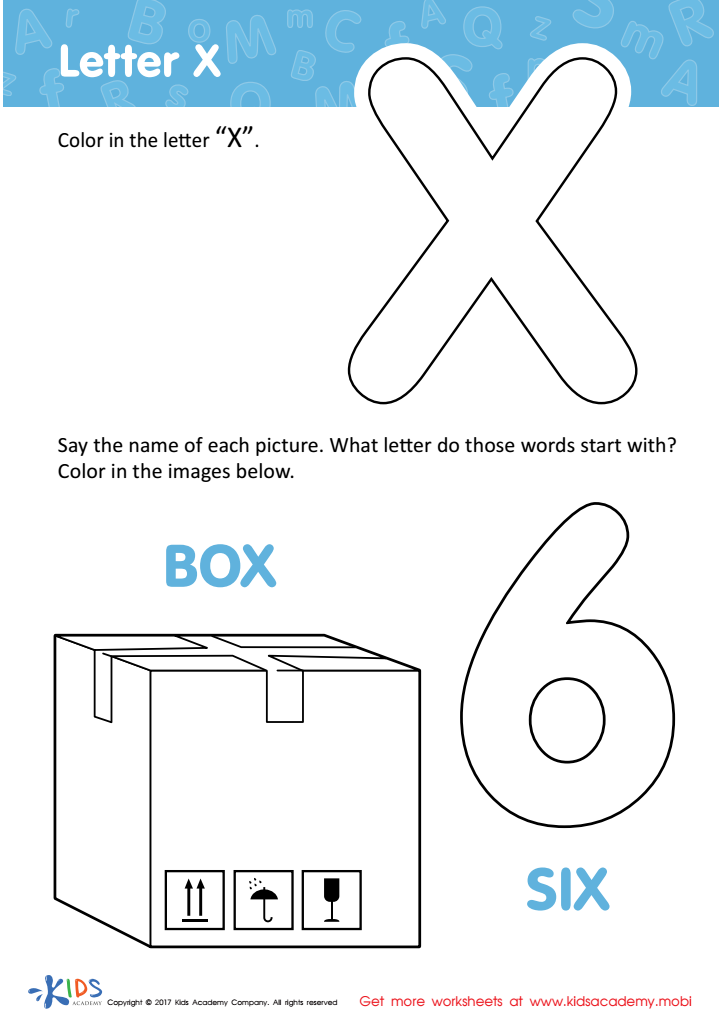
Letter X Coloring Sheet
 Assign to My Students




Letter recognition is crucial for Grade 3 students as it forms the foundation of literacy development. At this stage, children transition from learning to read to reading to learn. Recognizing letters, both uppercase and lowercase, is essential for understanding the alphabetic principle—that letters correspond to sounds, which are combined to form words.
When children confidently recognize letters, they can decode words quickly, leading to improved reading fluency. This skill enhances comprehension, allowing students to grasp more complex texts, develop vocabulary, and strengthen critical thinking abilities. Moreover, strong letter recognition supports writing skills; children can express themselves more effectively when they can confidently spell words.
For parents and teachers, fostering letter recognition can be a rewarding experience. Engaging activities, such as letter games, memory exercises, and reading together, can enhance this learning process. Supporting this skill at home and in the classroom creates a positive reading culture and lays the groundwork for future academic success.
Ultimately, strengthening letter recognition not only boosts a child's confidence but also encourages a lifelong love for reading and learning, which is essential in today's knowledge-driven world. Therefore, advocating for and actively promoting this skill is critical for every child's educational journey.