Comparison Skills Grade 3 Worksheets
4 filtered results
Difficulty Level
Grade
Age
-
From - To
Subject
Activity
Standards
Enhance your third grader's critical thinking with our engaging Comparison Skills Grade 3 Worksheets! These educational resources help students develop their ability to compare and contrast different concepts, objects, and ideas effectively. Our worksheets are designed to align with third-grade learning standards and encourage young learners to think analytically. With fun activities, like Venn diagrams and charts, students will practice identifying similarities and differences while honing their visual and organizational skills. Perfect for both classroom and homework use, our printable worksheets provide a valuable tool for reinforcing comparison skills in a dynamic and interactive way. Start your child’s learning journey today!
Favorites
With answer key
Interactive
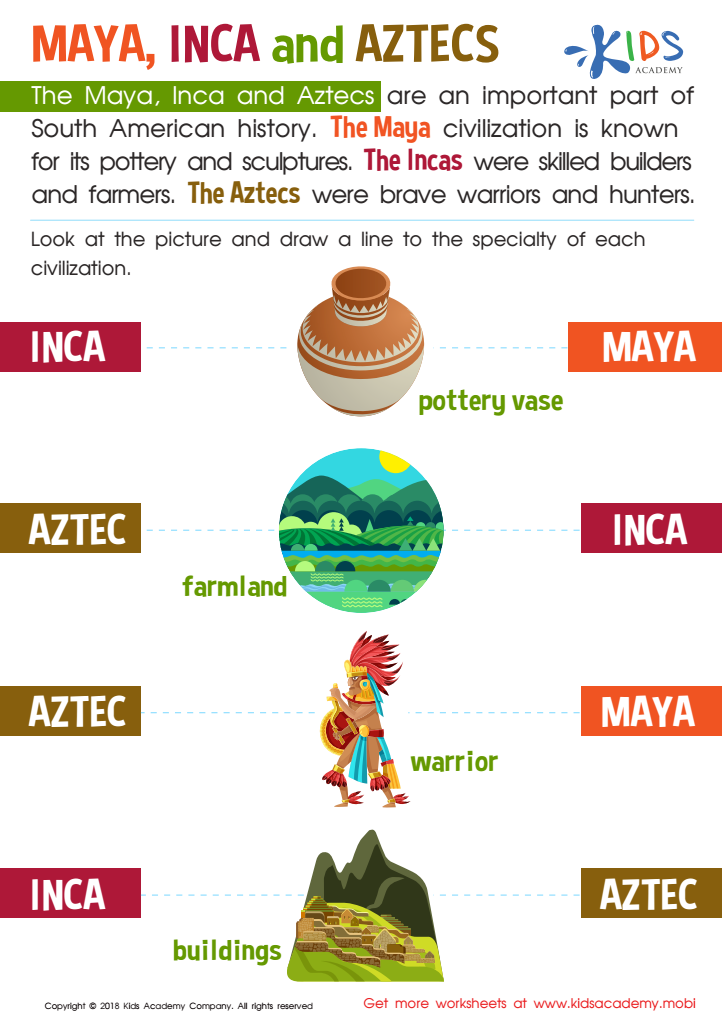
Maya, Inca and Aztecs Worksheet
This worksheet introduces your child to the thrilling histories of the Mayan, Incan and Aztec cultures, teaching them about their warriors, sculptors and farmers. With traceable lines and colorful imagery, they'll connect each culture with its correct associated picture - great for cementing concepts!
 Assign to My Students
Maya, Inca and Aztecs Worksheet
Worksheet
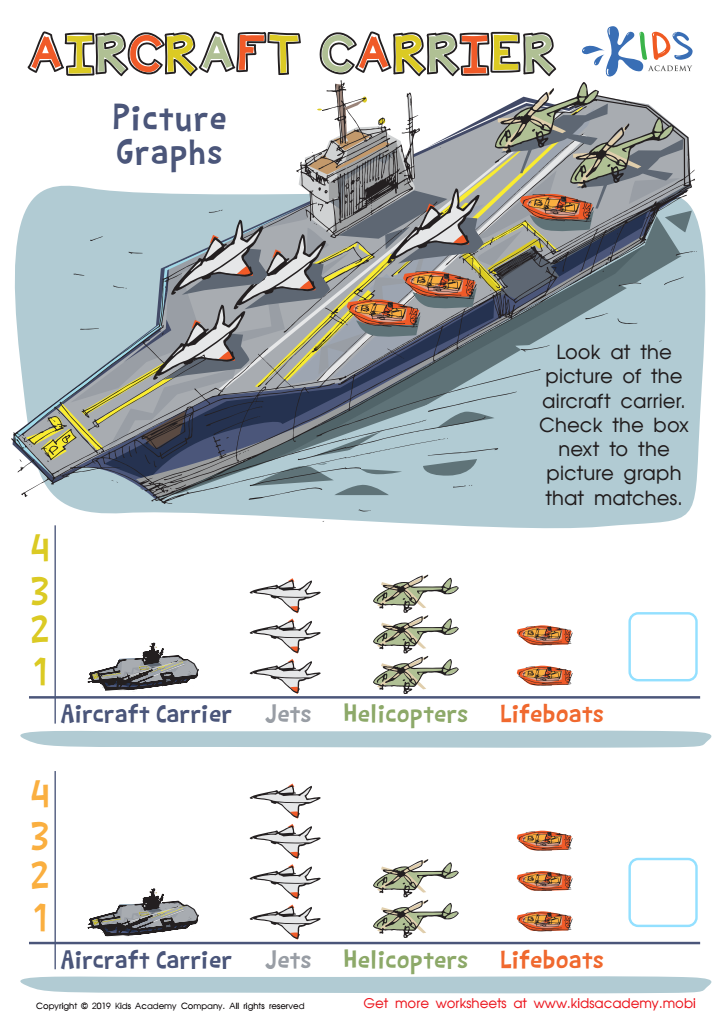
Aircraft Carrier Picture Graphs Worksheet
Kids love learning about jets and boats with this awesome worksheet! It's a great way to engage them as they work on picture graphs. Representing numerical values with pictures, this free PDF requires them to choose which picture graph and representation best match the carrier in the picture. It's also great practice for visual discrimination!
Aircraft Carrier Picture Graphs Worksheet
Worksheet
Join Kids Academy for Free
Who is primarily going to use this learning content?






Comparison skills are essential for grade 3 students as they play a vital role in developing critical thinking and analytical abilities. At this age, children are starting to make sense of the world around them, and the ability to compare and contrast helps them understand relationships between different concepts, objects, or ideas. This skill not only supports academic success but also equips children with practical skills they will utilize throughout their lives.
When students compare, they learn to identify similarities and differences, which is crucial for effective problem-solving. For instance, when analyzing characters in a story or various mathematical concepts, students grasp deeper meanings and make connections between different subjects. Additionally, fostering comparison skills encourages children to form their opinions and make informed decisions, enhancing their confidence.
Moreover, comparison skills lay the foundation for higher-order thinking needed in later grades. By focusing on these abilities in grade 3, parents and teachers can help students develop stronger reasoning skills, recognize patterns, and understand complex ideas in both academic and social contexts. Ultimately, nurturing comparison skills in the early years promotes holistic development and prepares children for more advanced learning in the future.