Learning about ecosystems Grade 3 Worksheets
3 filtered results
-
From - To
Discover a world of knowledge with our Grade 3 Learning about Ecosystems worksheets designed by Kids Academy! Perfectly tailored for third graders, these engaging resources cover vital concepts such as producers, consumers, food chains, and habitats. Boost your child's understanding of how living organisms interact within their environments through fun and interactive activities. Our printable worksheets make learning simple and enjoyable, encouraging curiosity and fostering a love for science. Ideal for supplementing classroom education or for homeschooling parents, these ecosystem worksheets empower students to explore and understand the natural world around them. Start their educational adventure today!
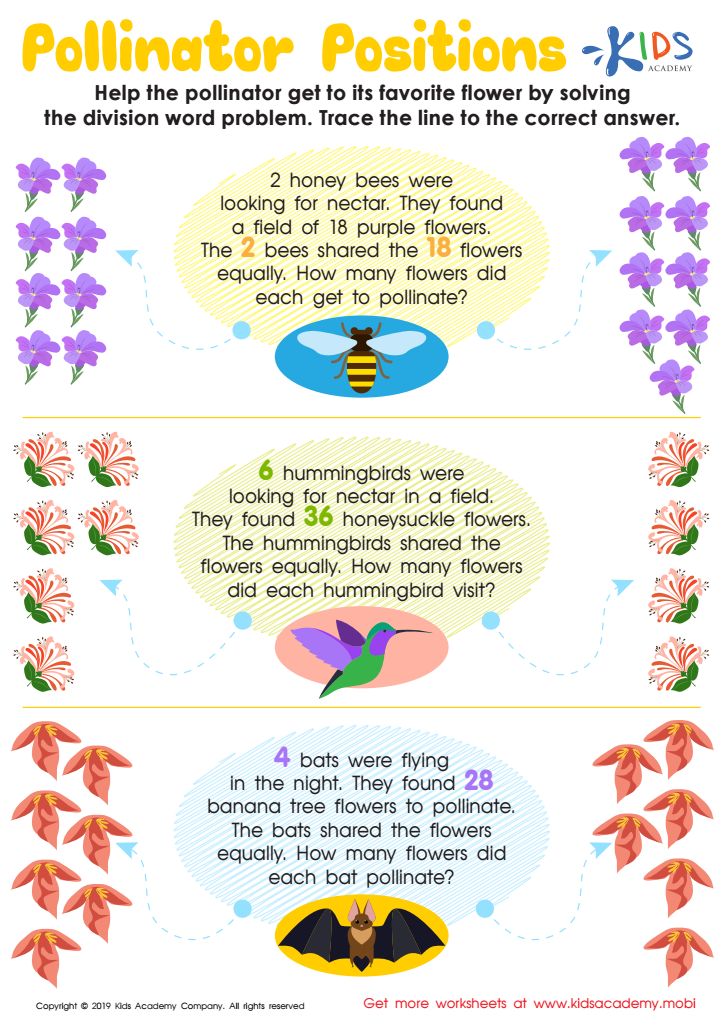
Pollinator Positions Worksheet
 Assign to My Students
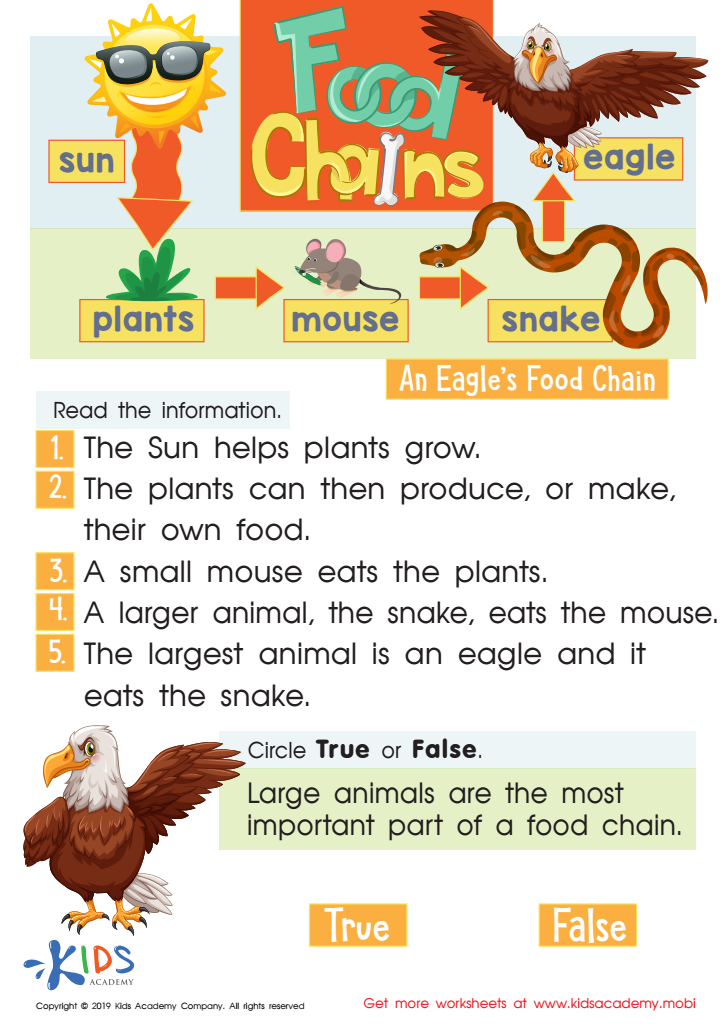
Food Chains Worksheet
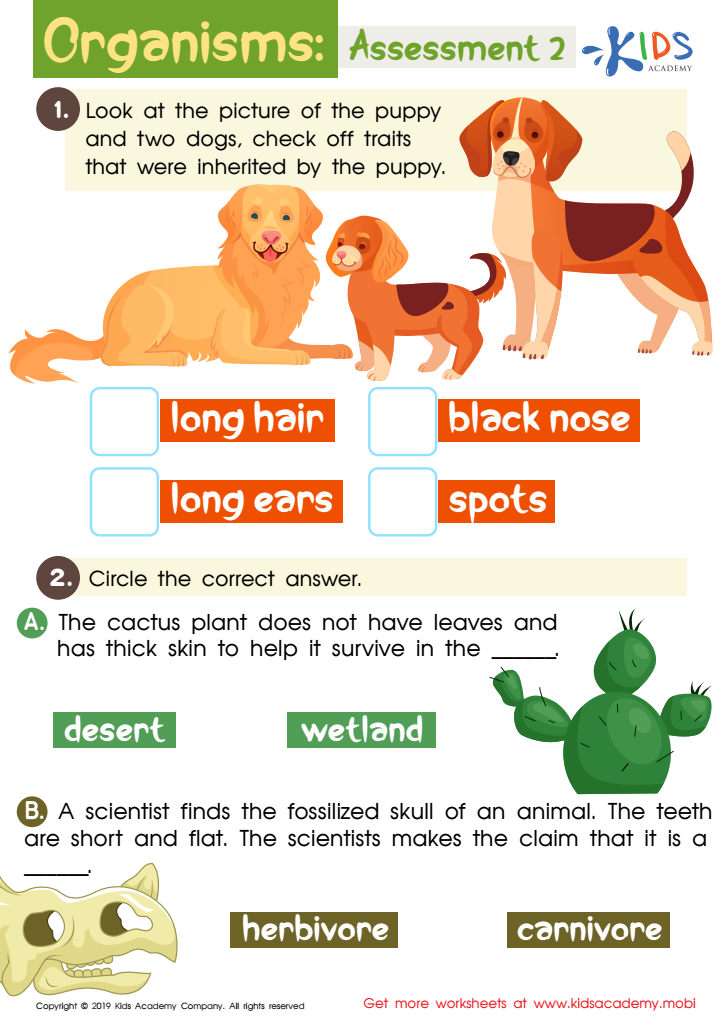
Organisms: Assessment 2 Worksheet








Parents and teachers should care deeply about teaching third graders about ecosystems because it lays the foundation for environmental stewardship and scientific literacy. At this young age, children are building their understanding of the world around them. Learning about ecosystems helps them appreciate the complex interdependence between living organisms and their habitats. This knowledge is crucial for fostering a sense of responsibility towards the environment, promoting sustainable practices from a young age.
Moreover, studying ecosystems aligns with key educational standards and curricula that emphasize critical thinking, problem solving, and inquiry-based learning. Through hands-on activities, observations, and projects, students learn to ask questions, collect data, and interpret results, which are essential scientific skills.
In addition, understanding ecosystems can enhance a child's empathy as they begin to see how human actions impact the environment and other living beings. This holistic education approach supports their emotional and ethical development, enabling them to become more compassionate and conscientious individuals.
Finally, integrating ecosystem education into the curriculum encourages interdisciplinary learning, combining aspects of science, geography, math, and even art. This makes learning engaging and meaningful, attracting diverse learners and giving them multiple ways to connect with and understand the content. Overall, teaching ecosystems in grade three sparks curiosity and embedded values that benefit society as a whole.