Logical thinking development Grade 3 Worksheets
10 filtered results
Difficulty Level
Grade
Age
-
From - To
Subject
Activity
Standards
Enhance your third grader's logical thinking skills with our engaging worksheets designed specifically for Grade 3 students! Our collection features a variety of activities that promote critical thinking, problem-solving, and analytical reasoning through fun exercises. Each worksheet encourages kids to identify patterns, make inferences, and classify objects, making learning both enjoyable and impactful. Ideal for classroom or home use, these worksheets facilitate interactive learning moments that foster intellectual growth. Download now to inspire creativity and build a strong foundation in logical reasoning for your third grader. Help your child become a confident thinker with our easy-to-use, comprehensive resources!
Favorites
With answer key
Interactive
Voting Worksheet
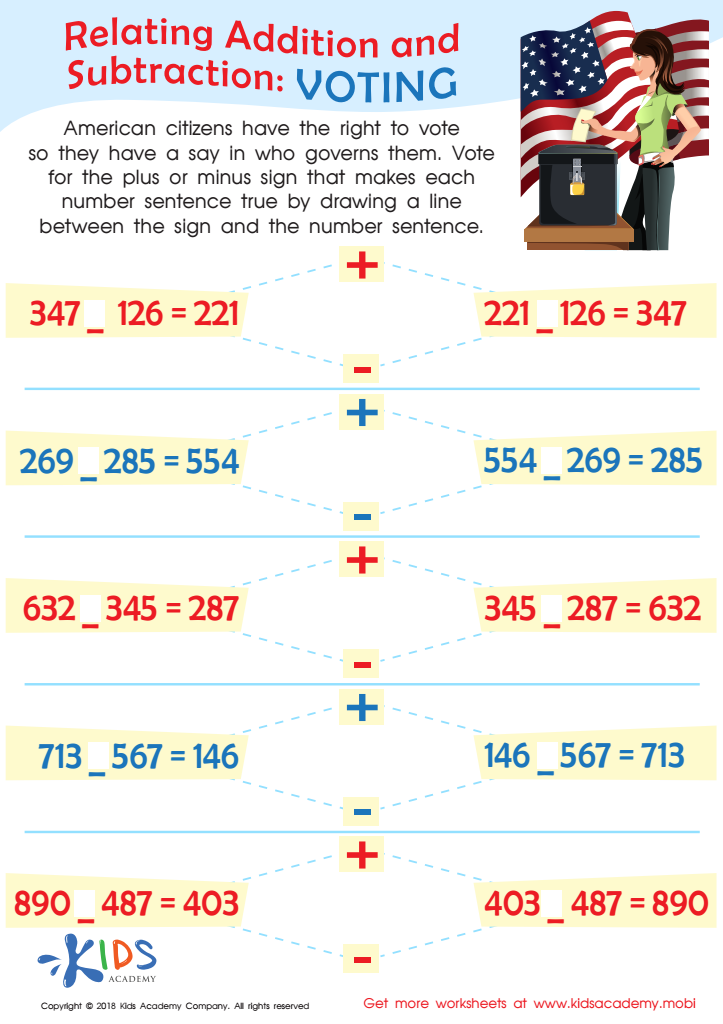
This worksheet combines Social Studies and Math, teaching kids the democratic concept of voting. Guide learners to observe the problem, and decide if it needs a plus or minus. They "vote" for the correct answer by drawing a line from the problem to the correct operation symbol. Tally up the votes to check the answers!
 Assign to My Students
Voting Worksheet
Worksheet
Tricky Problems Worksheet: Part 2
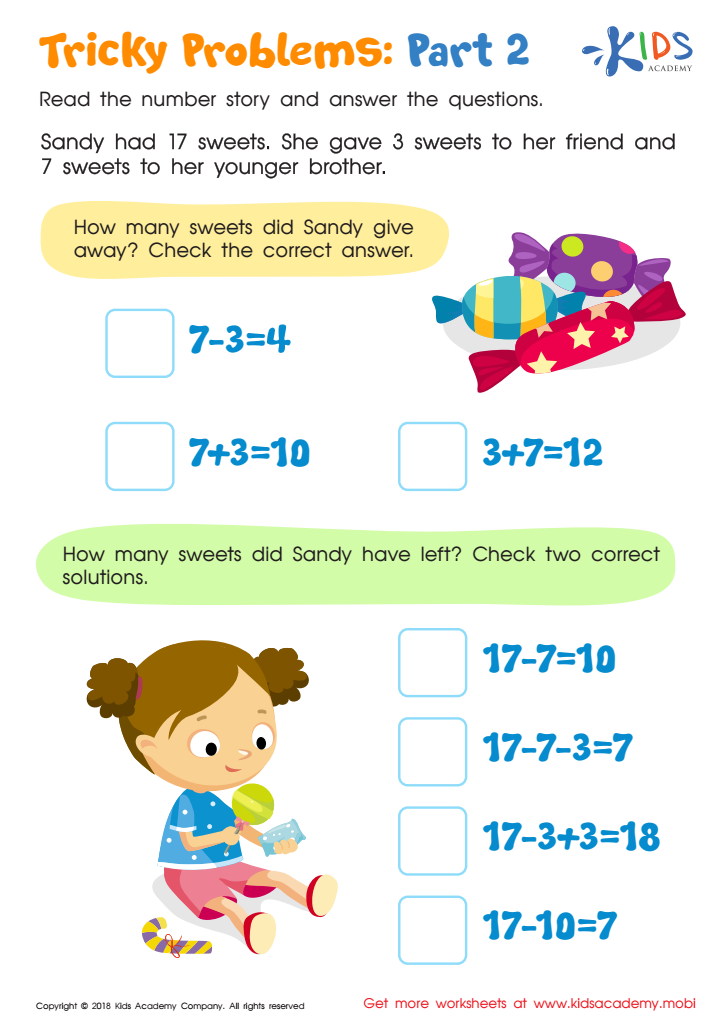
Help your little math learner visualize number stories with this engaging worksheet. They'll connect pictures to the story and use math facts to find the sums. After that, they'll be able to identify the correct number sentences to match. Let them practice and get better at problem solving!
Tricky Problems Worksheet: Part 2
Worksheet
Match the Word Problems Worksheet
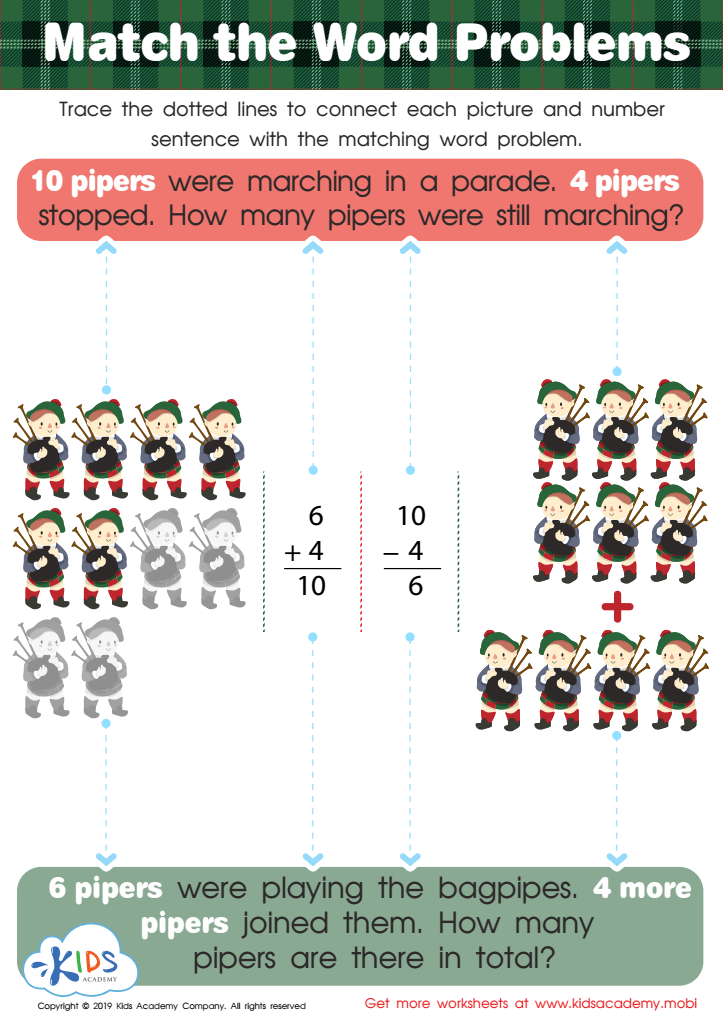
Read this word problem to your kids: Help them understand how it can be translated into a number problem. Trace the dotted lines to see how each picture and number sentence match the problem. With this worksheet, you can show your kids how easy it is to transform a word problem into a number problem.
Match the Word Problems Worksheet
Worksheet
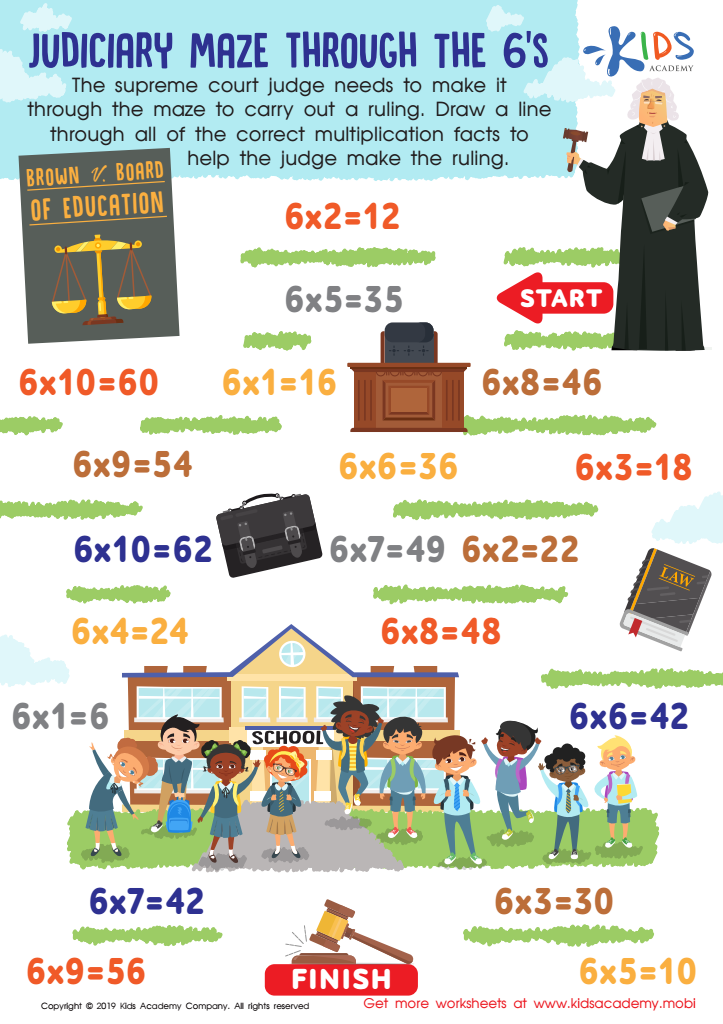
Judiciary Maze Through The 6’s Worksheet
Multiplication can be complicated for kids, with lots of numbers and a seemingly endless multiplication table. Get them interested with a fun worksheet! Have them draw a line through all the correct multiplication facts to help the judge make it through the maze and carry out a ruling.
Judiciary Maze Through The 6’s Worksheet
Worksheet
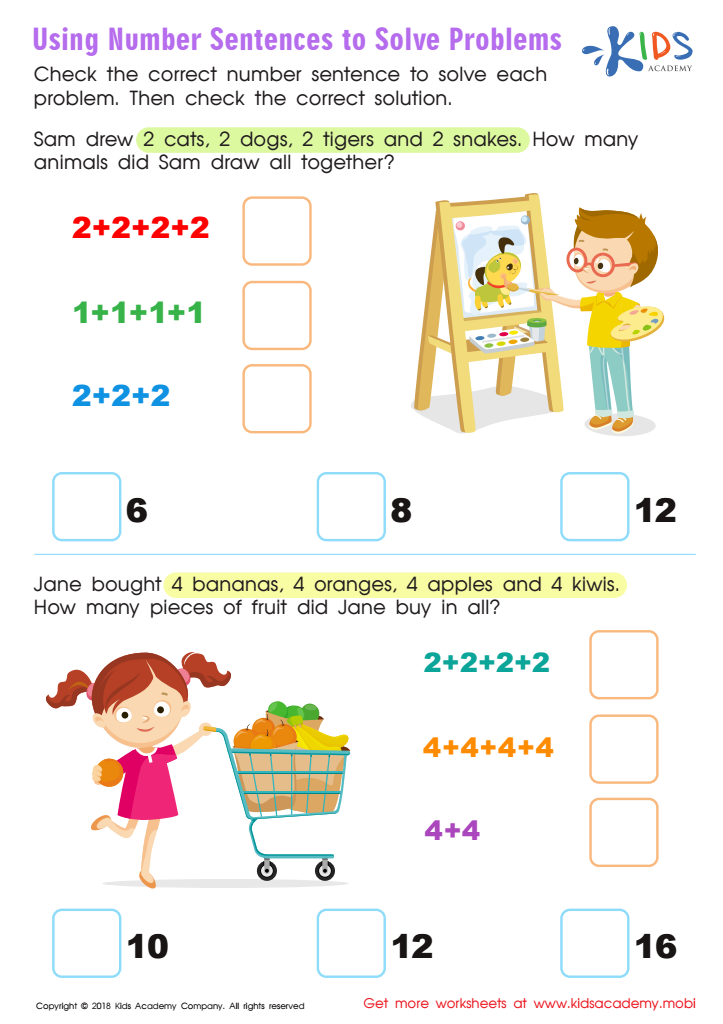
Using Number Sentences to Solve Problems Worksheet
Solving math problems requires an efficient strategy. Picture representation can help young mathematicians with basic addition problems, especially when it involves repeated addends. As they gain confidence, they'll be able to apply their number sentence solving abilities to more complex equations.
Using Number Sentences to Solve Problems Worksheet
Worksheet
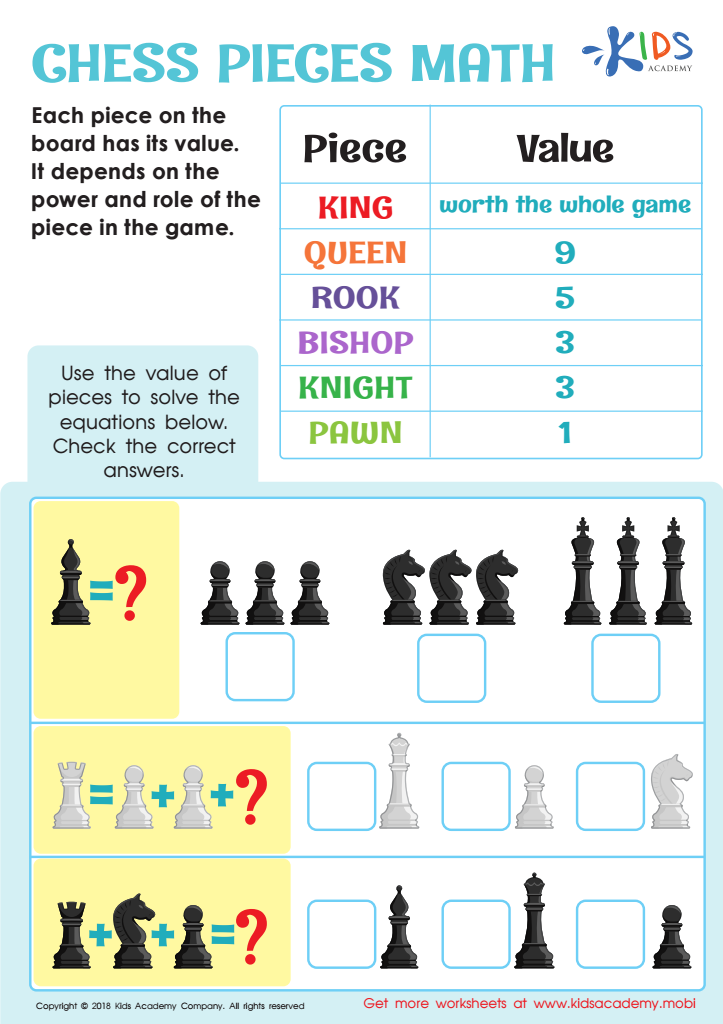
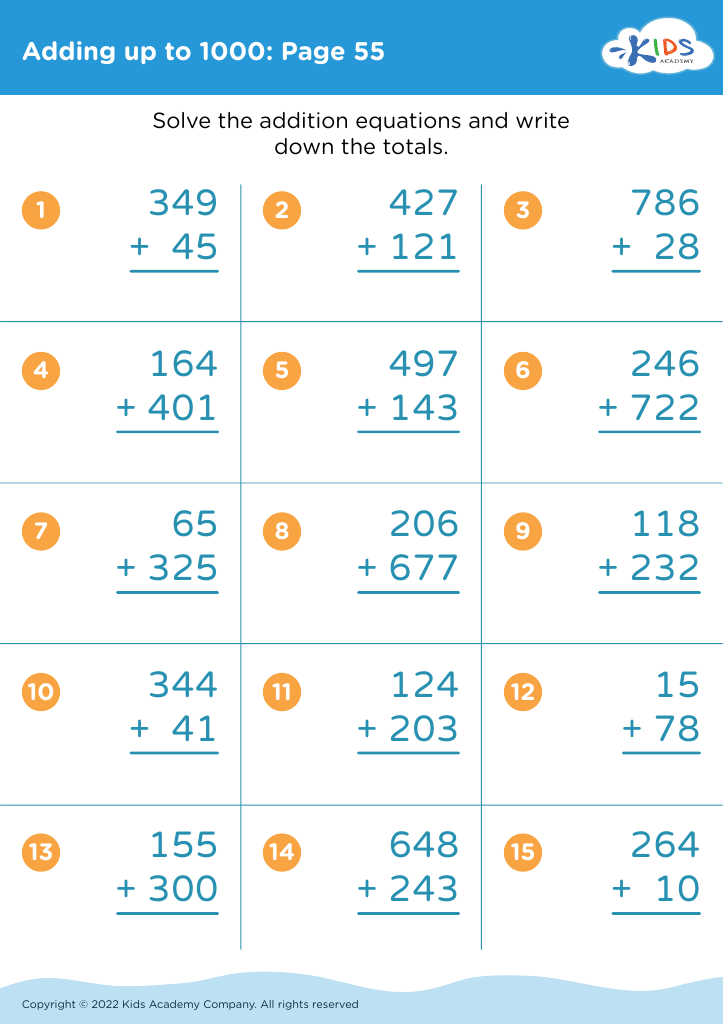
Chess Pieces Math Worksheet
Chess involves math! Each piece has its own value, from the king (worth the entire game) to the queen (9 points), varying according to their power and role. In the worksheet, your child must use these values to solve the equations at the bottom.
Chess Pieces Math Worksheet
Worksheet
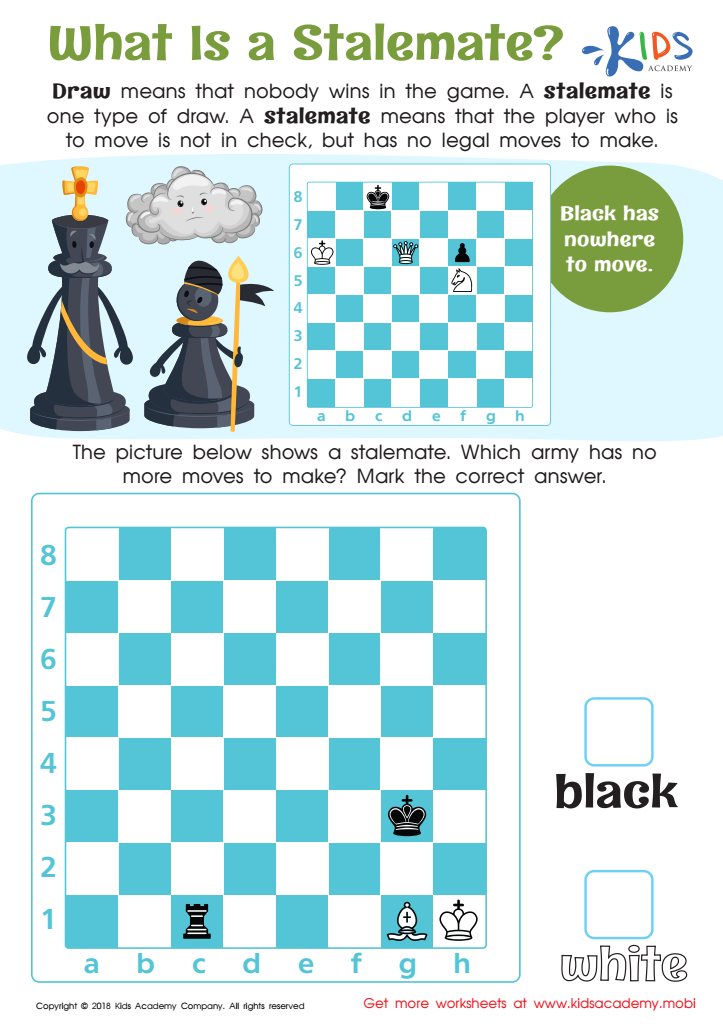
What Is a Stalemate? Worksheet
Chess is an ideal way to develop logic, strategizing, problem-solving and more! Even kids can learn it. With this worksheet, children can learn about draws and stalemates. Sample boards will help them decide which team, black or white, is at a stalemate.
What Is a Stalemate? Worksheet
Worksheet
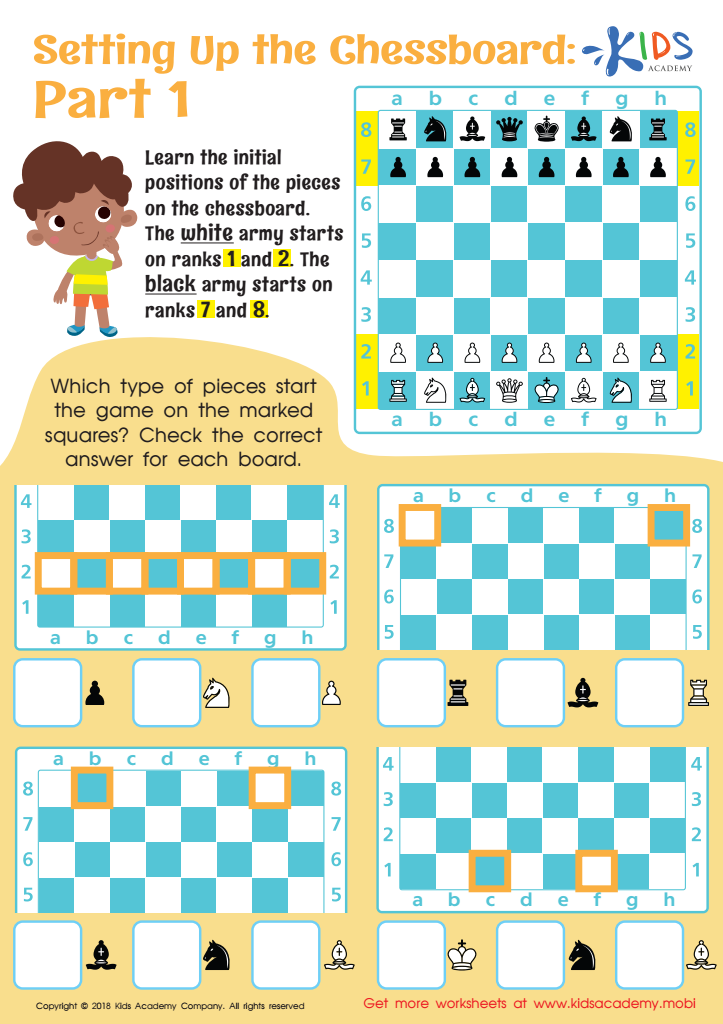
Setting up the Chessboard: Part 1 Worksheet
Teach your child the starting positions of the black and white armies on the chessboard. Black pieces are placed on ranks 7 and 8, and white pieces on ranks 1 and 2. Have them check the highlighted boxes on the chessboard to make sure they know the correct pieces to start with.
Setting up the Chessboard: Part 1 Worksheet
Worksheet
Join Kids Academy for Free
Who is primarily going to use this learning content?







Parents and teachers should prioritize the development of logical thinking skills in Grade 3 because these skills form the foundation for academic success and everyday problem-solving. At this age, children begin to think more abstractly and can engage in more structured reasoning, making it a crucial time to nurture these abilities.
Logical thinking helps children understand concepts, formulate arguments, and connect ideas across various subjects, such as math, science, and language arts. Developing these skills aids in the comprehension of complex problems, promoting analytical and strategic thinking. This is particularly important as students encounter more advanced curriculum topics, enabling them to excel academically.
Moreover, logical thinking fosters creativity and independence. Children who can think logically are better equipped to tackle challenges both in school and in life. They learn to evaluate situations, make informed decisions, and grope solutions, ensuring they are resilient and resourceful individuals.
Lastly, supporting logical thinking development encourages collaboration and communication skills. Kids learn to explain their thought processes and understand differing perspectives, essential for working effectively in groups. By investing in logical thinking now, parents and teachers are setting the stage for lifelong learning and success.