Shape Recognition Grade 3 Worksheets
24 filtered results
-
From - To
Enhance your Grade 3 students' geometric skills with our engaging Shape Recognition Worksheets! Designed to help young learners identify and understand various shapes, these worksheets feature fun activities that make learning interactive and exciting. From tracing and coloring shapes to solving puzzles, each worksheet aims to reinforce shape recognition through visuals and hands-on practice. Ideal for classroom use or at-home learning, our resources cater to diverse learning styles. Encourage your students to explore the world of shapes and develop their critical thinking skills with these comprehensive and user-friendly worksheets. Perfect for educators looking to enrich their math curriculum!
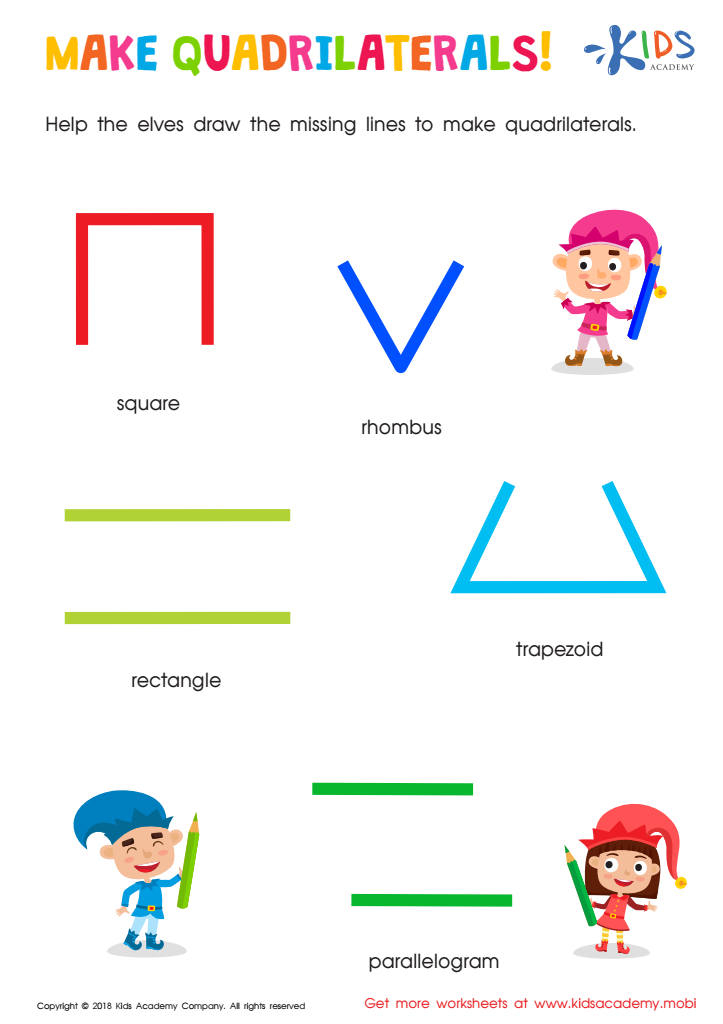
Make Quadrilaterals Worksheet
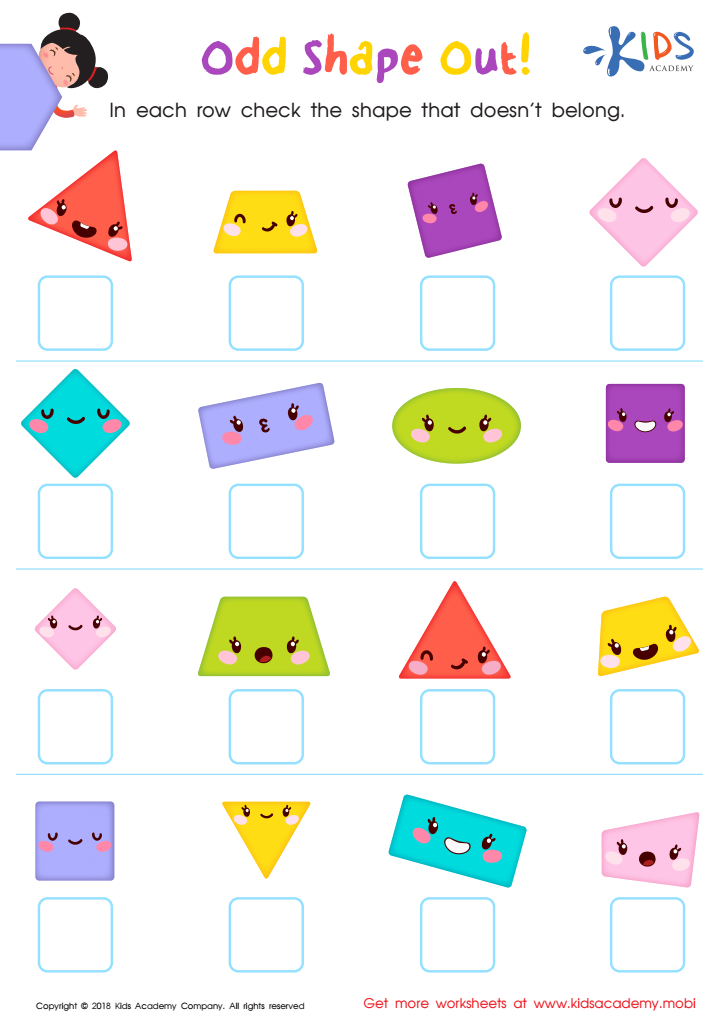
Odd Shape Out Worksheet for Grade 3
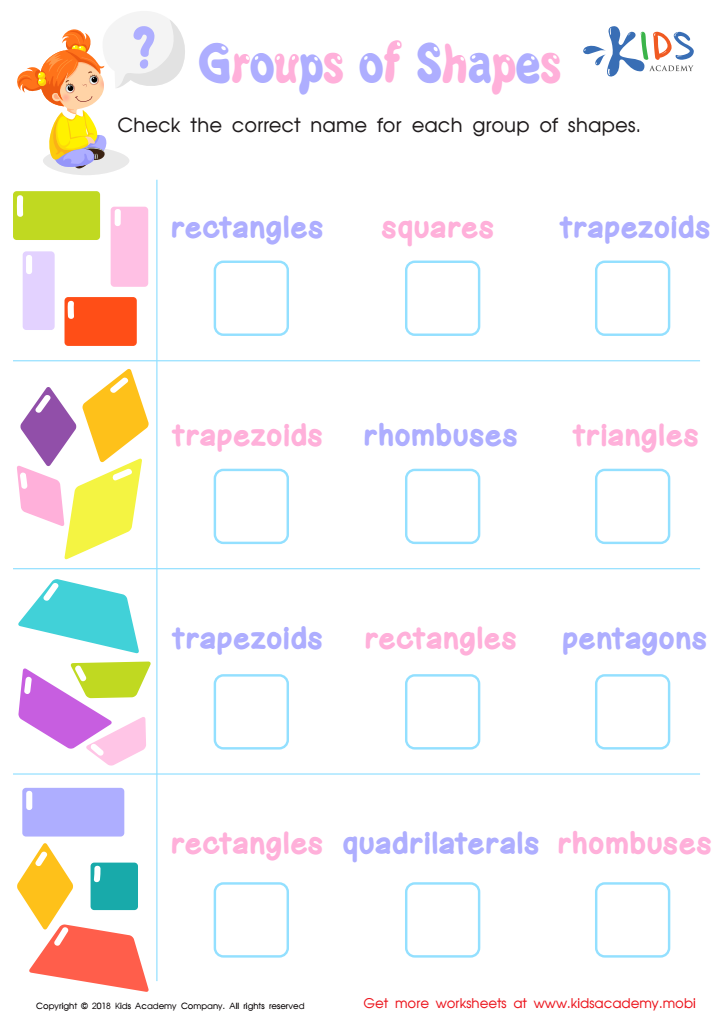
Groups of Shapes Worksheet
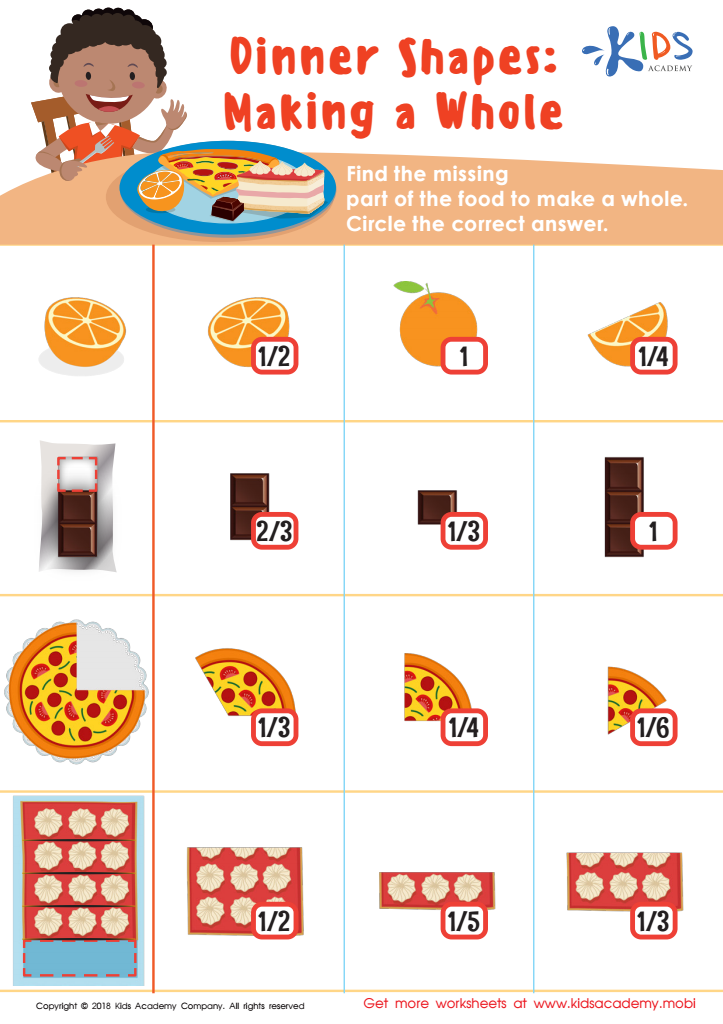
Dinner Shapes: Making a Whole Worksheet
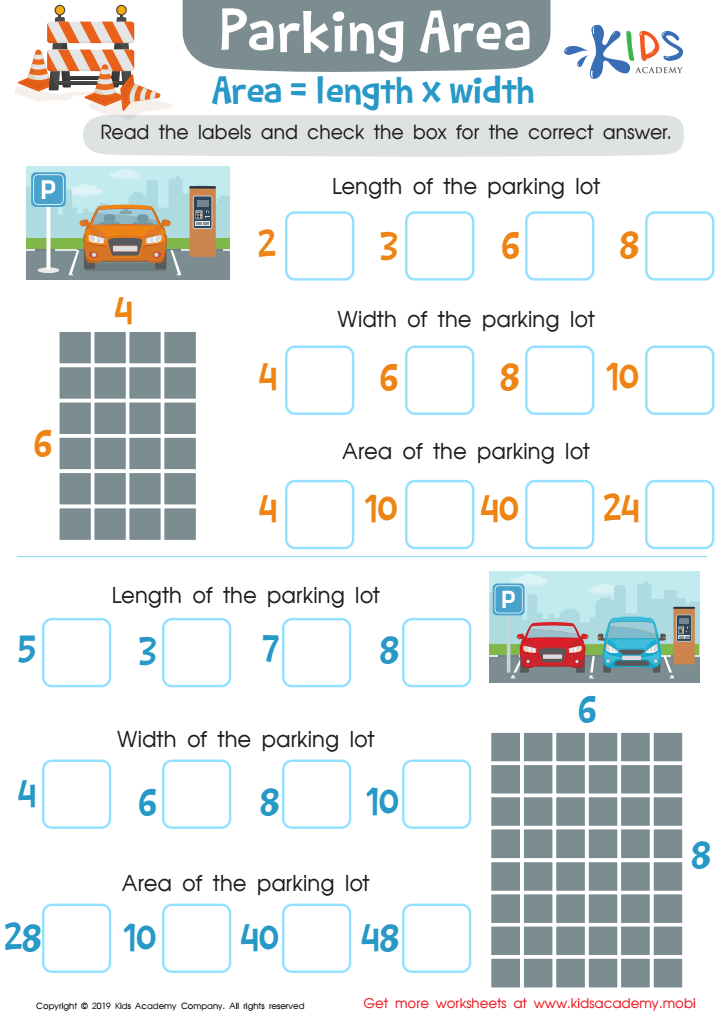
Parking Area Worksheet
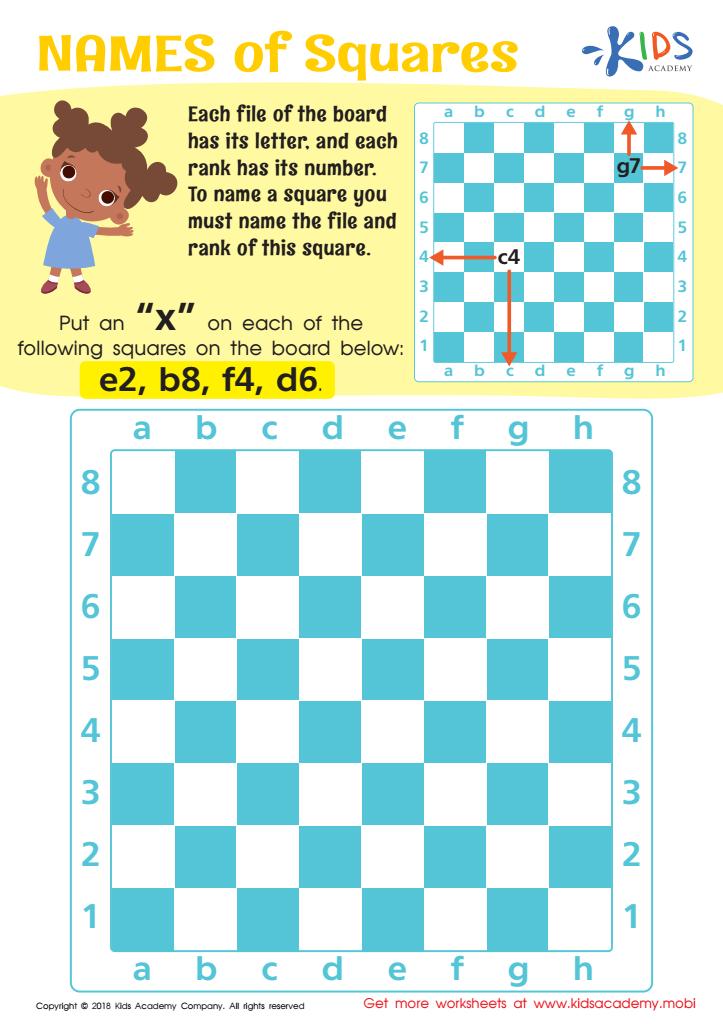
Names of Squares Worksheet
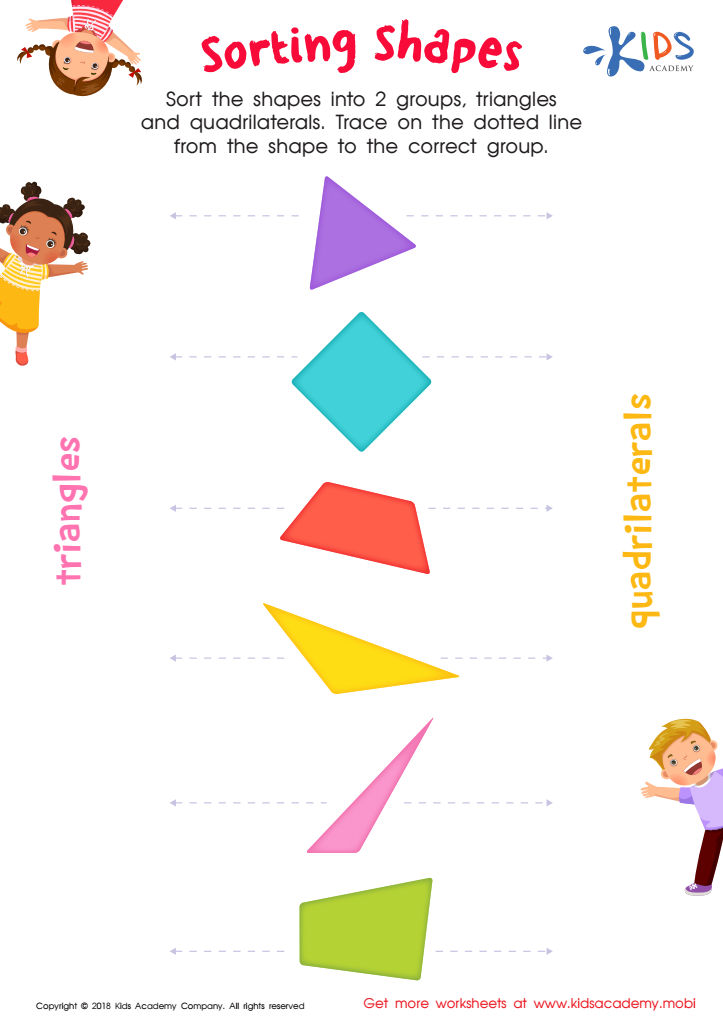
Sorting Shapes Worksheet
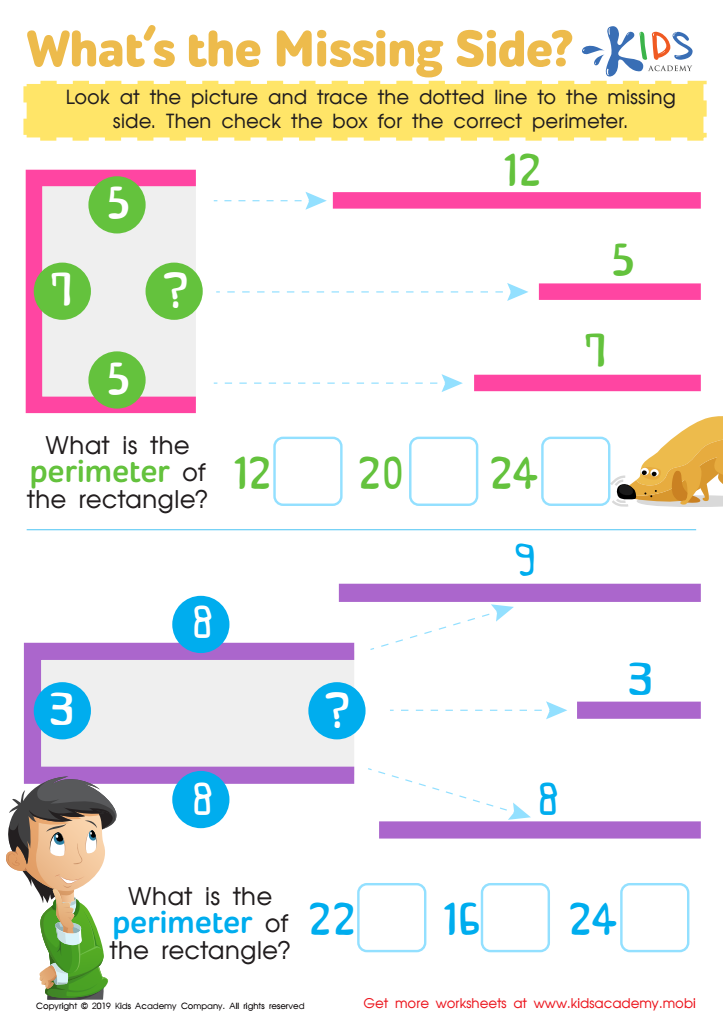
What's the Missing Side Worksheet
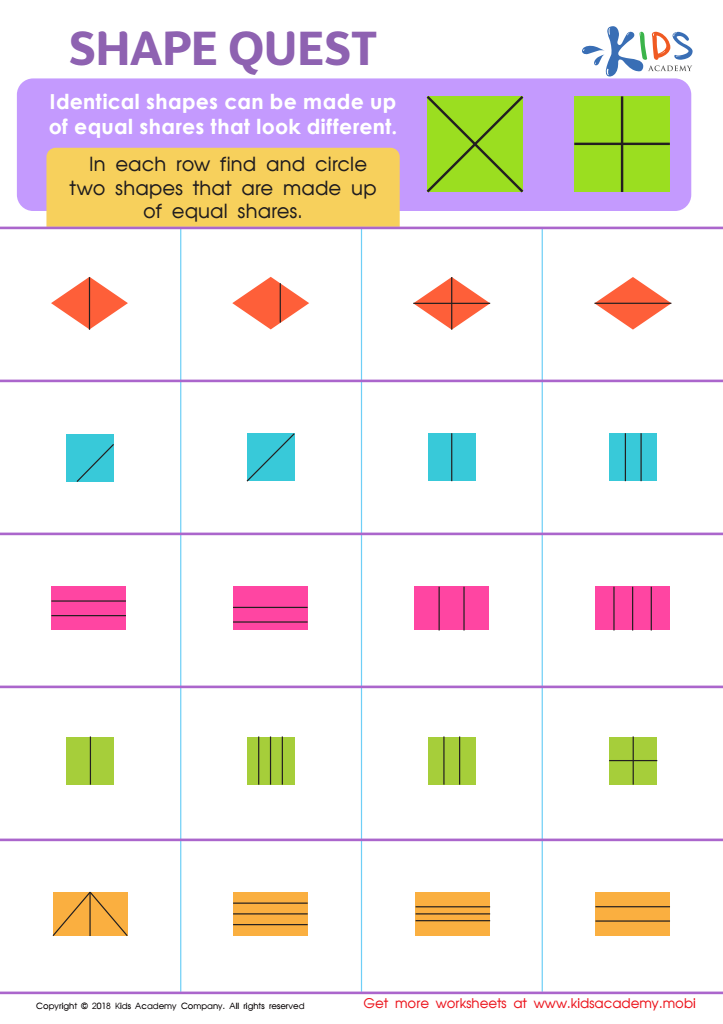
Shape Quest Worksheet
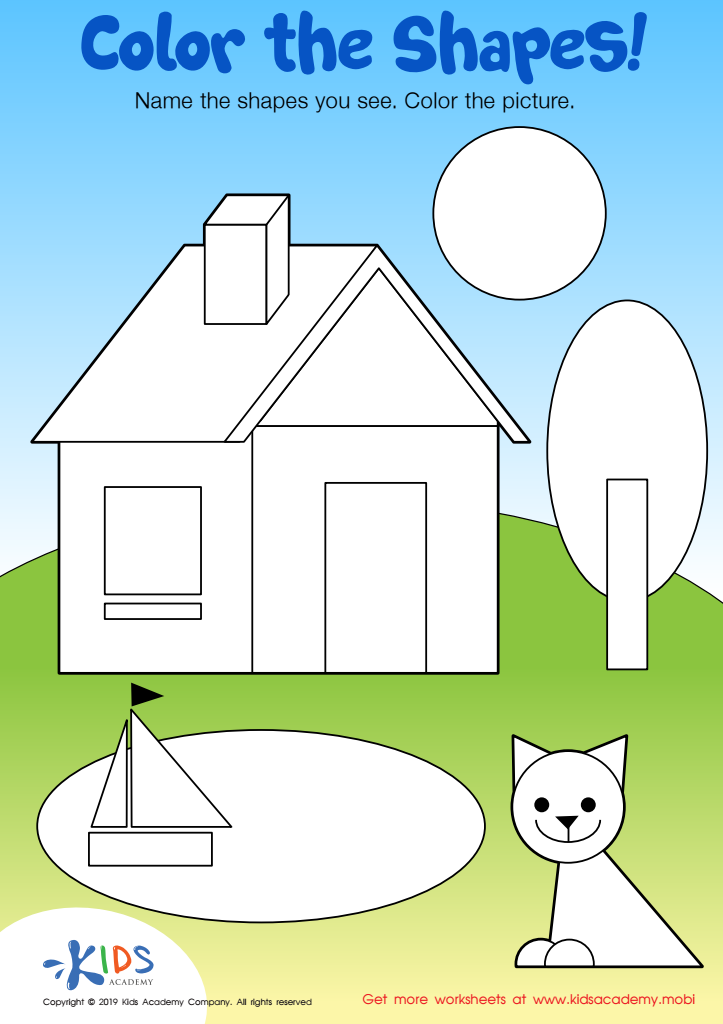
Color the Shapes Worksheet
 Assign to My Students
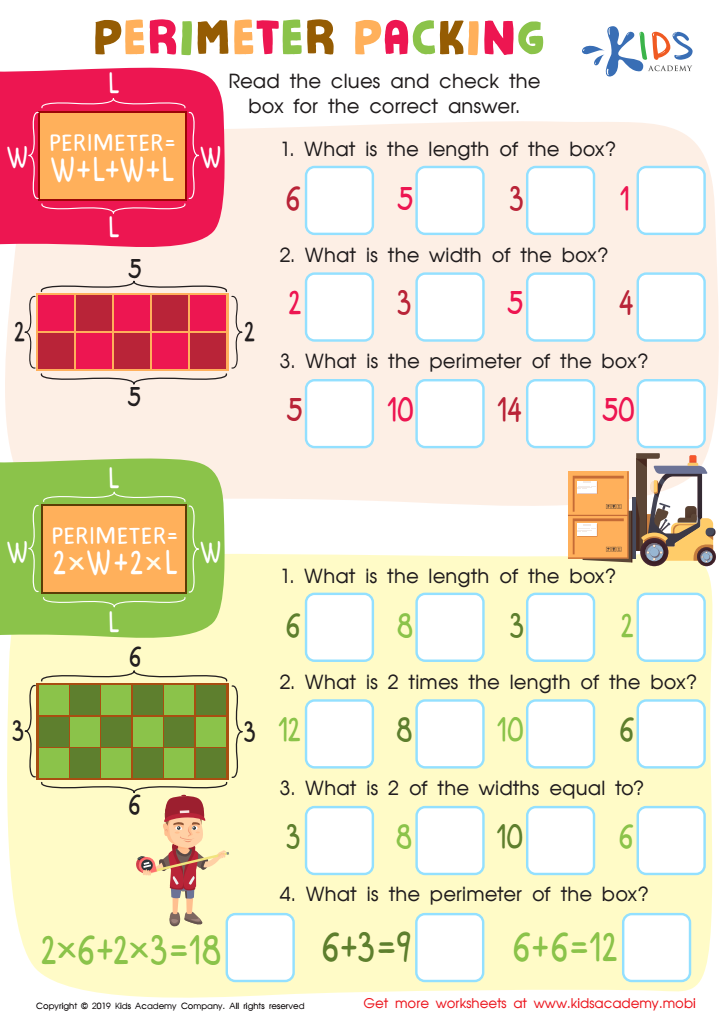
Perimeter Parking Worksheet
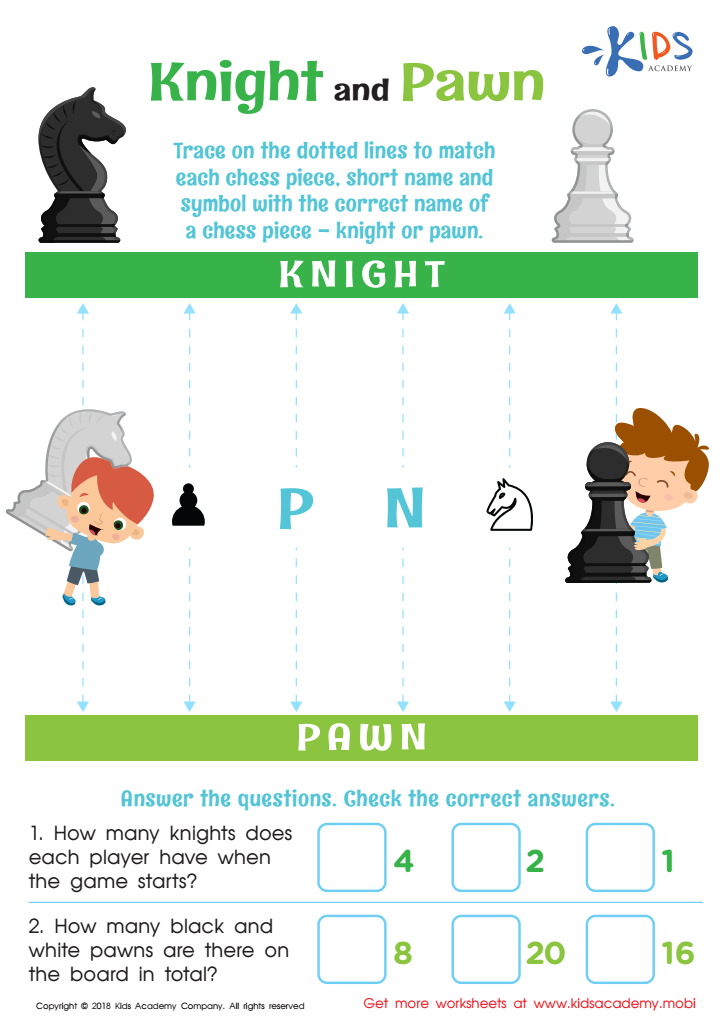
Knight and Pawn Worksheet







Shape recognition is a crucial component of early mathematics education, particularly in Grade 3. At this stage, children enhance their understanding of geometric concepts, which serves as a foundation for higher-level math skills. Recognizing and understanding shapes helps students develop spatial awareness, critical thinking, and problem-solving abilities—skills that are essential not just in math, but across the curriculum.
Moreover, shape recognition supports language development, as children learn to describe shapes, compare them, and articulate their attributes. This fosters communication skills, allowing children to express their ideas clearly. It also encourages creativity, as they explore how shapes combine to form new figures, laying the groundwork for future studies in geometry and even art.
For parents and teachers, engaging children in shape recognition activities can be a joyful experience, transforming learning into an interactive and exciting process. Activities involving real-life applications, such as identifying shapes in the environment, not only reinforce learning but also strengthen parent-child or teacher-student relationships. Ultimately, prioritizing shape recognition will help children build confidence in their mathematical abilities, setting them up for success in future academic endeavors and real-world problem-solving situations. By caring about this foundational skill, adults invest in their children's overall cognitive development.