Check out this FREE Grade 3 "Understanding fractions" Trial Lesson!

What are the Parts of a Fraction?

Favorites
With answer key
Interactive
  • Grade 3
  • Understanding fractions
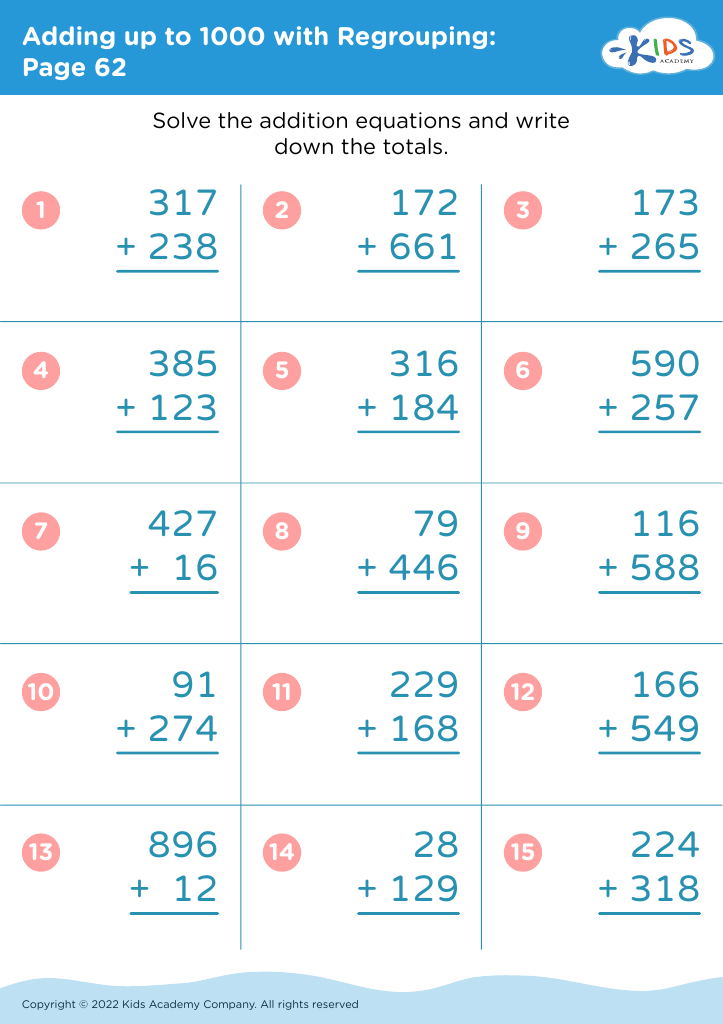
Adding up to 1000 with Regrouping: Page 62
Worksheet
Food Fractions Worksheet

Food Fractions Worksheet

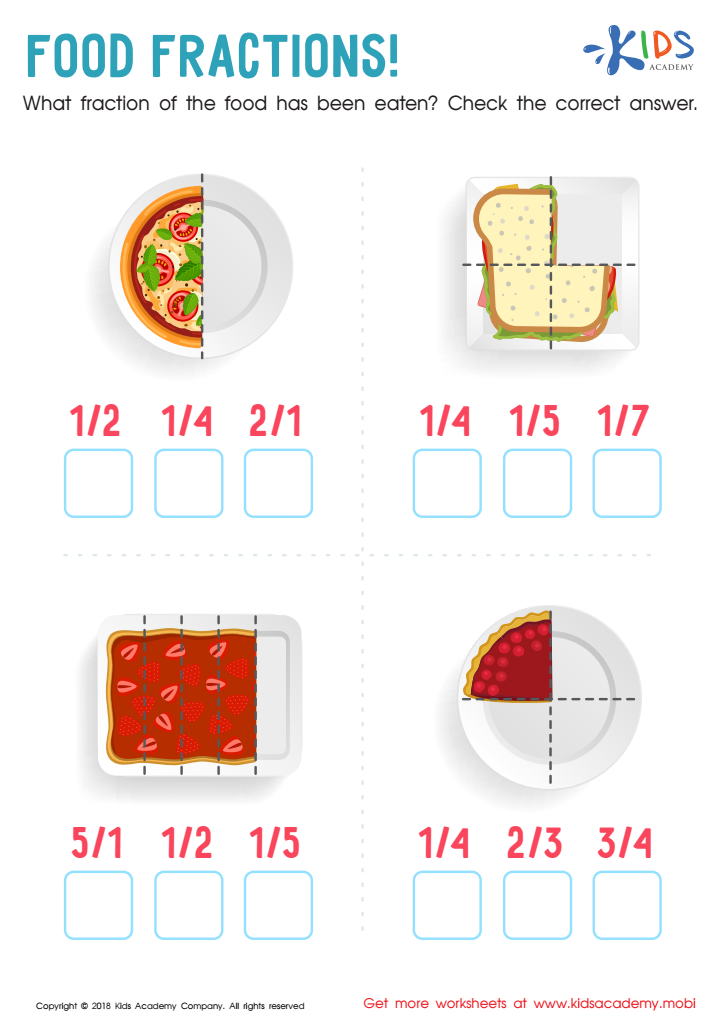
Test your child's understanding of fractions with this Food Fractions worksheet. Ask them to identify what fraction of the food in the four pictures has been eaten and select the correct answer from the options provided. See how well they understand your lessons!
Food Fractions Worksheet
Worksheet
What Is the Numerator? Worksheet

What Is the Numerator? Worksheet

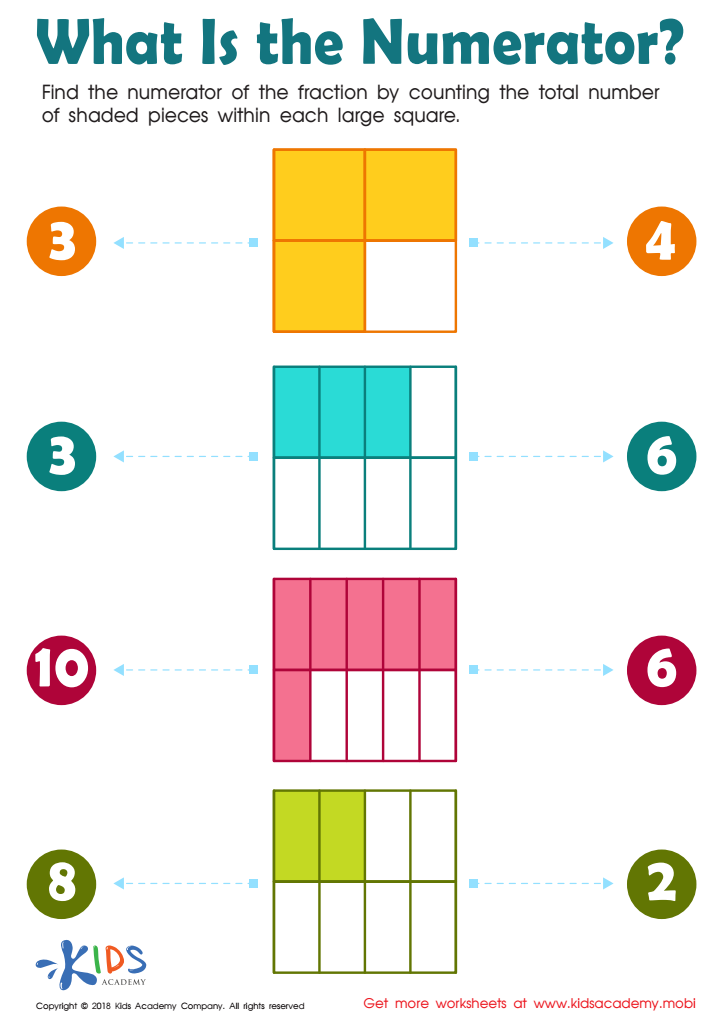
Help your kids learn fractions with this simple worksheet. Explain that the numerator is the number atop another number, then have them count the shaded pieces in each large square to find the numerator of the fraction. This activity is perfect for young kindergartners starting out with fractions.
What Is the Numerator? Worksheet
Worksheet
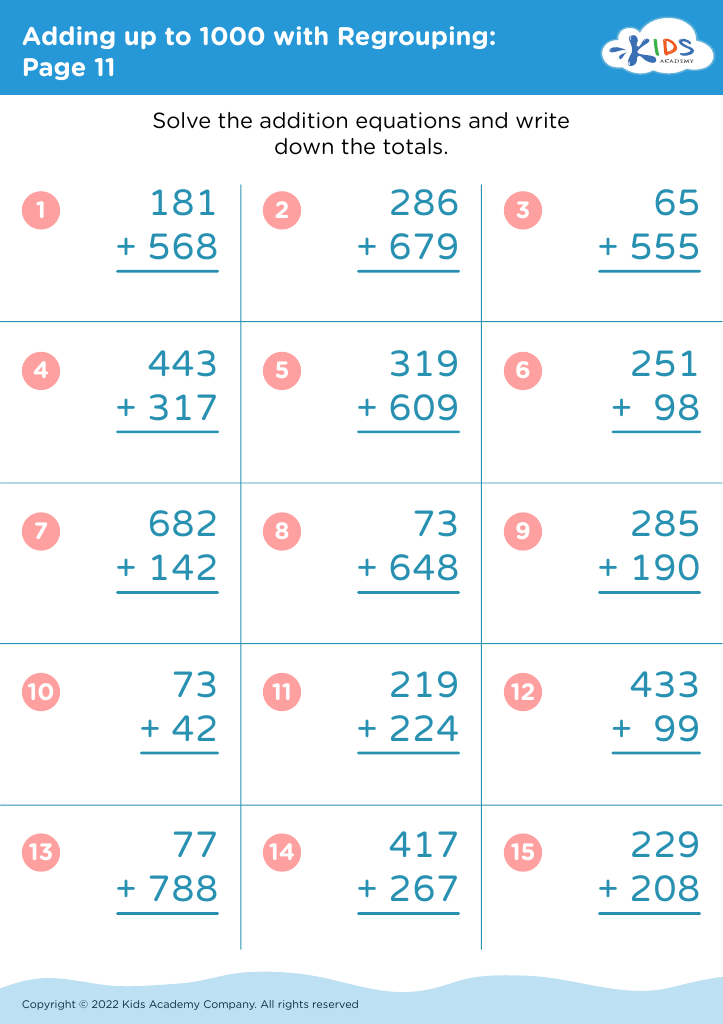
Adding up to 1000 with Regrouping: Page 11
Worksheet
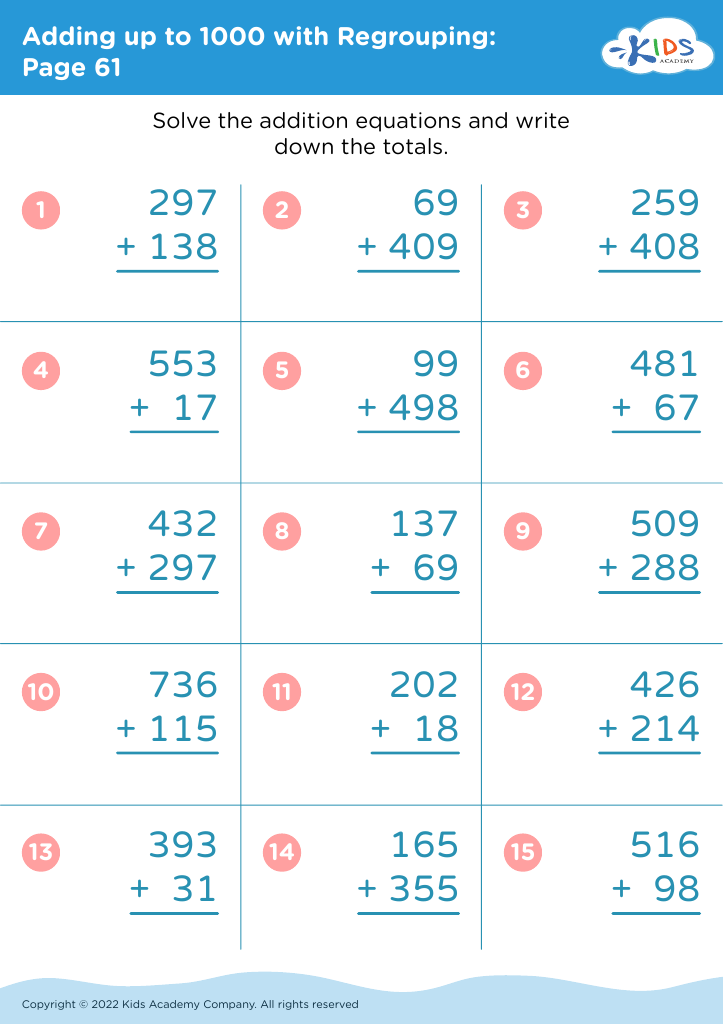
Adding up to 1000 with Regrouping: Page 61
Worksheet
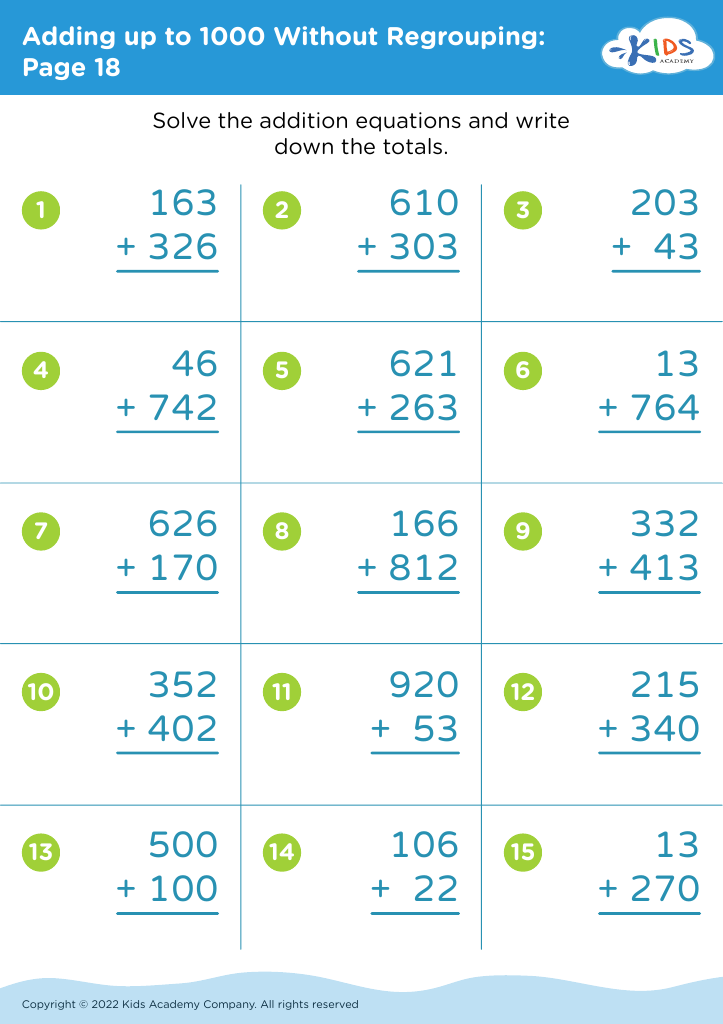
Adding up to 1000 Without Regrouping: Page 18
Worksheet
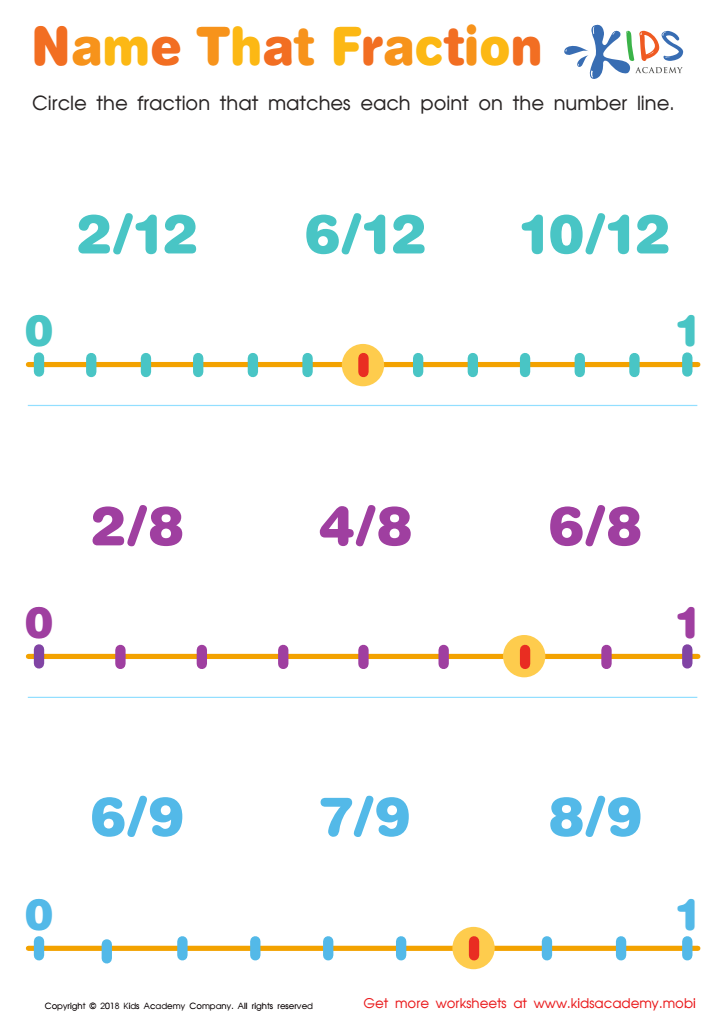
Name That Fraction Worksheet

Name That Fraction Worksheet

Kids must learn to identify and name fractions to solve equations. Included in this worksheet are three equations that need solving. Have your child match each point on the number line with the correct fraction and circle it. This exercise helps build their fraction skills.
Name That Fraction Worksheet
Worksheet
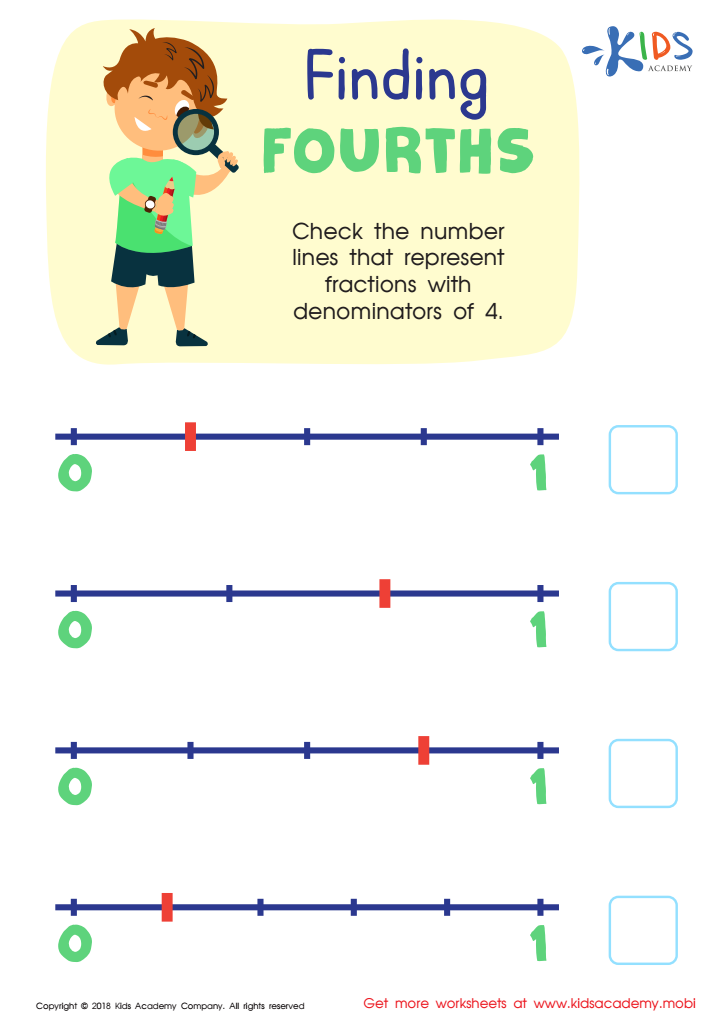
Finding Fourths Worksheet
Finding Fourths Worksheet
Help your kids sharpen math skills with extra homework, stimulating exercises, and fun worksheets. This printout features four equations with fractions and number lines. Your child's task is to check the number lines with denominators of 4. Enough to get them thinking and learning.
Finding Fourths Worksheet
Worksheet
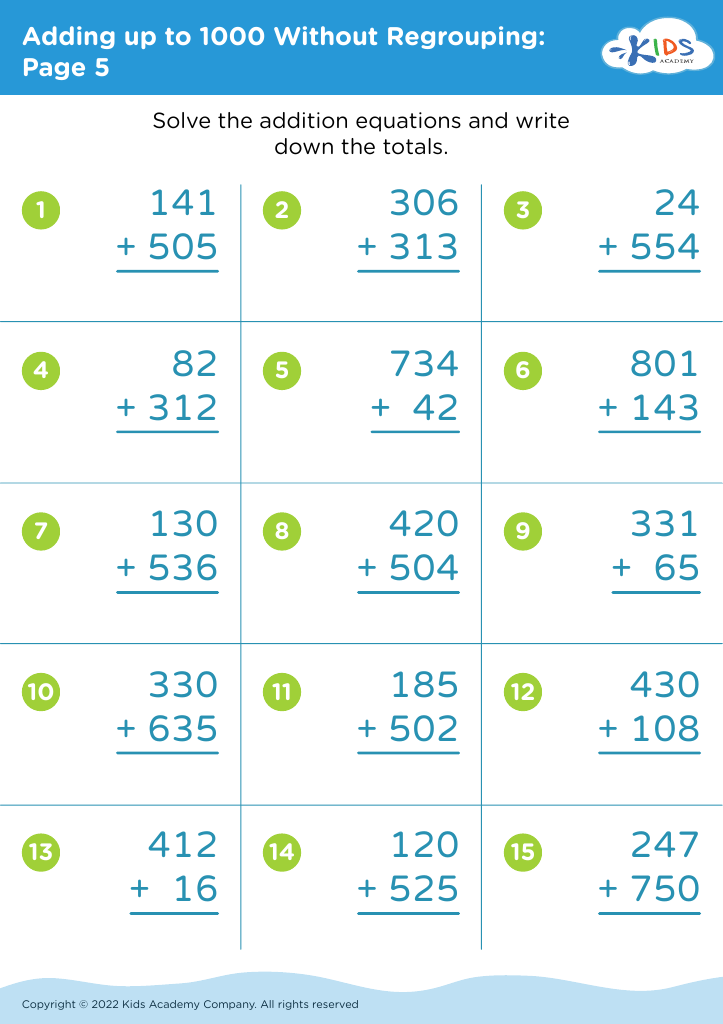
Adding up to 1000 Without Regrouping: Page 5
Worksheet
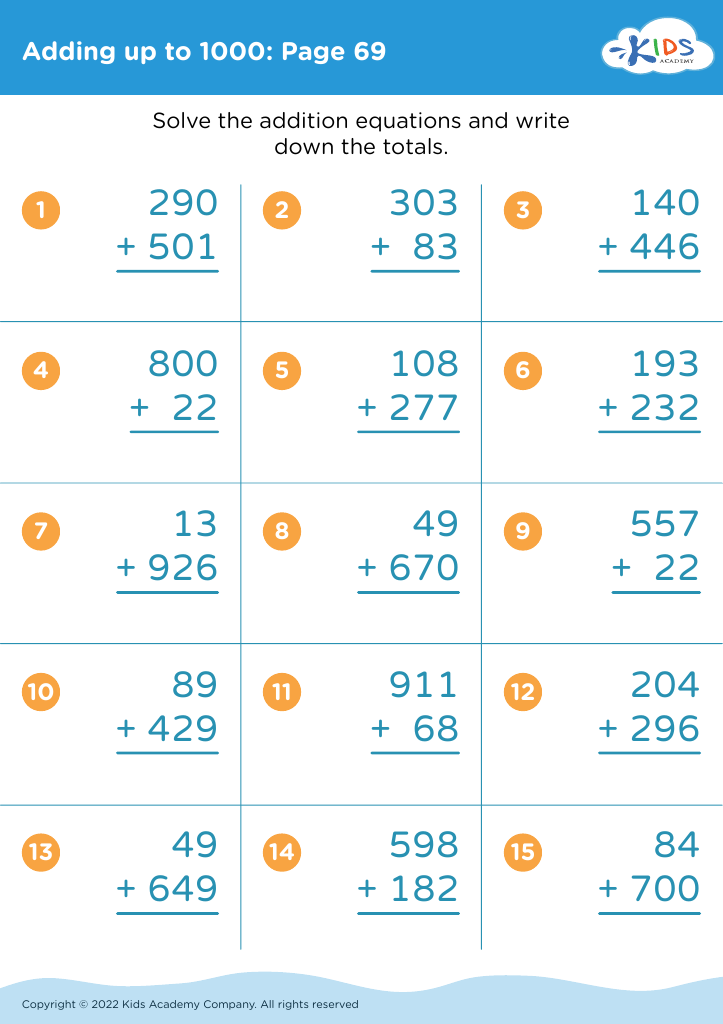
Adding up to 1000: Page 69

Adding up to 1000: Page 69

Adding up to 1000: Page 69
Worksheet
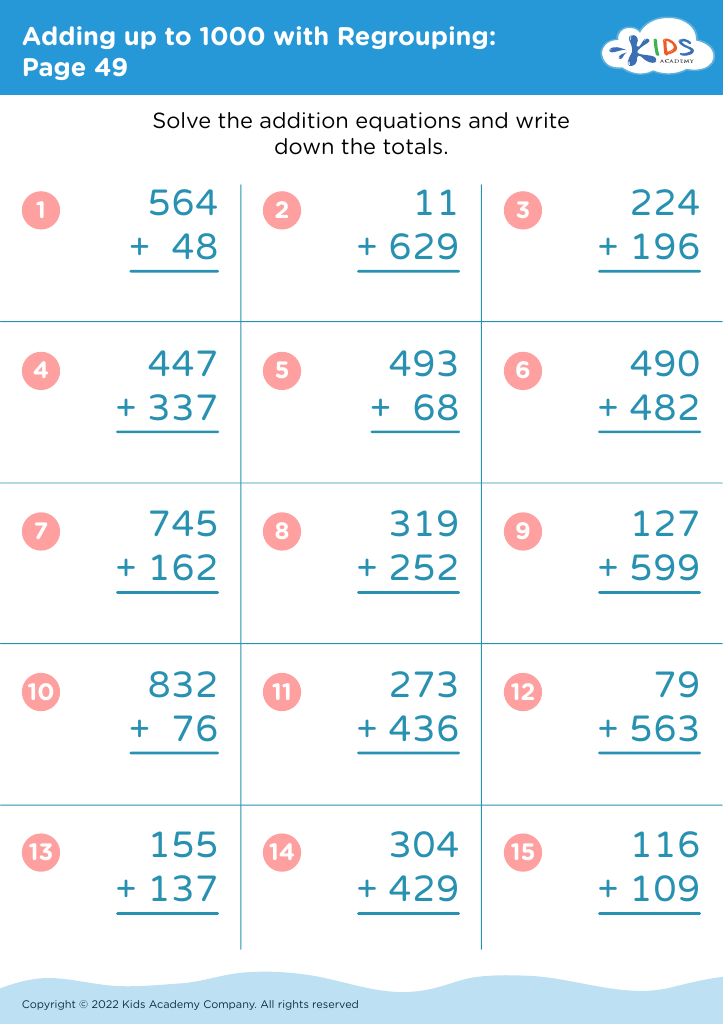
Adding up to 1000 with Regrouping: Page 49
Worksheet
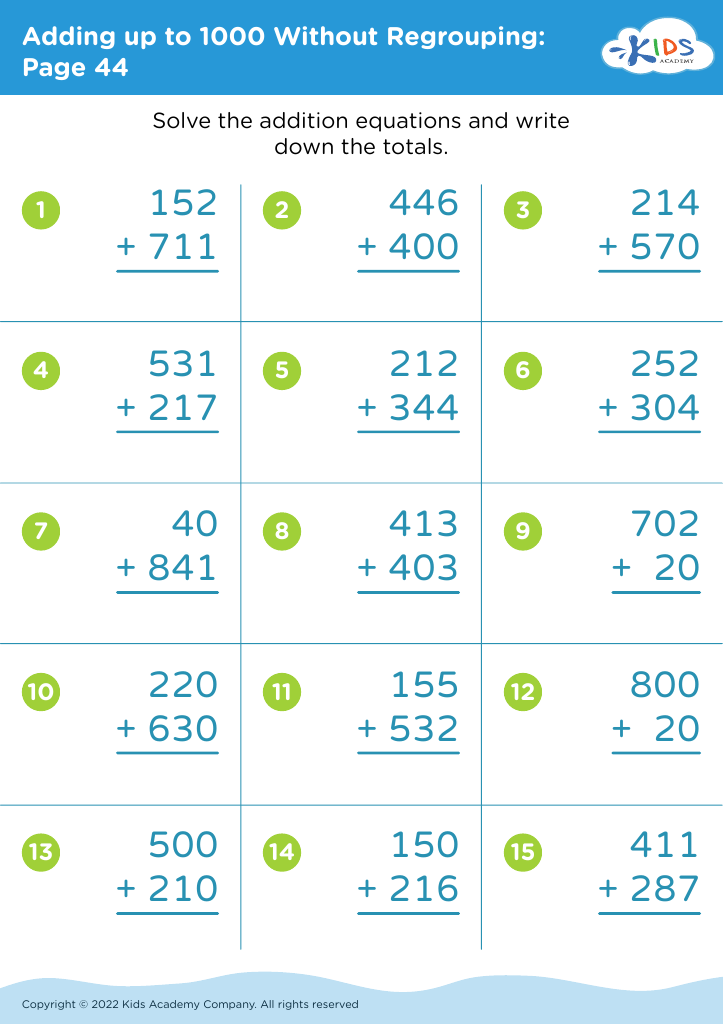
Adding up to 1000 Without Regrouping: Page 44
Worksheet
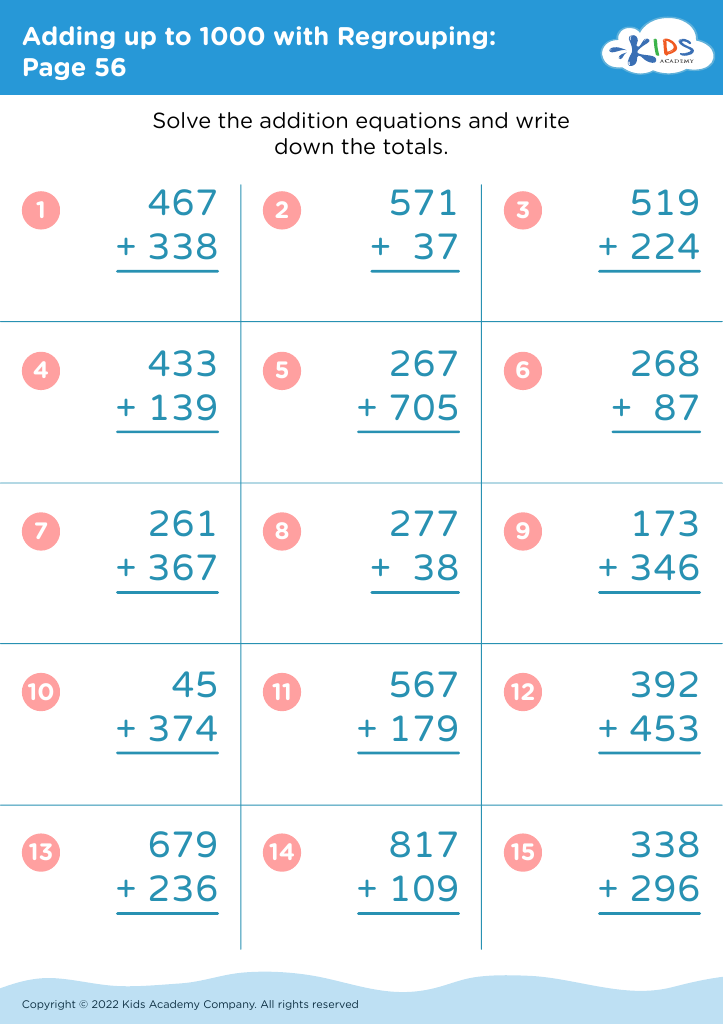
Adding up to 1000 with Regrouping: Page 56
Worksheet
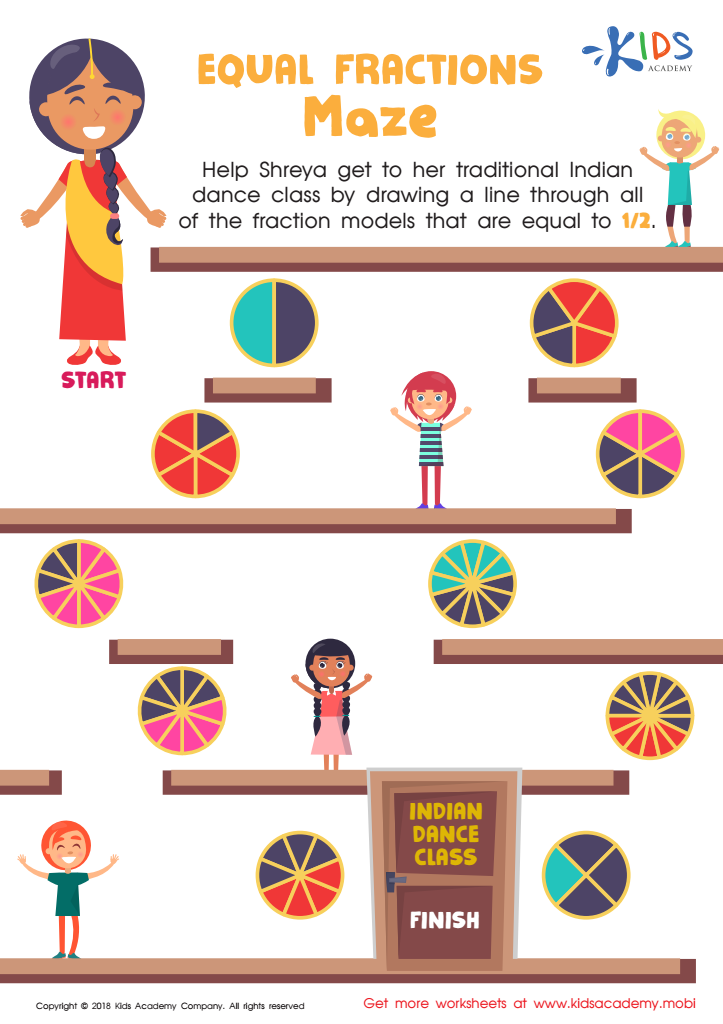
Equal Fractions Maze Worksheet
Equal Fractions Maze Worksheet
Help Shreya get to dance class! Draw a line through all fraction models that are equal to ½, starting at the entrance marked 'start'. Guide your kids through the maze paths and help Shreya -- she's an Indian girl who practices her cultures and traditions -- reach the door to her class.
Equal Fractions Maze Worksheet
Worksheet
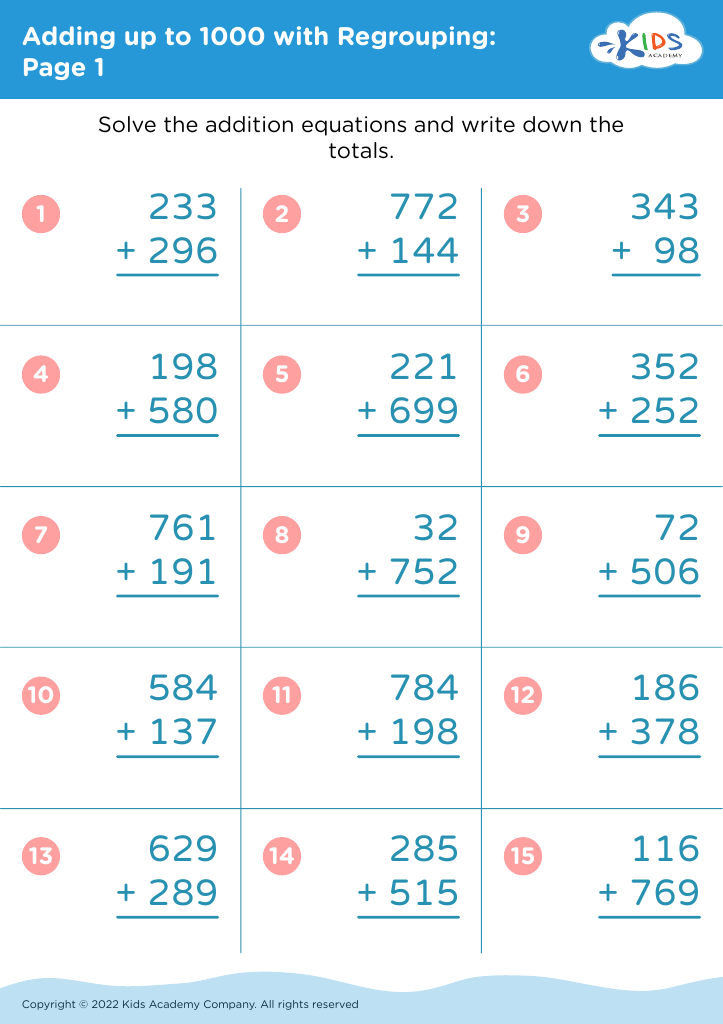
Adding up to 1000 with Regrouping: Page 1
Worksheet
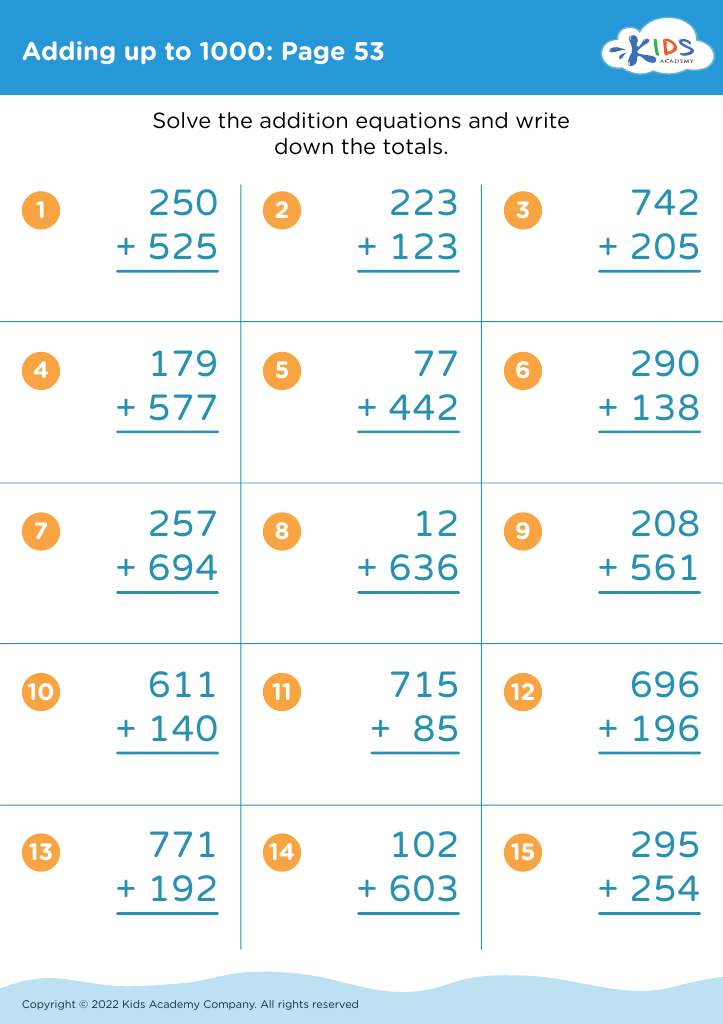
Adding up to 1000: Page 53

Adding up to 1000: Page 53

Adding up to 1000: Page 53
Worksheet
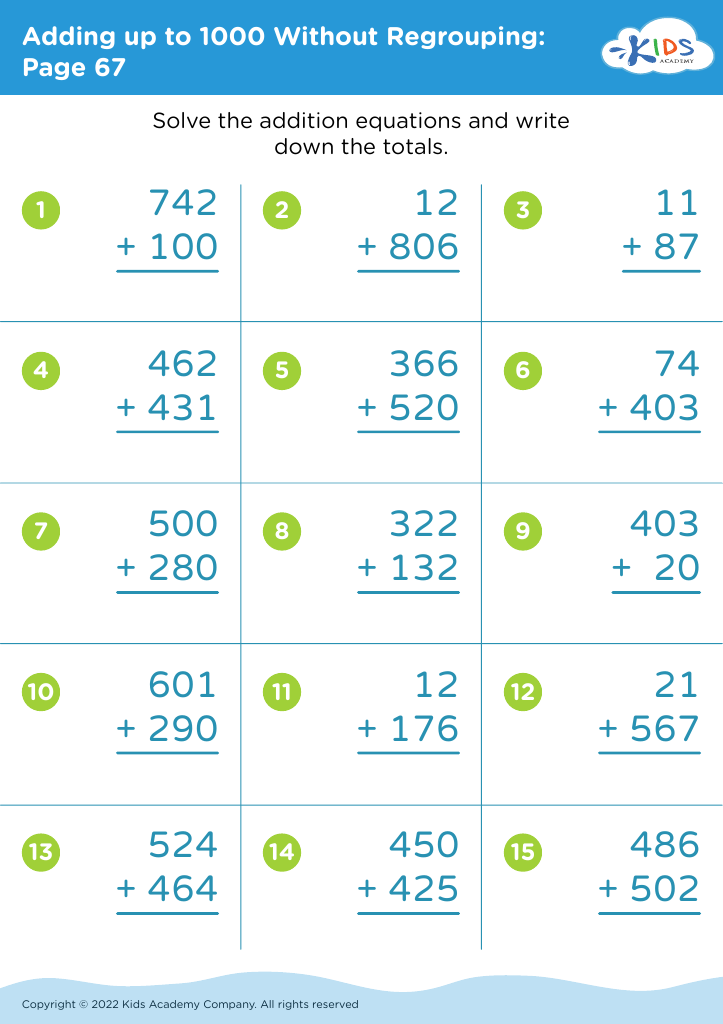
Adding up to 1000 Without Regrouping: Page 67
Worksheet
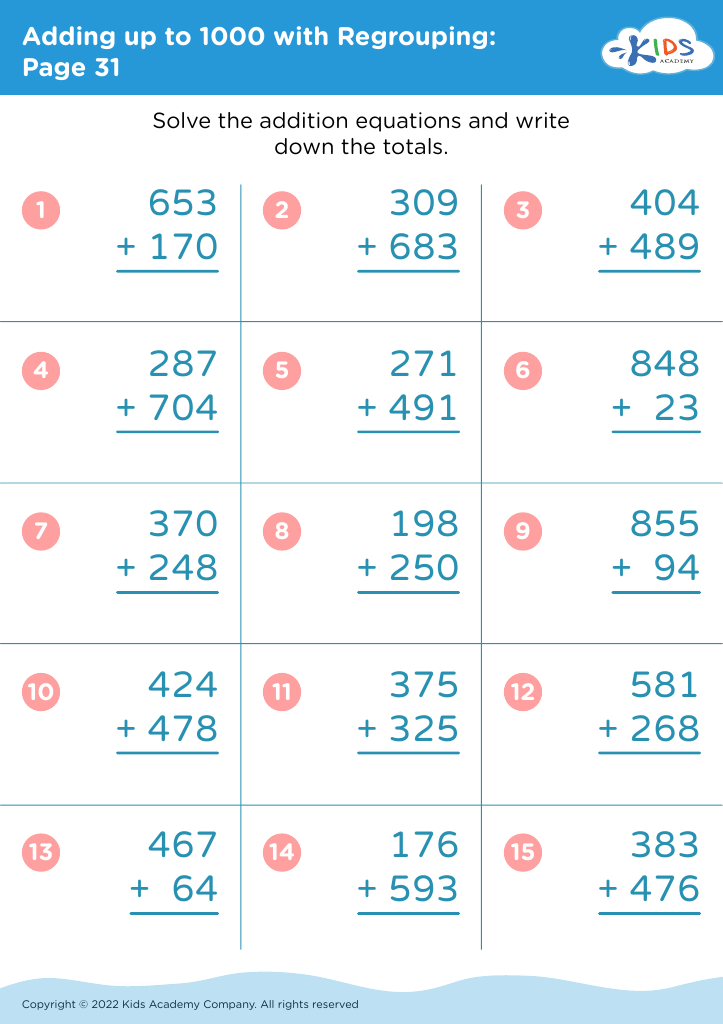
Adding up to 1000 with Regrouping: Page 31
Worksheet
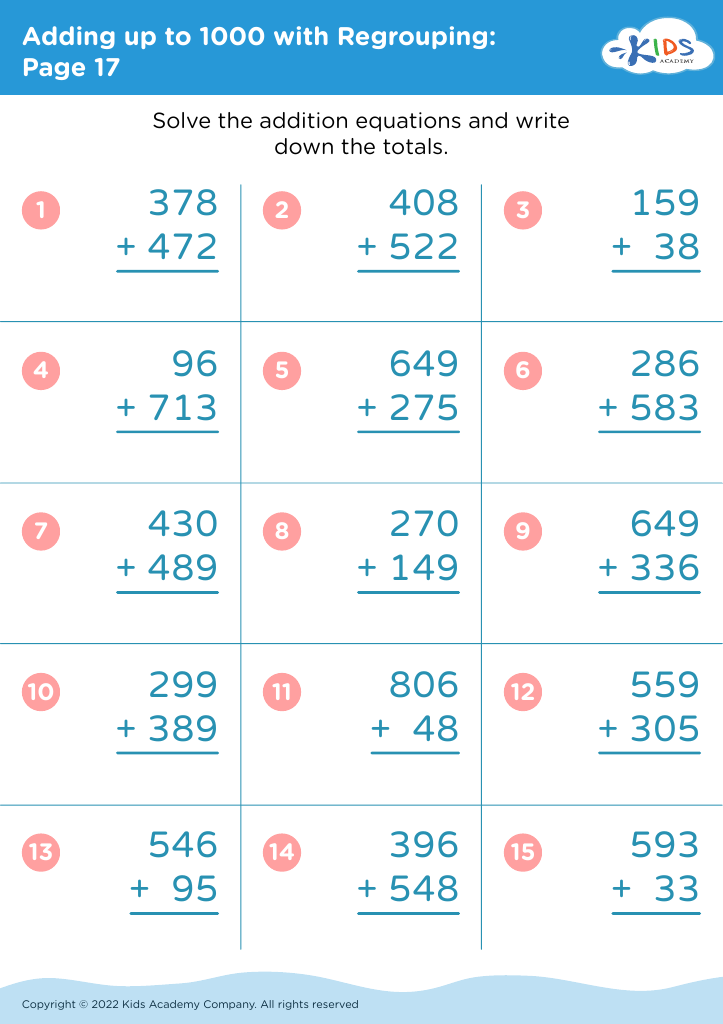
Adding up to 1000 with Regrouping: Page 17
Worksheet
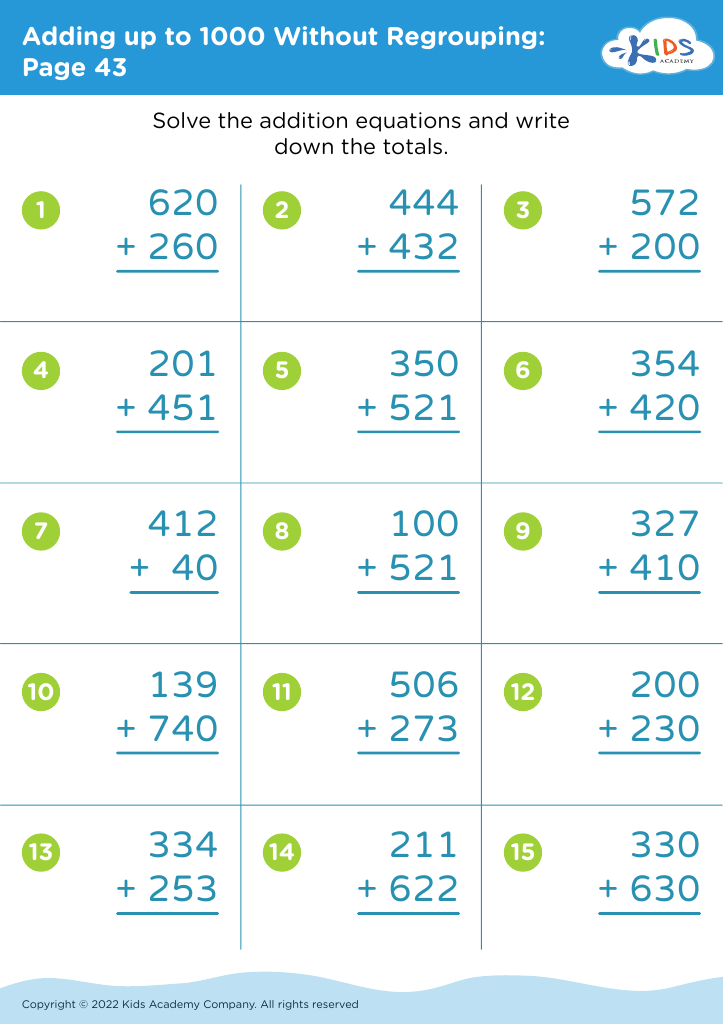
Adding up to 1000 Without Regrouping: Page 43
Worksheet
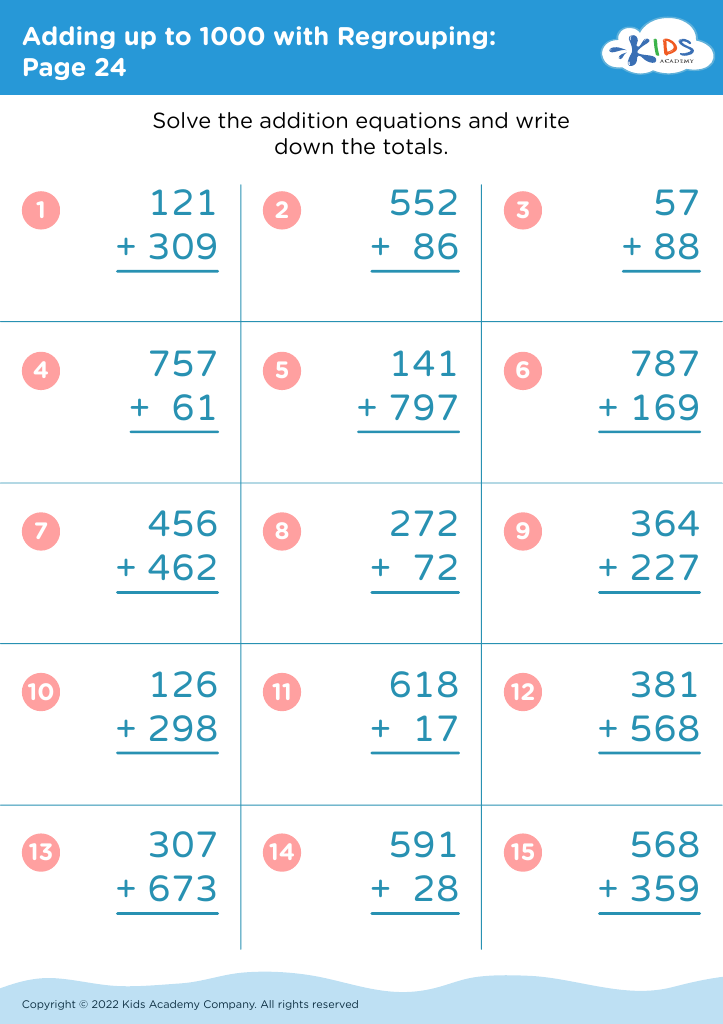
Adding up to 1000 with Regrouping: Page 24
Worksheet
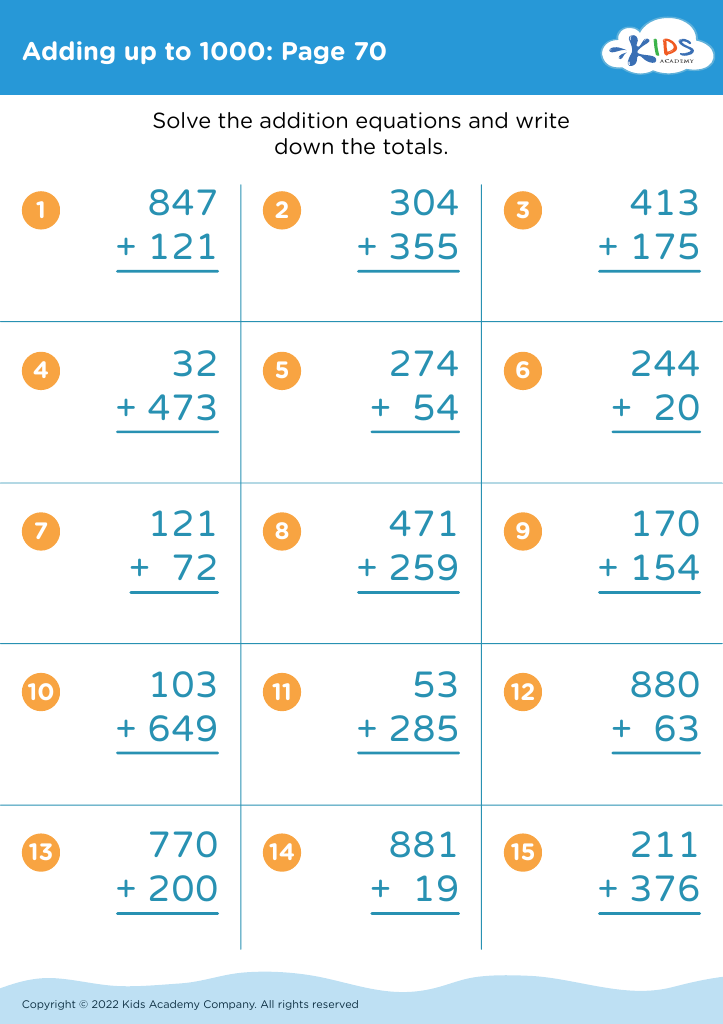
Adding up to 1000: Page 70

Adding up to 1000: Page 70

Adding up to 1000: Page 70
Worksheet
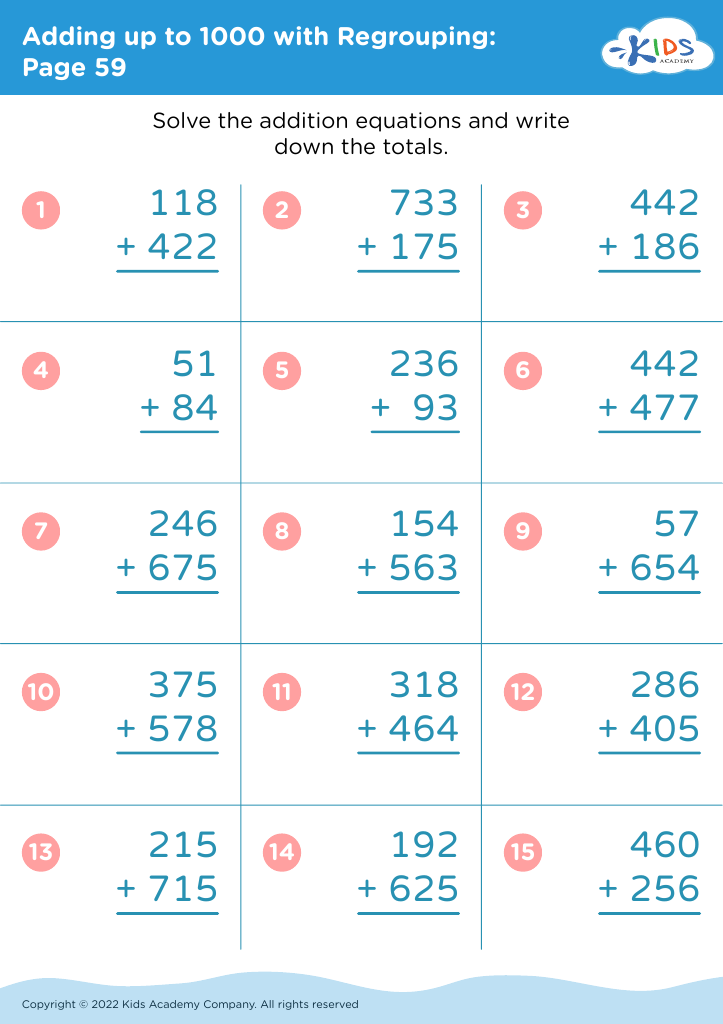
Adding up to 1000 with Regrouping: Page 59
Worksheet
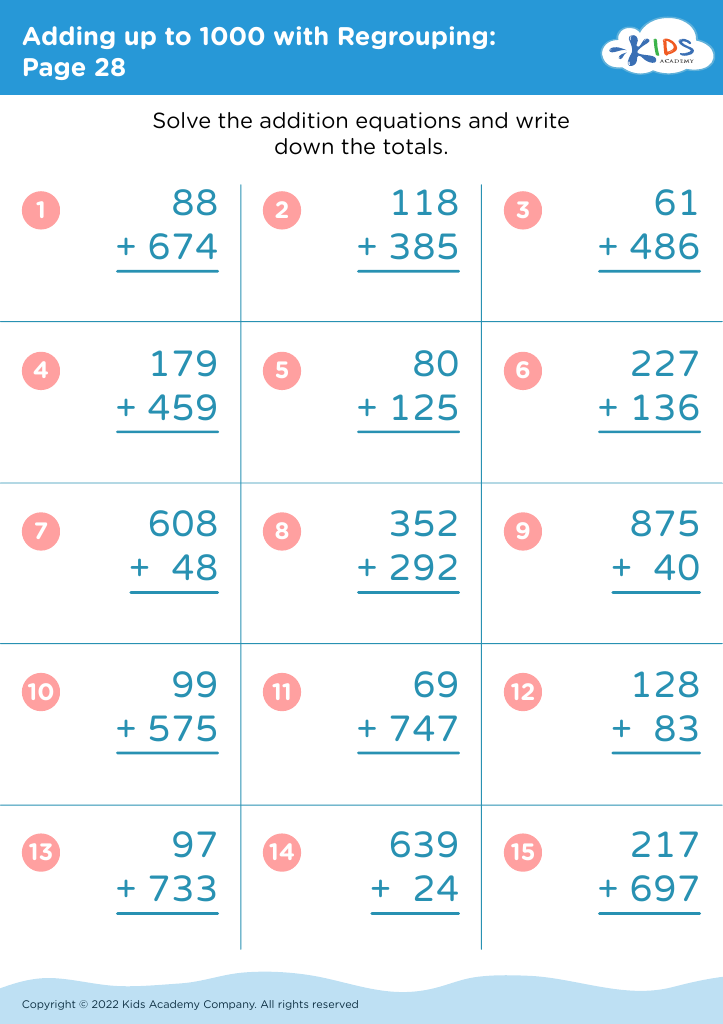
Adding up to 1000 with Regrouping: Page 28
Worksheet


Understanding fractions is crucial for third-grade students as it lays a foundational skill that is used throughout their academic and everyday lives. Teachers and parents should care about this concept for several reasons. First, fractions introduce students to the idea of parts of a whole, enhancing their ability to comprehend various mathematical concepts, including addition, subtraction, multiplication, and division later on.

Secondly, mastering fractions encourages critical thinking and problem-solving skills. Students learn to compare sizes, make estimations, and apply their knowledge in real-life situations, such as cooking, shopping, or even dividing time. This practical context makes learning fractions more relevant and engaging for young minds.

Moreover, a confidence in fractions can boost a child's overall mathematical skills, contributing to greater success in future math courses. When children struggle with fractions, it can lead to frustration and a lack of interest in mathematics, affecting their academic trajectory.

Finally, a collaborative effort between parents and teachers to support fraction understanding at home and in the classroom creates a nurturing learning environment. Engaging activities such as cooking, arts and crafts, or using visual aids can make learning about fractions interactive and fun, ensuring students are motivated and curious to learn.