Understanding bar graphs Grade 3 Addition & Subtraction Worksheets
3 filtered results
-
From - To
Discover engaging and educational worksheets designed to help Grade 3 students master the concept of understanding bar graphs through addition and subtraction exercises. Our carefully crafted resources provide step-by-step instructions that guide young learners in interpreting and creating bar graphs based on given mathematical problems. With a variety of fun activities, students will practice valuable skills such as data representation, comparison, and analysis, all while reinforcing their addition and subtraction abilities. These worksheets not only foster critical thinking but also make learning interactive and enjoyable. Ideal for classroom or home use, these resources support a comprehensive understanding of mathematics for young minds.
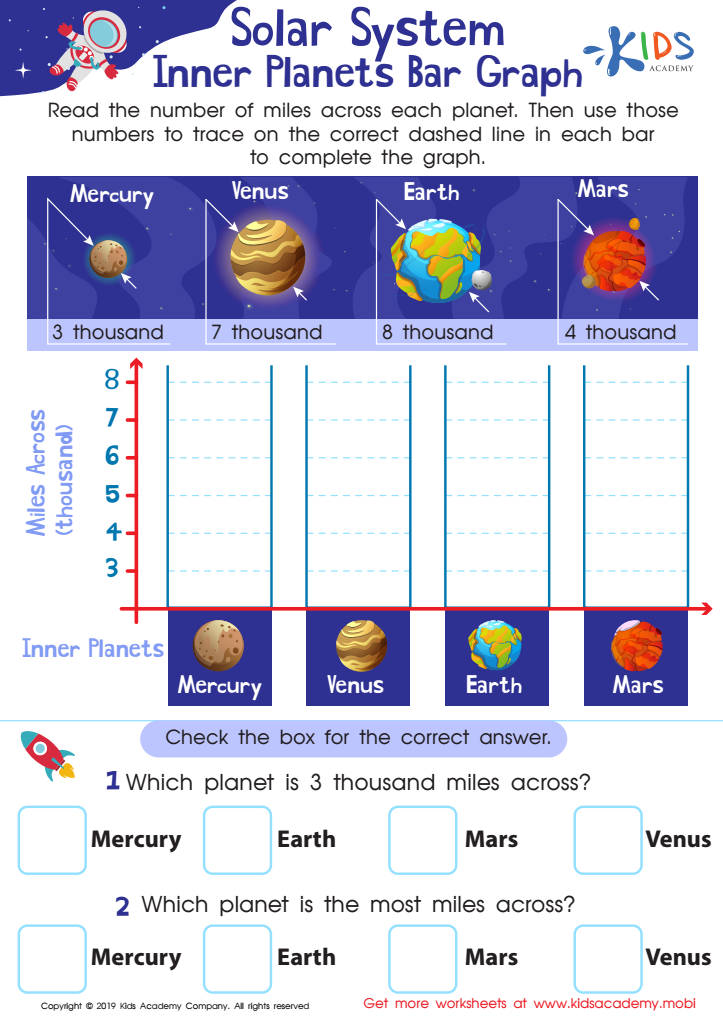
Planets Bar Graph Worksheet
 Assign to My Students
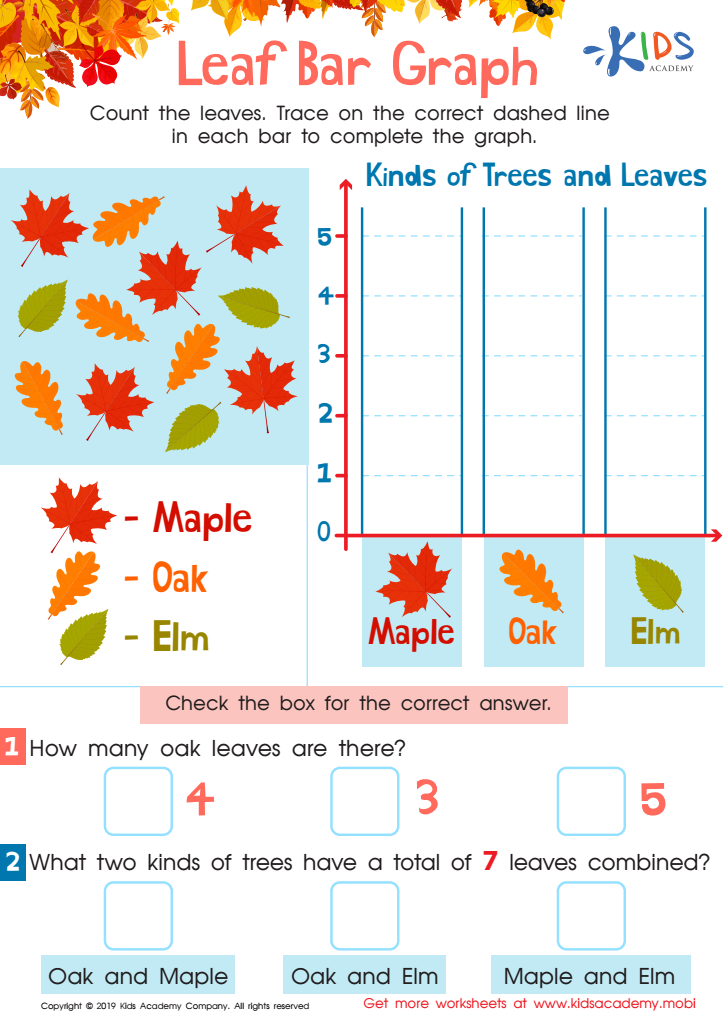
Leaf Bar Graph Worksheet
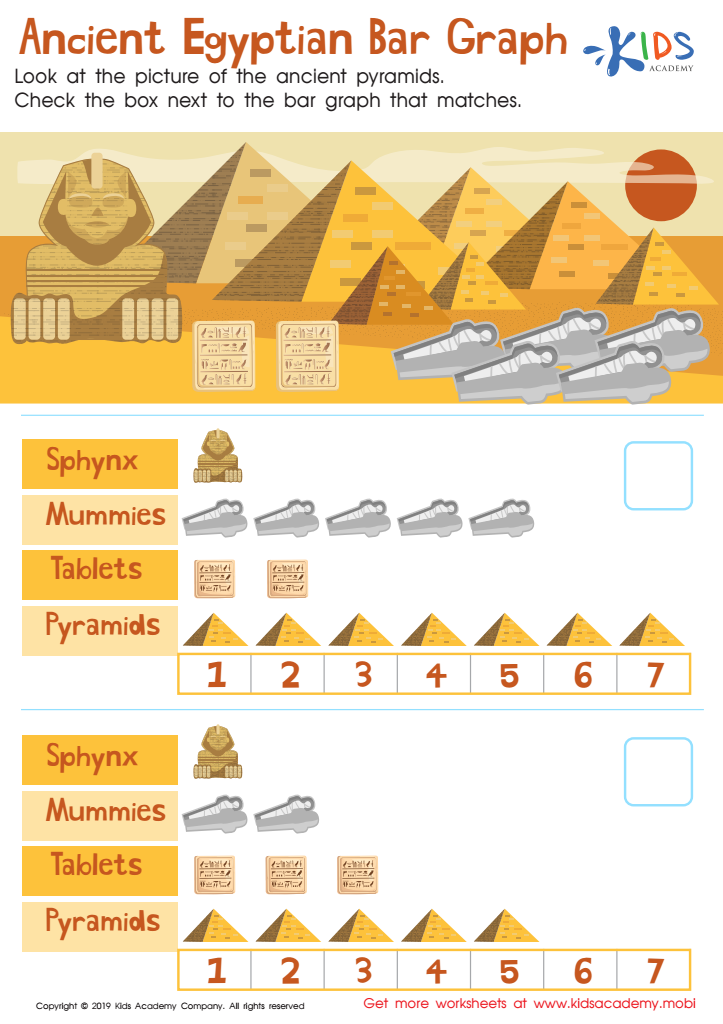
Egyptian Bar Graph Worksheet








Understanding bar graphs is an essential skill for Grade 3 students and a fundamental aspect of mathematics that parents and teachers should prioritize. Bar graphs serve as a visual representation of data, helping students to comprehend and analyze information effectively. Learning to interpret bar graphs enhances critical thinking skills, as it requires students to make connections between numbers and real-world scenarios.
In Grade 3, students begin to develop mastery in addition and subtraction operations. When bar graphs are integrated into these lessons, they can visualize the results of addition and subtraction problems, making abstract concepts more concrete. For example, they can see how different groups compare, identify trends, or interpret results from class surveys or experiments.
Additionally, bar graphs encourage communication skills, as children learn to describe data and draw conclusions. This knowledge is foundational for future mathematical learning and is applicable in everyday life, from interpreting election results to analyzing sports statistics.
By fostering an understanding of bar graphs, parents and teachers help students build a solid mathematical foundation, ultimately preparing them for more complex scientific and statistical reasoning as they progress in their education. Engaging with data analysis supports critical skills that extend beyond the classroom, encouraging informed, educated citizens.