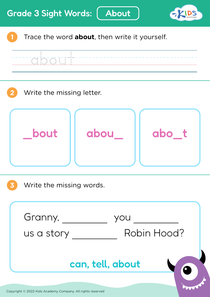
Hand-eye Coordination Grade 3 Addition Worksheets
3 filtered results
-
From - To
Enhance your child's learning experience with our Hand-eye Coordination Grade 3 Addition Worksheets! Designed specifically for third graders, these engaging worksheets help develop vital motor skills while reinforcing addition concepts. Each activity encourages students to practice addition through fun, interactive tasks that promote eye-hand coordination. Worksheets feature colorful visuals and easy-to-understand instructions, ensuring kids stay motivated and focused. Ideal for both classroom use and at-home learning, our resources provide vibrant opportunities for children to practice math skills effectively. Discover how these addition worksheets can help your child blend academics with essential coordination skills, making math both entertaining and educational!
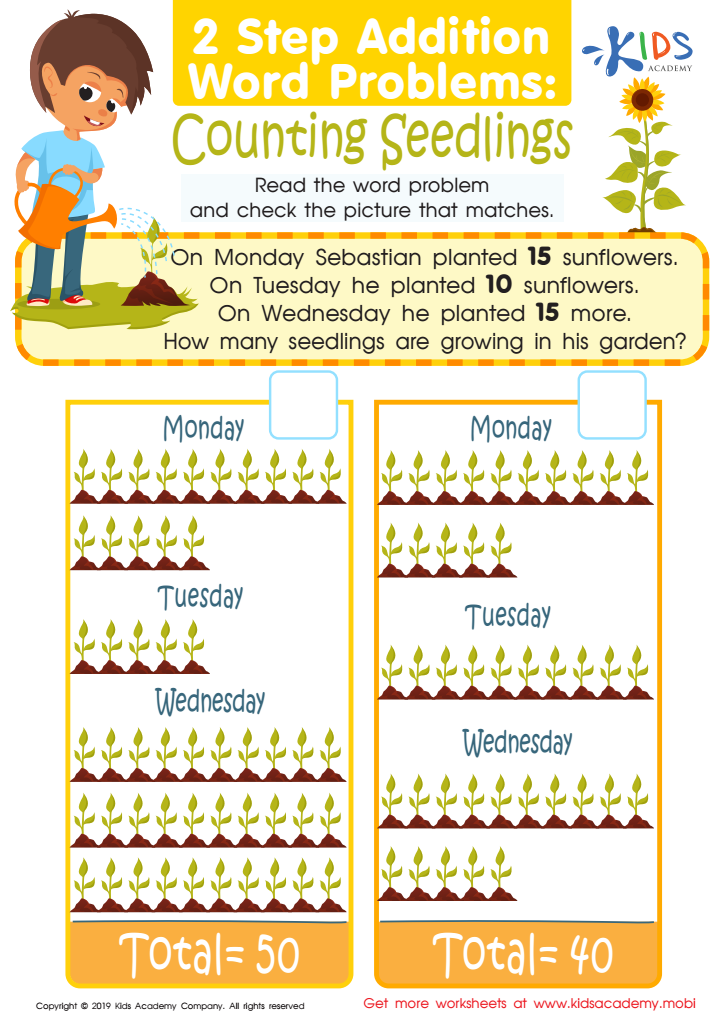
Counting Seedlings Worksheet
 Assign to My Students
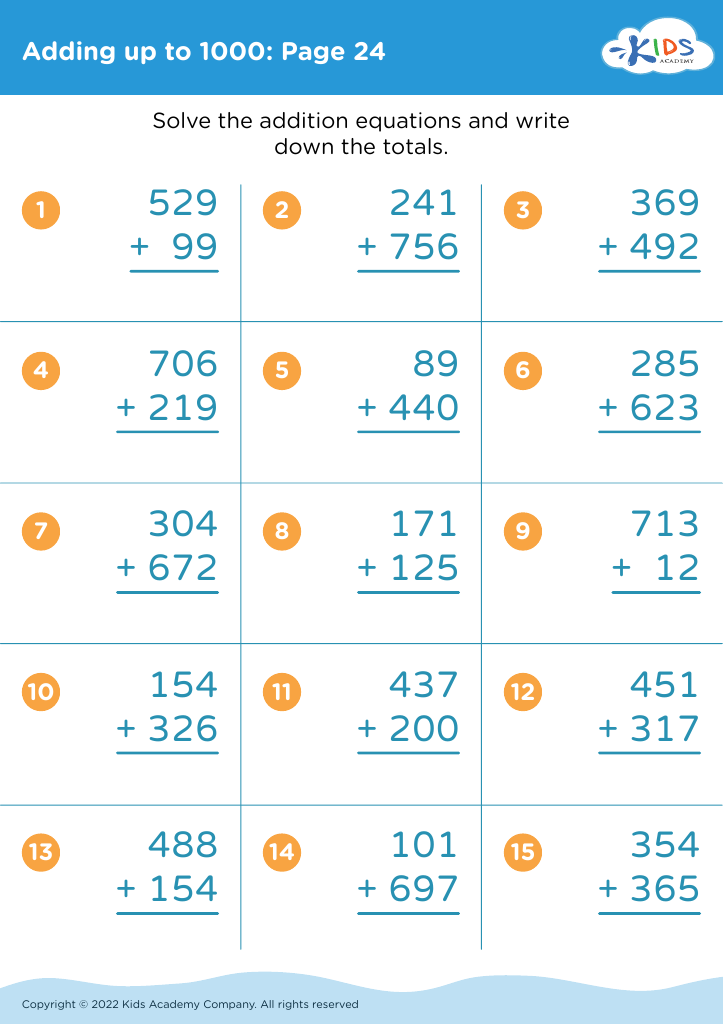
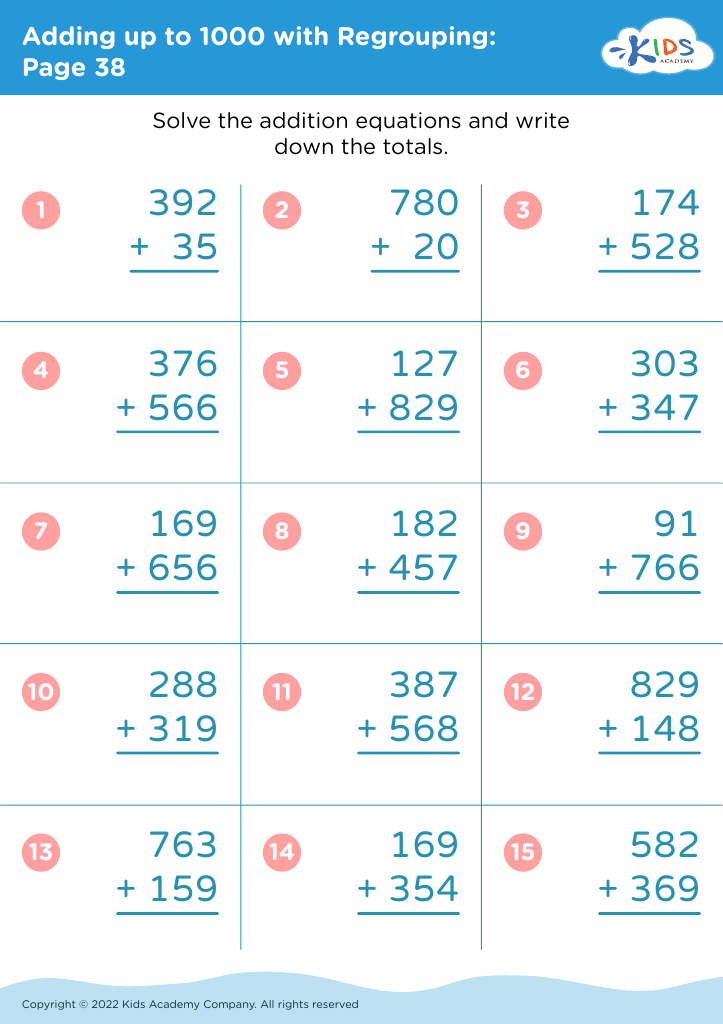








Hand-eye coordination is an essential skill that significantly influences a child's learning experience, particularly in activities like Grade 3 addition. It involves the ability to successfully coordinate visual input with motor actions, playing a critical role in various aspects of a child's education.
For parents and teachers, fostering hand-eye coordination is crucial because it directly affects a child's ability to understand mathematical concepts. When children manipulate objects, such as counters or number lines, their ability to coordinate what they see with their physical actions enables them to grasp addition more effectively. Strong hand-eye coordination also contributes to improved fine motor skills, allowing children to write numbers clearly and accurately, which is vital for successful math completion.
Moreover, hand-eye coordination activities can be incorporated into engaging games, making learning interactive and enjoyable. This not only boosts confidence but also fosters a positive attitude toward mathematics. Excellent hand-eye coordination can also contribute to a child's overall academic performance, as it extends beyond math to other subjects that require visual and motor skills.
Therefore, investing time and effort in developing hand-eye coordination is beneficial for both parents and teachers, leading to better learning outcomes and cultivating a more enjoyable educational experience for children.