Enhancing critical thinking Grade 3 Numbers Worksheets
3 filtered results
Difficulty Level
Grade
Age
-
From - To
Subject
Activity
Standards
Unlock your child's potential with our "Enhancing Critical Thinking Grade 3 Numbers Worksheets." Designed to engage and challenge young minds, these worksheets provide a fun platform for developing essential critical thinking skills through numbers. Each activity encourages students to analyze, solve problems, and explore mathematical concepts, fostering a deeper understanding of numbers. From reasoning puzzles to comparative tasks, our diverse range of worksheets ensures that learning is both enjoyable and educational. Perfect for classroom use or home practice, these resources will help your child think critically about numbers while building a strong foundation for future math success. Start enhancing critical thinking today!
Favorites
With answer key
Interactive
Rounding Numbers Up Worksheet
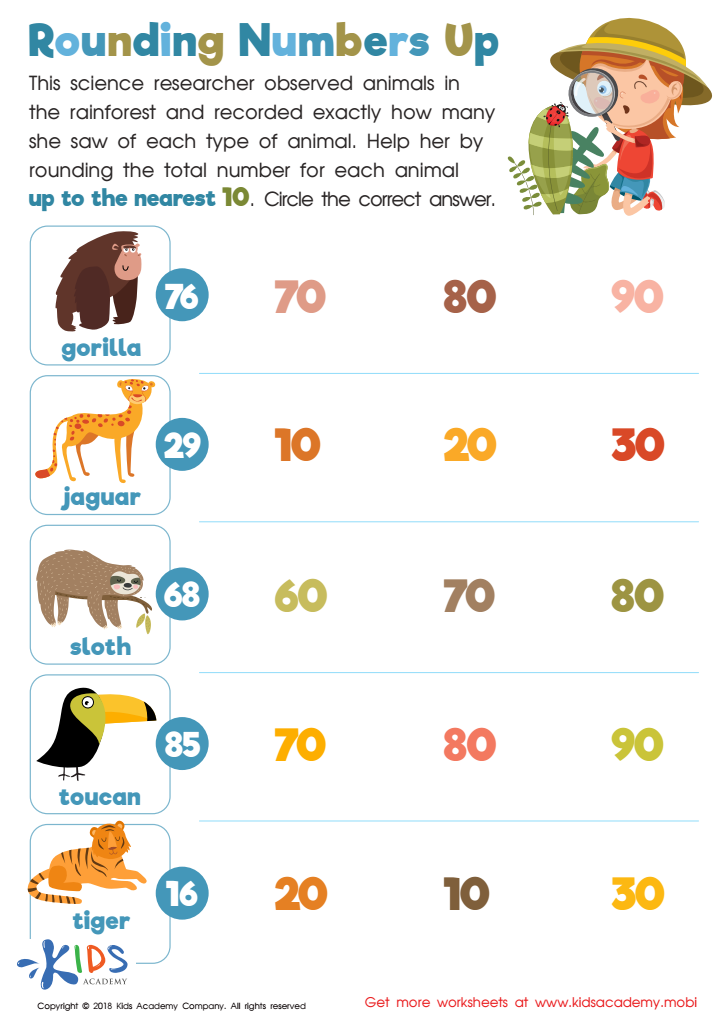
Does your child want to be a science researcher? If so, they share something in common with the person in this worksheet. She observed rainforest animals and counted them. Your child can help by rounding the totals to the nearest 10 and circling the correct answer for each type.
 Assign to My Students
Rounding Numbers Up Worksheet
Worksheet
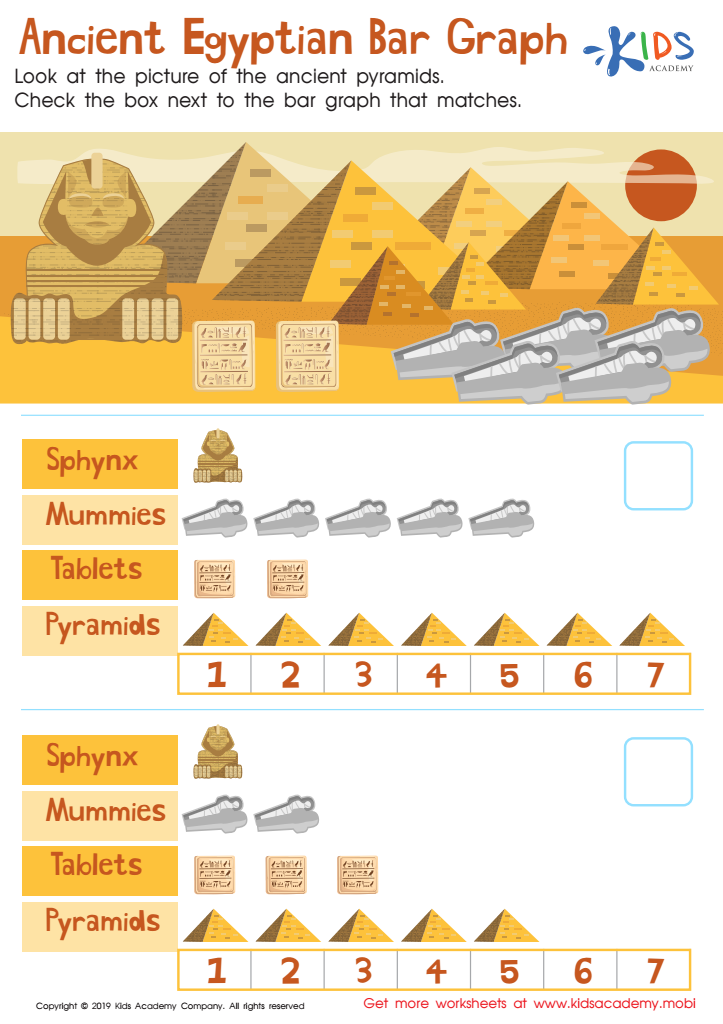
Egyptian Bar Graph Worksheet
Help your kids get a hang of bar graphs with this fun worksheet. Examine the picture of the ancient pyramids and help them match the bar graph to it. Check the box next to the correct bar graph and watch your little ones learn quickly!
Egyptian Bar Graph Worksheet
Worksheet
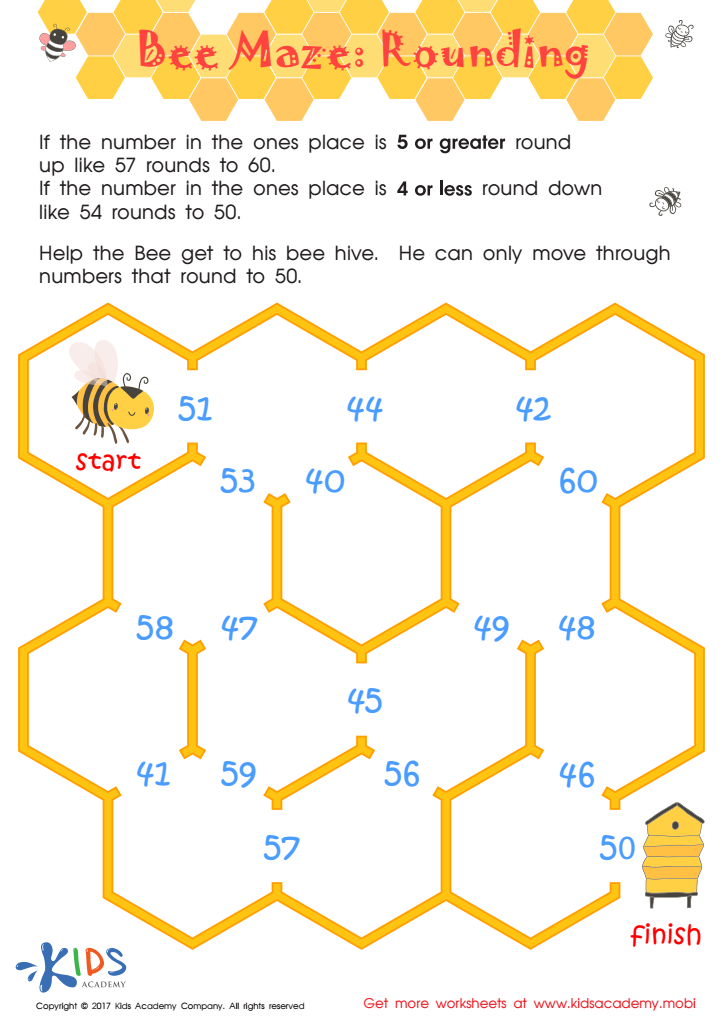
Bee Maze Worksheet
Help the bee find his way to the hive by rounding to the nearest 50!
Help the bee get to his hive with this fun, tricky rounding puzzle! This PDF worksheet challenges your child to round numbers up or down to 50. It reinforces the rules for rounding numbers and leads the bee through a maze. Get your child to help the bee reach the hive by rounding to 50!
Bee Maze Worksheet
Worksheet
Join Kids Academy for Free
Who is primarily going to use this learning content?





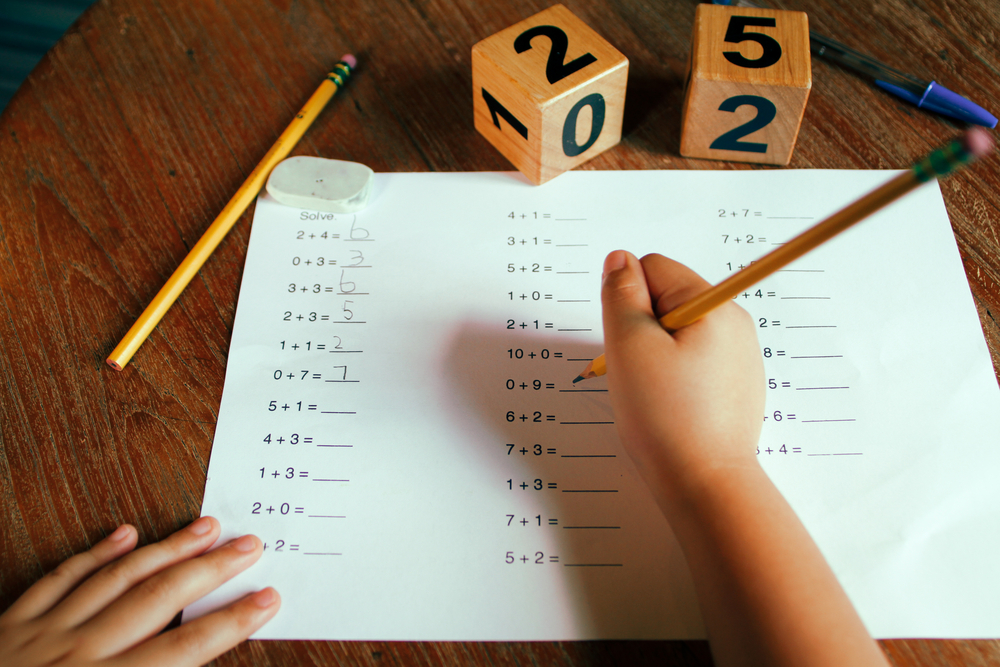


Enhancing critical thinking in Grade 3 students, particularly in numbers, is essential for several reasons. At this developmental stage, children are beginning to solidify their understanding of mathematical concepts, and fostering critical thinking skills helps them make sense of the world around them. Developing these skills encourages students to analyze problems, recognize patterns, and make reasoned decisions, which are crucial as they encounter more complex mathematical ideas.
Furthermore, critical thinking in numbers goes beyond rote memorization; it empowers students to approach real-life situations with a problem-solving mindset. For example, when faced with budgeting for a class project, students need to evaluate costs, prioritize items, and make choices based on their analysis. Thus, fostering a critical thinking environment not only supports academic achievement but also prepares children for future challenges.
Additionally, collaboration between parents and teachers can significantly enhance critical thinking. When adults model thinking aloud and ask open-ended questions, they give children the tools to reflect on their thinking processes. As critical thinkers, students become more confident learners, able to communicate their thought processes and articulate justifications for their answers. Ultimately, this foundational skill set paves the way for lifelong learning in mathematics and beyond.