Logical thinking Grade 3 Math Worksheets
6 filtered results
-
From - To
Our Grade 3 Math Worksheets dedicated to logical thinking are designed to engage young learners in developing critical problem-solving skills. At Kids Academy, we emphasize interactive and fun activities that challenge students to think systematically and approach problems creatively. These worksheets cover a variety of topics, including puzzles, patterns, sequences, and more, tailored to boost cognitive skills and confidence. Each worksheet is crafted by educational experts to align with common core standards, ensuring that students receive quality learning experiences. Perfect for at-home use or in the classroom, these worksheets help third graders excel in math and logical reasoning.
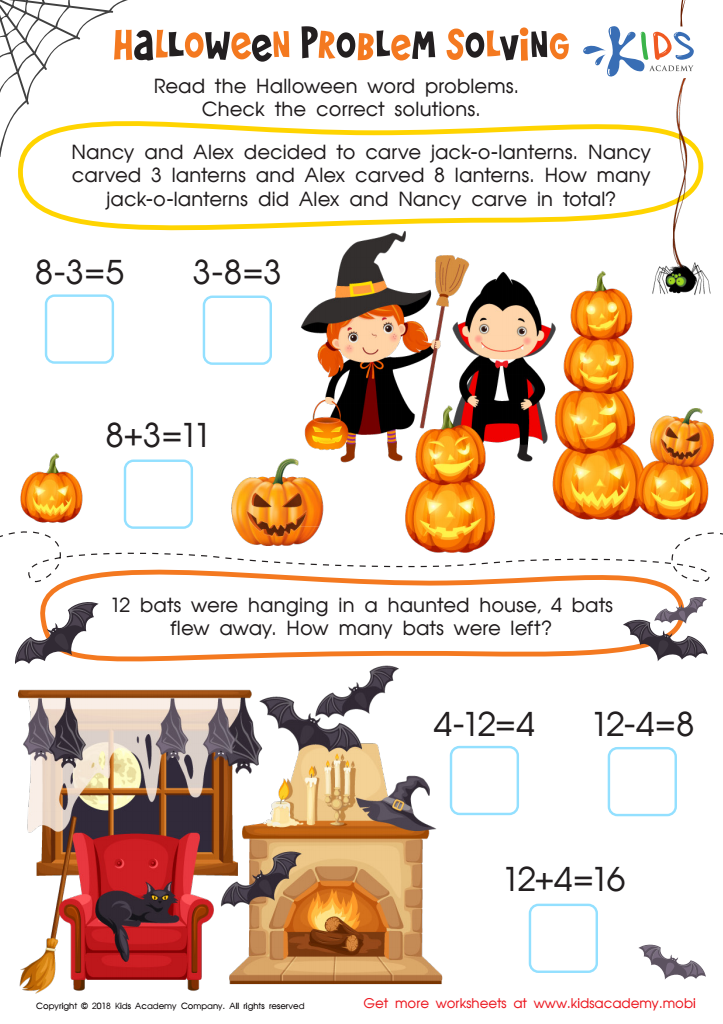
Halloween Problem Solving Worksheet
 Assign to My Students
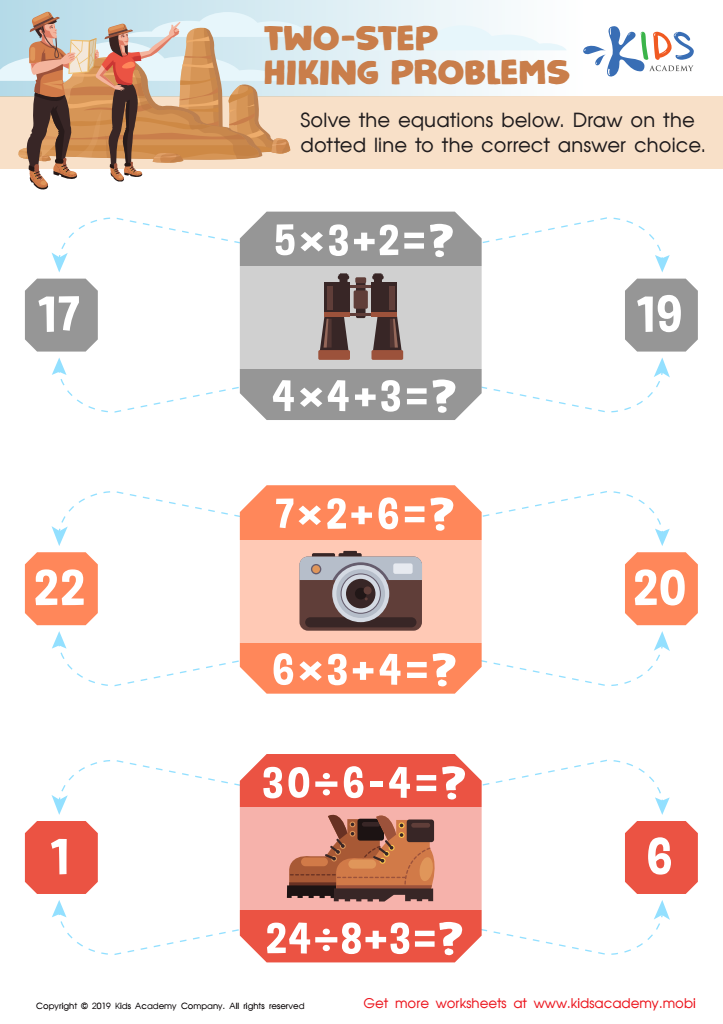
Two-Step Hiking Problems Worksheet
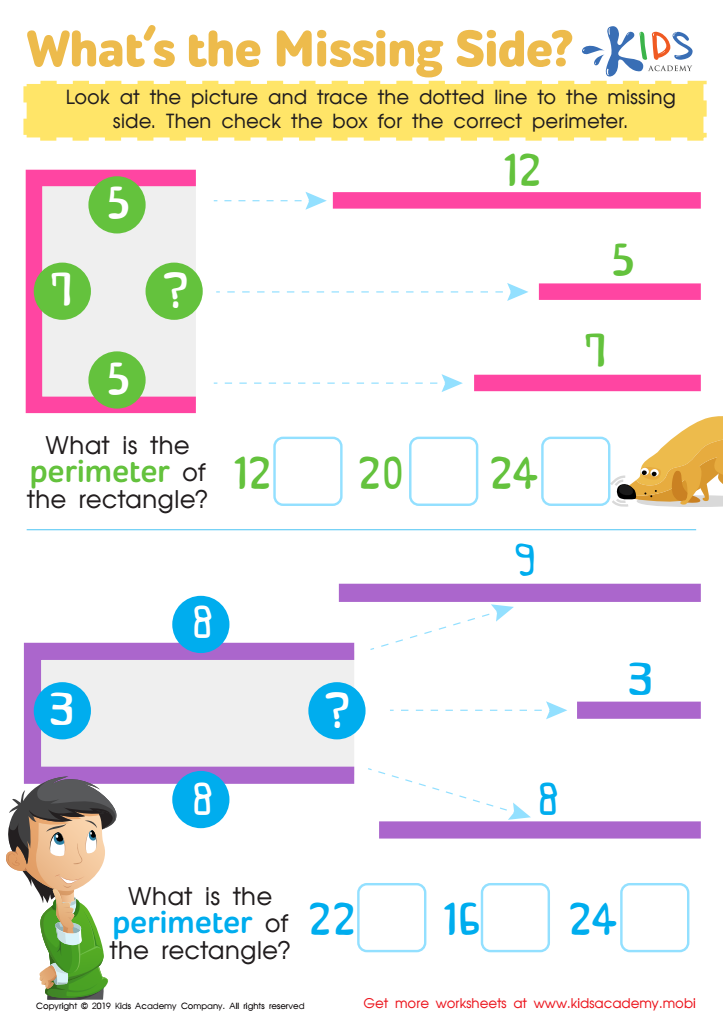
What's the Missing Side Worksheet
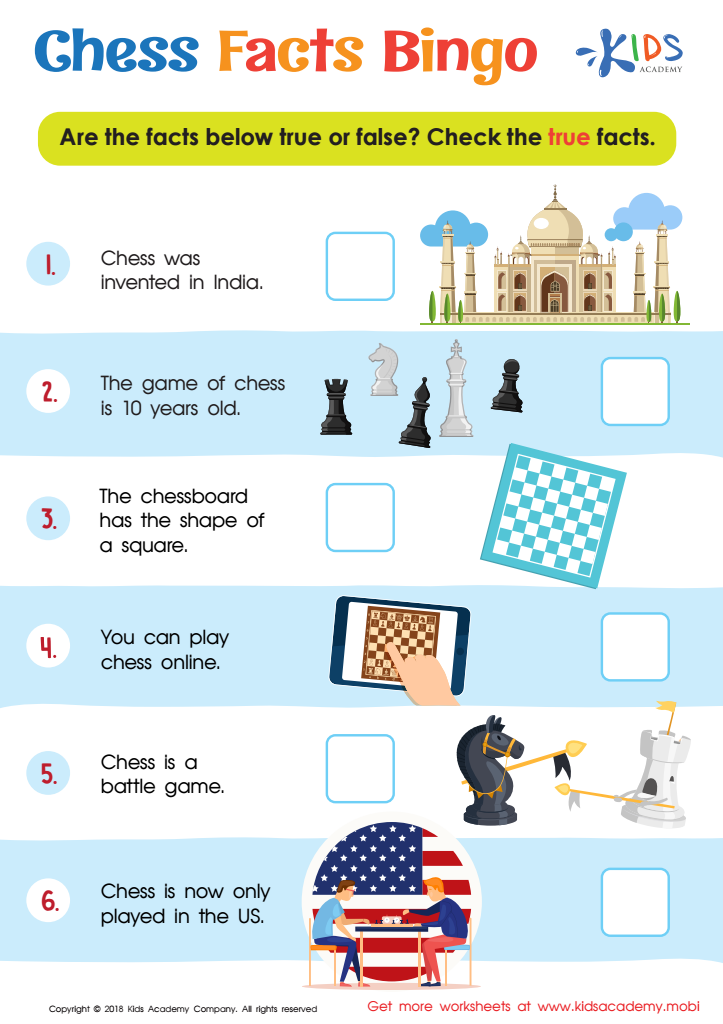
Chess Facts Bingo Worksheet







Logical thinking is a cornerstone of early childhood development, and it plays an especially crucial role in Grade 3 Math. At this stage, children transition from basic arithmetic to more complex problem-solving tasks. Logical thinking helps them make connections between different concepts, understand patterns, and apply learned knowledge to new scenarios.
For parents, fostering logical thinking can greatly enhance their child’s academic performance and self-confidence. A strong foundation in logical reasoning not only aids in mastering math but also benefits other subjects, promoting overall cognitive development. Activities like puzzles and games that require strategic thinking can be both fun and educational.
Teachers, on the other hand, will find students with well-developed logical thinking skills more engaged and capable of tackling challenging math problems. Logical reasoning fosters a deeper understanding of mathematical principles, which is essential for higher-level math and real-world problem-solving. This ability to think systematically and critically can lead to better classroom experiences and improved educational outcomes.
Both parents and teachers should recognize that early development of logical thinking is an investment in the child's future. It equips them with essential life skills, such as decision-making and problem-solving, which are vital for academic success and everyday challenges. Encouraging logical thinking from an early age can make a significant difference in a child's educational journey.