Recognizing shapes Grade 3 Math Worksheets
10 filtered results
-
From - To
Explore our Grade 3 Math Worksheets focused on Recognizing Shapes! These engaging, printable resources are designed to help students identify, classify, and understand various geometric shapes, including circles, squares, and triangles. Each worksheet features fun activities that encourage critical thinking and visualization skills, making math enjoyable for young learners. Aligned with educational standards, our worksheets are perfect for classroom use or home practice. Enhance your child's learning experience with hands-on exercises that foster creativity while reinforcing shape recognition skills essential for their mathematical foundation. Download now for a structured and interactive approach to mastering shapes in third grade!
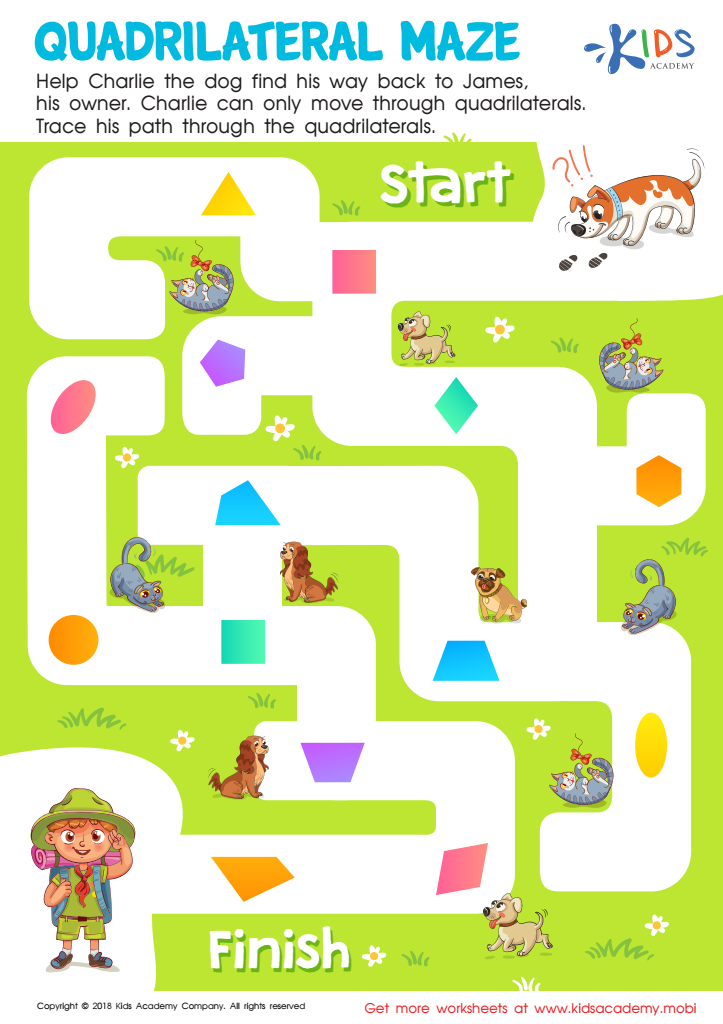
Quadrilateral Maze Worksheet
 Assign to My Students
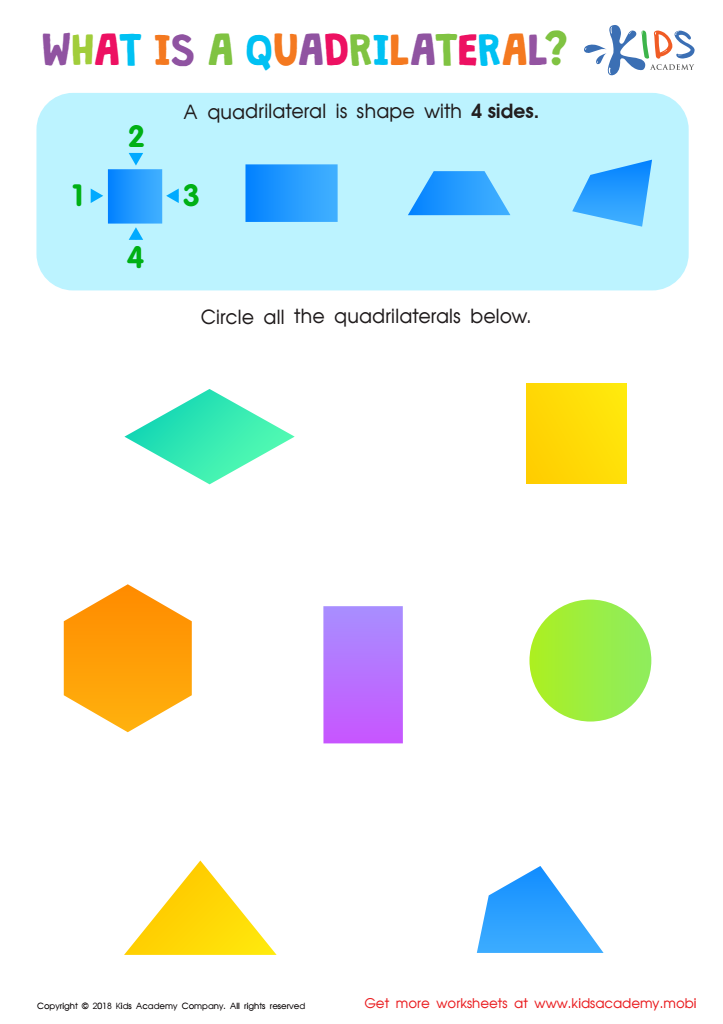
What Is a Quadrilateral? Worksheet






Recognizing shapes is an essential skill in Grade 3 math that lays the foundation for more complex mathematical concepts. Parents and teachers should care about this topic because shape recognition not only enhances spatial awareness but also fosters critical thinking and problem-solving skills. Understanding different shapes helps children identify patterns, categorize objects, and develop their geometric reasoning.
In daily life, awareness of shapes is vital. From recognizing stop signs to organizing objects and constructing models, shape knowledge is all around us. Encouraging students to explore shapes allows them to make connections between math and the real world, ultimately promoting enthusiasm for learning. Moreover, proficiency in identifying shapes contributes to successful concepts in measurement, area, and spatial comparisons at higher grade levels.
Engaging with shapes can also reinforce important skills across various subjects, such as art and science. Through hands-on activities, children enhance their fine motor skills while creatively exploring geometry. Thus, a focused approach on recognizing shapes not only meets curriculum standards but prepares students for future academic success by equipping them with vital cognitive tools transferable across disciplines. Engaging parents in this learning reinforces these concepts at home, fostering a collaborative educational environment.