Simplifying Fractions Grade 3 Math Worksheets
10 filtered results
Difficulty Level
Grade
Age
-
From - To
Subject
Activity
Standards
Welcome to our collection of "Simplifying Fractions" worksheets tailored for Grade 3 students! These engaging, printable resources are designed to help young learners understand and master the concept of simplifying fractions. Through fun activities and clear instructions, students will develop essential skills in identifying equivalent fractions and manipulating numerators and denominators. Our worksheets offer a variety of exercises, from visual aids to word problems, ensuring comprehensive practice. Perfect for classroom use or at-home learning, these worksheets aim to boost confidence and build strong foundational math knowledge. Download today and make simplifying fractions a breeze for your third grader!
Favorites
With answer key
Interactive
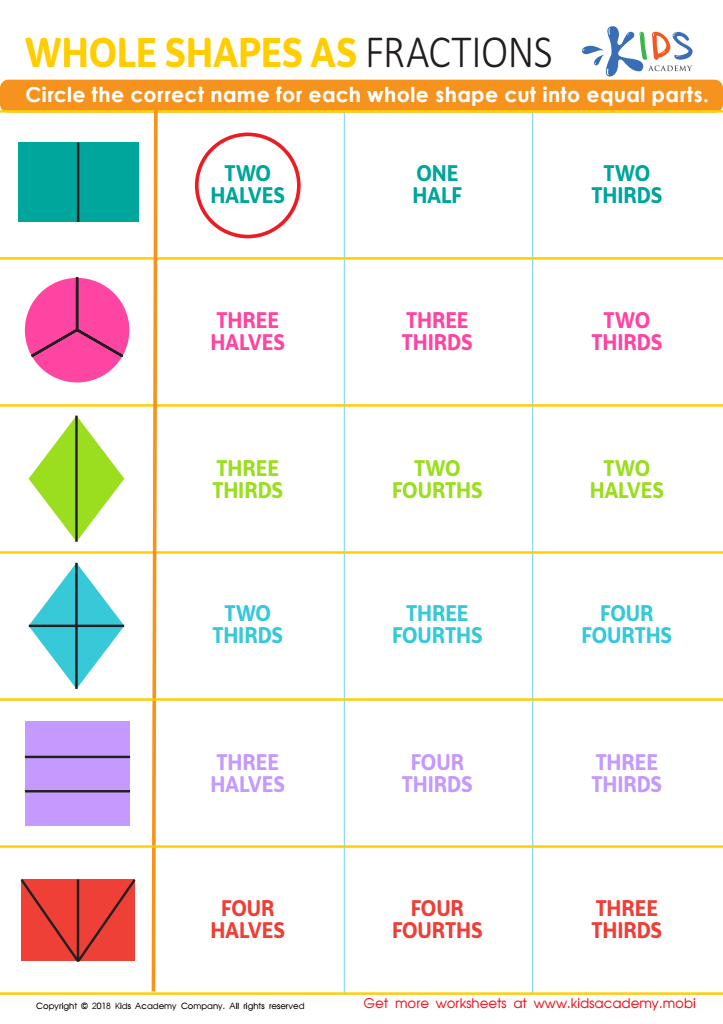
Whole Shapes as Fractions Worksheet
Introduce your child to fractions! After they can draw whole shapes, have them represent them as fractions using a simple worksheet. This will help improve their understanding of naming whole shapes cut into equal parts.
 Assign to My Students
Whole Shapes as Fractions Worksheet
Worksheet
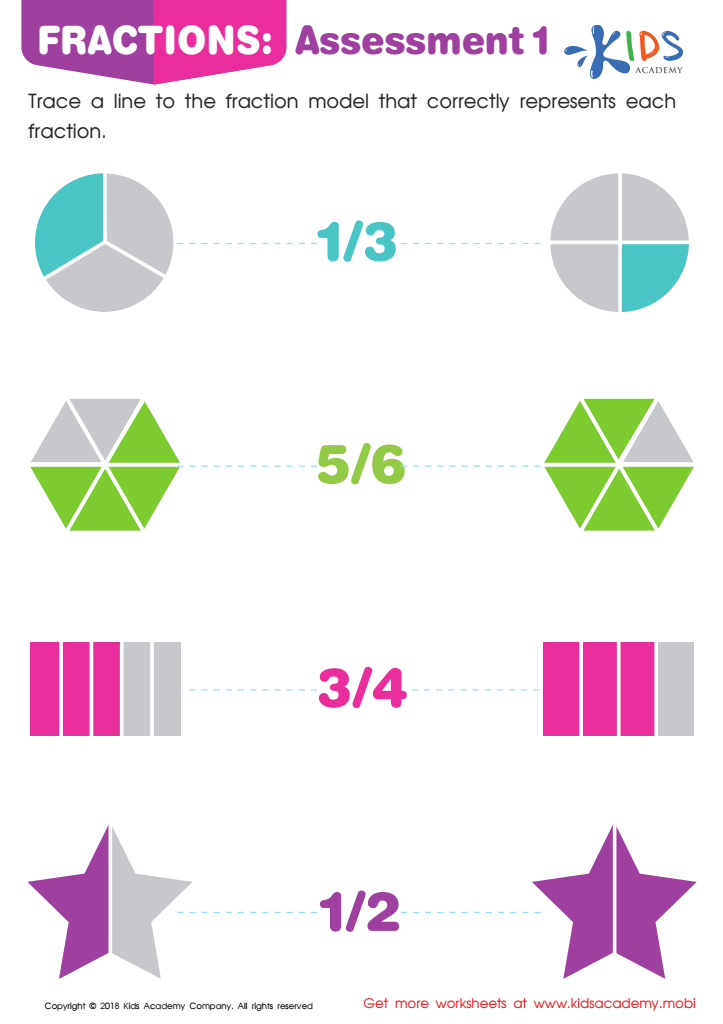
Fractions: Assessment 1 Worksheet
Master fractions easily with this worksheet! It has four sets of fraction models and fraction equations with two models each. Guide your kids to trace a line to the correct fraction model for each equation.
Fractions: Assessment 1 Worksheet
Worksheet
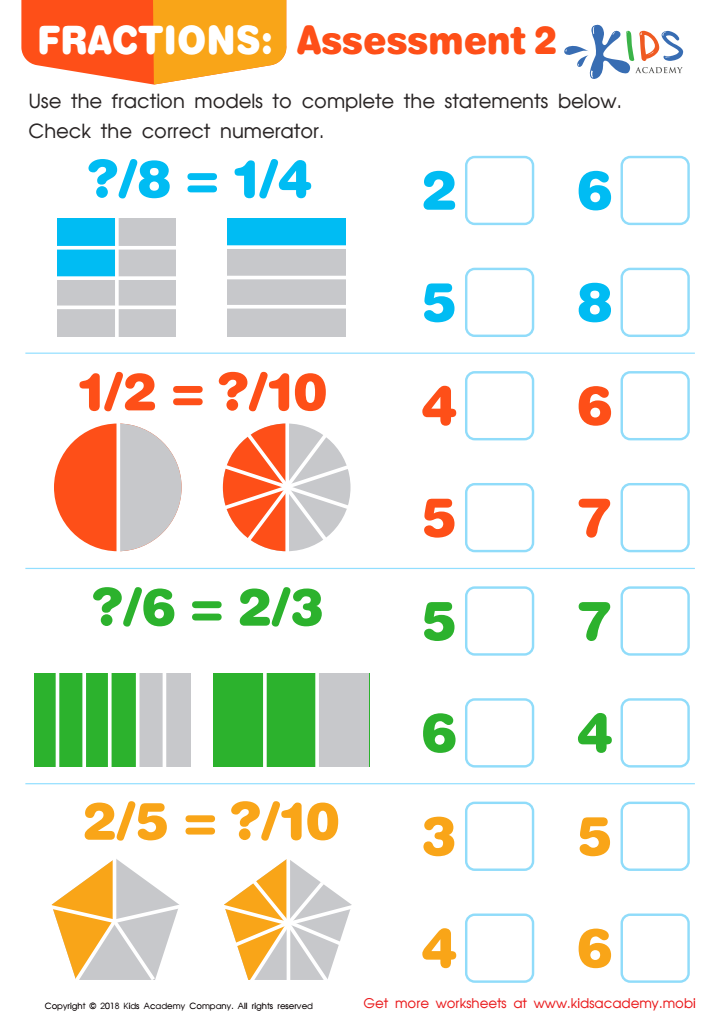
Fractions: Assessment 2 Worksheet
Help your kids understand fractions better with this worksheet. Ask them to complete the fraction statements using the fraction models on the left and then check the correct numerators. This can help clear up any confusion they may have with fractions and fraction models.
Fractions: Assessment 2 Worksheet
Worksheet
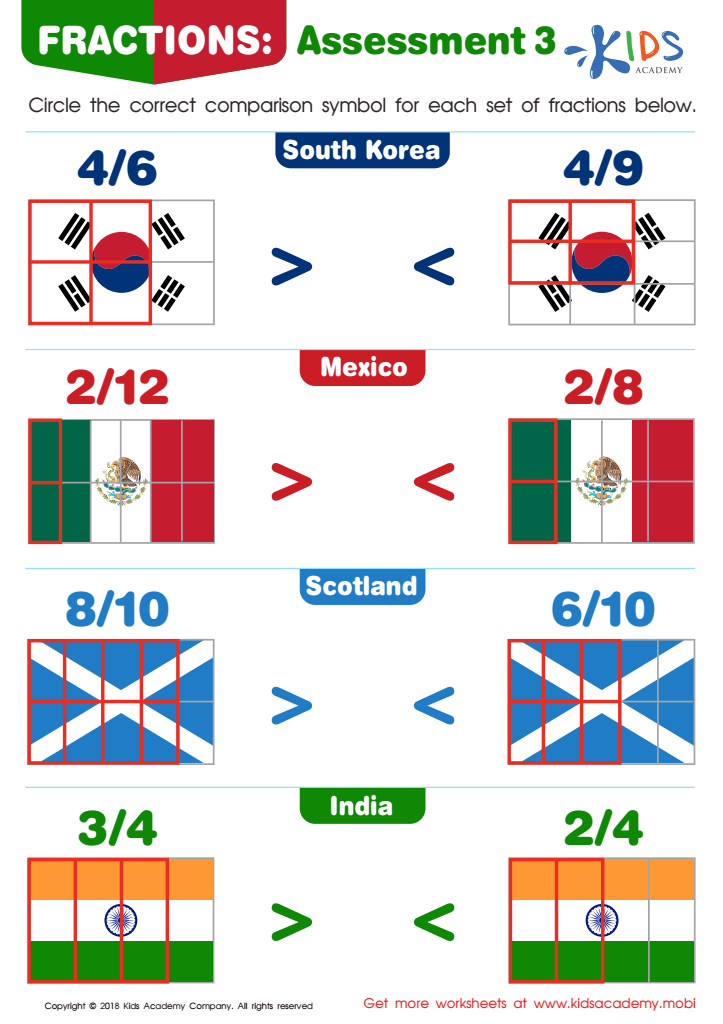
Fractions: Assessment 3 Worksheet
This worksheet helps teach kids about fractions and introduces them to countries and their flags. Have them read the country names and point to the flags. Then help them assess the fractions, and ask them to circle the symbol that shows their values.
Fractions: Assessment 3 Worksheet
Worksheet
Join Kids Academy for Free
Who is primarily going to use this learning content?







Simplifying fractions is an essential skill for third-grade students, and it holds significance for parents and teachers alike. Understanding this concept lays the groundwork for more advanced mathematical operations in future grades. When students learn to simplify fractions, they gain insight into the relationship between numbers and develop critical thinking and problem-solving skills.
For parents, engaging with their children during math lessons encourages a positive attitude toward learning. By understanding how to simplify fractions, parents can help reinforce classroom learning at home, fostering a supportive environment for their child's academic growth.
Teachers, on the other hand, can utilize simplified fractions as a gateway to introduce broader math concepts such as equivalent fractions, addition, and subtraction of fractions. This not only enhances comprehension but also prepares students for real-world applications, such as cooking or measuring.
In essence, the ability to simplify fractions cultivates a deeper mathematical understanding, encouraging both independent learning and collaborative discussions, both at home and in the classroom. This foundational skill ultimately adds capability and confidence, equipping young learners for greater academic challenges ahead. By prioritizing this concept, parents and teachers collectively contribute to a solid mathematical foundation for students.