Understanding bar graphs Grade 3 Math Worksheets
4 filtered results
-
From - To
Our "Understanding Bar Graphs" Grade 3 Math Worksheets are designed to make data interpretation fun and engaging for young learners. These printable worksheets help students master the basics of reading, creating, and analyzing bar graphs. Through a variety of activities and exercises, children will learn to accurately display data and draw meaningful conclusions. Perfect for classroom use or extra practice at home, our worksheets are aligned with educational standards to support your child’s growth in math. Boost your third grader's confidence and skills in data interpretation with our easy-to-understand and visually appealing bar graph worksheets.
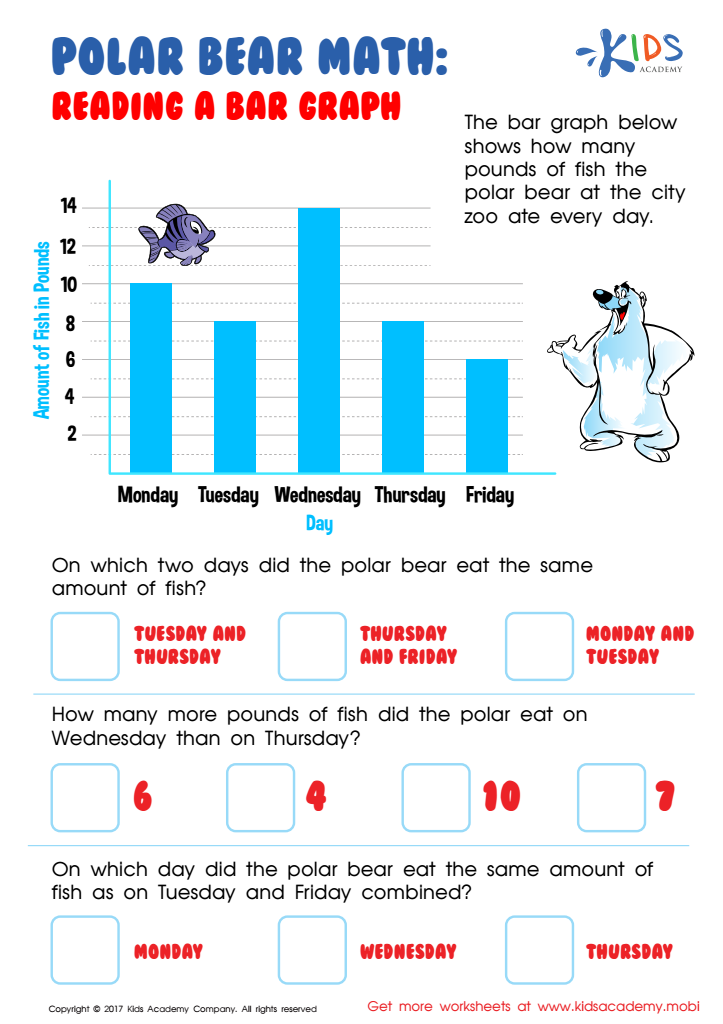
Reading Bar Graph Worksheet
 Assign to My Students
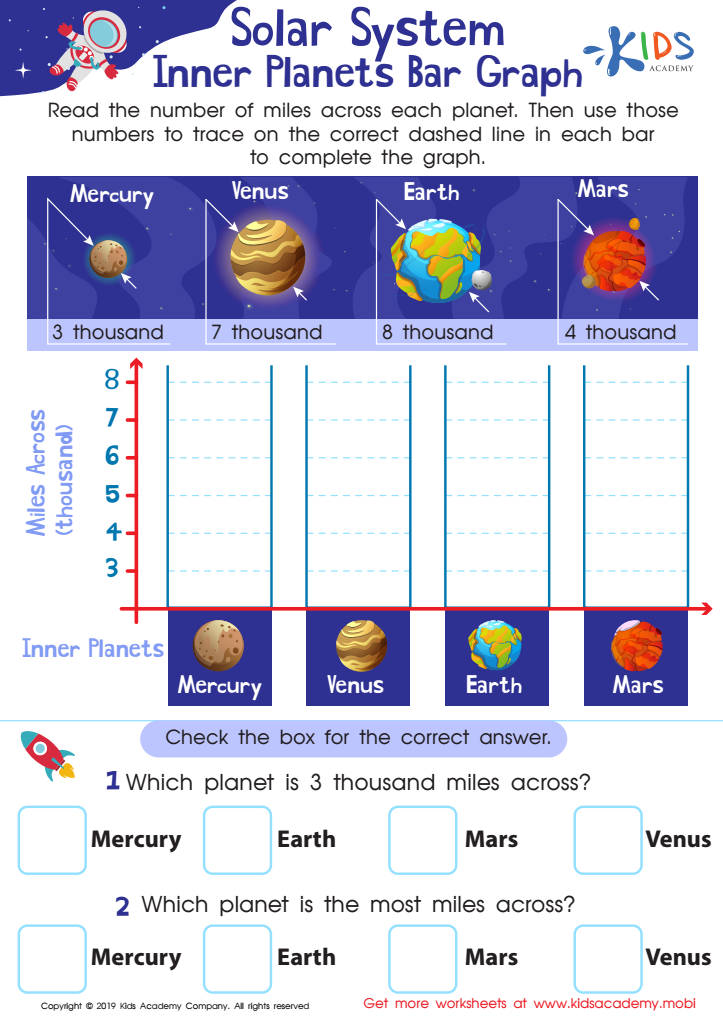
Planets Bar Graph Worksheet
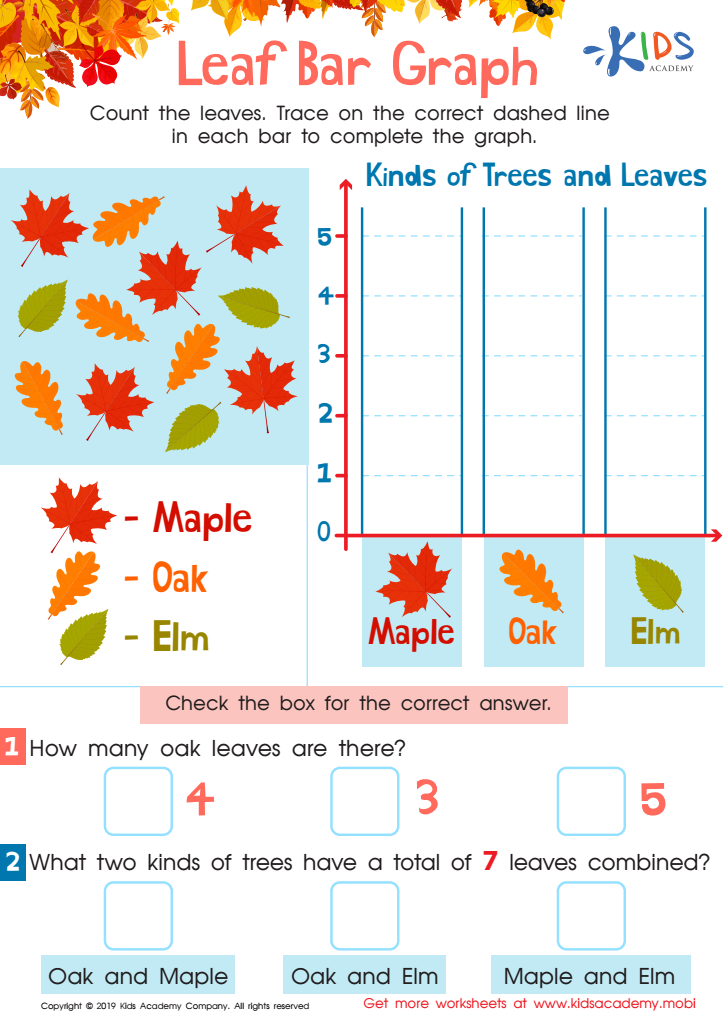
Leaf Bar Graph Worksheet
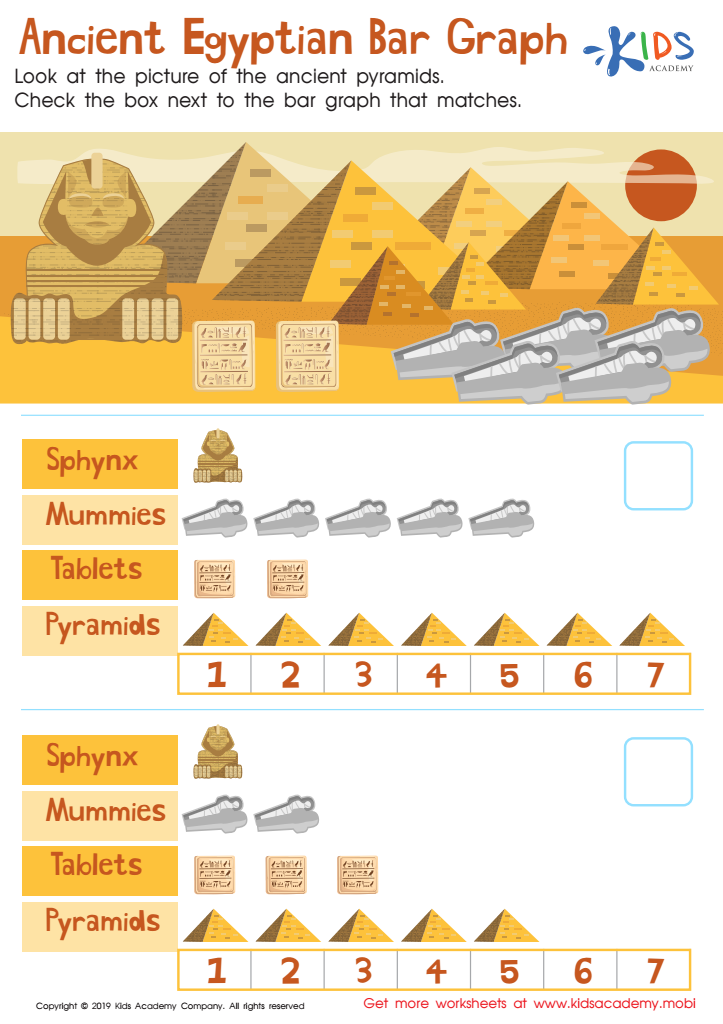
Egyptian Bar Graph Worksheet






Understanding bar graphs is an essential skill in Grade 3 math that warrants attention from both parents and teachers. Firstly, bar graphs are practical tools for representing data visually, making it easier for children to grasp complex information and trends quickly. This foundational skill lays the groundwork for more advanced data interpretation in later grades.
Engaging with bar graphs enhances analytical thinking. As children learn to read and create bar graphs, they practice organizing information logically, recognizing patterns, and making comparisons. These critical thinking skills are transferable to other academic subjects and real-life situations.
Additionally, early exposure to bar graphs aligns with mathematics standards and curricula, ensuring that students meet learning benchmarks. By mastering this concept early on, children build confidence in their math abilities, which can foster a more positive attitude toward the subject.
Parents and teachers play a significant role in reinforcing these concepts outside the classroom. Simple activities like discussing a bar graph from a favorite magazine or creating one to track household chores can make learning interactive and fun. When adults show they value bar graphs, children are more likely to understand their importance and see them as useful tools, not just academic requirements. This holistic approach amplifies a child's competence and interest in math, crucial for long-term educational success.