Phonics recognition Grammar Worksheets
5 filtered results
-
From - To
Enhance your child's reading and writing skills with our Phonics Recognition Grammar Worksheets. Designed for young learners, these interactive and engaging worksheets focus on phonics and grammar fundamentals. Kids will practice recognizing letter sounds, blending, and word formation, developing a strong phonemic awareness. Utilizing fun exercises and vivid illustrations, our worksheets make learning an enjoyable experience. Ideal for both classroom and home use, they support active learning and improve literacy skills in an easy-to-understand format. Foster a love for language and boost early reading proficiency with Kids Academy's expertly crafted phonics and grammar worksheets.
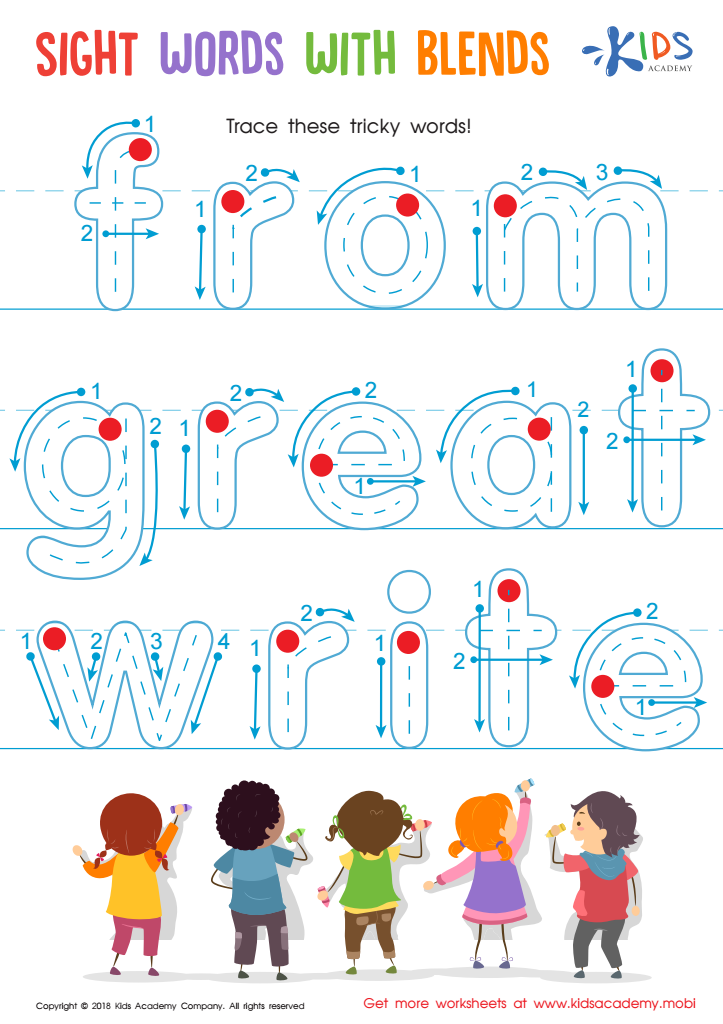
Sight Words with Blends Worksheet
 Assign to My Students
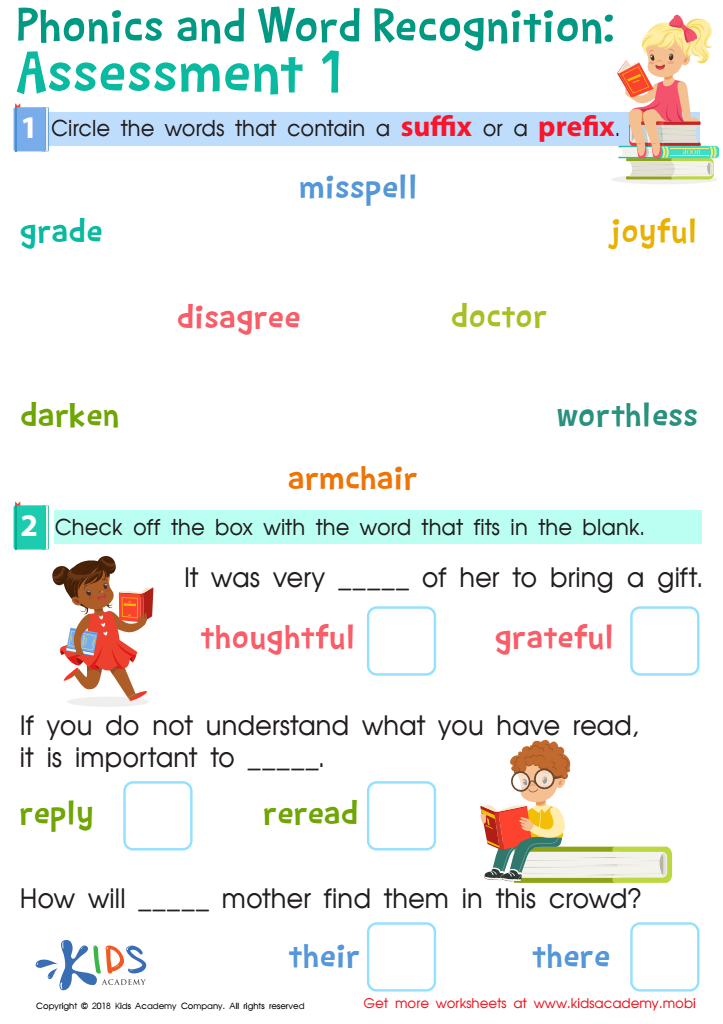
Phonics and Word Recognition: Assessment 1 Worksheet
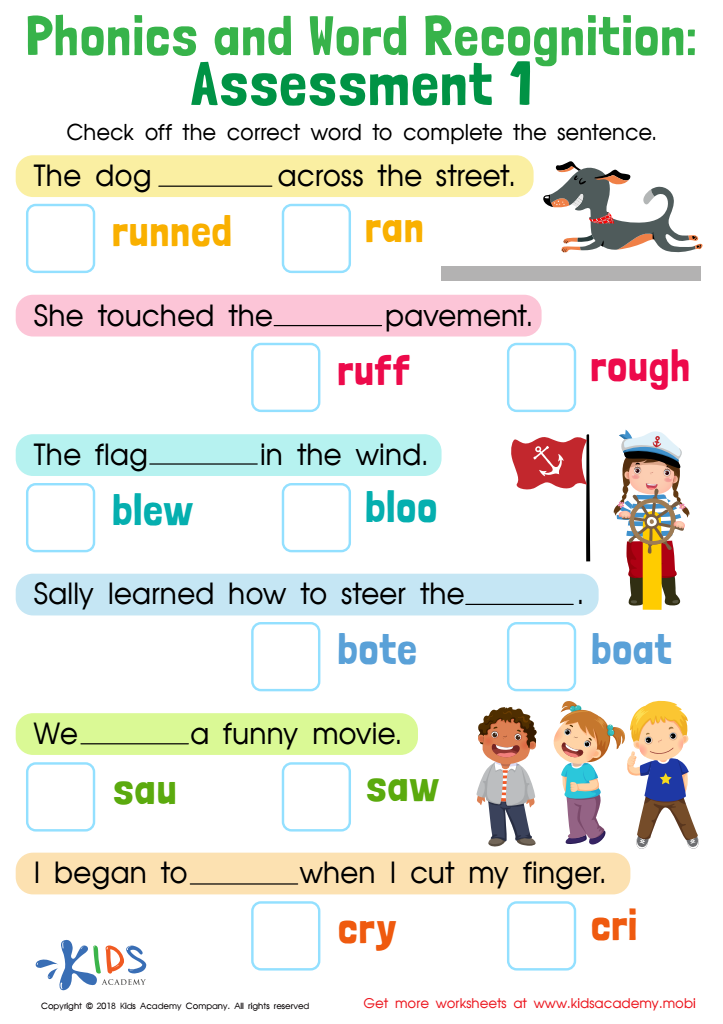
Phonics and Word Recognition: Assessment 1 Worksheet
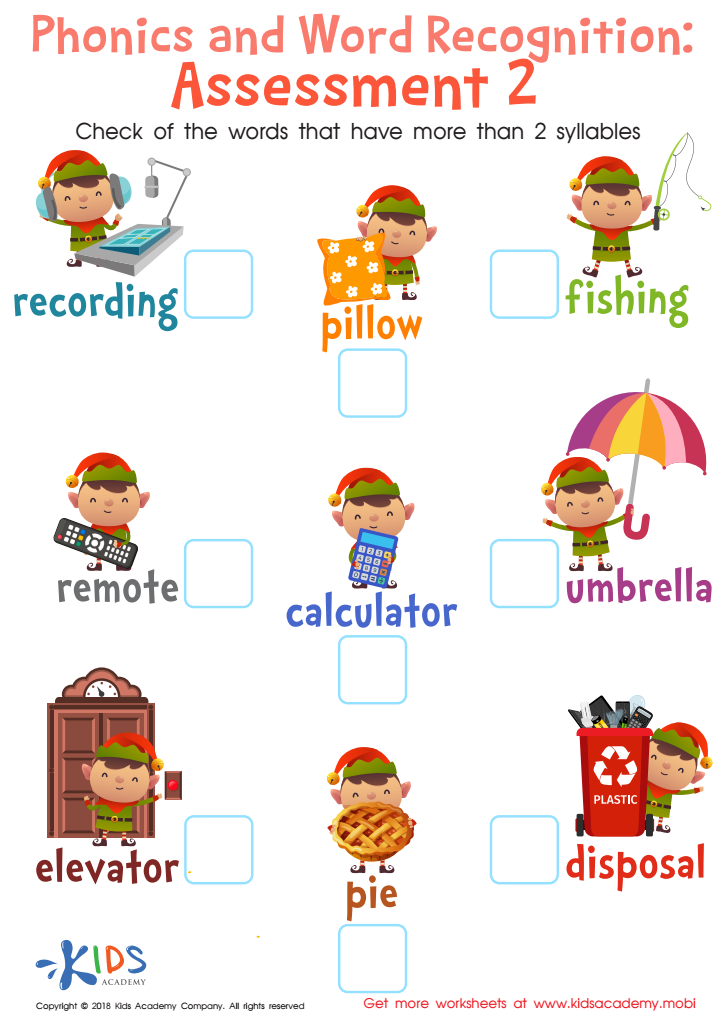
Phonics and Word Recognition: Assessment 2 Worksheet
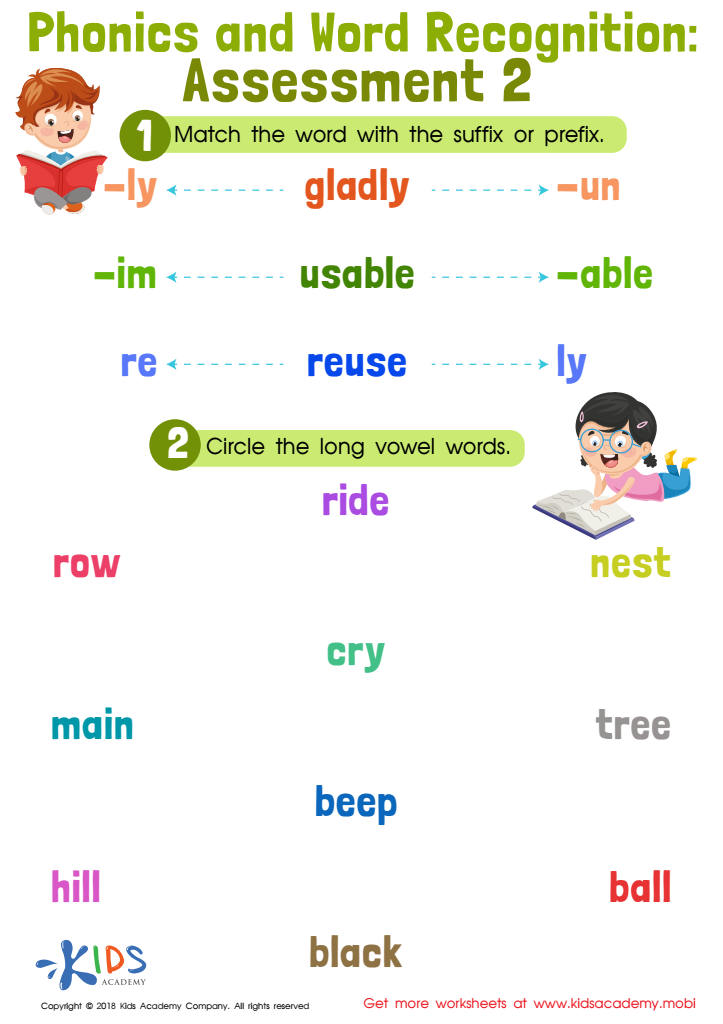
Phonics and Word Recognition: Assessment 2



.jpg)



Phonics recognition and grammar are fundamental building blocks in early childhood education, both crucial for developing proficient reading and writing skills. Phonics helps children understand the relationship between letters and their corresponding sounds, enabling them to decode new words and improve their reading fluency and comprehension. This foundational skill is vital for reading confidence and opens up a world of knowledge and imagination through literature.
Grammar, on the other hand, provides the structure needed for coherent communication. It includes rules and conventions of the language that help children construct meaningful and articulate sentences. Understanding grammar allows children to express their thoughts accurately and understand others effectively, which is essential for academic success and social interaction.
Parents and teachers play pivotal roles in fostering these skills. Early exposure to phonics can make a significant difference in a child's ability to read independently, while regular practice in grammar helps children write clearly and correctly. In neglecting these areas, children may struggle with more complex literacy tasks later on, affecting their overall academic performance and self-esteem.
By prioritizing phonics recognition and grammar, parents and teachers equip children with essential tools for lifelong learning, critical thinking, and effective communication, laying the groundwork for future educational success and personal development.








