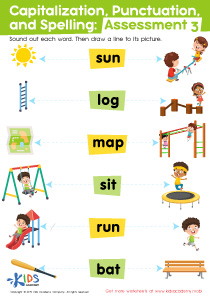
Contextual understanding Writing Worksheets
6 filtered results
-
From - To
Elevate your child's writing skills with our Contextual Understanding Writing Worksheets from Kids Academy. Designed by educational experts, these worksheets focus on enhancing comprehension and contextual awareness in young learners. Activities include identifying word meanings through context clues, building vocabulary, and fostering an understanding of how words function within sentences. Engaging and interactive, these resources are perfect for both classroom and home use, assisting kids in developing critical thinking and interpretative skills. With vivid illustrations and age-appropriate exercises, children will gain confidence in their writing abilities while having fun. Unlock your child's potential today with our expertly crafted worksheets.
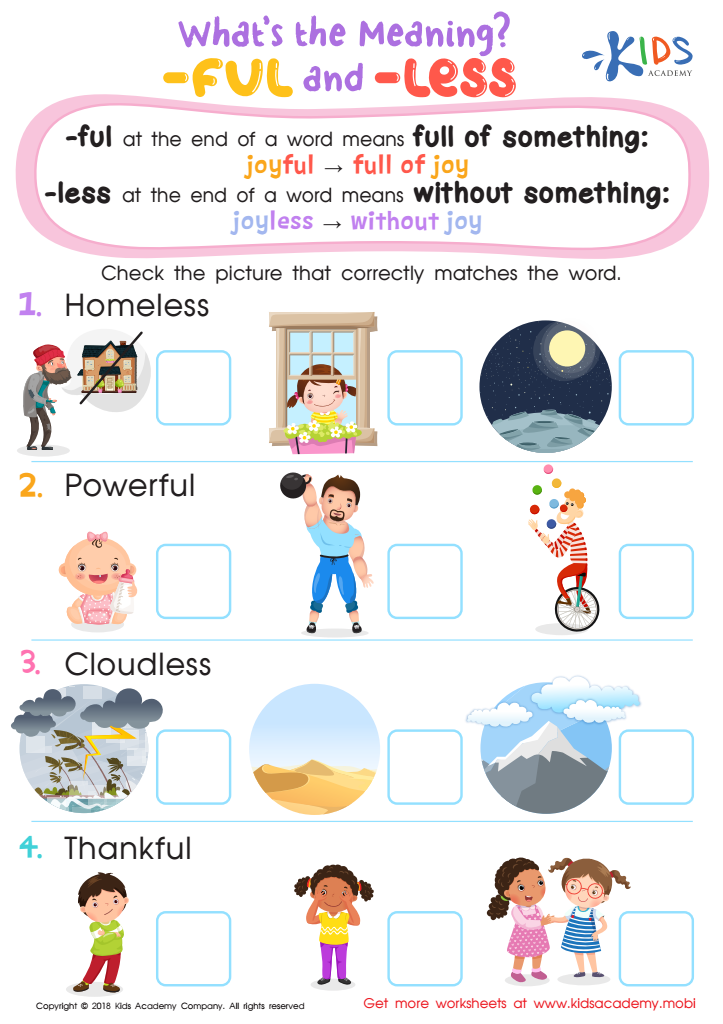
What's the Meaning? Worksheet
 Assign to My Students
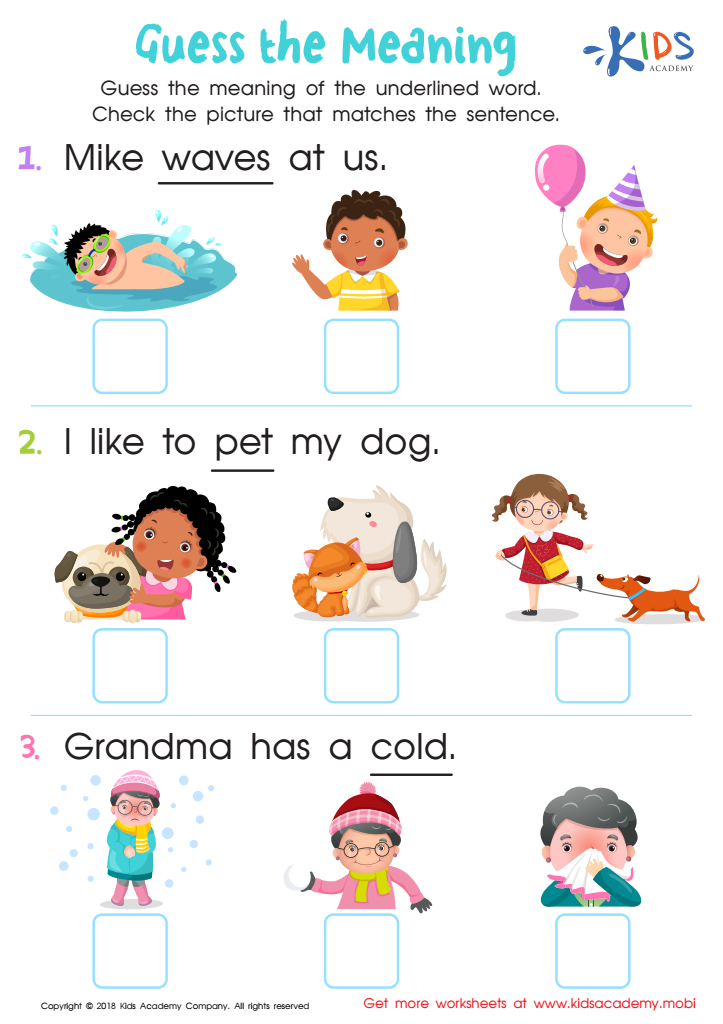
Guess the Meaning Worksheet
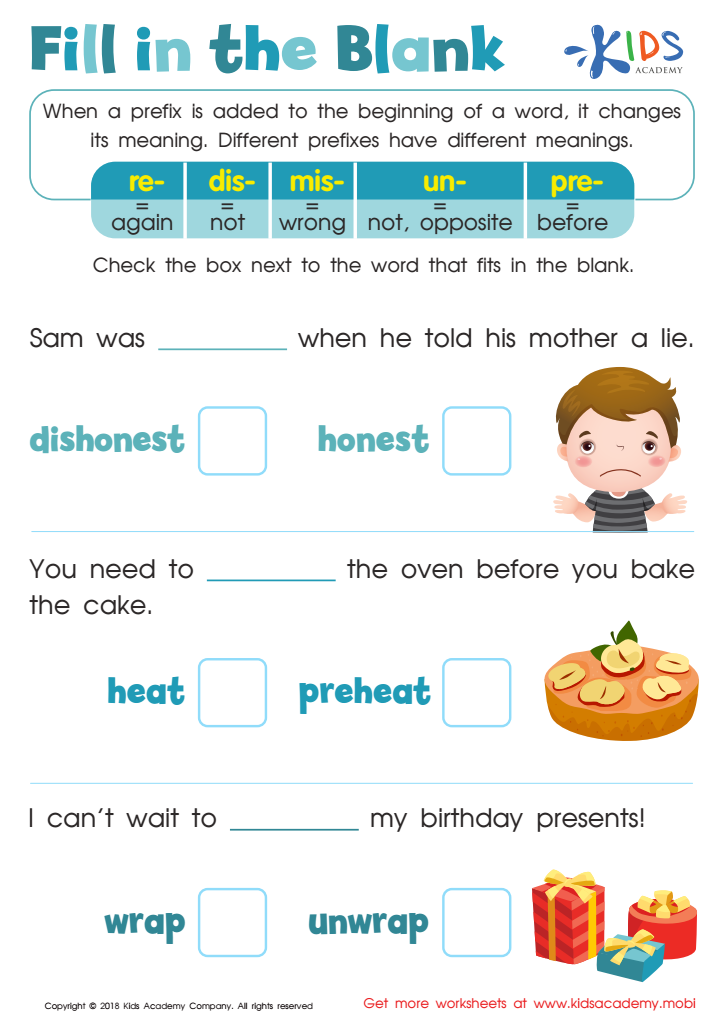
Reading: Fill in the Blank Worksheet
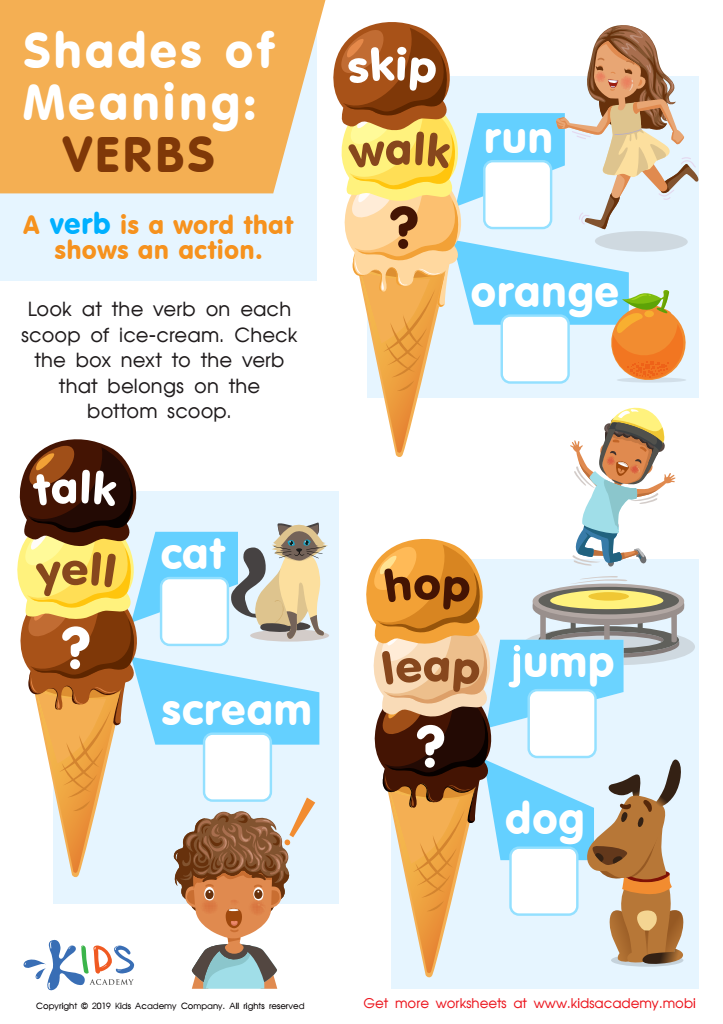
Shades of Meaning: Verbs Worksheet
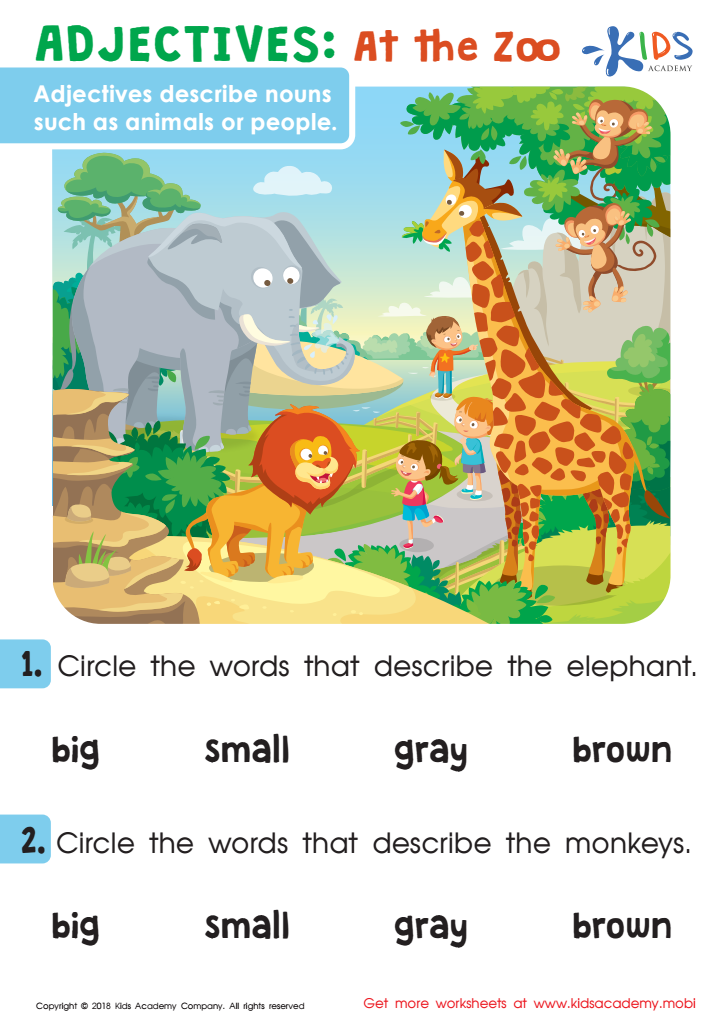
Adjectives: At The Zoo Worksheet
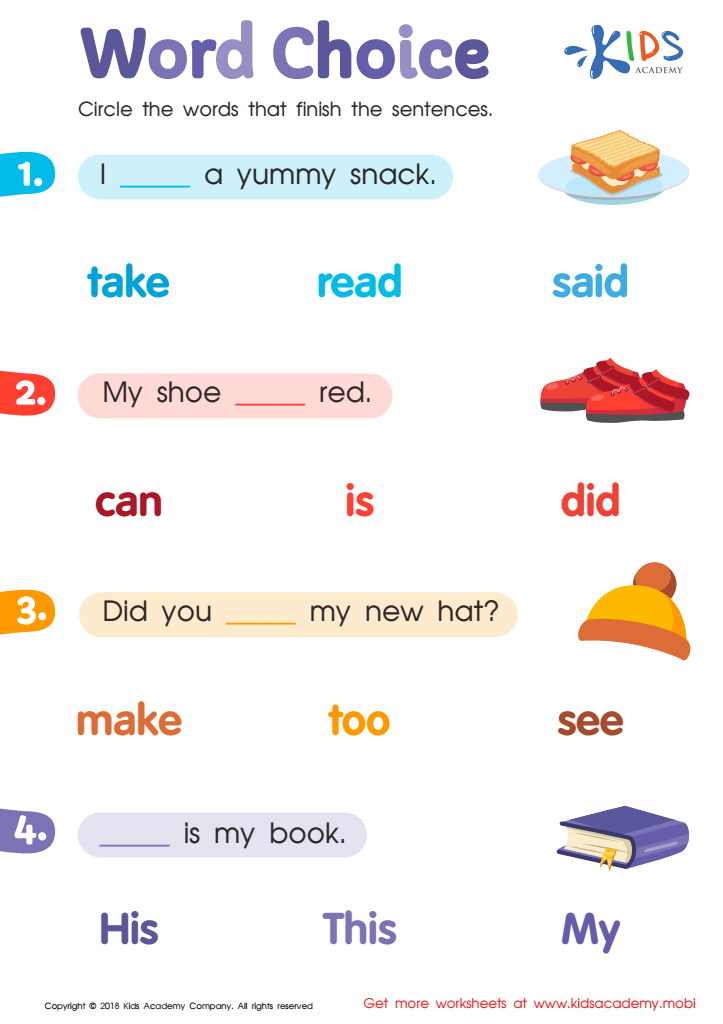
Word Choice Worksheet







Parents and teachers should prioritize contextual understanding in writing because it is fundamental to effective communication and cognitive development. Contextual understanding involves grasping the nuances, background, and situational factors that add meaning to written content. When children write with context in mind, they create richer, more coherent, and more engaging narratives or reports. This skill helps them convey their thoughts clearly and persuasively, making their writing more relevant to readers.
For parents, encouraging contextual understanding enhances their child’s critical thinking and problem-solving skills. Children learn to consider different perspectives, leading to broader awareness and empathy. This not only improves academic performance but also social interaction outside of school.
Teachers can foster a deeper comprehension of themes, history, and real-world applications by guiding students to write contextually. This practice reinforces the interconnectedness of subjects, creating a holistic learning experience. Contextual understanding also helps students excel in standardized tests and assessments, which increasingly emphasize critical thinking and the ability to interpret complex information.
Ultimately, nurturing contextual understanding in writing prepares children for future academic challenges and professional environments, where effective communication is key. By investing in this skill early on, parents and teachers equip students with tools essential for lifelong learning and success.