Phonics skills improvement Writing Worksheets
3 filtered results
-
From - To
Enhance your child's phonics skills with our engaging Writing Worksheets! Designed for young learners, these worksheets provide a fun and interactive way to improve reading and writing abilities. Each activity focuses on key phonics concepts, helping kids recognize letter sounds, blend words, and improve spelling. With colorful visuals and age-appropriate exercises, children will stay motivated as they practice their writing skills. Perfect for classroom use or at-home learning, our worksheets encourage independent practice and boost confidence. Explore our collection to turn phonics learning into an enjoyable experience, paving the way for literacy success. Start your journey towards phonics mastery today!
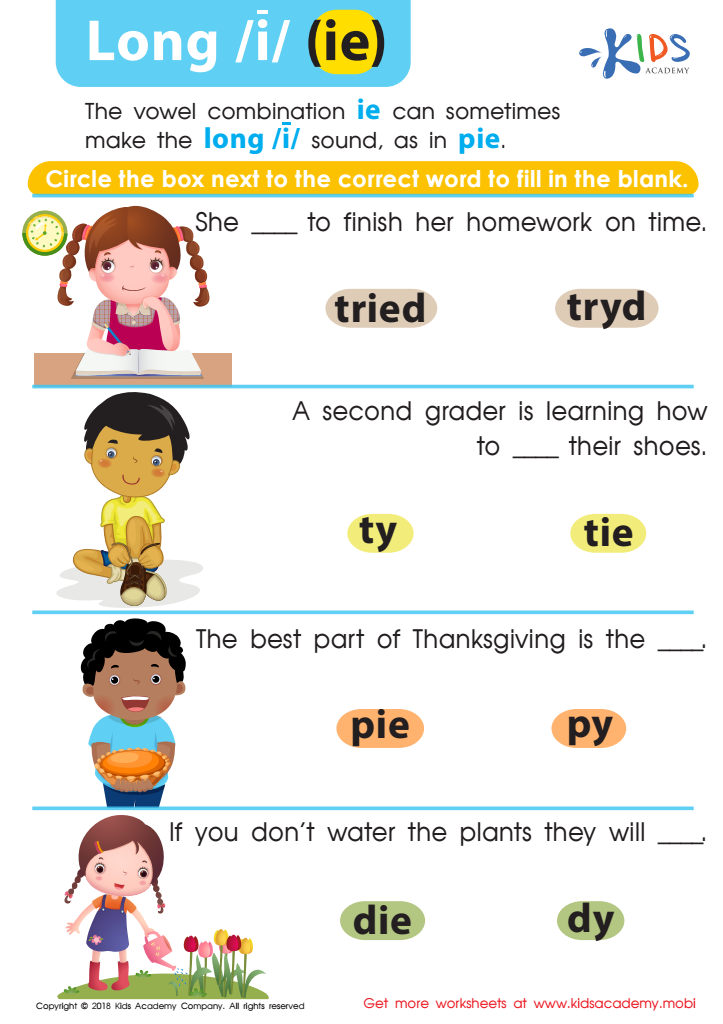
Reading: Long I and IE Worksheet
 Assign to My Students
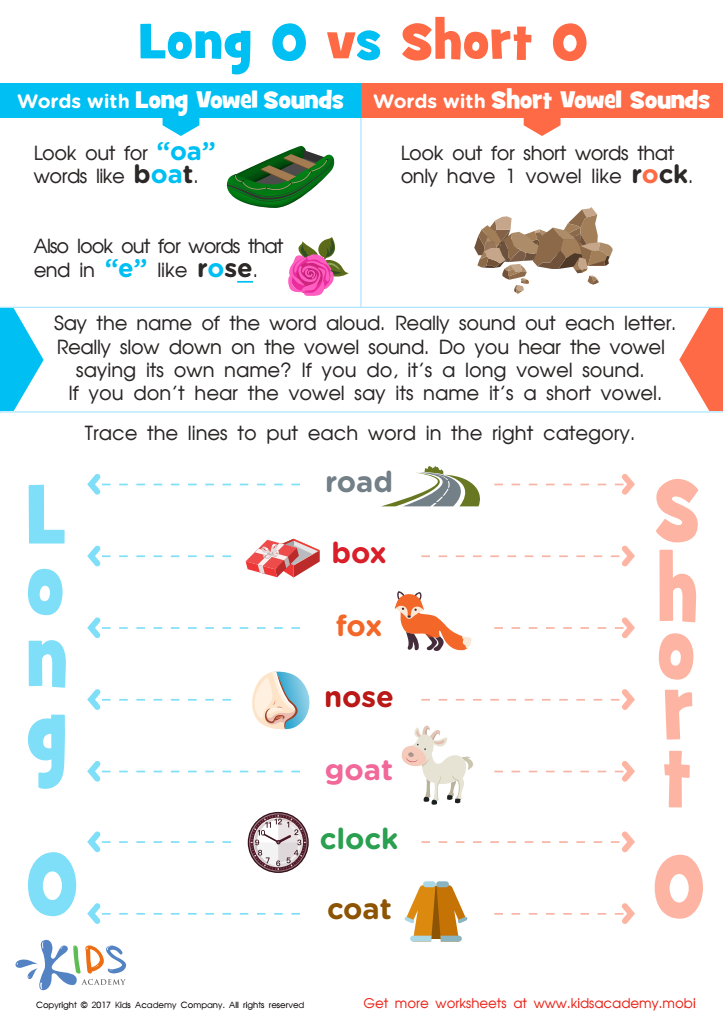
Long and Short Vowel O Spelling Worksheet
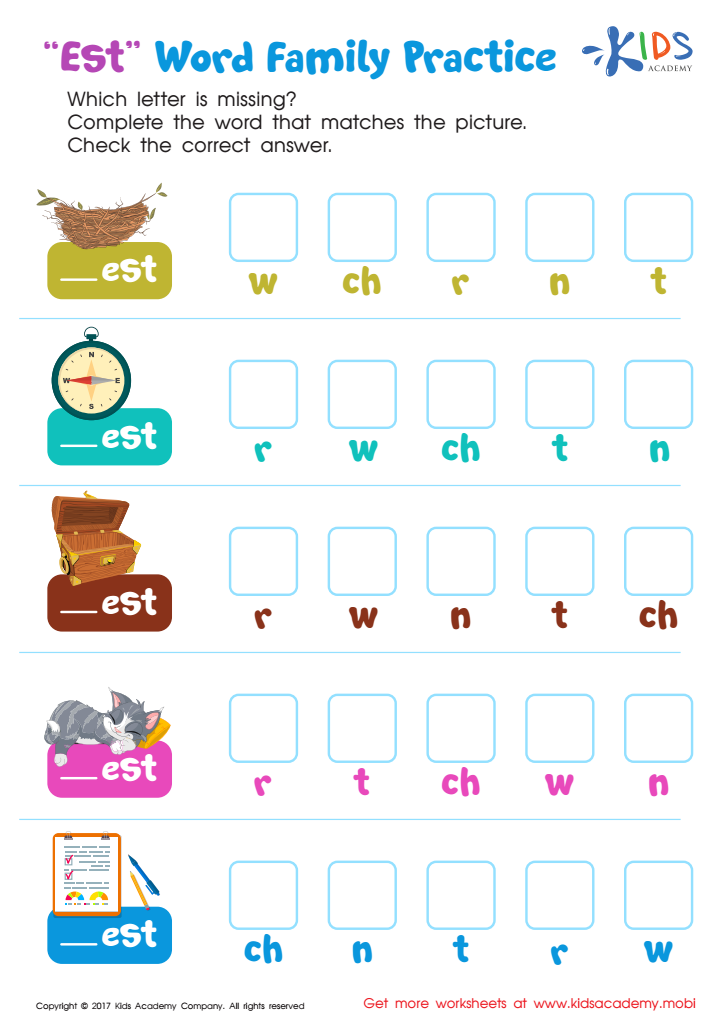
Words Family "est" Spelling Worksheet






Phonics skills are fundamental to a child's reading and writing development. Parents and teachers should prioritize improvement in these skills because they form the building blocks of literacy. Through phonics, children learn the relationship between sounds and letters, enabling them to decode words efficiently. This skill not only enhances reading fluency but also boosts comprehension, as children can focus more on understanding the text rather than struggling to decode it.
Furthermore, strong phonics skills can have a profound impact on a child’s overall academic performance. As literacy is essential across all subjects, children who are proficient in phonics are likely to experience greater success in school, leading to increased confidence and a love for learning.
Engaging in phonics instruction also allows adults to identify any potential learning difficulties early on, enabling timely intervention. Additionally, when teachers and parents collaborate to reinforce phonics outside the classroom—through reading together, playing word games, or engaging in writing activities—they foster an enriched learning environment that encourages children’s linguistic development.
Ultimately, investing time and resources in improving phonics skills helps children become capable readers and writers, laying a strong foundation for future educational success.








