Addition & Subtraction worksheets activities for Ages 3-8 - Page 2
26 filtered results
-
From - To
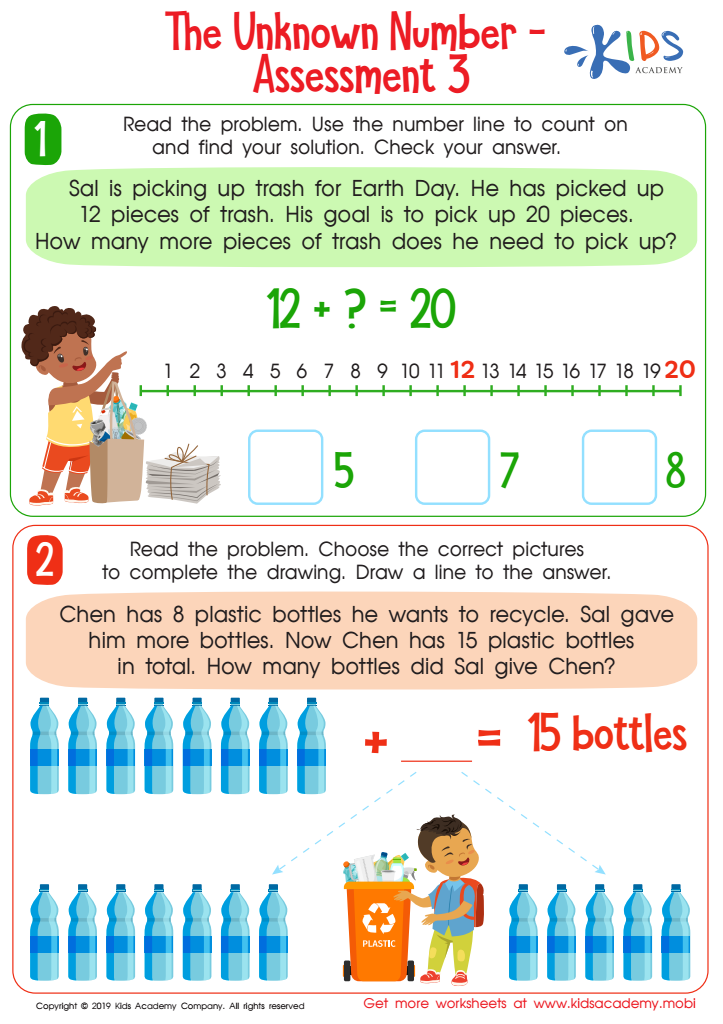
The Unknown Number - Assessment 3 Worksheet
 Assign to My Students
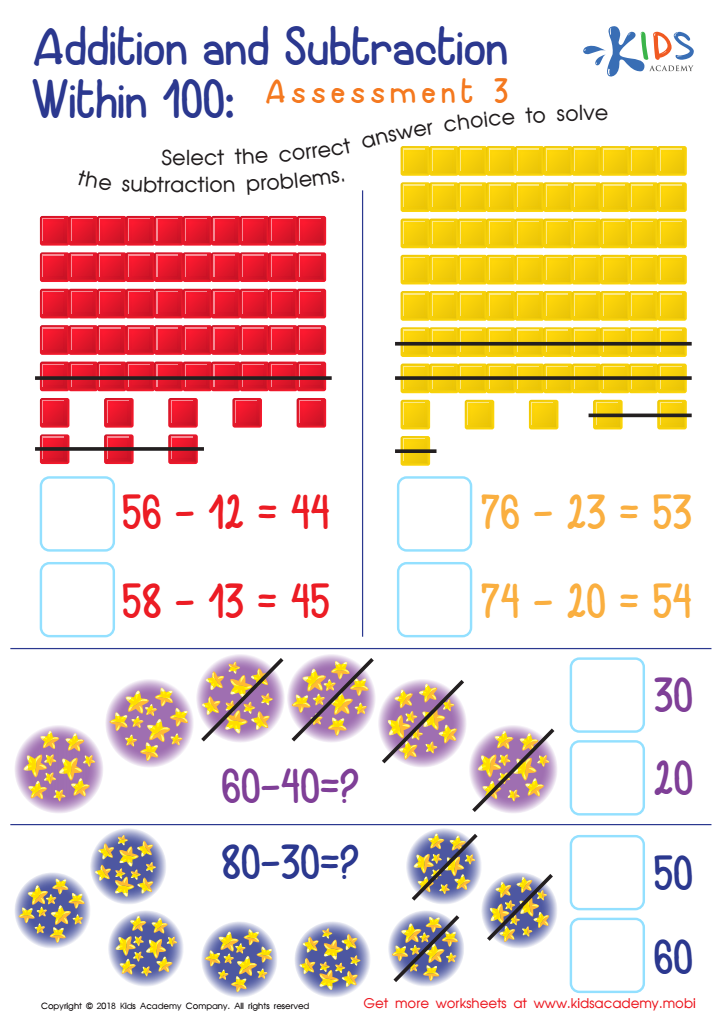
Addition and Subtraction Within 1: Assessment 3 Worksheet








Parents and teachers should prioritize Addition and Subtraction activities for children ages 3-8 because these foundational skills are critical for a child’s overall mathematical development. At this young age, children are naturally curious and eager to learn, making it an ideal time to introduce basic arithmetic concepts. Engaging in Addition and Subtraction activities cultivates number sense, which is the ability to understand and work with numbers effectively.
These activities provide numerous cognitive benefits: they enhance problem-solving skills, promote logical thinking, and help children understand relationships between quantities. Additionally, early mastery of these concepts sets the stage for future academic success in mathematics and other subjects that require analytical thinking.
Moreover, interactive and fun activities, such as counting games, manipulatives, and real-life problem-solving, make learning engaging and enjoyable. These experiences enhance a child’s confidence and positive attitude toward math, which is crucial as they progress through school.
Lastly, incorporating Addition and Subtraction into everyday life helps children see relevance and application of what they learn, fostering a lifelong love for learning. By prioritizing these activities, parents and teachers can create a solid mathematical foundation that will benefit children throughout their education.








