Punctuation worksheets activities for Ages 4-7
3 filtered results
-
From - To
Welcome to our interactive Punctuation Worksheets for Ages 4-7! Designed to spark creativity and enhance learning, these engaging activities introduce young learners to the basics of punctuation in a fun and accessible way. Our worksheets feature colorful illustrations and entertaining exercises tailored to help children recognize and use punctuation marks such as periods, commas, and question marks. These resources will not only strengthen their writing skills but also build confidence in communication. Perfect for homeschool or classroom use, our activities encourage independent learning and foster a love for language. Explore our collection today and watch your child’s punctuation skills soar!
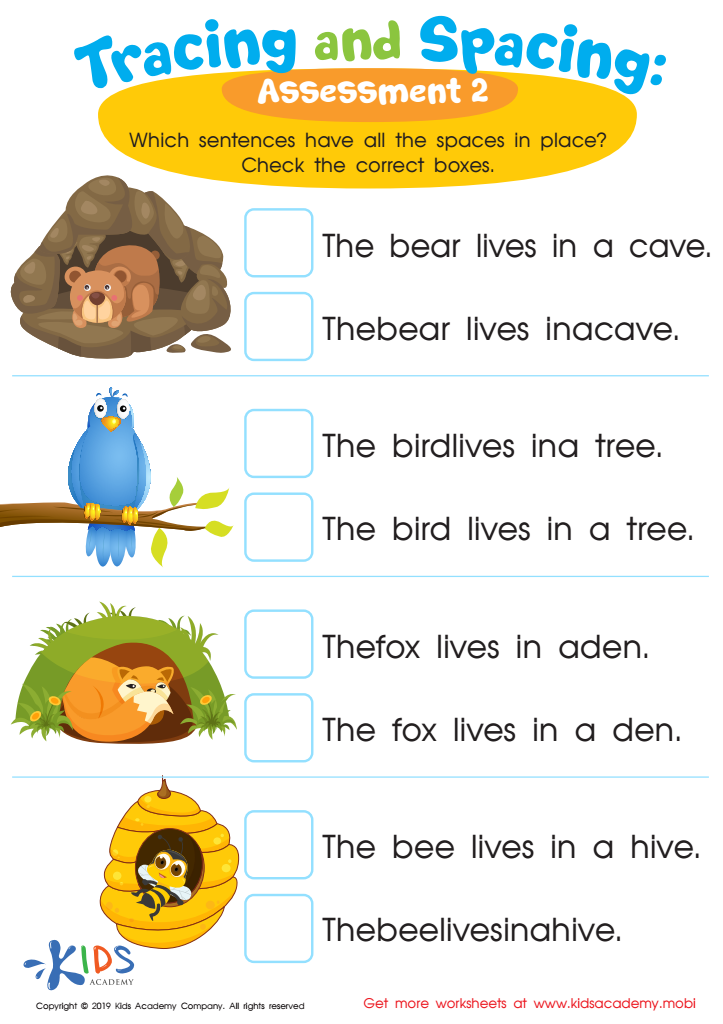
Tracing and Spacing: Assessment 2 Worksheet
 Assign to My Students
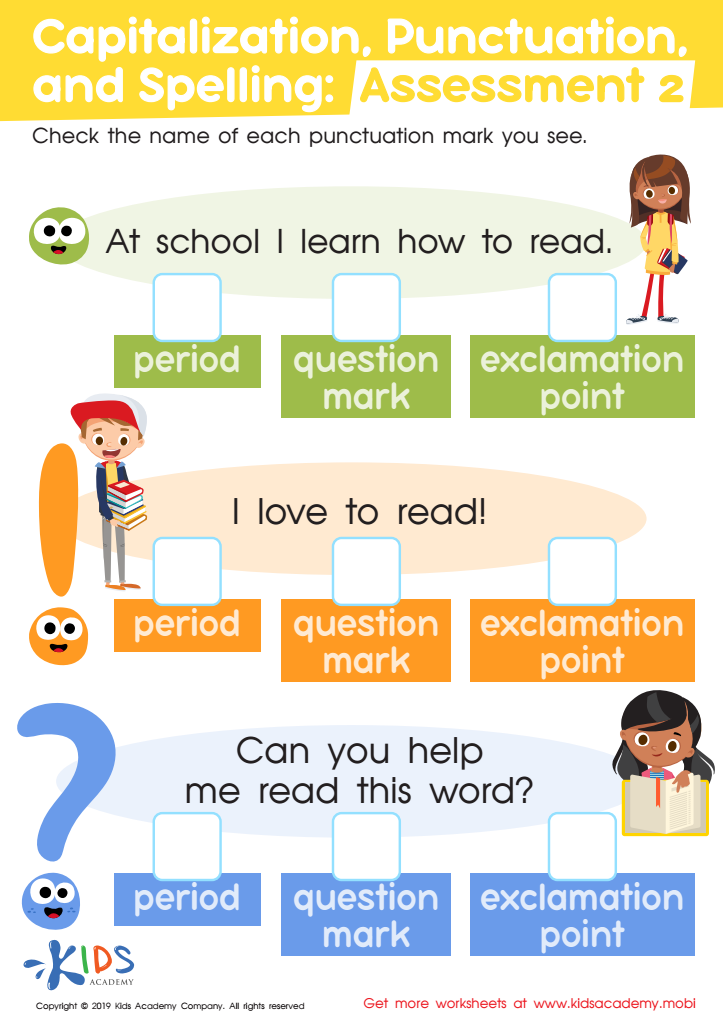
Capitalization. Punctuation. Spelling: Assessment 2 Worksheet
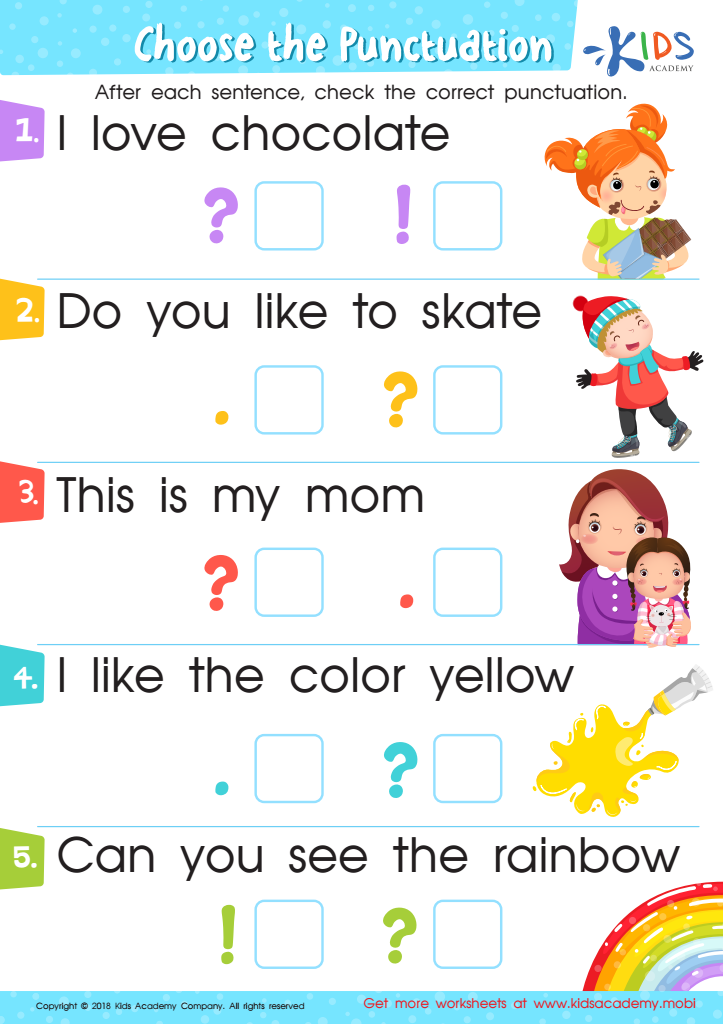
Choose the Punctuation: Assessment Worksheet








Punctuation activities for children aged 4-7 are crucial for developing foundational skills in reading, writing, and communication. At this age, children are beginning to understand the mechanics of language, and the correct use of punctuation marks enhances their literacy development. Engaging in punctuation activities helps children comprehend sentence structure and meaning. For example, knowing when to use periods, question marks, or exclamation points affects how they interpret and express thoughts.
These activities also foster critical thinking. As children explore punctuation, they learn to differentiate between statements, questions, or exclamations, which shapes their ability to analyze text. Such skills are essential for effective communication, laying the groundwork for academic success in later years.
Furthermore, interactive punctuation exercises can ignite a love for writing. When children see how punctuation can change the tone or clarity of their sentences, they become more motivated to express their ideas.
For parents and teachers, incorporating punctuation activities within lesson plans or at home reinforces not just language skills, but instills confidence in young learners as effective communicators. Ultimately, investing time in teaching punctuation is crucial—ensuring that students are equipped with essential skills for lifelong learning and social interaction.








