Physical Science worksheets activities for Ages 4-8
6 filtered results
-
From - To
Explore our engaging Physical Science worksheets and activities designed specifically for ages 4-8! These resources help young learners discover the wonders of science through hands-on experiments and interactive exercises. Each worksheet combines educational content with fun illustrations, making complex concepts accessible and enjoyable for young minds. From learning about matter and energy to exploring forces and motion, these activities encourage curiosity and foster critical thinking skills. Perfect for home or classroom use, our Physical Science worksheets provide an exciting way to reinforce learning and ignite a passion for science in early education. Start your child’s journey in science today!
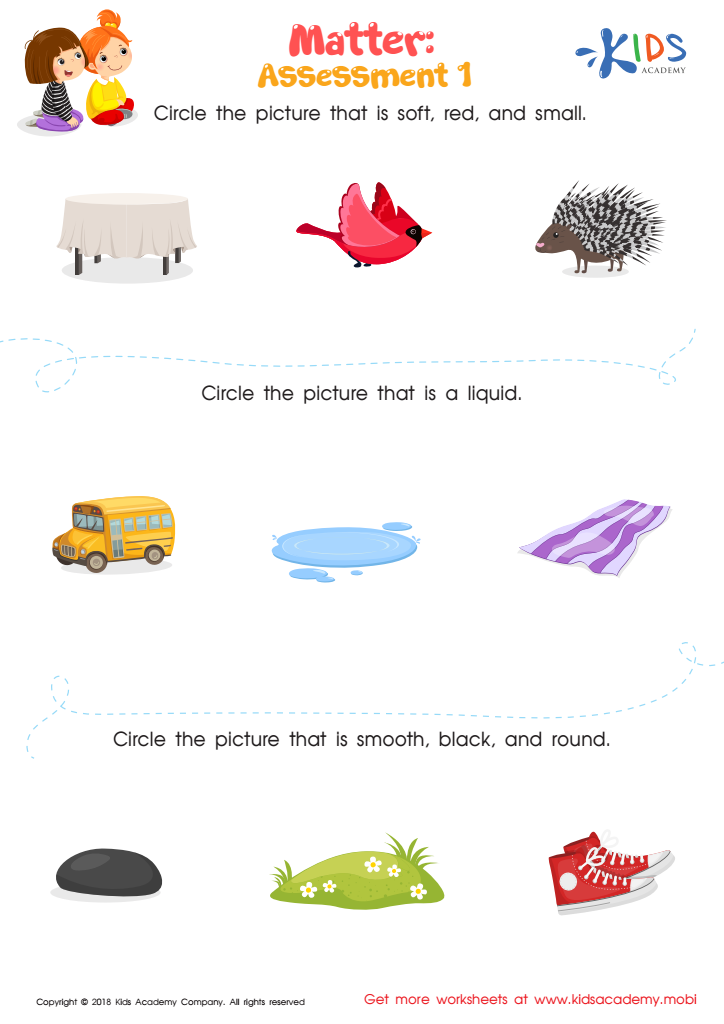
Matter: Assessment 1 Worksheet
 Assign to My Students
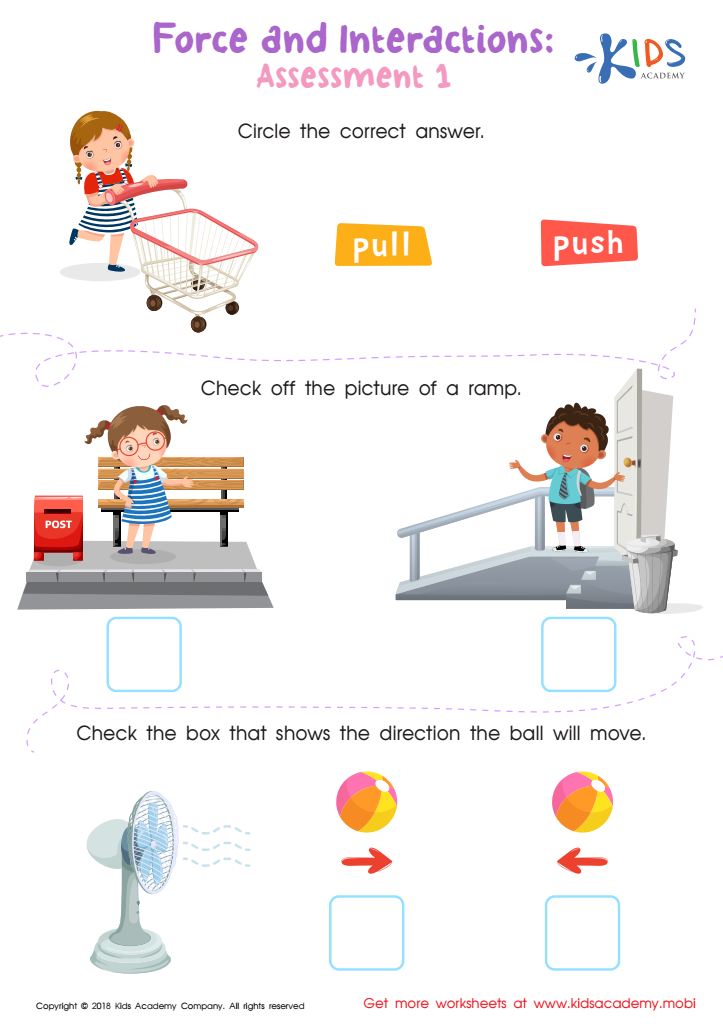
Force and Interactions: Assessment 1 Worksheet
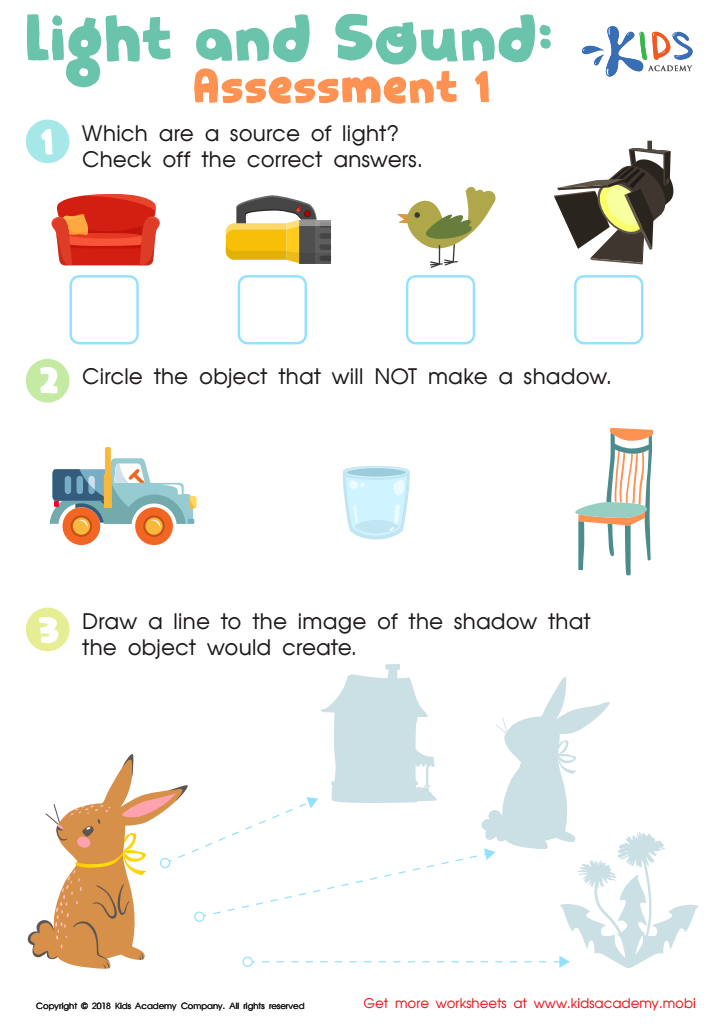
Light and Sound: Assessment 1 Worksheet
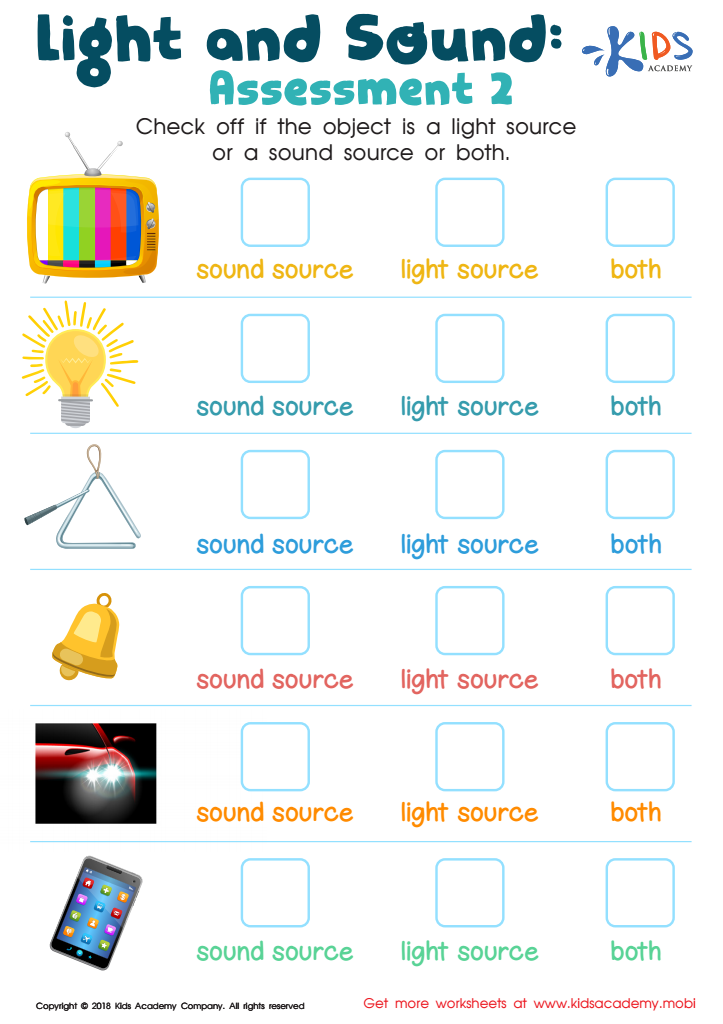
Light and Sound: Assessment 2 Worksheet
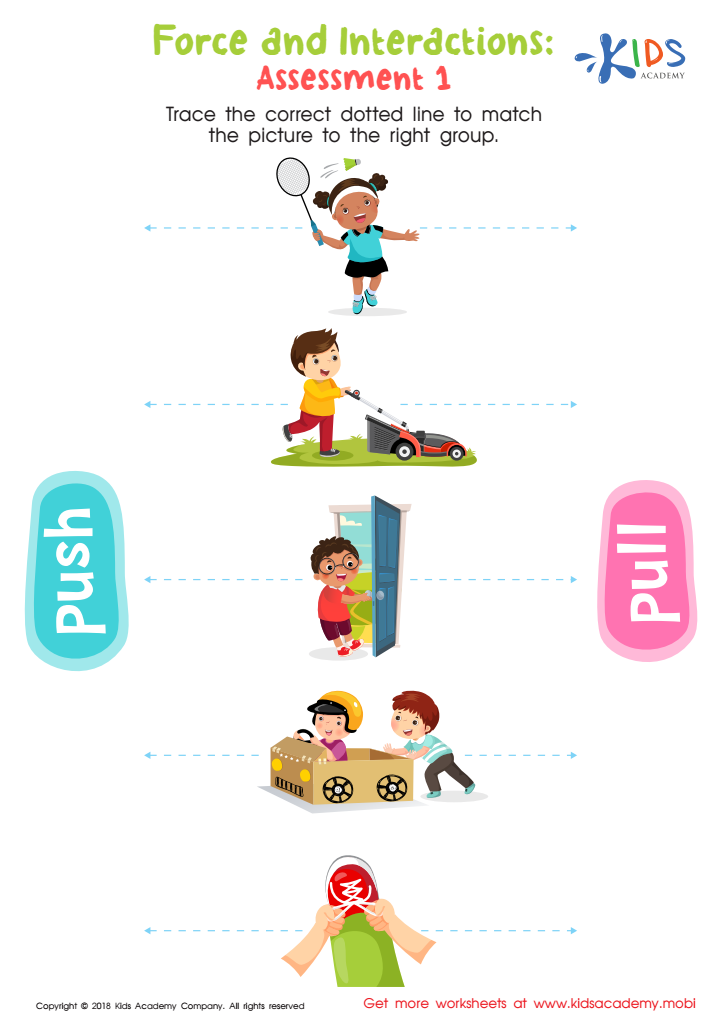
Force and Interactions: Assessment 2 Worksheet
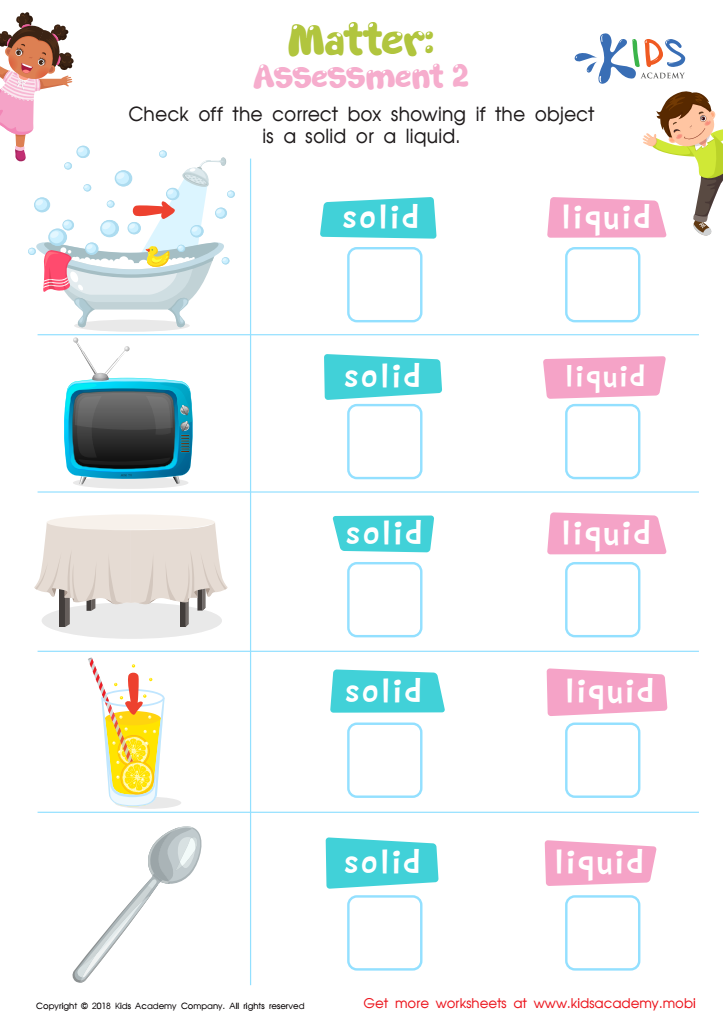
Matter: Assessment 2 Worksheet







Parents and teachers should prioritize physical science activities for children aged 4-8 because these foundational experiences play a crucial role in early cognitive development. At this age, children are naturally curious and exploratory, making it the ideal time to introduce them to scientific concepts. Engaging in physical science activities fosters critical thinking skills as children make observations, hypothesize, and experiment.
Furthermore, these activities promote hands-on learning, which is essential for young learners. Children develop fine and gross motor skills while conducting experiments, building with materials, and manipulating objects. This kinesthetic approach enhances their understanding of concepts like buoyancy, magnetism, and simple machines in a tangible way, making learning both fun and meaningful.
Incorporating physical science in early education also nurtures a sense of inquiry and encourages collaborative play among peers, reinforcing social skills and teamwork. As young students learn to work together, they practice communication and problem-solving skills, which are vital for their future academic and personal lives.
Ultimately, investing in physical science activities not only sparks children's interest in the natural world but also lays a strong foundation for their future learning in science and other disciplines. By fostering a love for exploration, parents and educators can help cultivate the next generation of thinkers and problem solvers.








