Cursive Writing worksheets activities for Ages 5-8 - Page 2
26 filtered results
-
From - To
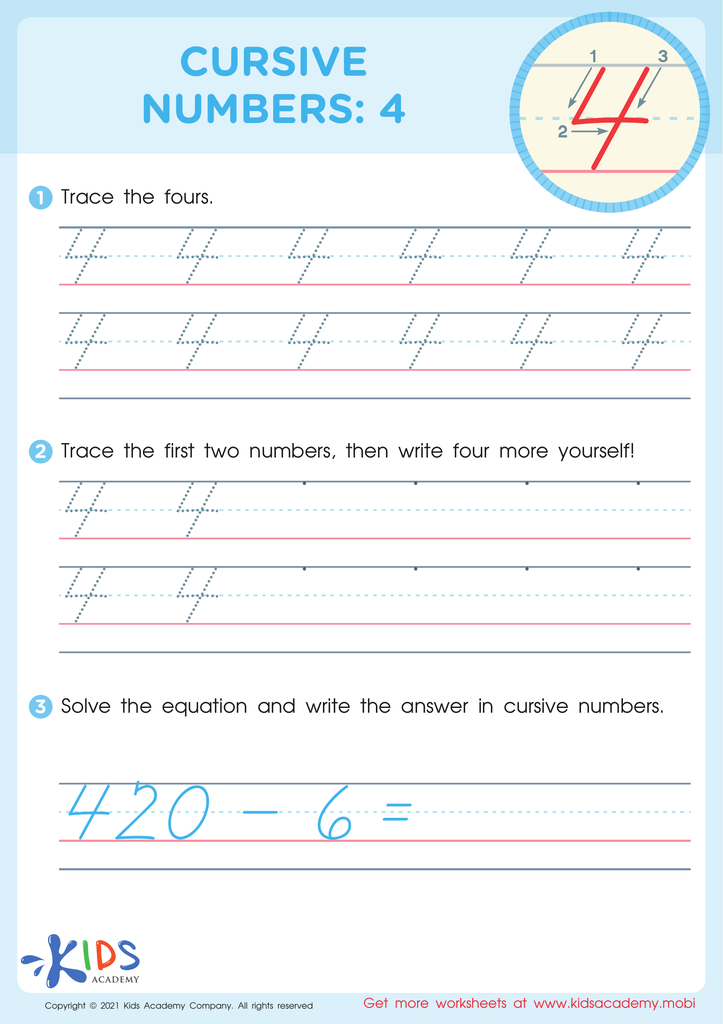
Cursive Numbers: 4 Worksheet
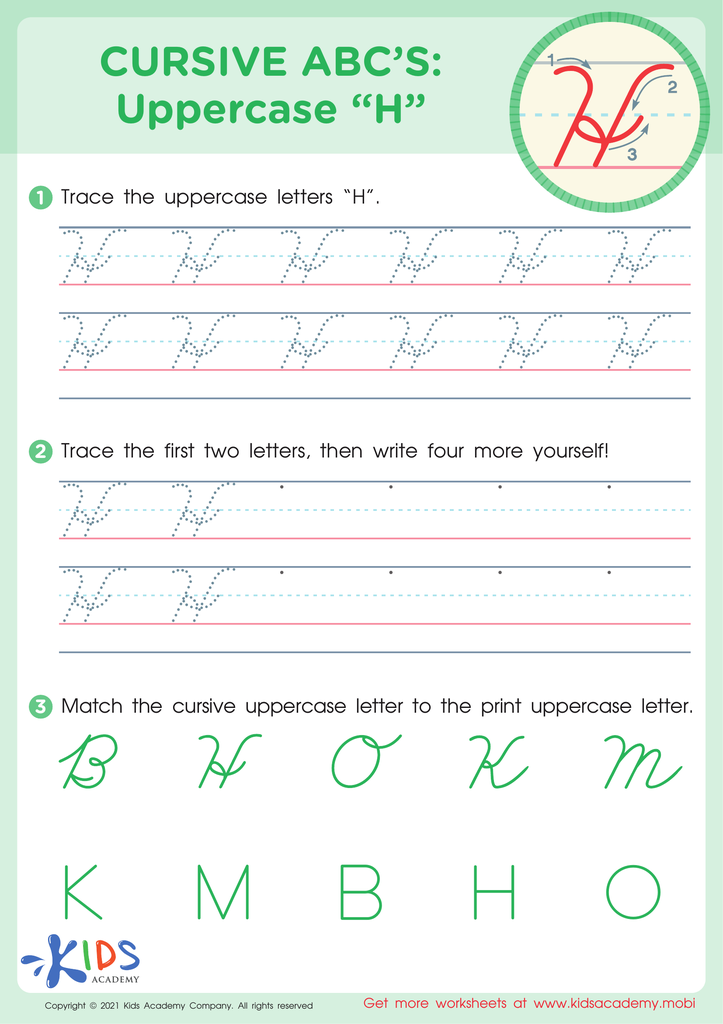
Cursive ABCs: Uppercase H






Cursive writing activities for children aged 5-8 are vital for several reasons. Firstly, these activities enhance fine motor skills, as writing in cursive requires fluid, coordinated hand movements that strengthen the fingers and hands. Improved dexterity is beneficial not only in writing but also in other daily tasks, such as using tools or tying shoelaces.
Secondly, cursive writing promotes cognitive development. Engaging in cursive helps children strengthen their memory and understand the connection between letters and sounds, reinforcing reading skills. As they learn how to form letters fluidly, they also gain an awareness of word formation, enhancing their overall literacy skills.
Additionally, cursive writing helps foster personal expression. Developing a signature style encourages children to take pride in their writing and convey their unique voice. This can build a sense of identity and confidence as they share their thoughts more creatively.
Lastly, in the digital age, where typing may overshadow traditional writing, maintaining cursive literacy preserves a crucial aspect of our written language. By encouraging cursive writing at an early age, parents and teachers lay a strong foundation for future academic success while helping children express themselves effectively.








