Filters

6 filtered results

Clear all filters
Favorites
With answer key
Interactive

6 filtered results

Difficulty Level

Grade


Subject

    Discover engaging Physical Science worksheets and activities designed specifically for ages 6-8! Our interactive resources help young learners explore fundamental concepts such as matter, energy, and simple experiments through fun-filled lessons. Each worksheet aligns with educational standards and encourages critical thinking, problem-solving, and creativity. Tailored for early grade students, these activities foster curiosity about the world around them while enhancing their understanding of core scientific principles. Whether at home or in the classroom, these vibrant worksheets provide an excellent opportunity for hands-on learning. Start your child's science journey today and watch their confidence soar as they uncover the wonders of Physical Science!

    Check out this FREE Physical Science Trial Lesson for age 6-8!

    My Family

    Favorites
    With answer key
    Interactive
    • Physical Science
    • 6-8
    Matter: Assessment 1 Worksheet
    Matter: Assessment 1 Worksheet

    Matter: Assessment 1 Worksheet

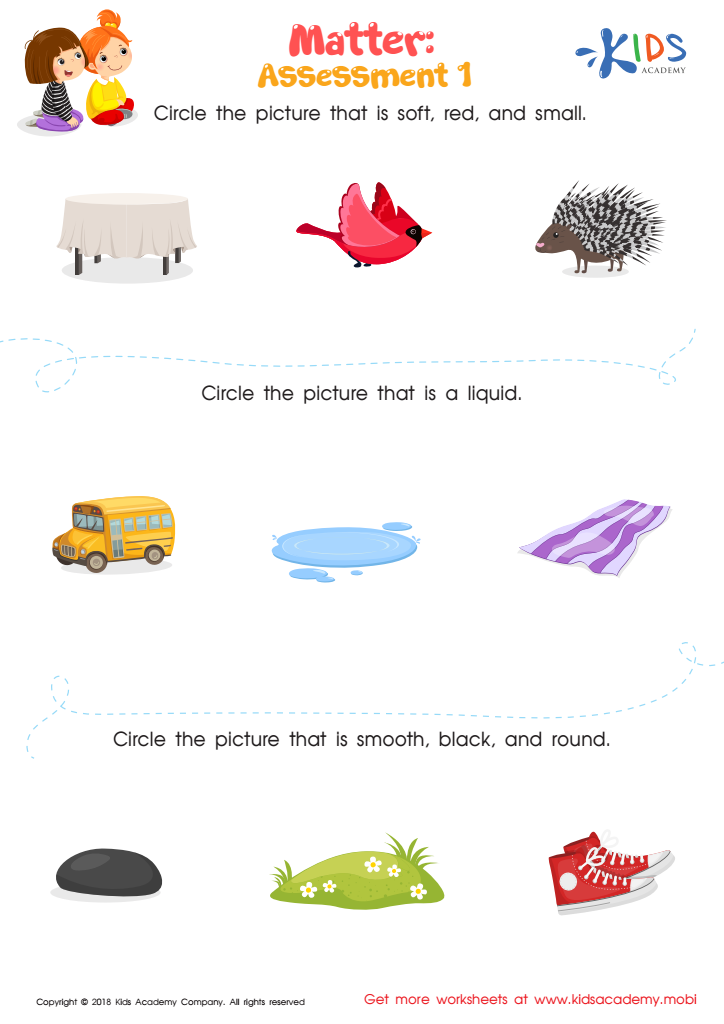
    Have your children learn that anything that has weight and takes up space is matter. Examples include buses, tables, people, animals, and more. Use this worksheet to help them identify the objects and circle the soft, red, and small one; the liquid; and the smooth, black, and round one.
    Matter: Assessment 1 Worksheet
    Worksheet
    Force and Interactions: Assessment 1 Worksheet
    Force and Interactions: Assessment 1 Worksheet

    Force and Interactions: Assessment 1 Worksheet

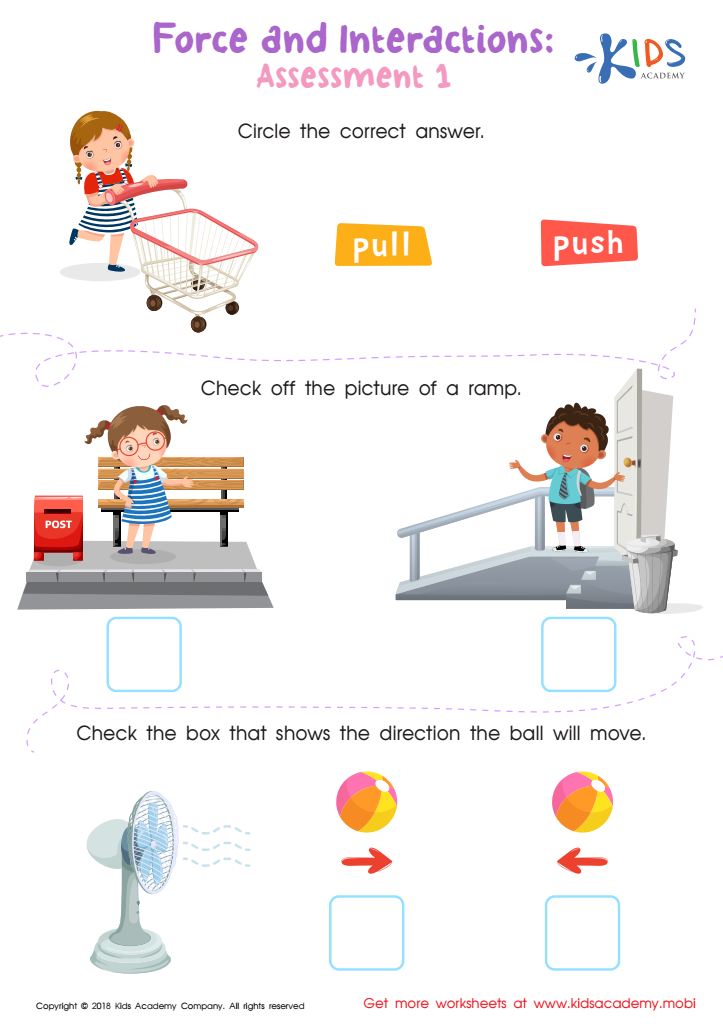
    Test your students' knowledge of pushing, pulling, ramps and wind with this worksheet. The first task requires them to identify push or pull pictures. The second asks them to identify a ramp and the third to explain which direction a ball will move when exposed to wind.
    Force and Interactions: Assessment 1 Worksheet
    Worksheet
    Light and Sound: Assessment 1 Worksheet
    Light and Sound: Assessment 1 Worksheet

    Light and Sound: Assessment 1 Worksheet

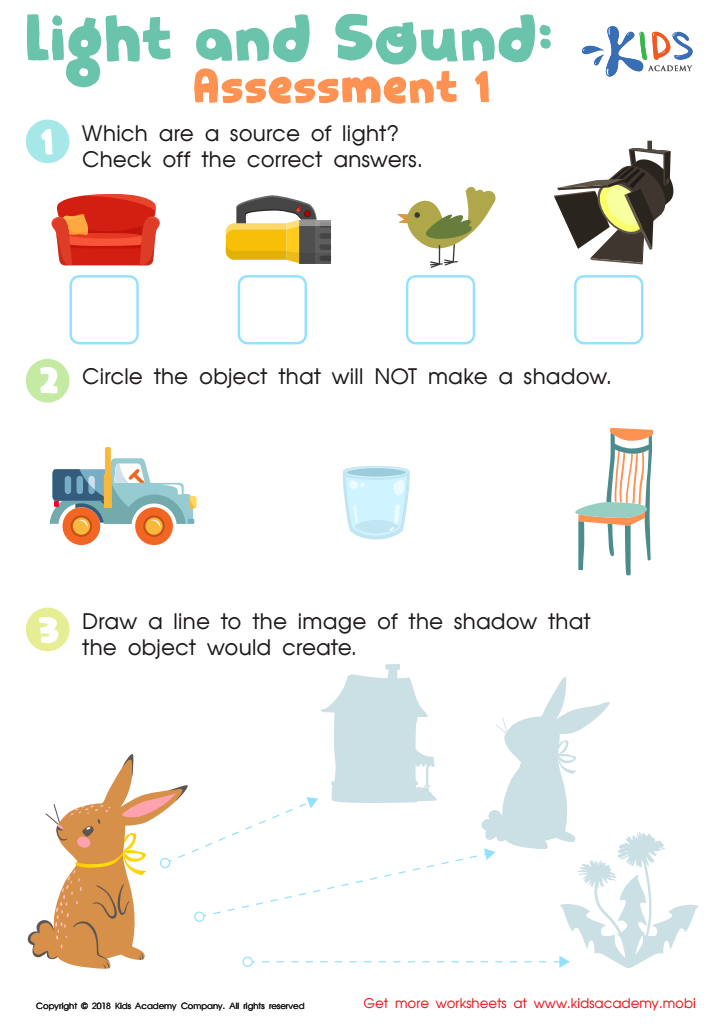
    Can your kids name a light source? Challenge them to name the sun and moon, then point out objects they use when the sun sets. Look through the worksheet with them and ask them to identify the light sources. Help them check off the correct answers.
    Light and Sound: Assessment 1 Worksheet
    Worksheet
    Light and Sound: Assessment 2 Worksheet
    Light and Sound: Assessment 2 Worksheet

    Light and Sound: Assessment 2 Worksheet

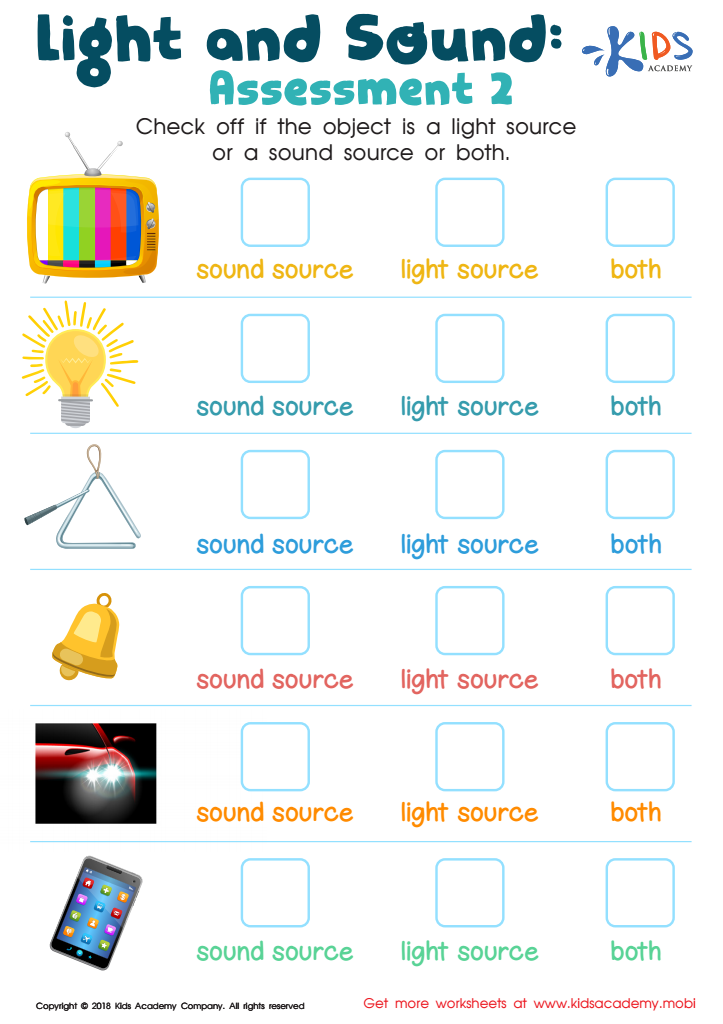
    This worksheet introduces your kids to light and sound, with common sources of each. Identify the objects and help them check if it's a light source, a sound source, or both. Colourful and simple, it's a great way to teach your little ones! (80 words)
    Light and Sound: Assessment 2 Worksheet
    Worksheet
    Force and Interactions: Assessment 2 Worksheet
    Force and Interactions: Assessment 2 Worksheet

    Force and Interactions: Assessment 2 Worksheet

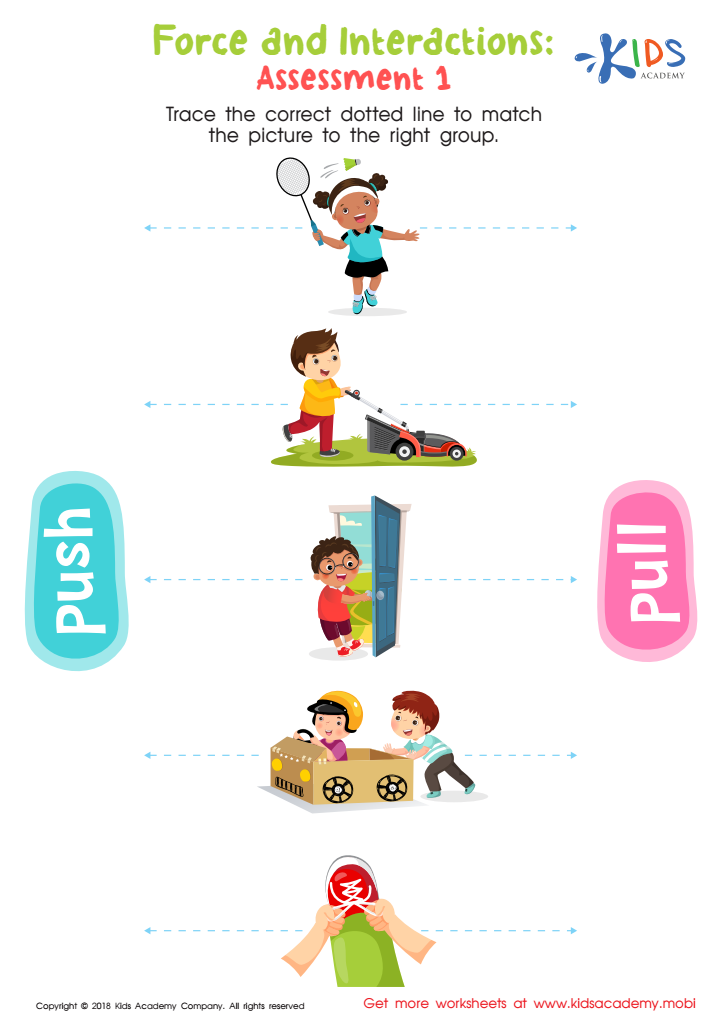
    Help your child see the difference between push and pull with this fun worksheet. Ask them to match each picture to the right group. The "push" is on the left and the "pull" is on the right. Assist them in tracing the activities and explain what it is the people are doing.
    Force and Interactions: Assessment 2 Worksheet
    Worksheet
    Matter: Assessment 2 Worksheet

    Matter: Assessment 2 Worksheet

    Matter: Assessment 2 Worksheet

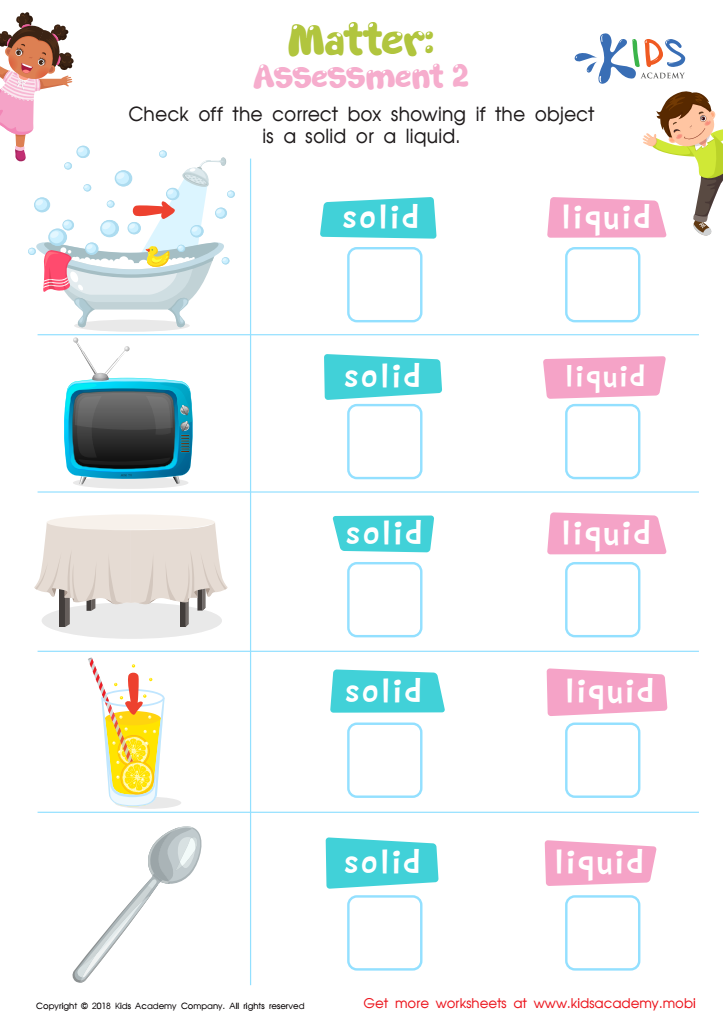
    Identify the five objects in this worksheet as either solid or liquid. Ask your kids to check the correct box. Melting changes solids to liquids while freezing transforms liquids to solids.
    Matter: Assessment 2 Worksheet

    Worksheet


    Parents and teachers should prioritize Physical Science activities for children ages 6 to 8 due to the critical developmental and educational benefits they offer. At this age, kids are naturally curious about the world around them. Engaging in Physical Science activities cultivates this curiosity and transforms it into a foundation for scientific inquiry. These activities promote hands-on learning, which is vital for young children, as they often learn best through play and exploration.

    Physical Science activities also enhance critical thinking and problem-solving skills. By participating in experiments and observing physical phenomena, children learn to ask questions, make predictions, and analyze results. This nurtures a scientific mindset, encouraging them to think logically and understand cause-and-effect relationships.

    Moreover, these activities foster collaboration and communication skills as children often work in groups, share ideas, and navigate challenges together. Lastly, introducing children to basic principles of Physical Science can inspire a lifelong interest in science, technology, engineering, and mathematics (STEM) fields, which are crucial in today’s society.

    In summary, engaging children in Physical Science activities not only enriches their understanding of the world but also supports essential cognitive, social, and emotional development.