Multiplication worksheets activities for Ages 7-8
3 filtered results
-
From - To
Discover a fun and engaging collection of multiplication worksheets designed specifically for children aged 7-8. Our activities focus on enhancing multiplication skills through interactive exercises that cater to various learning styles. From simple multiplication drills to creative games and challenging word problems, these worksheets aim to boost your child's confidence in math. Each activity is crafted to promote understanding of core concepts while keeping learning enjoyable. Parents and educators will appreciate the ease of use, with printable options available to support any classroom or home learning environment. Explore our resources today to help your child master multiplication with confidence!
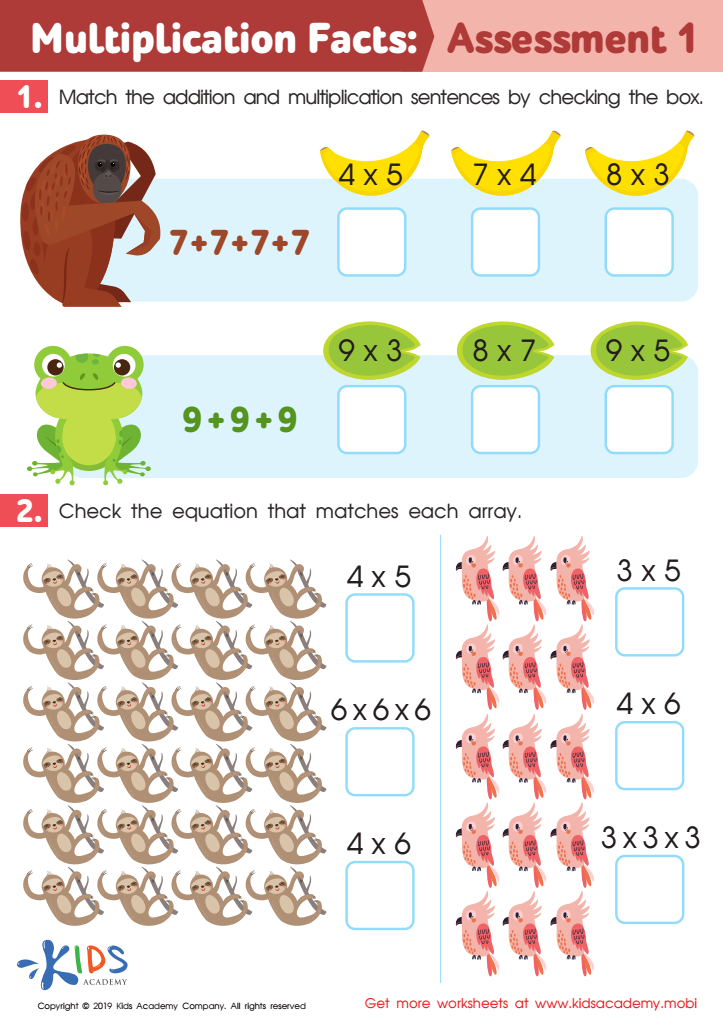
Multiplication Facts: Assessment 1 Worksheet
 Assign to My Students
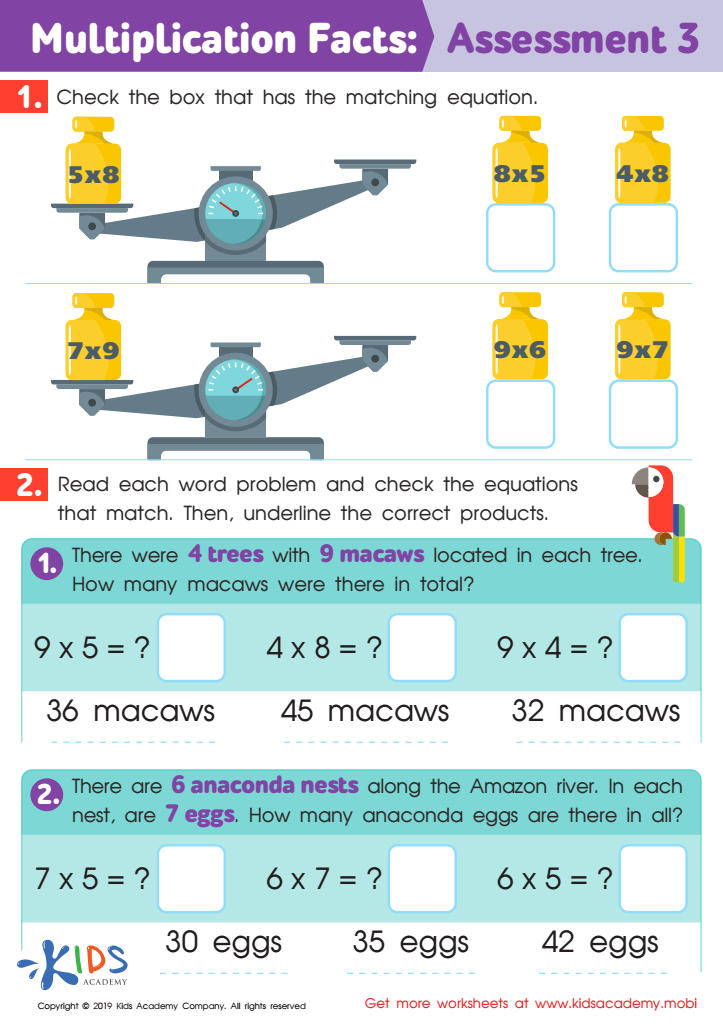
Multiplication Facts: Assessment 3 Worksheet
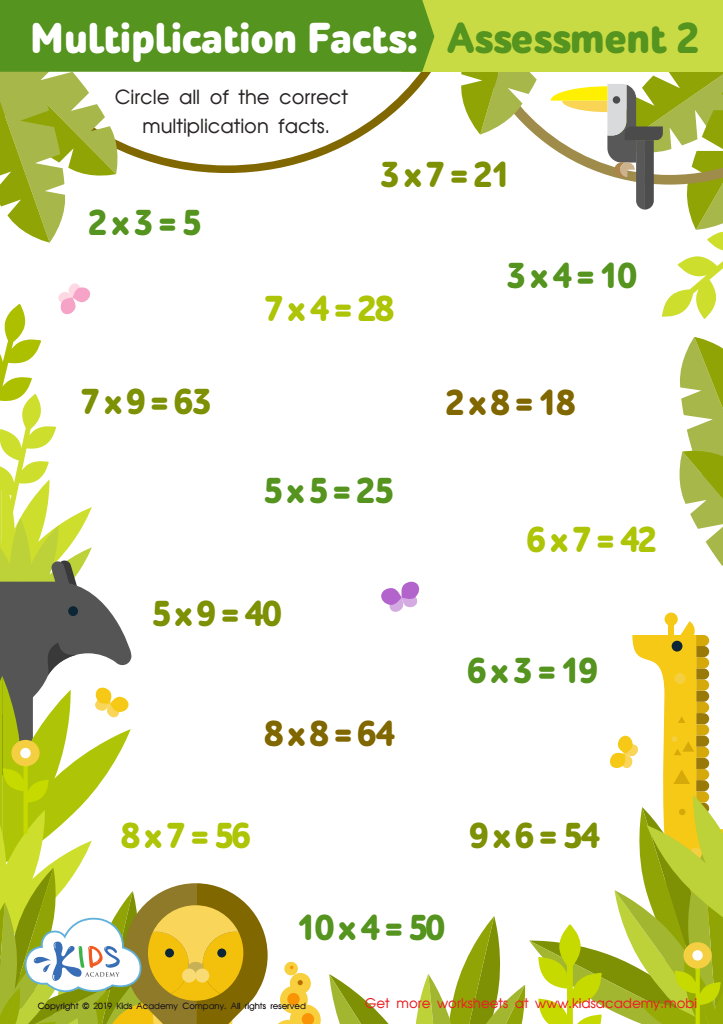
Multiplication Facts: Assessment 2 Worksheet








Parents and teachers should prioritize multiplication activities for children aged 7-8 as this foundational skill is crucial for their mathematical development and academic success. At this age, children typically transition from basic addition and subtraction to more complex mathematical concepts, making multiplication an essential building block. Engaging in multiplication activities helps learners understand the concept of repeated addition, which fosters number sense and lays the groundwork for division, fractions, and problem-solving.
Moreover, multiplication skills enhance children's confidence and motivation in math. Positive early experiences can instill a lifelong appreciation for mathematics. Fun and interactive multiplication games can supplement traditional learning, making it enjoyable and engaging while determinedly addressing individual learning styles.
Incorporating multiplication activities Sharpens critical thinking and helps children apply math in real-life situations, from calculating time and measurements to understanding money management. Understanding multiplication at this stage also sets the stage for success in standardized testing and higher education, as math curriculum complexity increases as students advance. By dedicating time and effort to multiplication, parents and teachers directly contribute to not only academic growth but also overall cognitive development, ensuring a strong mathematical foundation for future learning.








