Normal Numbers worksheets activities for Ages 5-9
3 filtered results
-
From - To
Explore our engaging Normal Numbers worksheets designed for children ages 5-9! These activities focus on building essential number recognition and counting skills through interactive and fun exercises. Perfect for early learners, our worksheets include colorful visuals and easy-to-follow prompts that maintain children's interest while enhancing their mathematical understanding. Each worksheet is tailored to develop foundational knowledge, encouraging hands-on learning and critical thinking. Whether at home or in the classroom, these resources help young minds explore the world of numbers through playful practice. Start your child's numerical journey today with our collection of thoughtfully designed Normal Numbers activities!
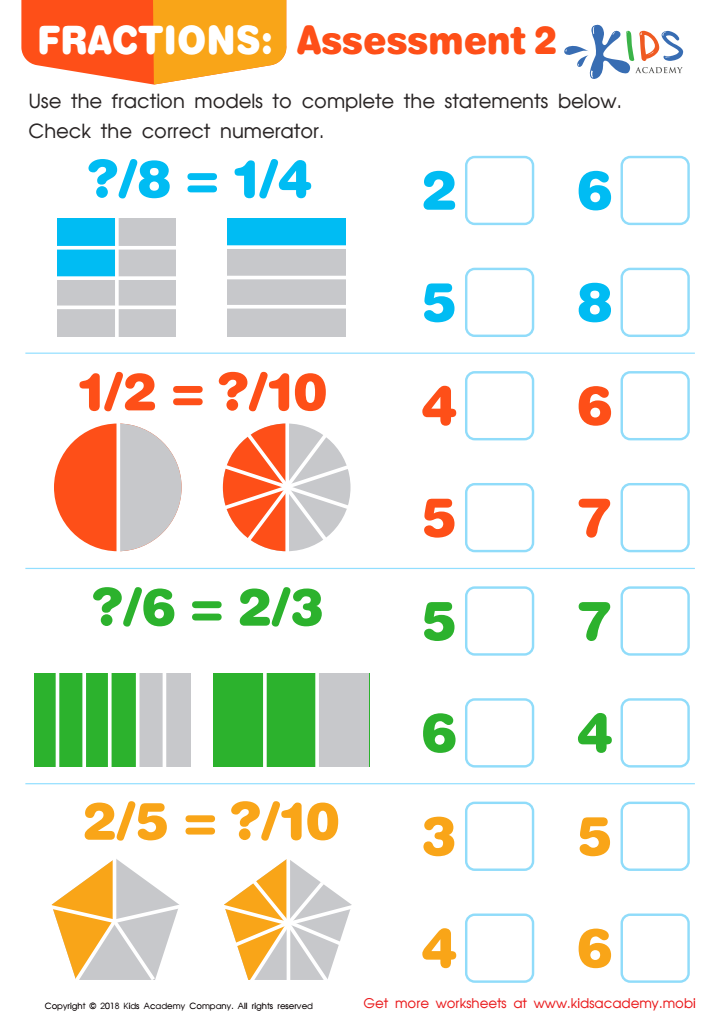
Fractions: Assessment 2 Worksheet
 Assign to My Students
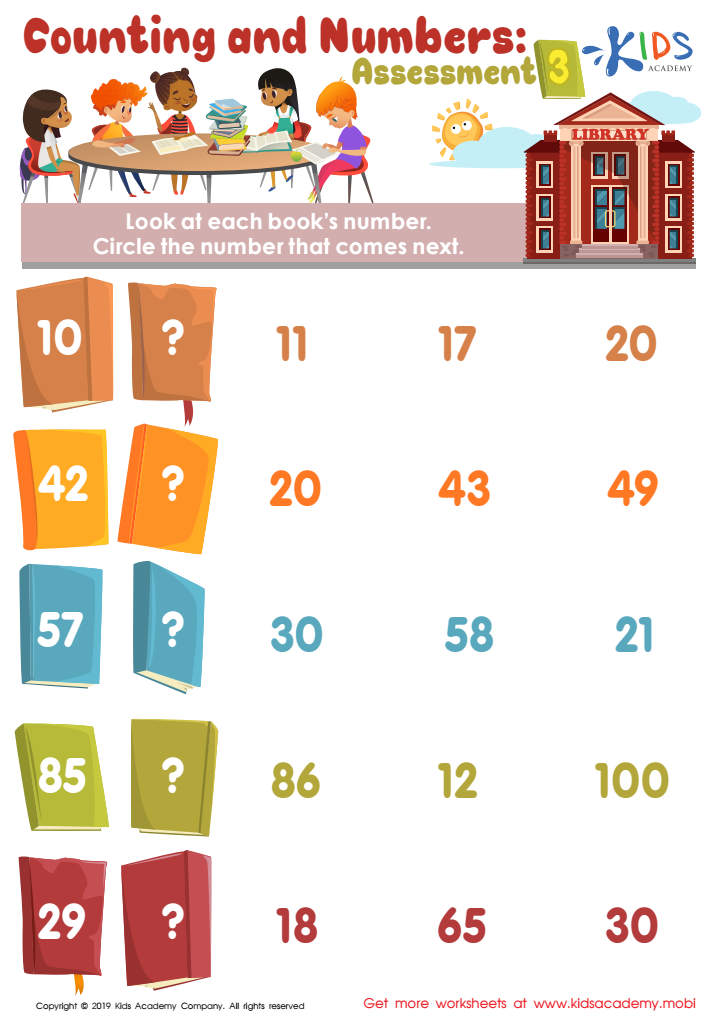
Counting and Numbers: Assessment Worksheet
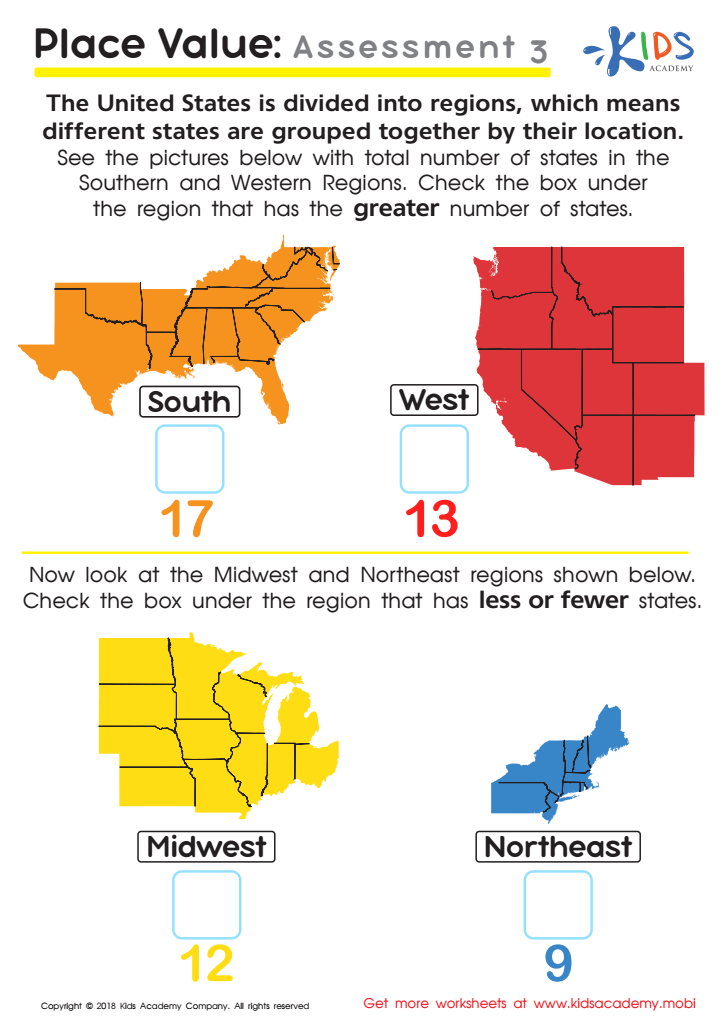
Place Value: Assessment 3 Worksheet







Parents and teachers should care about Normal Numbers activities for children aged 5-9 because these foundational experiences can significantly enhance a child's cognitive development and mathematical understanding. At this age, children are beginning to explore basic number concepts, and engaging them with normal numbers—where digits are uniformly distributed across a certain range—helps in developing essential skills such as counting, pattern recognition, and number comprehension.
Activities that introduce normal numbers encourage children to think critically and explore sequences, fostering problem-solving abilities. Moreover, these activities create an interactive learning environment that makes math enjoyable, thus promoting a positive attitude towards mathematics at an early age.
Social interaction during group activities further boosts communication skills, emotional intelligence, and teamwork. As they play with normal numbers through games or creative exercises, children not only solidify their understanding of key concepts but also learn how to articulate their thoughts and collaborate with peers.
In summary, normal numbers activities are vital for nurturing a strong mathematical foundation, supporting cognitive and social development, and promoting a lifelong love of learning. By prioritizing these activities, parents and teachers set the stage for success in mathematics and wider academic pursuits.








