
Normal Phonics worksheets activities for Ages 7-9
5 filtered results
Difficulty Level
Grade
Age
-
From - To
Subject
Activity
Standards
Discover engaging Normal Phonics worksheets and activities designed for children ages 7 to 9 on our specialized webpage! Tailored to enhance reading skills, these worksheets provide a fun and interactive way for students to explore phonetic concepts. Our activities focus on essential skills like sound recognition, blending, and decoding, ensuring young learners build a solid foundation in literacy. Whether at home or in the classroom, these printable resources are perfect for reinforcing lessons and encouraging independent practice. Dive into our collection today to ignite your child's passion for reading and phonics while making learning enjoyable and effective!
Favorites
With answer key
Interactive
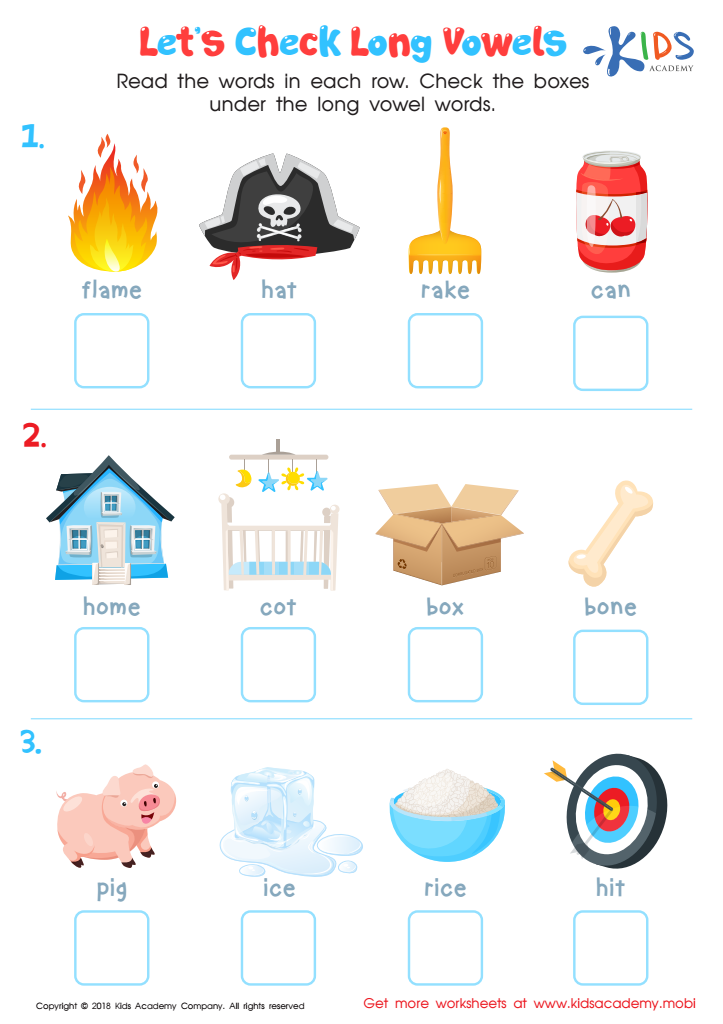
Let's Check Long Vowels: Assessment Worksheet
This worksheet helps your child identify objects and learn long vowel sounds. Ask them to say the names of the four objects in each row. Then, help them check the boxes to confirm they know the long vowel sounds. This will help them develop their reading skills.
 Assign to My Students
Let's Check Long Vowels: Assessment Worksheet
Worksheet
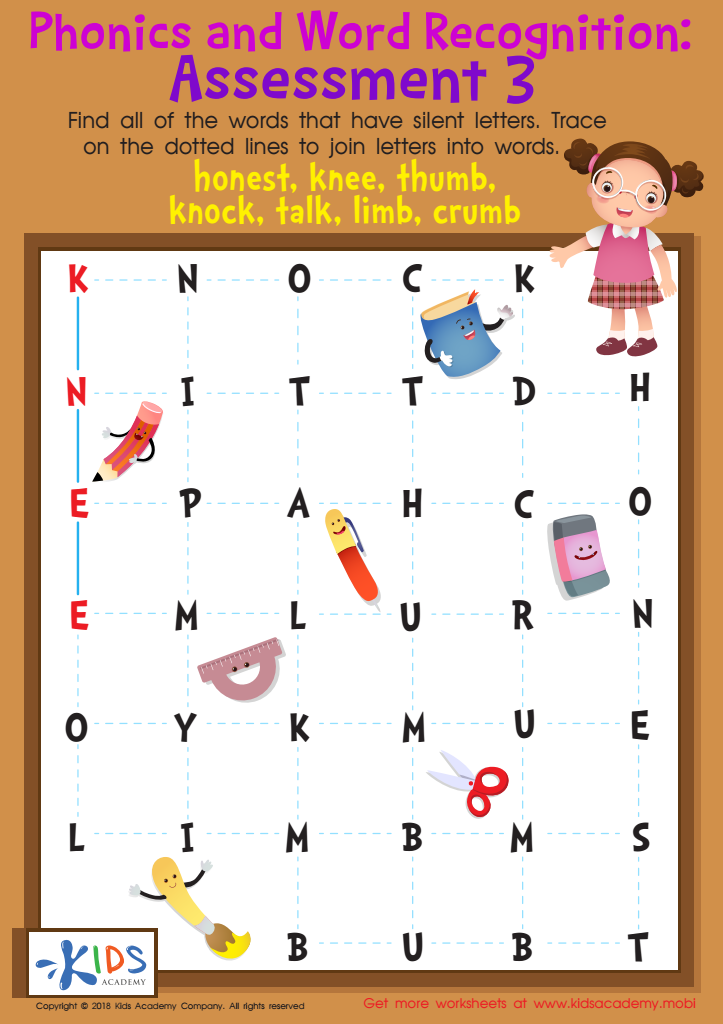
Phonics and Word Recognition: Assessment 3 Worksheet
Silent letters can be tricky for kids learning to read and write. Show them how they work with words like 'knee' and 'dumb'. Then, challenge them to come up with their own. Give them a worksheet with silent letters and trace the lines to join the letters into words.
Phonics and Word Recognition: Assessment 3 Worksheet
Worksheet
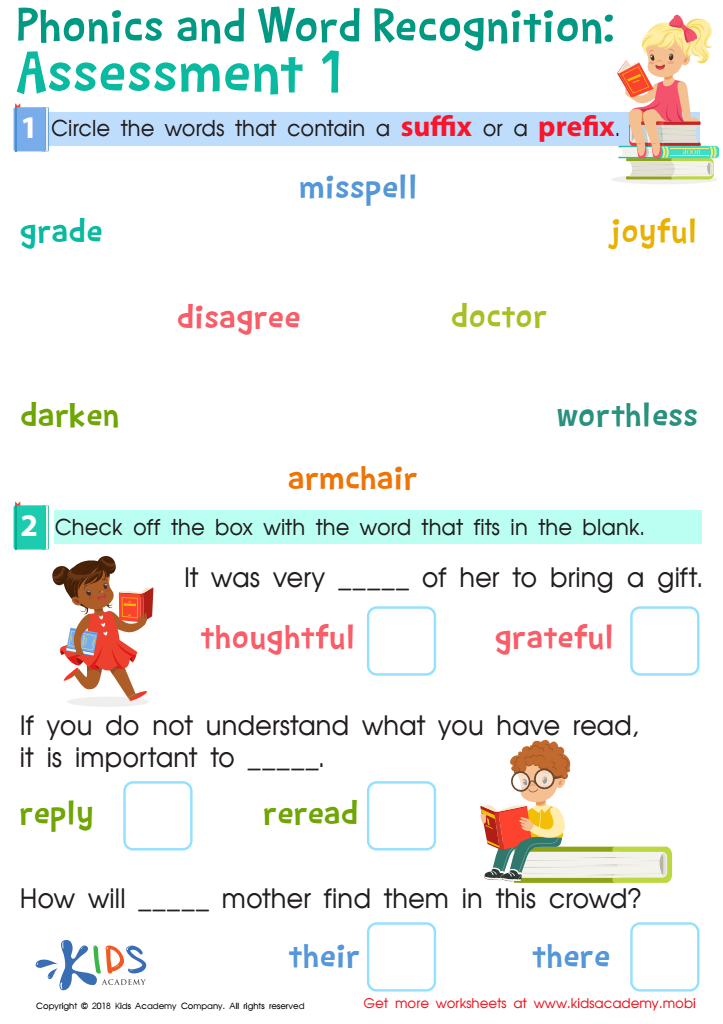
Phonics and Word Recognition: Assessment 1 Worksheet
Explain prefixes (words added to start of another word to give it a new meaning) and suffixes (added to end of word to change its meaning) to your kids with examples like 'unhappy' (prefix) and 'forgetful' (suffix). Now, help your child complete this worksheet, including circling words and checking boxes.
Phonics and Word Recognition: Assessment 1 Worksheet
Worksheet
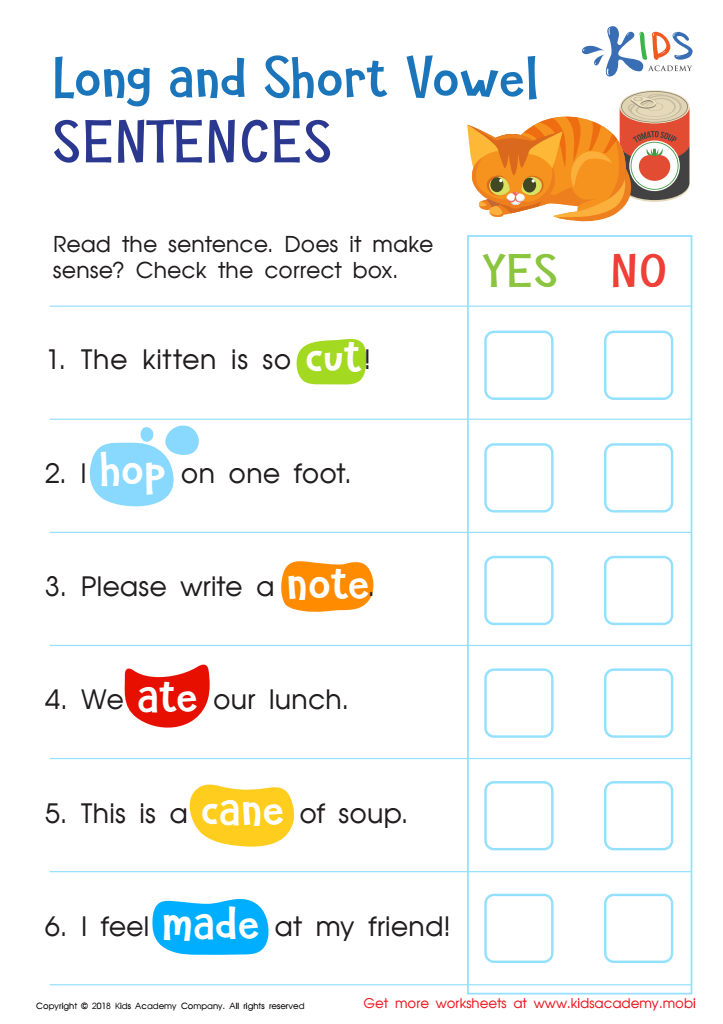
Long and Short Vowel Sentences: Assessment Worksheet
This printable worksheet helps kids practice differentiating between short and long vowel sounds. They'll use context clues to figure out which words make sense in simple sentences. A great way to build reading and writing skills!
Long and Short Vowel Sentences: Assessment Worksheet
Worksheet
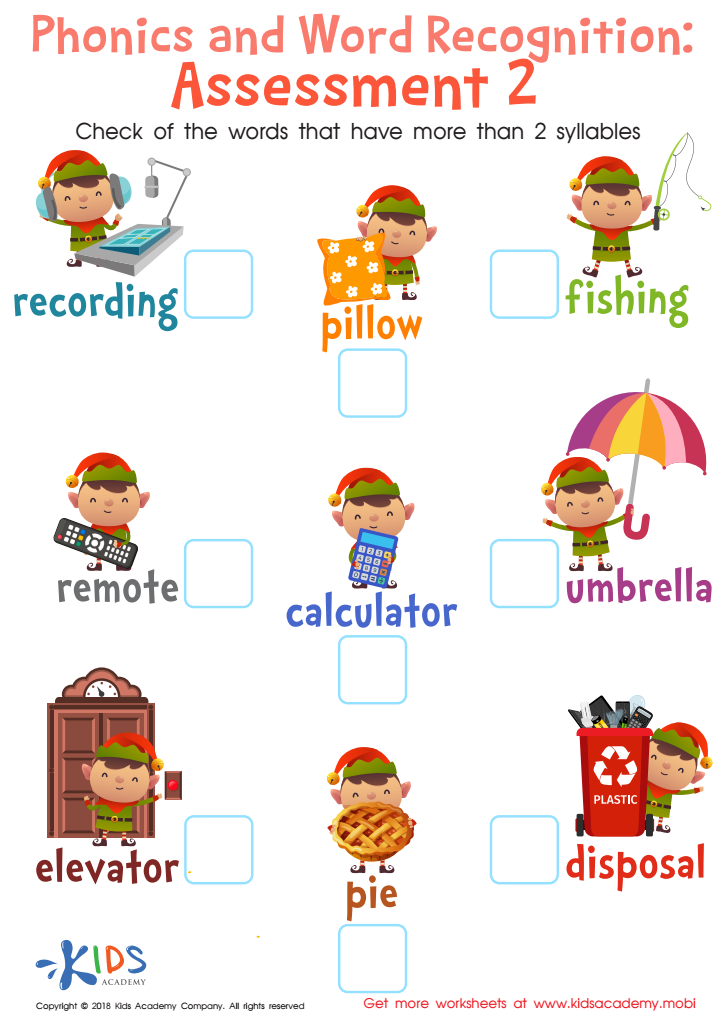
Phonics and Word Recognition: Assessment 2 Worksheet
Help your kids learn proper pronunciation by counting syllables. Most words they'll encounter have 1-3 syllables, making them simple to say. Have them repeat the words in your worksheet after you. Focus on longer words with more than two syllables.
Phonics and Word Recognition: Assessment 2 Worksheet
Worksheet
Join Kids Academy for Free
Who is primarily going to use this learning content?








Parents and teachers should care about Normal Phonics activities for Ages 7-9 because this stage is crucial for developing foundational literacy skills. Phonics is not just about recognizing letters; it's about understanding the relationship between sounds and their written representations. This understanding enhances reading fluency, comprehension, and spelling abilities.
At ages 7-9, children are transitioning from learning to read to reading to learn, making phonics instruction critical for their overall academic success. Engaging in phonics activities allows children to decode words confidently, which in turn fosters a love for reading and exploration of diverse topics.
Moreover, effective phonics instruction can help struggling readers catch up and build essential skills that other subjects often build upon. Activities tailored for this age group can make learning interactive and enjoyable, helping sustain children’s motivation.
Additionally, with phonetic understanding, children become better equipped to tackle complex texts and understand vocabulary nuances, enhancing their critical thinking skills. Thus, normal phonics activities serve not only to improve reading skills but also to establish a solid educational foundation that can lead to lifelong learning and success. Prioritizing these activities directly impacts children's literacy outcomes and their confidence in academic settings.








