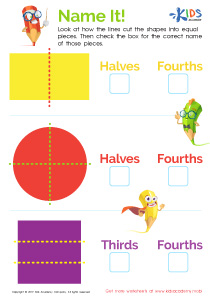
Problem-Solving Skills 2D Shapes Worksheets for Ages 3-4
6 filtered results
-
From - To
Introduce young learners to the world of geometry with our "Problem-Solving Skills 2D Shapes Worksheets for Ages 3-4". These thoughtfully designed worksheets help children recognize and differentiate basic 2D shapes through engaging puzzles and activities. As they color, trace, and match shapes, kids develop critical thinking and problem-solving skills essential for early math proficiency. Perfect for home or classroom use, these printables build a strong foundation for future learning. Discover how fun and interactive learning about circles, squares, triangles, and more can be. Download today and watch your child’s confidence in problem-solving soar!
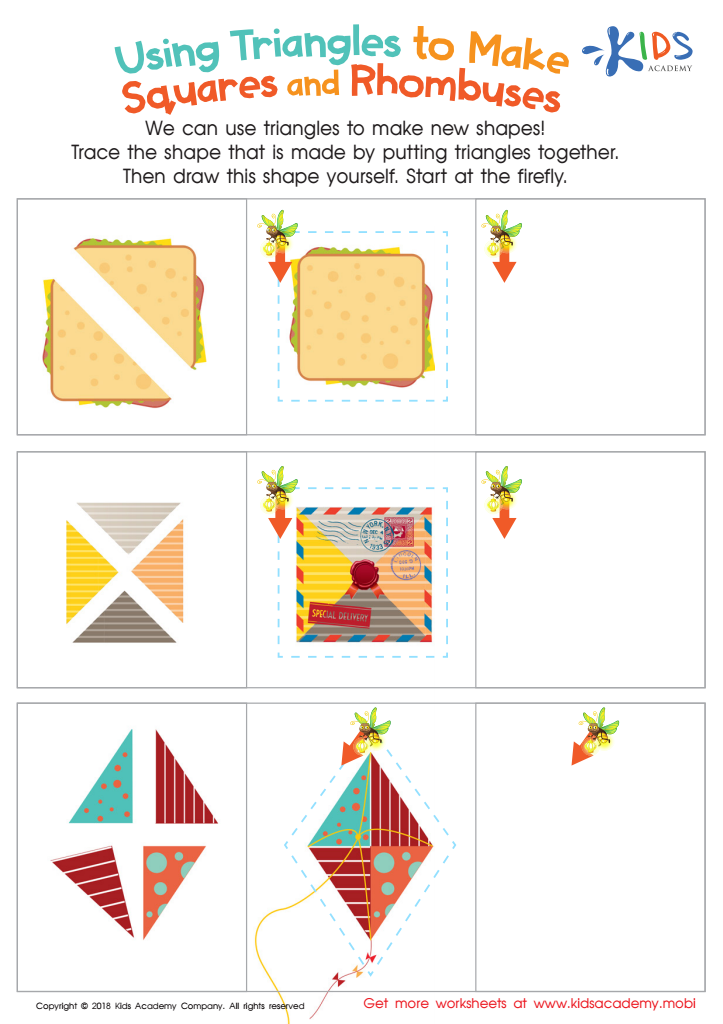
Using Triangles to Make Squares and Rhombuses Worksheet
 Assign to My Students



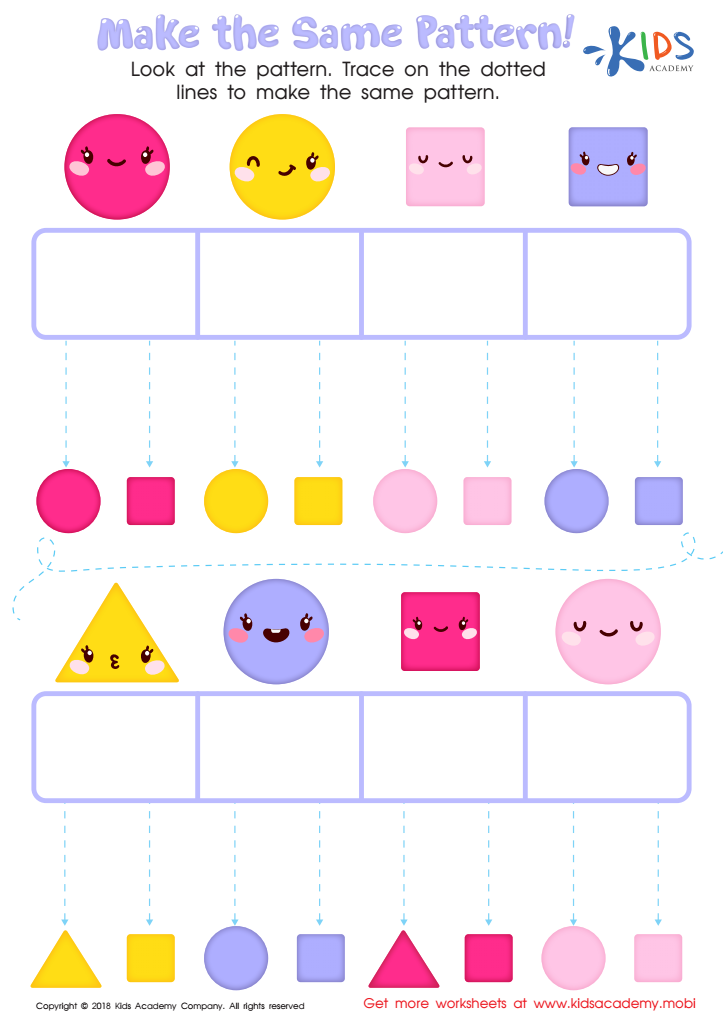
Make the Same Pattern Worksheet
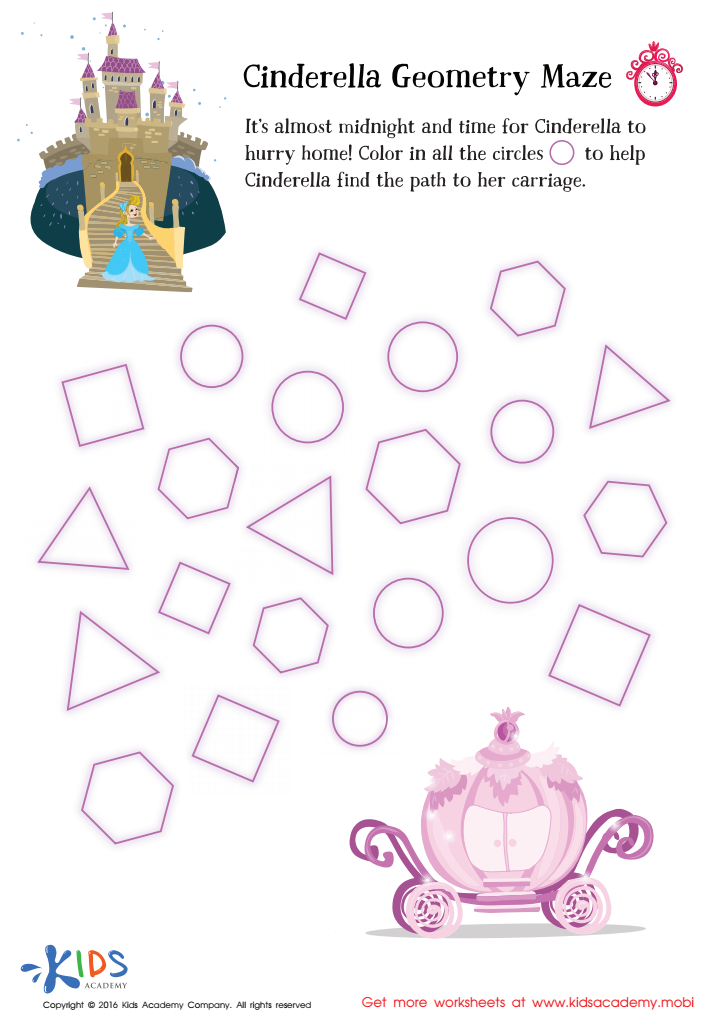
Cinderella Geometry Maze Worksheet
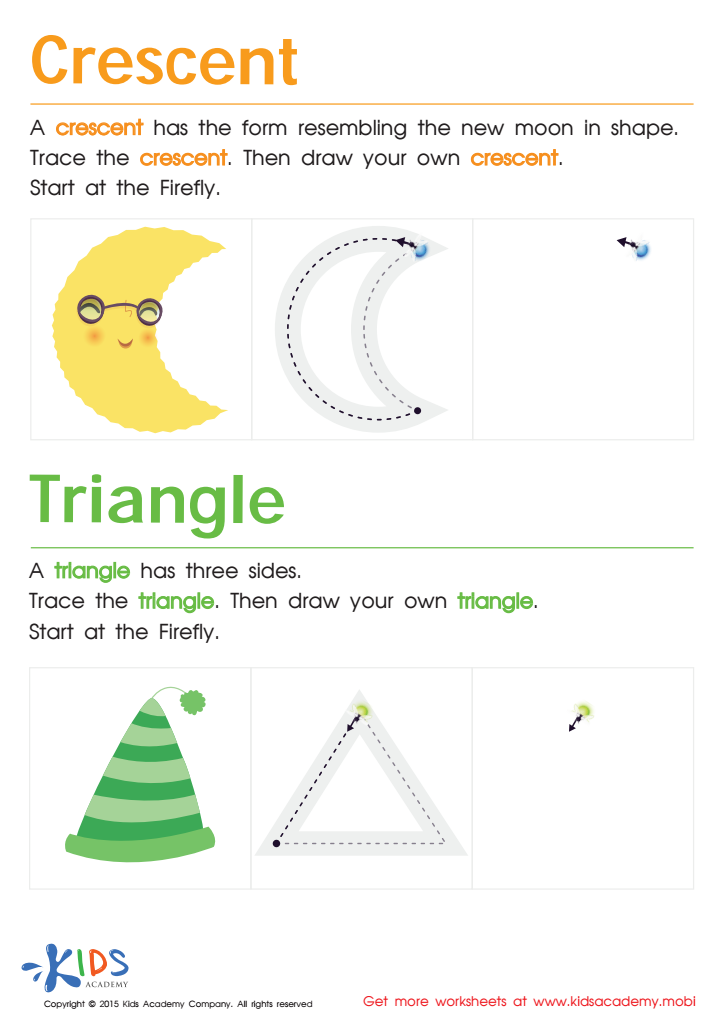
Learning to Draw Crescents And Triangles Worksheet
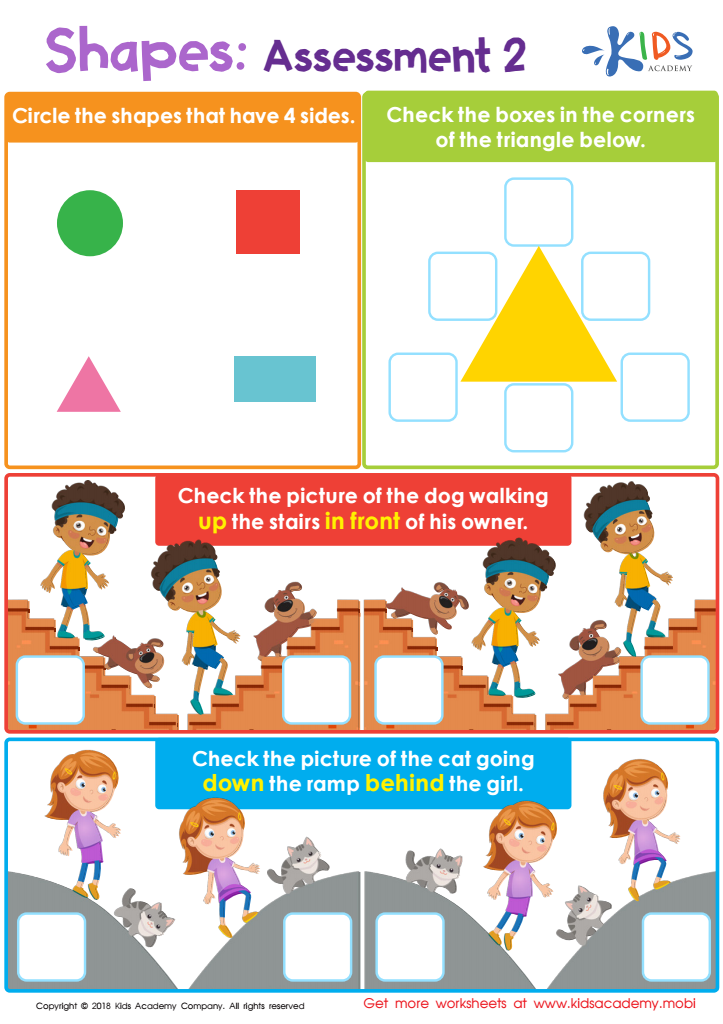
Shapes: Assessment 2 Worksheet
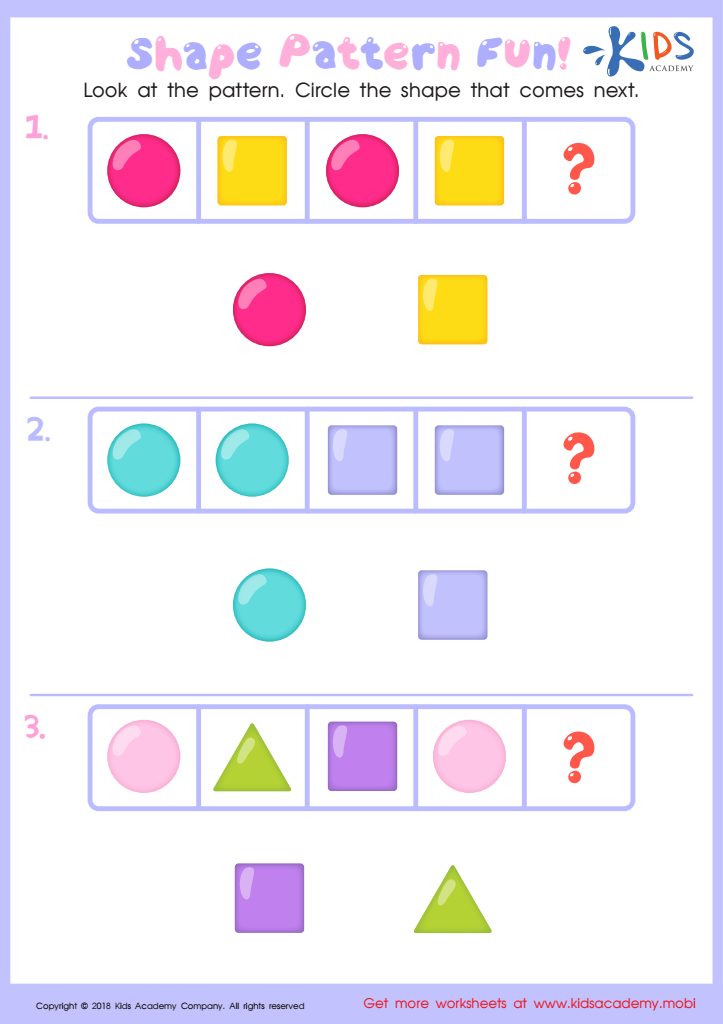
Shape Pattern Fun Worksheet








Parents and teachers should care about problem-solving skills and 2D shapes for children aged 3-4 because these foundational skills are essential for cognitive development and future learning success. Problem-solving skills enhance a child's ability to think critically, make decisions, and develop persistence when facing challenges. By engaging with problems and finding solutions, young children build confidence and become more resilient learners.
Learning about 2D shapes, such as circles, squares, and triangles, helps children understand basic geometric concepts and improves their spatial awareness. Recognizing and naming shapes not only supports math readiness but also language development as children learn new vocabulary. Introducing 2D shapes at an early age encourages children to observe and interpret the world around them, promoting curiosity and attention to detail.
Activities involving 2D shapes often require sorting, matching, and classifying, which are key problem-solving tasks. These activities can be incorporated into everyday play, making learning both fun and relevant. For example, identifying shapes in picture books or during a walk can reinforce their understanding in a real-world context. Thus, nurturing problem-solving skills and familiarity with 2D shapes helps set a strong foundation for academic achievement and lifelong learning.