Check out this FREE Trial Lesson on Addition & Subtraction for age 3-4!

Arrange up to 10 Objects

Favorites
With answer key
Interactive
  • 3-4
  • Basic Arithmetic
  • Addition & Subtraction
Line up the Tigers Worksheet

Line up the Tigers Worksheet

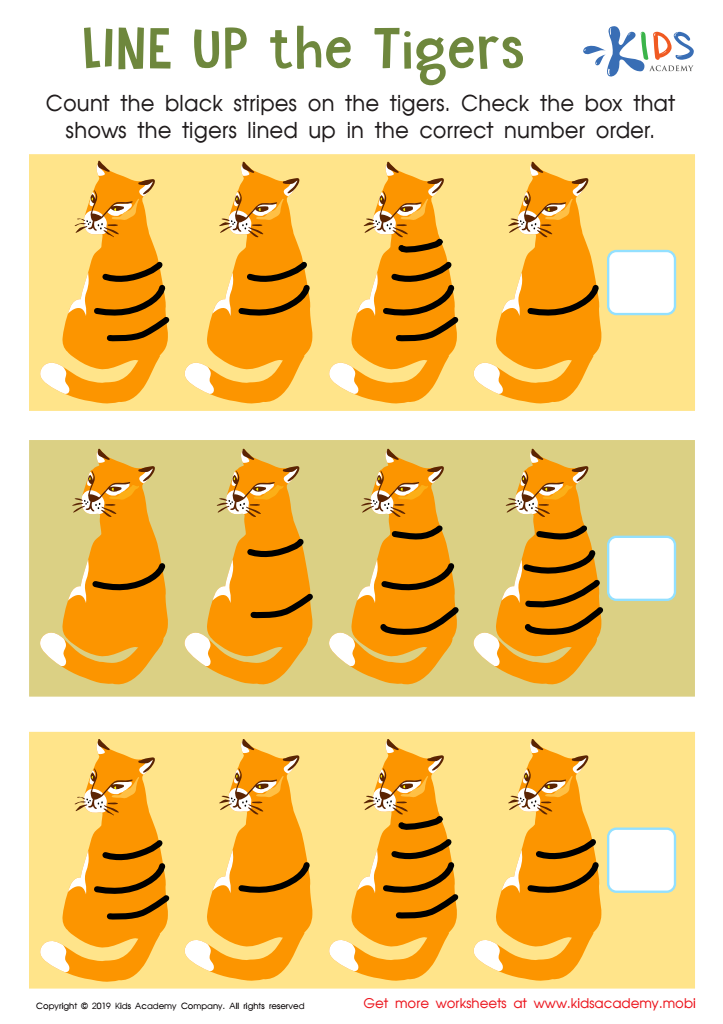
Give your preschoolers the right tools to succeed in math. Show them pictures of animals, then have them count the stripes and check the box that shows the tigers lined up in the right order. This will help them understand and make their journey easier.
Line up the Tigers Worksheet
Worksheet
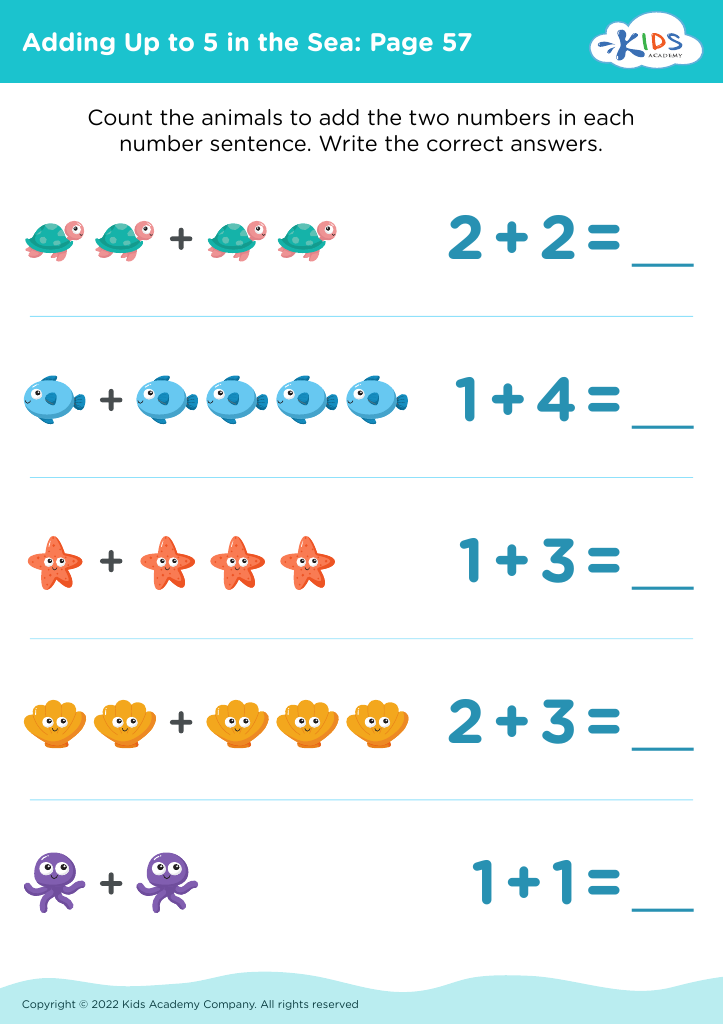
Adding Up to 5 in the Sea: Page 57
Worksheet
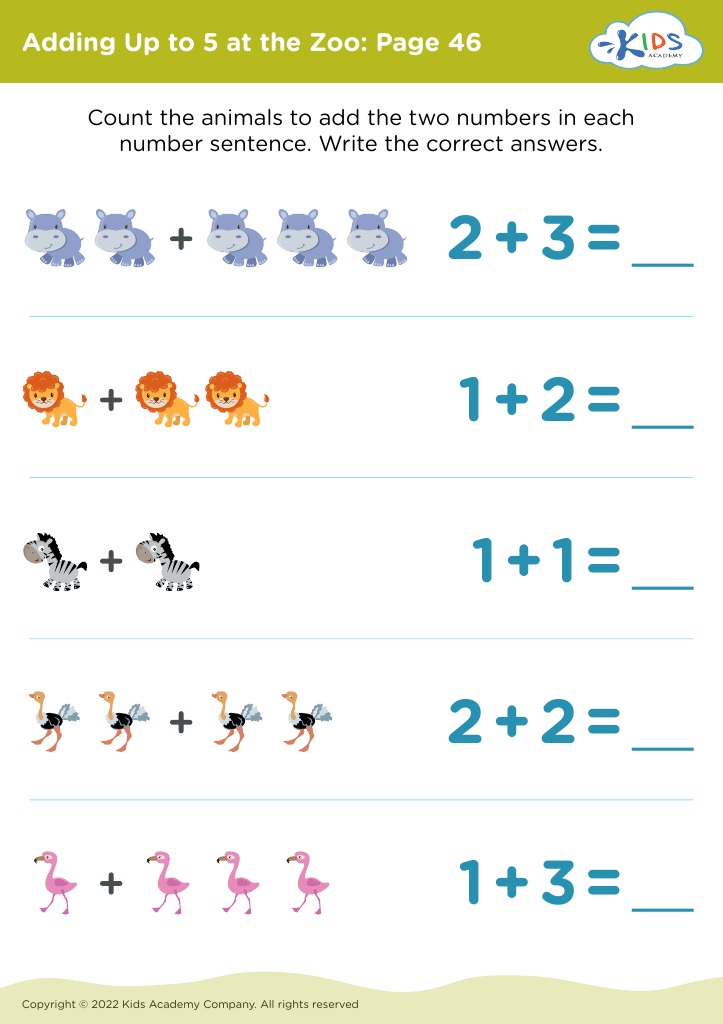
Adding Up to 5 at the Zoo: Page 46
Worksheet
Addition Worksheet PDF for Kindergarten

Star Addition Printable

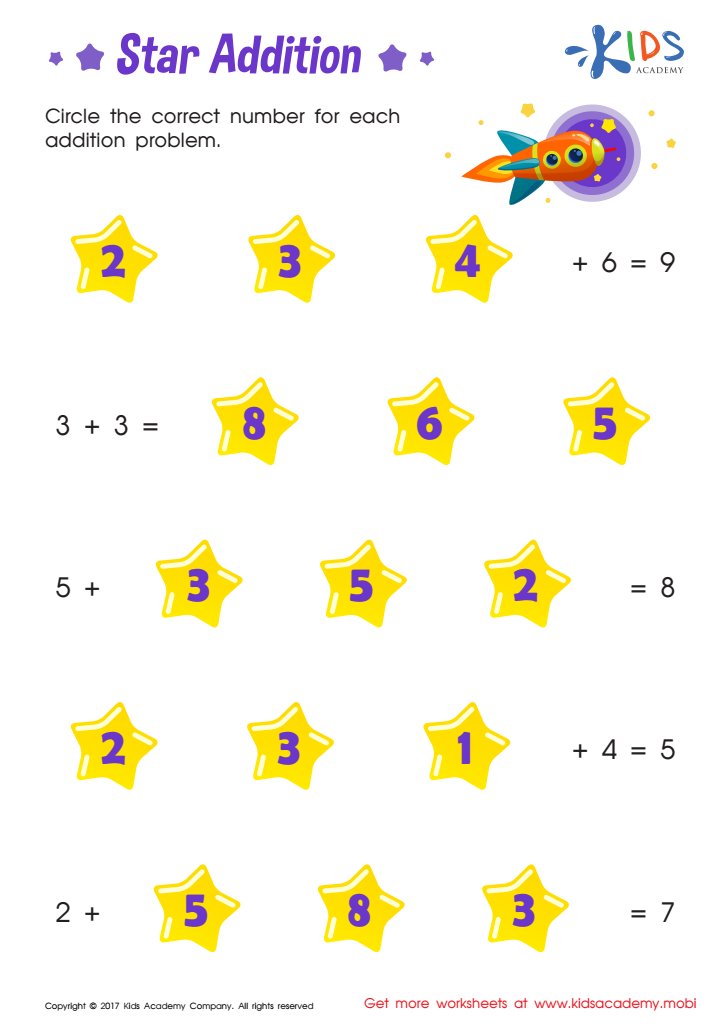
Is your child bored with the school math assignments? For those who love a challenge, this addition worksheet is perfect. It'll help your child practice addition, understand equations and switch between methods. Have them try each answer choice to eliminate wrong ones and for advanced learners, teach them to use subtraction. Let your child have fun while learning more advanced math concepts!
Star Addition Printable
Worksheet
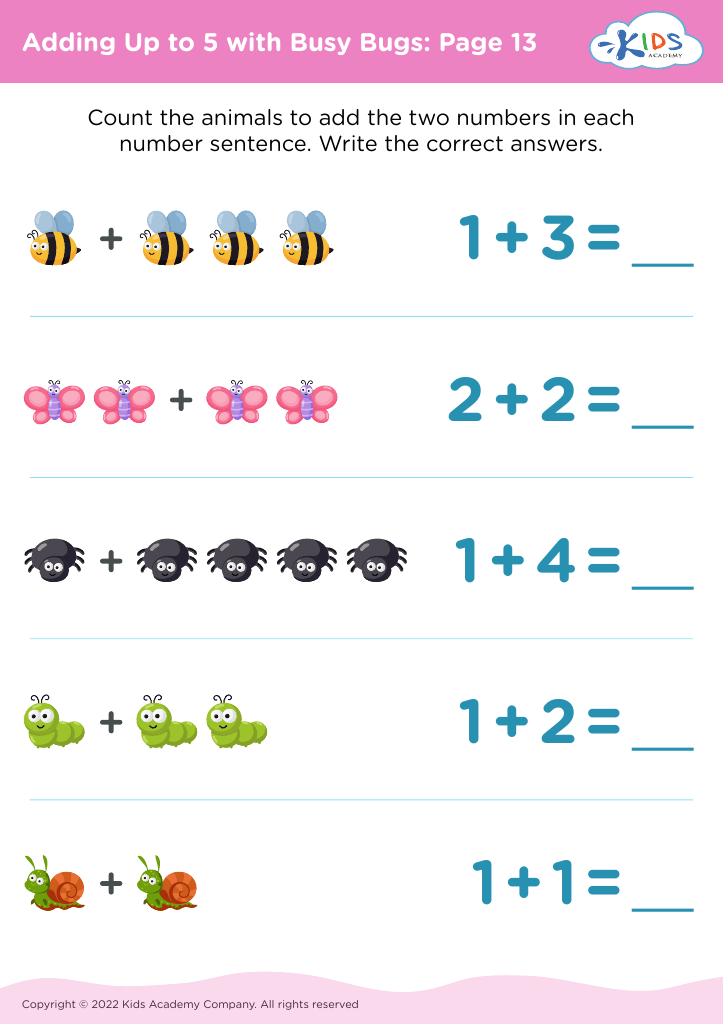
Adding Up to 5 with Busy Bugs: Page 13
Worksheet
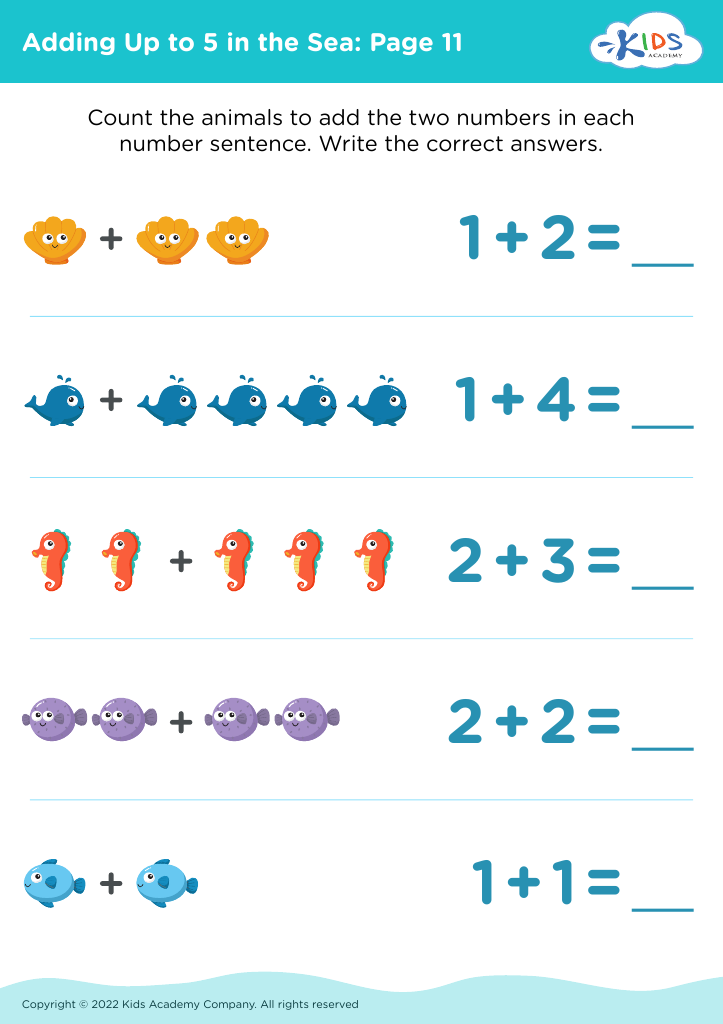
Adding Up to 5 in the Sea: Page 11
Worksheet
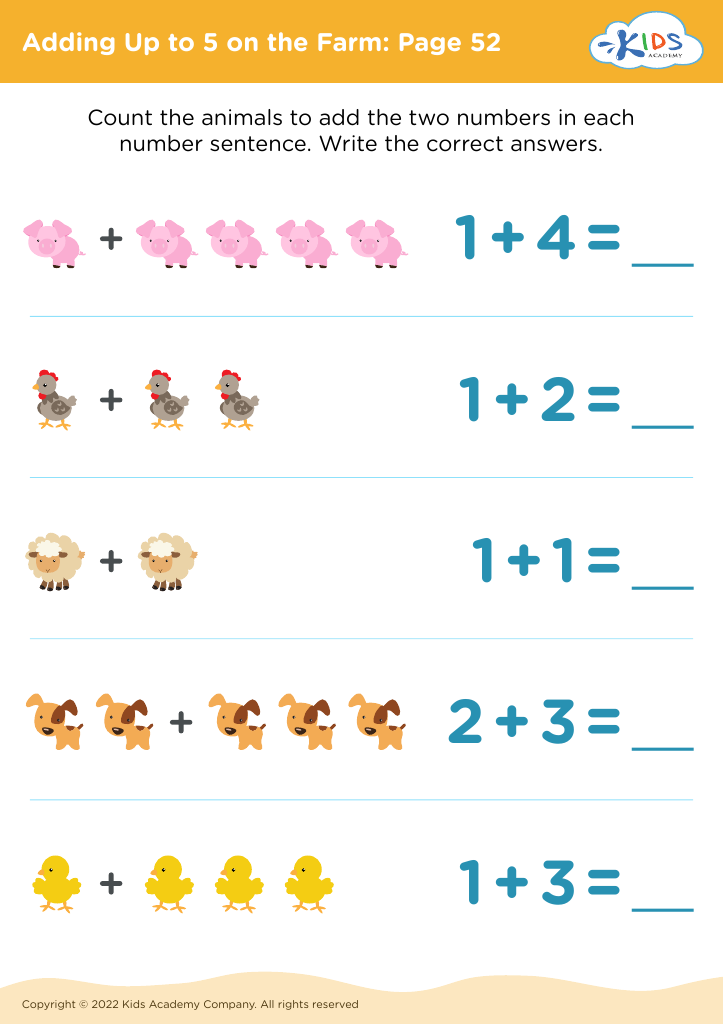
Adding Up to 5 on the Farm: Page 52
Worksheet
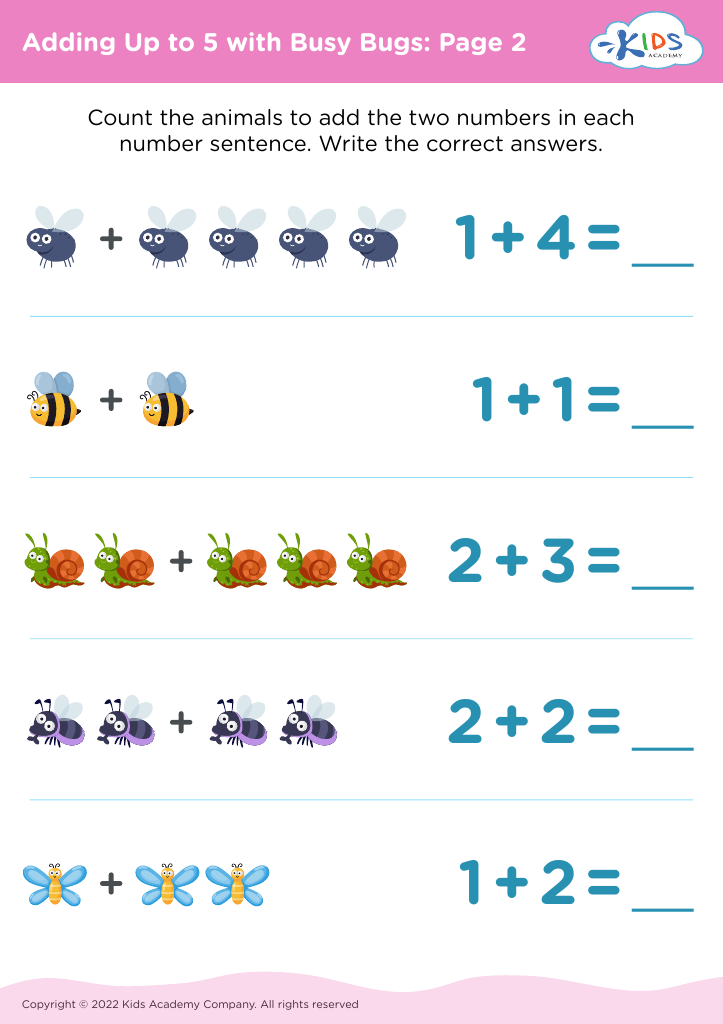
Adding Up to 5 with Busy Bugs: Page 2
Worksheet
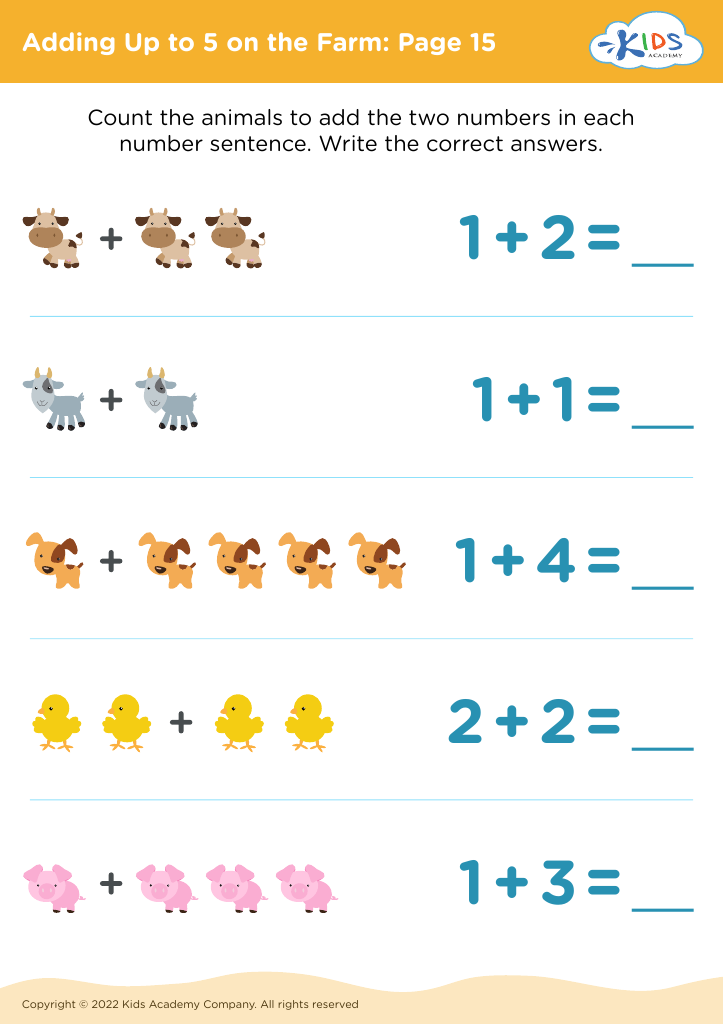
Adding Up to 5 on the Farm: Page 15
Worksheet
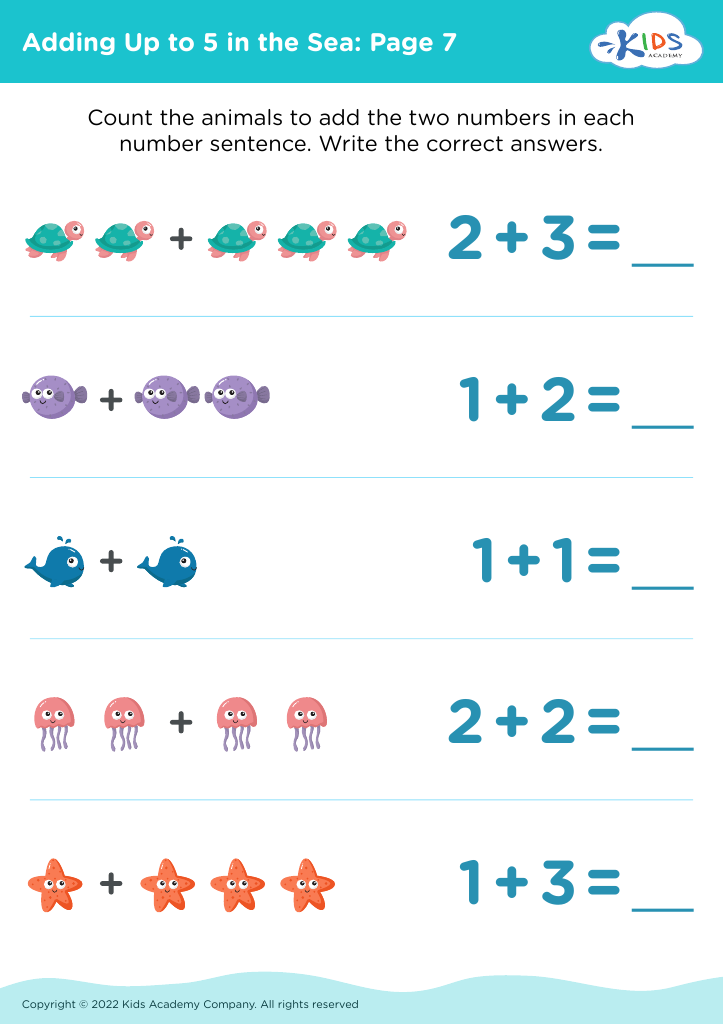
Adding Up to 5 in the Sea: Page 7

Adding Up to 5 in the Sea: Page 7

Adding Up to 5 in the Sea: Page 7
Worksheet
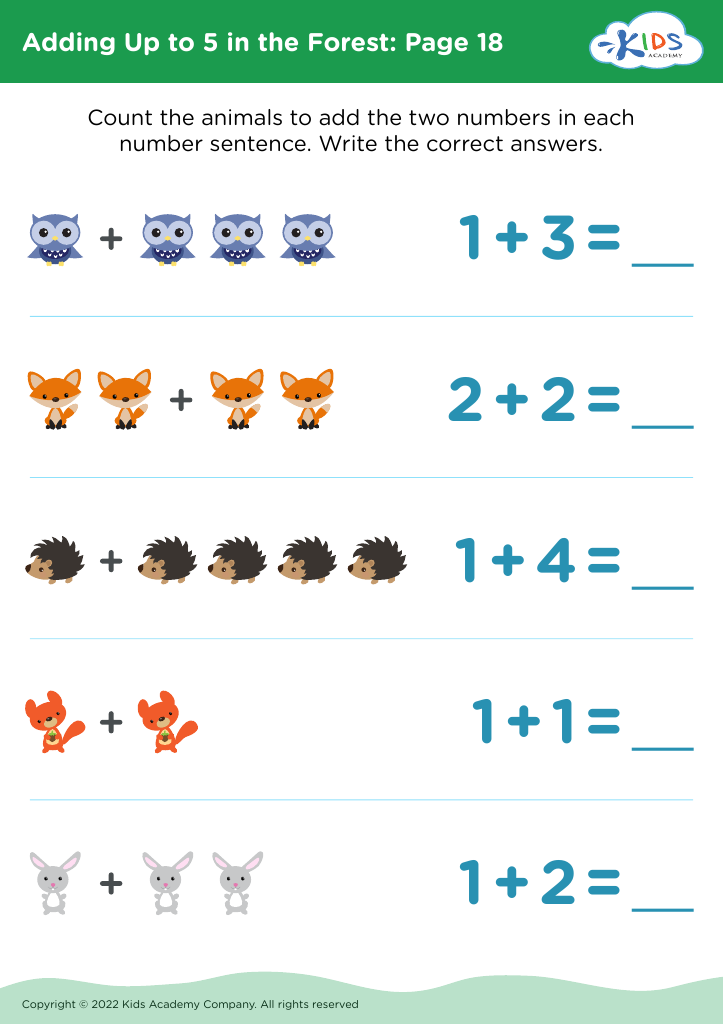
Adding Up to 5 in the Forest: Page 18
Worksheet
Supermarket Math Worksheet
Supermarket Math Worksheet
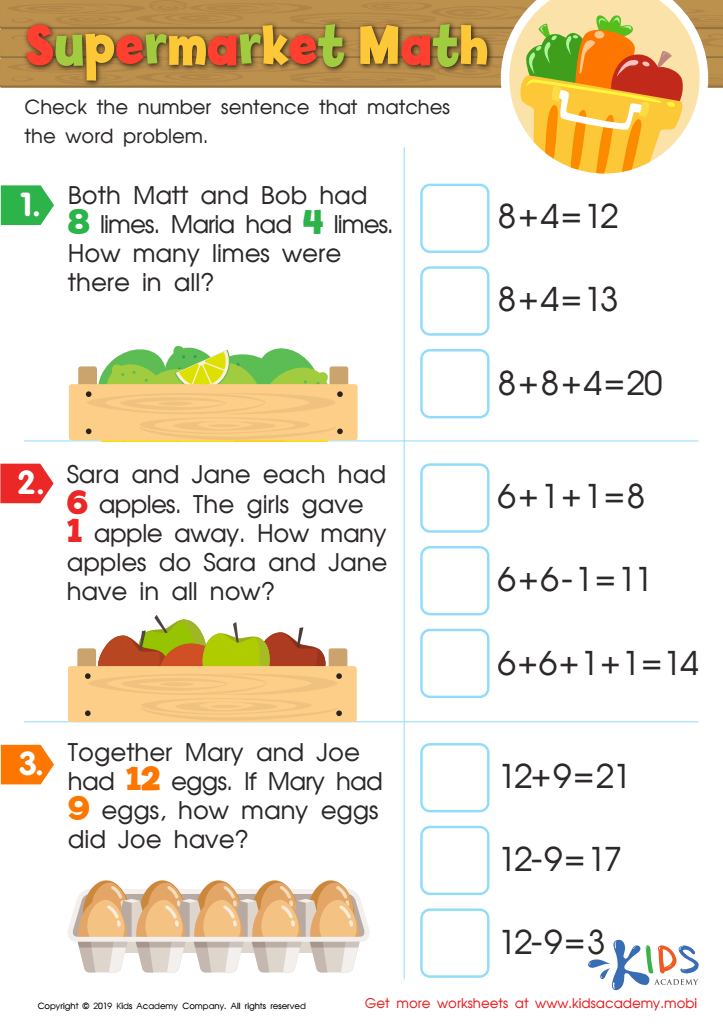
Take your kids to the supermarket and ask what they're looking forward to buying. Help them solve the three questions in the worksheet by interpreting each one into an equation, then choose the right answer.
Supermarket Math Worksheet
Worksheet
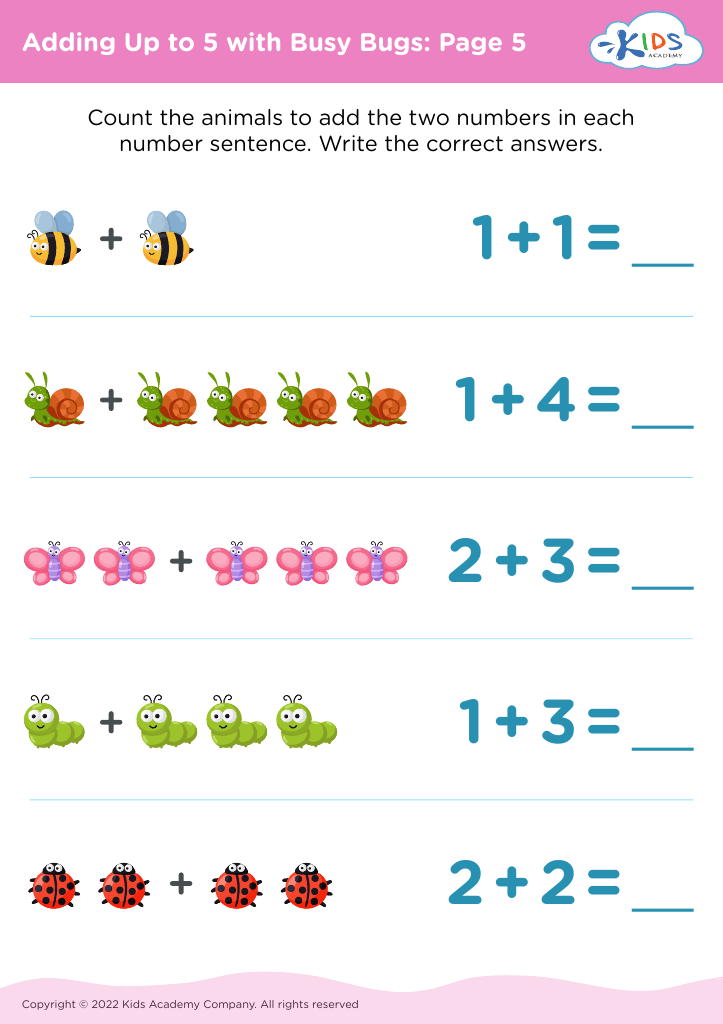
Adding Up to 5 with Busy Bugs: Page 5
Worksheet
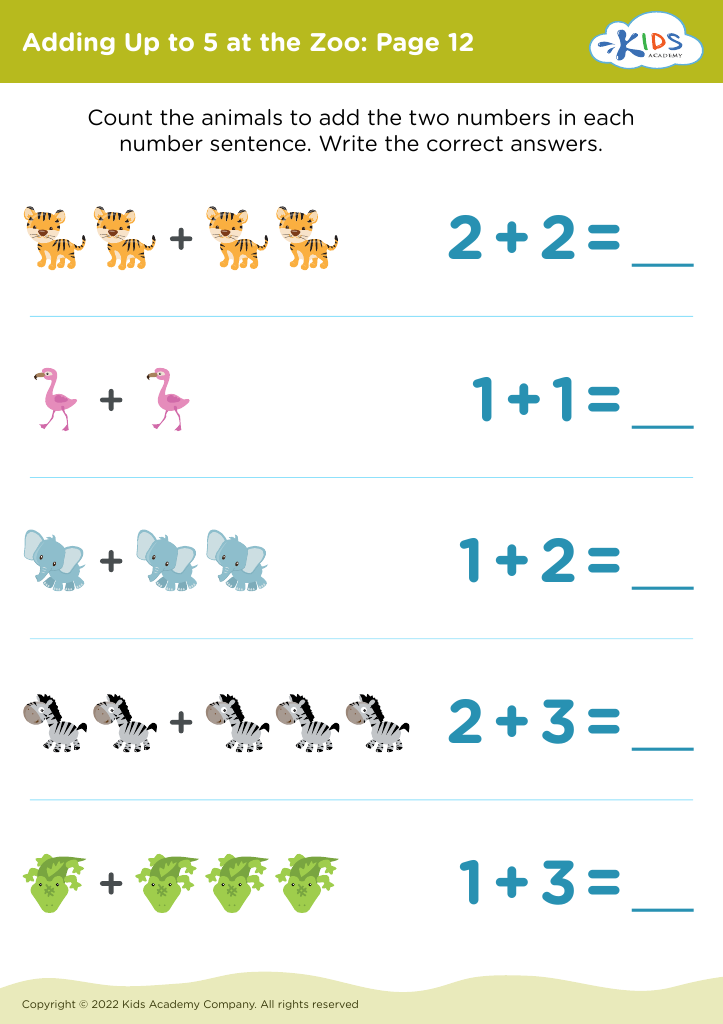
Adding Up to 5 at the Zoo: Page 12
Worksheet
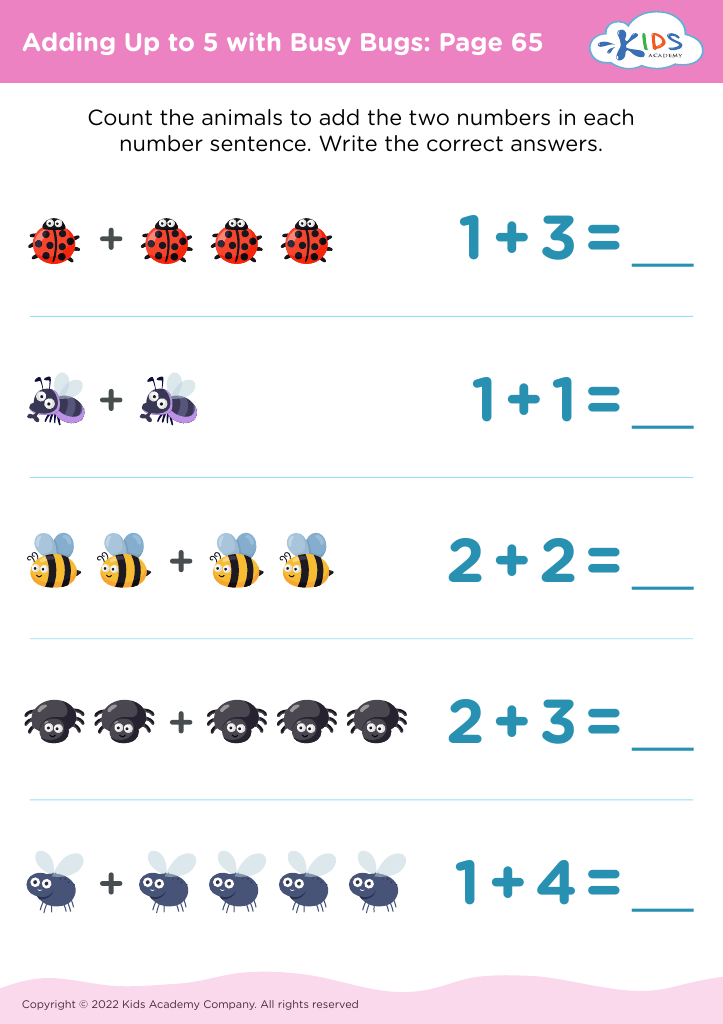
Adding Up to 5 with Busy Bugs: Page 65
Worksheet
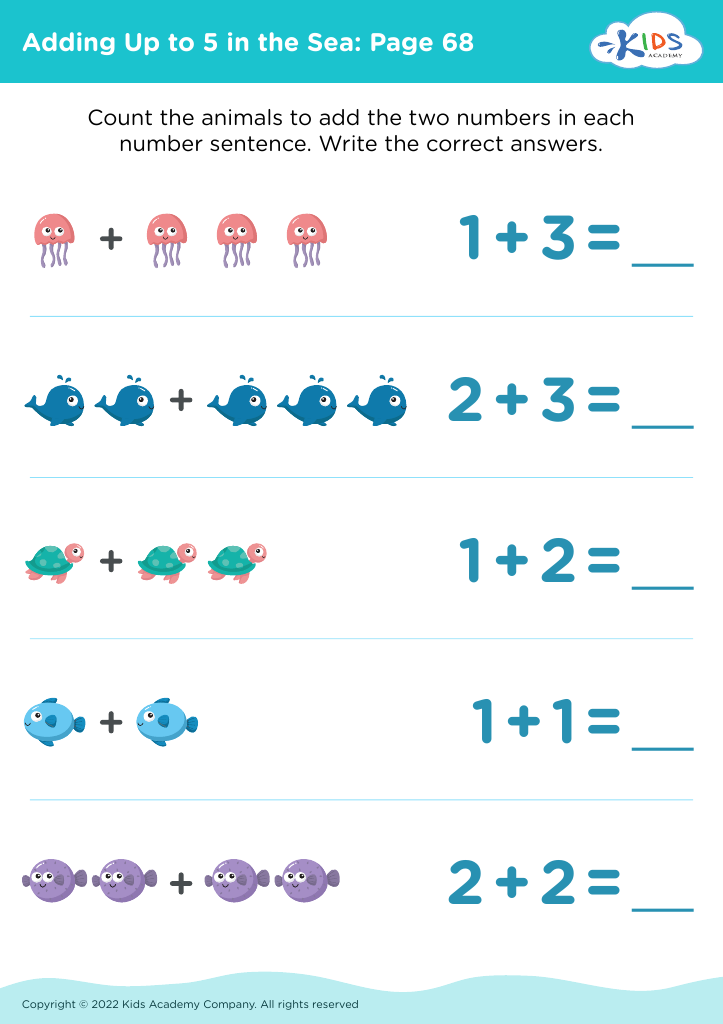
Adding Up to 5 in the Sea: Page 68
Worksheet
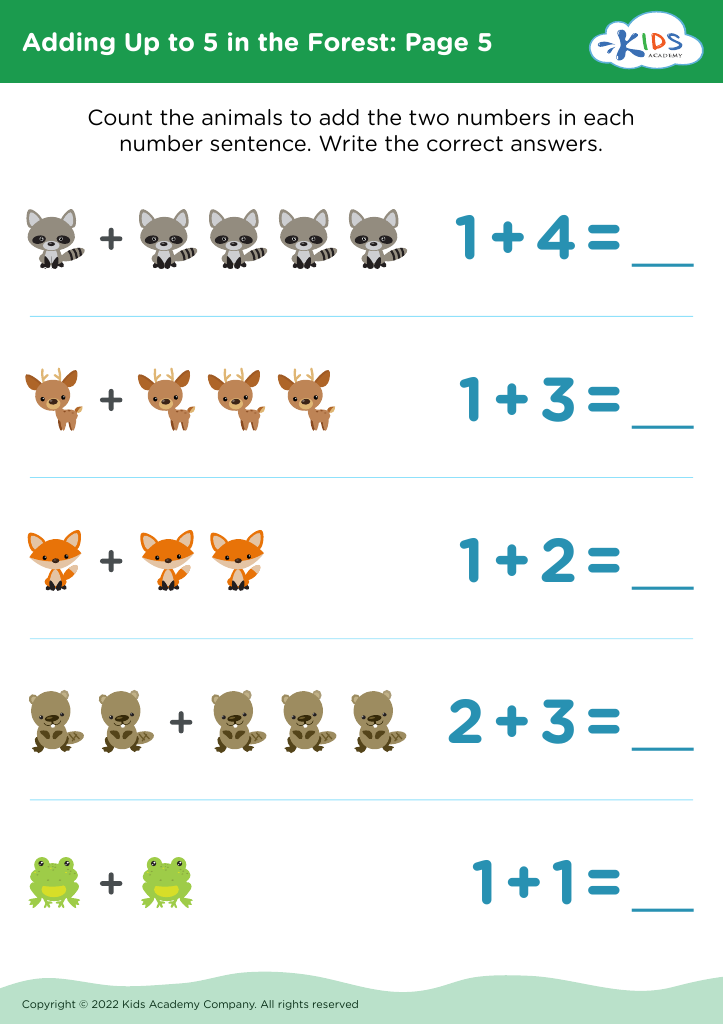
Adding Up to 5 in the Forest: Page 5
Worksheet
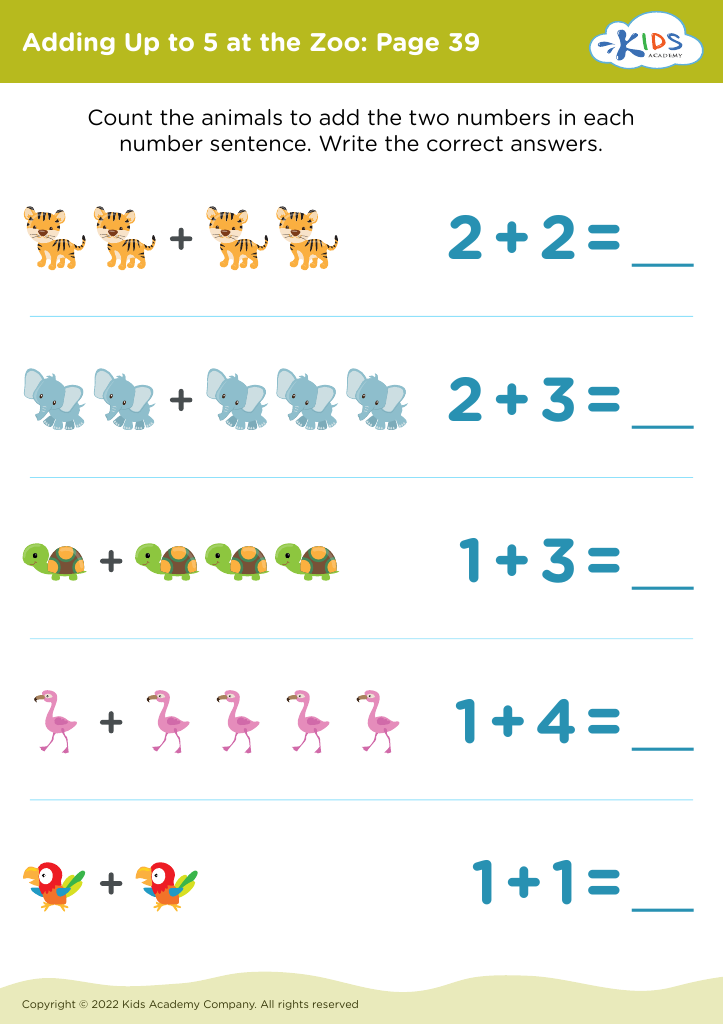
Adding Up to 5 at the Zoo: Page 39
Worksheet
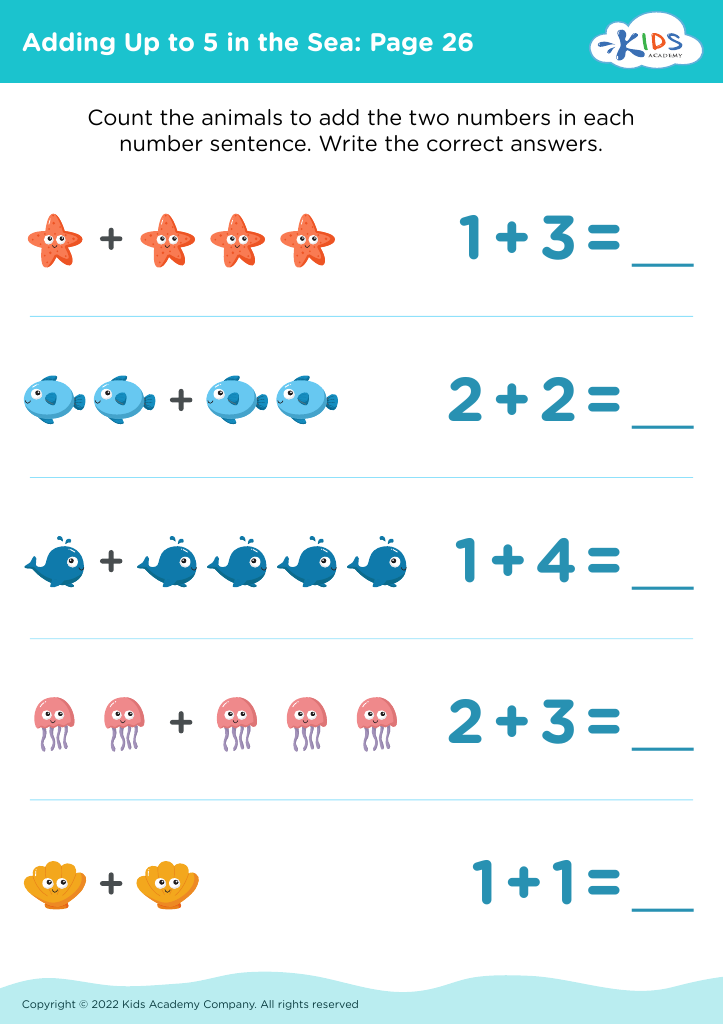
Adding Up to 5 in the Sea: Page 26
Worksheet
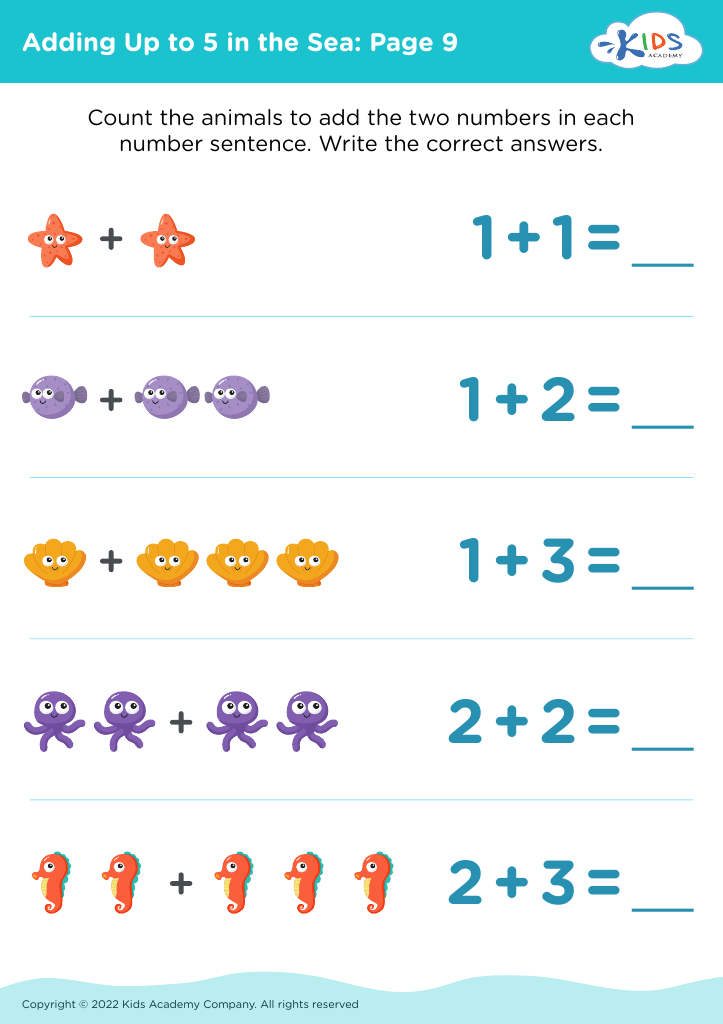
Adding Up to 5 in the Sea: Page 9

Adding Up to 5 in the Sea: Page 9

Adding Up to 5 in the Sea: Page 9
Worksheet


Basic arithmetic addition and subtraction are essential building blocks in the early development of a child's mathematical skills. For children aged 3-4, understanding these concepts goes beyond mere numbers; it fosters critical thinking, problem-solving, and cognitive development. At this age, children are curious and highly receptive to new information, making it an ideal time to introduce foundational math skills.

Early exposure to addition and subtraction helps develop number sense, which is important for future learning. Engaging in simple addition and subtraction activities, whether through games, storytelling, or hands-on toys, enables children to grasp these concepts in a fun and interactive way. This early start can significantly ease their anxiety later on when faced with more complex mathematical concepts in school.

Additionally, basic arithmetic supports the development of fine motor skills through activities such as counting objects or drawing sets. Parents and teachers play a crucial role in fostering mathematical conversations, encouraging children to express their numerical understanding.

Ultimately, caring about basic arithmetic during these formative years equips children with vital skills they will carry throughout their educational journey, empowering them to approach math with confidence and curiosity as they grow.