Logical Reasoning Addition & Subtraction Worksheets for Ages 3-4
5 filtered results
-
From - To
Our "Logical Reasoning Addition & Subtraction Worksheets for Ages 3-4" are designed to spark young minds' interest in mathematics through engaging and educational activities. These worksheets focus on building foundational skills in addition and subtraction, while also enhancing logical thinking and problem-solving abilities. Each colorful and fun sheet encourages children to explore numbers and develop their mathematical reasoning in a playful manner. Ideal for preschool and early kindergarten students, these printable resources make learning math enjoyable and effective. Visit our site to give your child a head start in math with our expertly crafted worksheets!
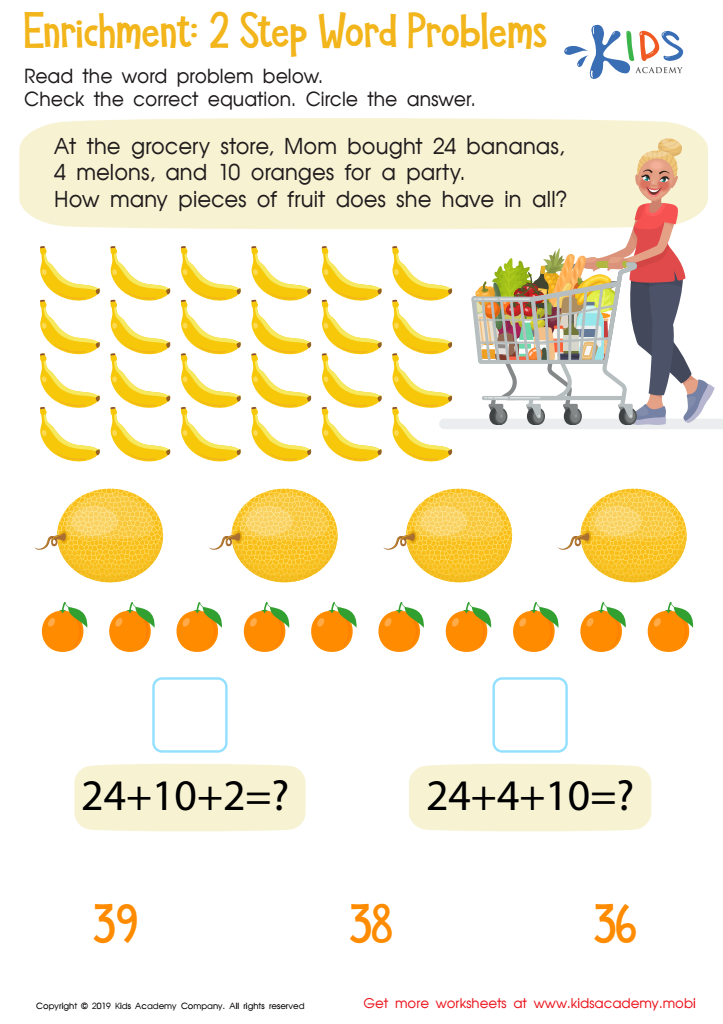
Enrichment -2 Step Word Problems Worksheet
 Assign to My Students
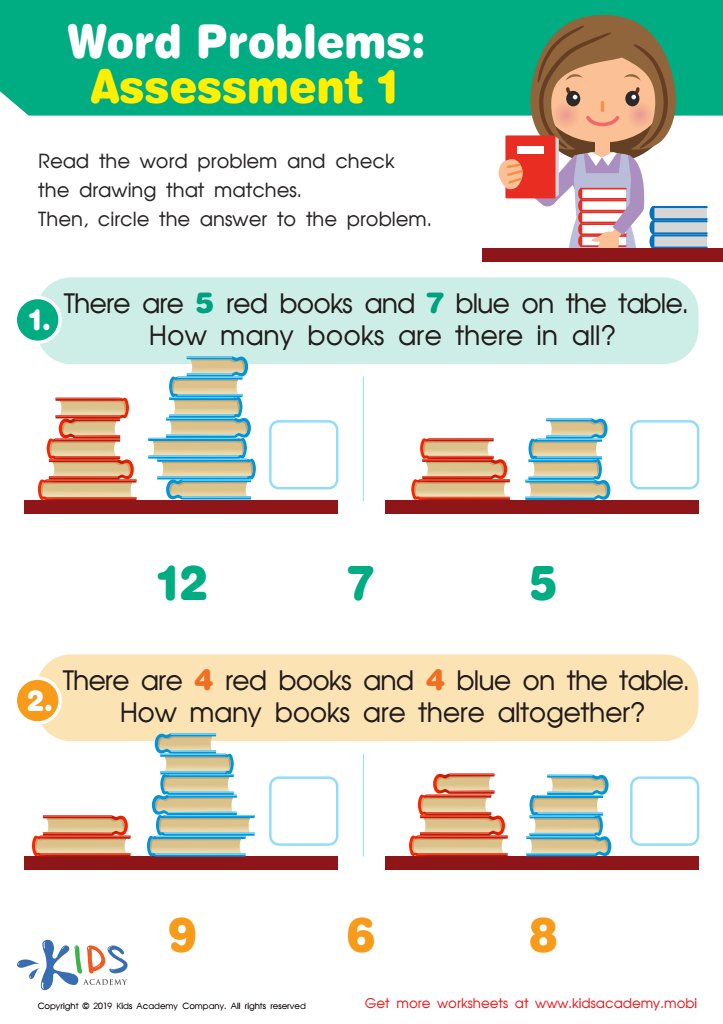
Word Problems: Assessment 1 Worksheet
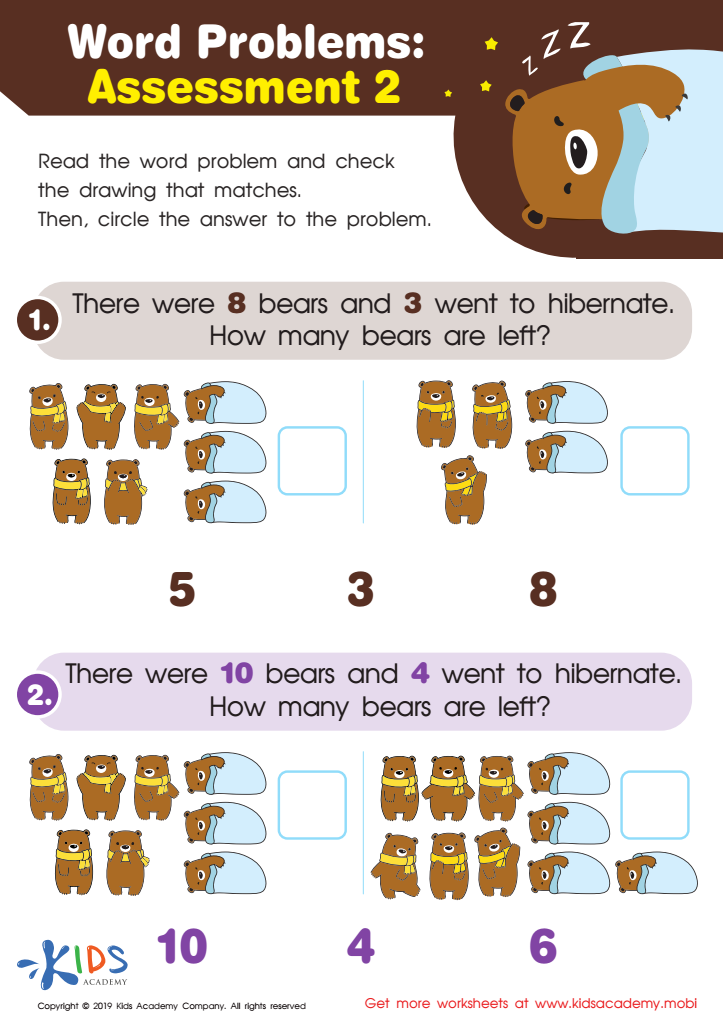
Word Problems: Assessment 2 Worksheet
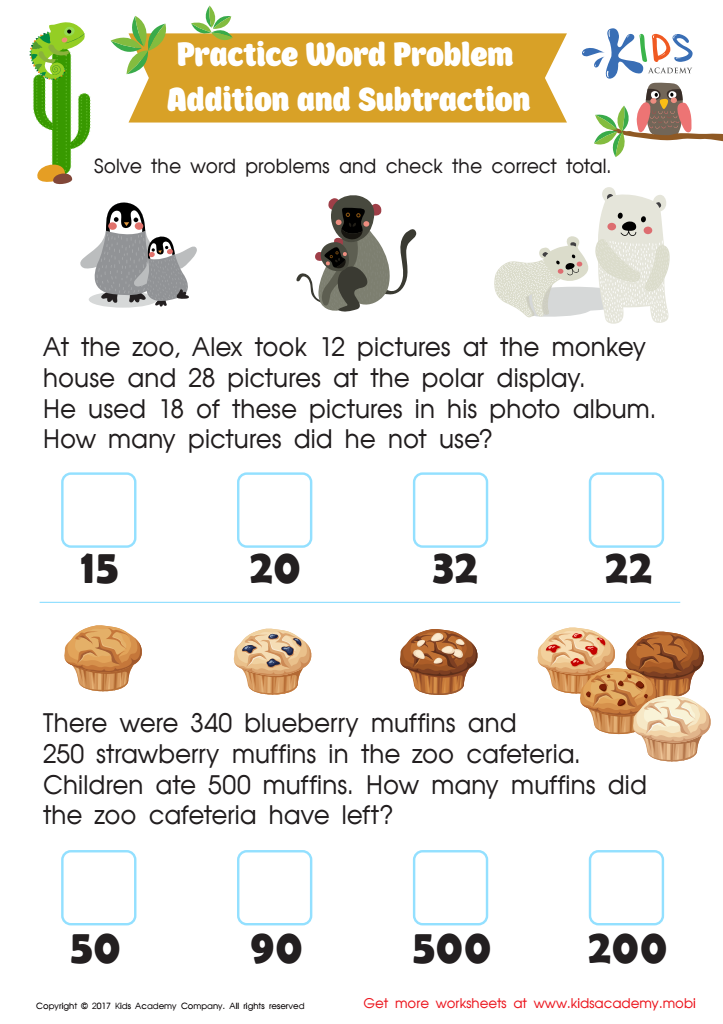
Addition and Subtraction: Word Problems Worksheet
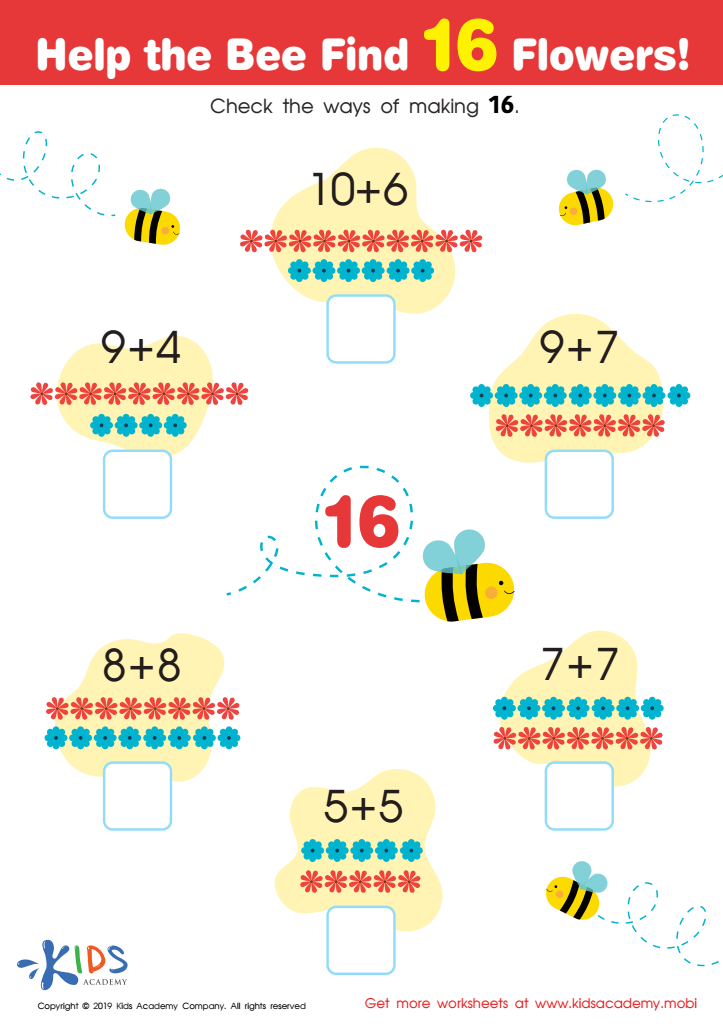
Help the Bee Find 16 Flowers Worksheet








Parents and teachers should care about logical reasoning in addition and subtraction for ages 3-4 because developing these skills early forms a crucial foundation for a child's future academic and life success. Logical reasoning encourages young minds to think critically, solve problems, and make connections between concepts, essential skills in all areas of learning. At this young age, incorporating logical reasoning with addition and subtraction exercises stimulates cognitive development, fostering both numerical recognition and comprehension.
For instance, when children understand that adding increases quantity and subtracting decreases it, they begin grasping basic mathematical principles. Activities like counting objects, using fingers for counting, or playing with simple puzzles help build these crucial skills. These experiences enhance memory, focus, and analytical thinking.
Furthermore, engaging in such activities supports the development of executive functions like planning, organizing, and creating strategies. These are not only invaluable for math but also for reading comprehension and everyday decision-making.
In conclusion, investing time and energy into fostering logical reasoning with addition and subtraction for young children equips them with essential tools for holistic development. It lays the groundwork for higher academic achievement and cultivates lifelong learners capable of adapting and thriving in a complex world.








