Visual Perception Skills Geometry Worksheets for Ages 3-4
3 filtered results
-
From - To
Discover our engaging Visual Perception Skills Geometry Worksheets designed specifically for children ages 3-4. These worksheets help young learners develop essential visual discrimination and spatial awareness skills through fun and interactive activities. Each worksheet features colorful illustrations and age-appropriate exercises that challenge children to identify shapes, sizes, and patterns. Perfect for preschool or at-home learning, our resources encourage creativity and critical thinking while laying a strong foundation in geometry. Help your little ones sharpen their visual perception skills today, making learning an enjoyable and educational experience! Explore our collection and watch them thrive in their early math journey!
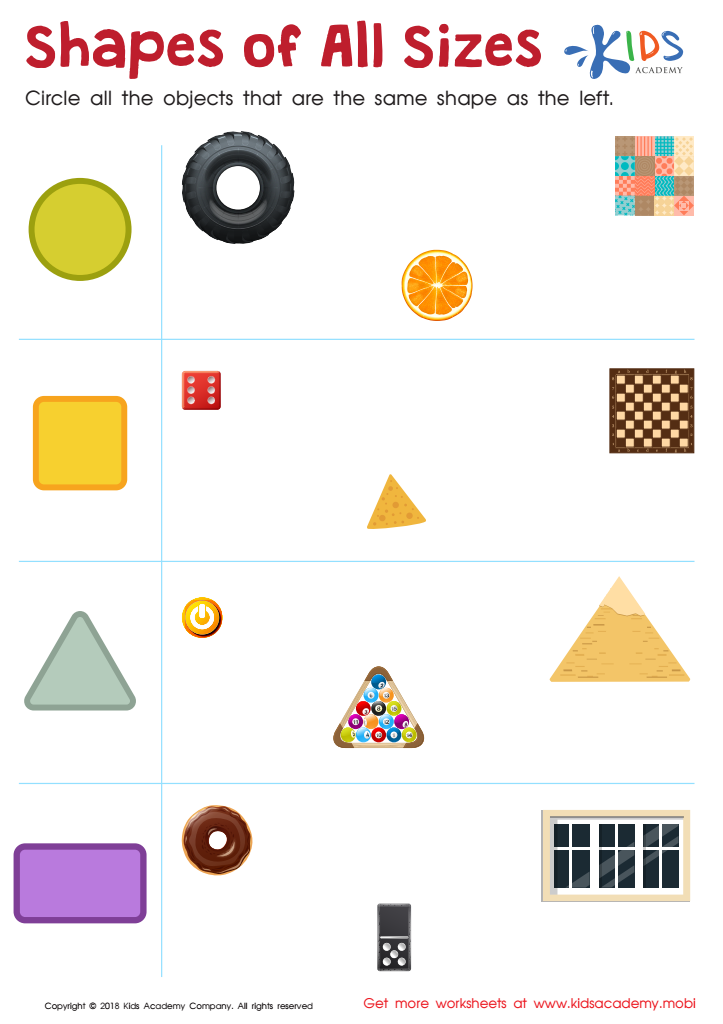
Shapes of All Sizes Worksheet
 Assign to My Students











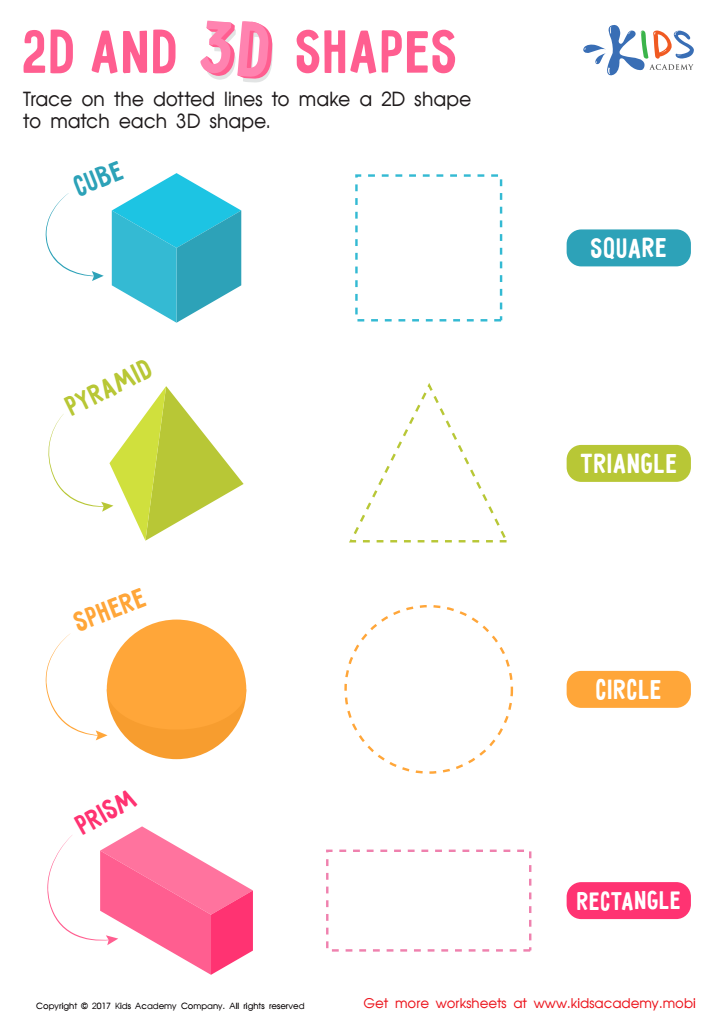
2D and 3D Shapes Worksheet
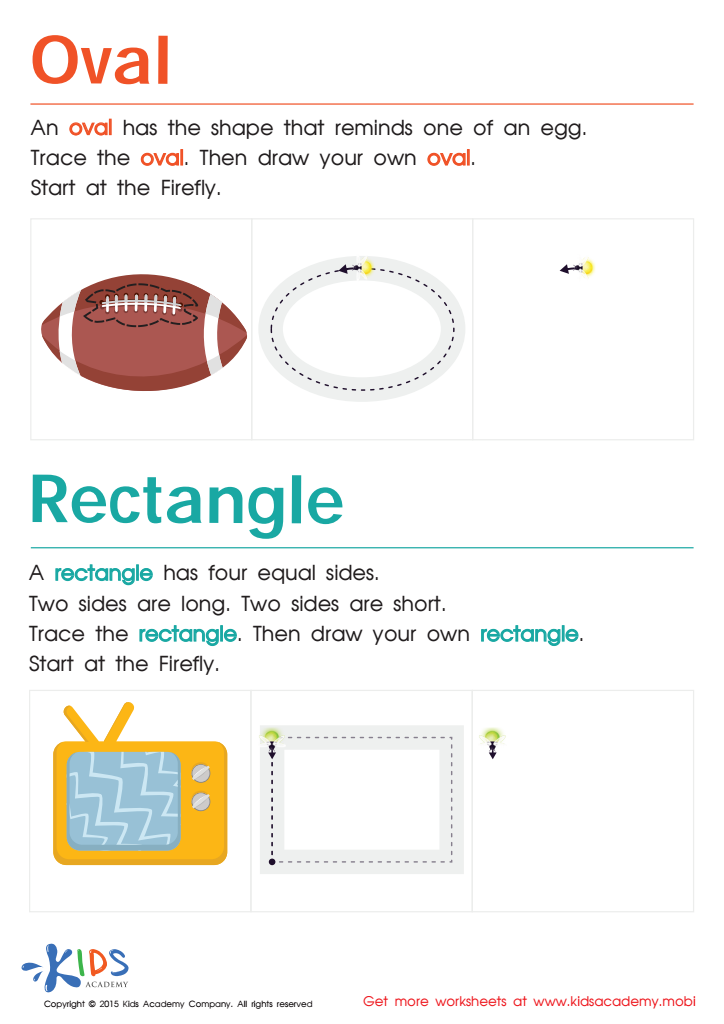
Easy Drawing of Ovals And Rectangles Worksheet








Parents and teachers should care about visual perception skills related to geometry for children aged 3-4 because these skills lay the foundational framework for later mathematical understanding and cognitive development. At this age, children start to explore shapes, sizes, and spatial relationships, which are key concepts in geometry. By nurturing these skills, adults can enhance children’s ability to recognize and manipulate shapes, patterns, and spatial concepts, which are critical for problem-solving and logical reasoning.
Developmentally, engaging with visual perception skills stimulates critical brain areas associated with math and spatial skills, leading to improved academic performance in later years. Moreover, these skills encourage creativity and innovation, allowing children to visualize different possibilities when tackling problems. Through playful activities like sorting shapes, puzzles, and blocks, adults can create a rich learning environment that promotes exploration and discovery.
Additionally, strong visual perception skills foster confidence in approaching mathematical tasks as children grow, easing their transition into more complex geometric concepts. Investing time and resources into enhancing these skills is integral to promoting a well-rounded education and preparing children for future success in math and other interconnected subjects. In essence, building visual perception skills at this early age is vital for lifelong learning.








