Understanding number patterns Math Worksheets for Ages 3-4
3 filtered results
-
From - To
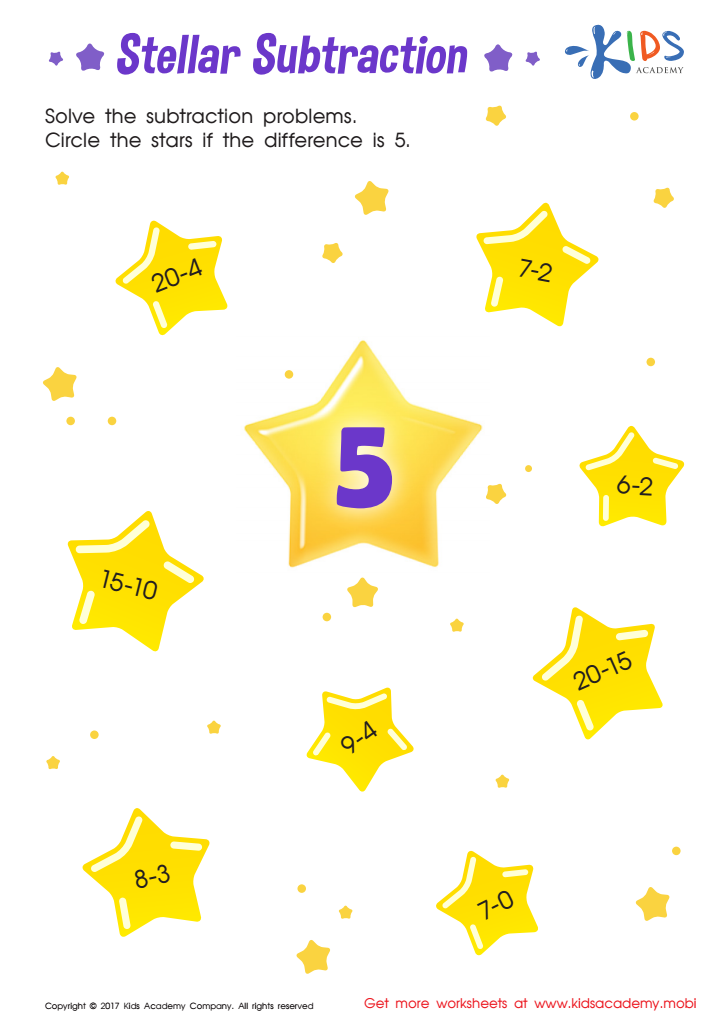
Unlock your child's potential with our "Understanding Number Patterns" math worksheets, specially designed for ages 3-4. These engaging worksheets help little learners recognize, complete, and create basic number patterns through fun and interactive activities. By identifying sequences, children enhance their counting skills and logical thinking. Each sheet features colorful illustrations and simple exercises to keep young minds interested and motivated. Perfect for preschoolers, these worksheets pave the way for future math success, fostering a love for numbers and patterns. Start your child's educational journey today with our expertly crafted resources.
 Assign to My Students
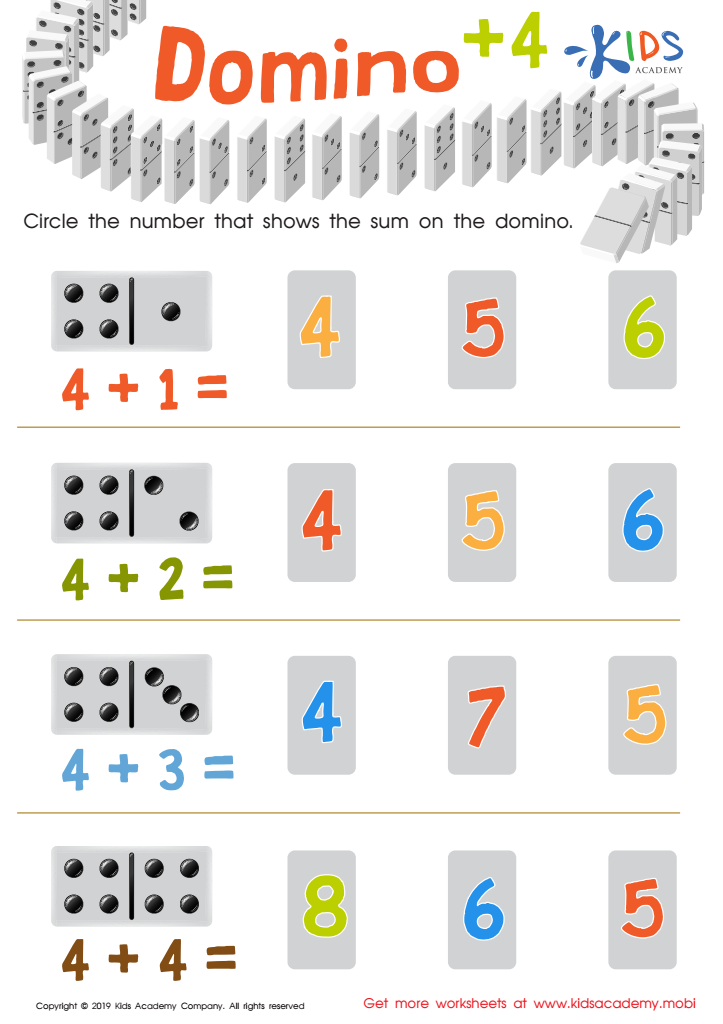
Domino +4 Worksheet
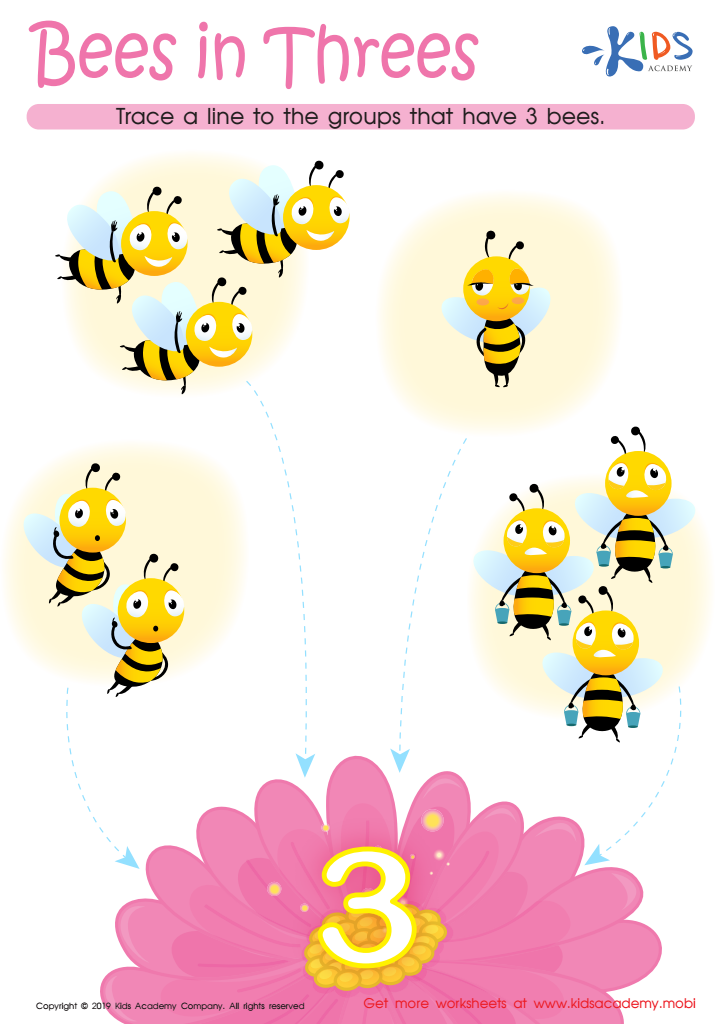
Bees in Threes Worksheet



.jpg)




Understanding number patterns is vital for children aged 3-4 because it lays the groundwork for their future mathematical learning and cognitive development. During these formative years, young children are highly receptive to learning basic concepts through play and interaction. Engaging with number patterns helps them grasp foundational ideas such as sequencing, counting, and recognizing relationships between numbers. These are not just abstract concepts; they translate into practical skills like problem-solving, reasoning, and logical thinking.
For parents and teachers, fostering an appreciation for number patterns can make math less intimidating and more enjoyable for young learners. Integrating number patterns into everyday activities, like counting steps or arranging toys, can turn learning into an accessible, enjoyable game. This approach encourages curiosity and enthusiasm for mathematics, rather than apprehension or fear.
Moreover, early recognition of number patterns enhances children's ability to spot regularities and make predictions, skills essential for subjects beyond math, including science and even language arts. As they grow older, the initial exposure to mathematical concepts will bolster their confidence and competence in tackling more complex tasks. Therefore, prioritizing the understanding of number patterns at this tender age is a critical investment in a child's educational journey and overall cognitive development.








