Cognitive Development Tracing Shapes Worksheets for Ages 3-4
4 filtered results
-
From - To
Enhance your child's cognitive development with our engaging Tracing Shapes Worksheets designed for ages 3-4. These printable resources focus on familiarizing young learners with basic geometric shapes while improving fine motor skills and hand-eye coordination. Each worksheet offers a fun and interactive way to trace shapes, ensuring children grasp spatial awareness and develop essential cognitive abilities. From circles to triangles, kids will have a blast learning as they color and trace diverse shapes. Perfect for pre-school settings or home learning, these worksheets inspire creativity and critical thinking. Dive into an enjoyable educational experience that sets the foundation for future learning!
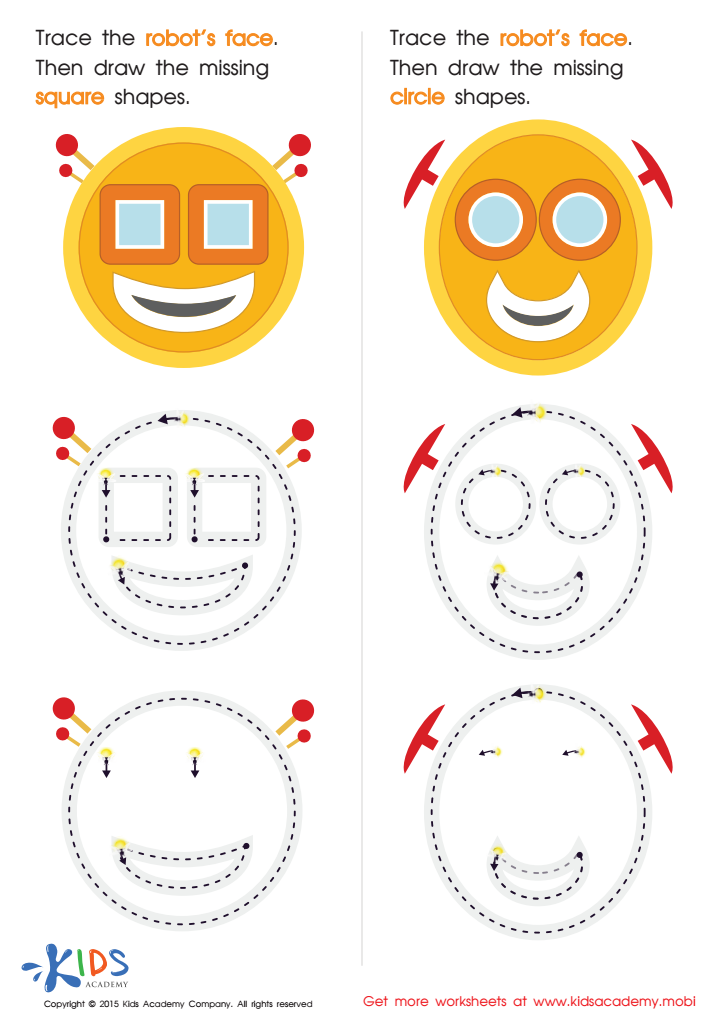
Practicing to Draw Circles And Squares Printable
 Assign to My Students
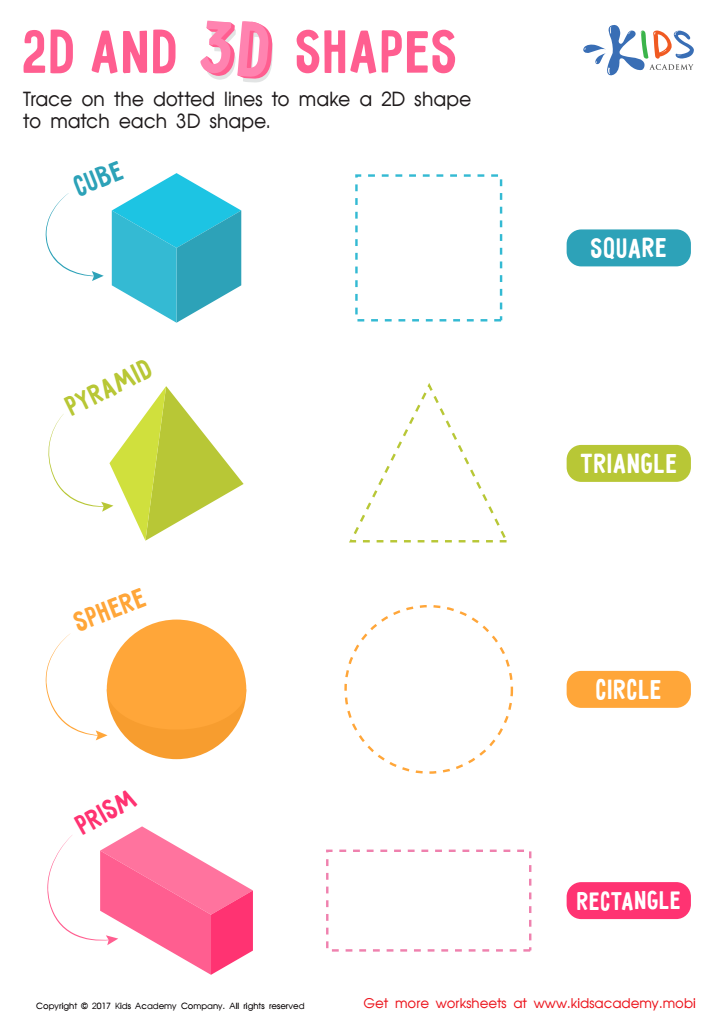
2D and 3D Shapes Worksheet
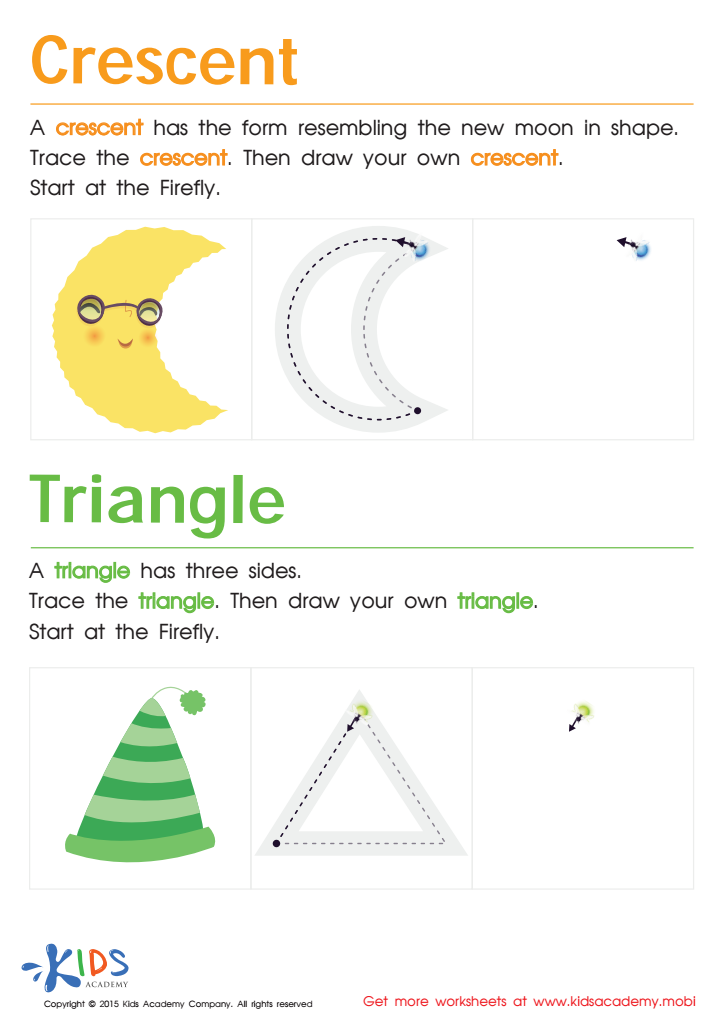
Learning to Draw Crescents And Triangles Worksheet

Matching 2D and 3D Shapes Worksheet








Cognitive development is crucial for children ages 3-4, and tracing shapes serves as an effective tool in this process. Firstly, engaging in shape tracing enhances fine motor skills, which are essential for tasks like writing, drawing, and self-care. These activities help children strengthen the small muscles in their hands and fingers, providing a foundation for later academic success.
Furthermore, tracing shapes aids in visual-spatial skills, which are important for understanding the world around them. Recognizing shapes leads to better problem-solving abilities and spatial awareness, enabling children to navigate their environment with confidence. This hands-on activity also contributes to cognitive skills such as focus, concentration, and memory retention, as children learn to visualize and execute their movements precisely.
Additionally, tracing shapes supports early math skills by introducing concepts like dimensions, symmetry, and geometric relationships. These foundational skills prepare children for more advanced mathematical thinking in the future.
By focusing on cognitive development through tracing shapes, parents and teachers equip children with essential tools for lifelong learning and problem-solving. Investing time in these activities fosters not only academic readiness but also boosts self-esteem and encourages a love for learning at an early age. Ultimately, caring for these developmental milestones sets the stage for future success.