
Reading skills improvement Reading Worksheets for Ages 3-4
3 filtered results
Difficulty Level
Grade
Age
-
From - To
Subject
Activity
Standards
Discover our engaging "Reading Skills Improvement Worksheets" tailored specifically for ages 3-4. Designed to spark a love for reading, these worksheets introduce young learners to foundational literacy skills through fun, interactive activities. Children will develop crucial abilities such as letter recognition, vocabulary enhancement, and phonemic awareness, all while exploring colorful illustrations and captivating themes. Each worksheet promotes early reading readiness in an enjoyable manner, making learning a delightful experience for your little ones. Foster your child's reading confidence and comprehension with our thoughtfully crafted resources. Start their journey into the wonderful world of words today!
Favorites
With answer key
Interactive
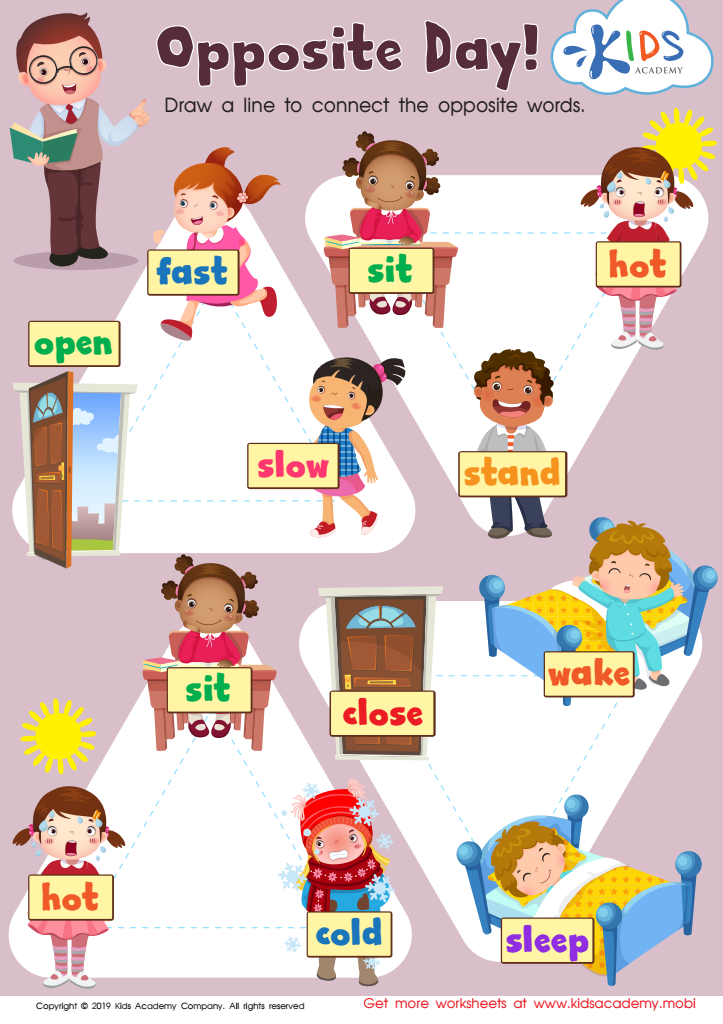
Opposite Day Worksheet
Early learners need to know about opposites to improve their higher-order thinking and critical thinking. This fun worksheet helps them understand the concept, practice opposite words, read high-frequency words and work on fine motor skills. Download the traceable PDF to get started.
 Assign to My Students
Opposite Day Worksheet
Worksheet
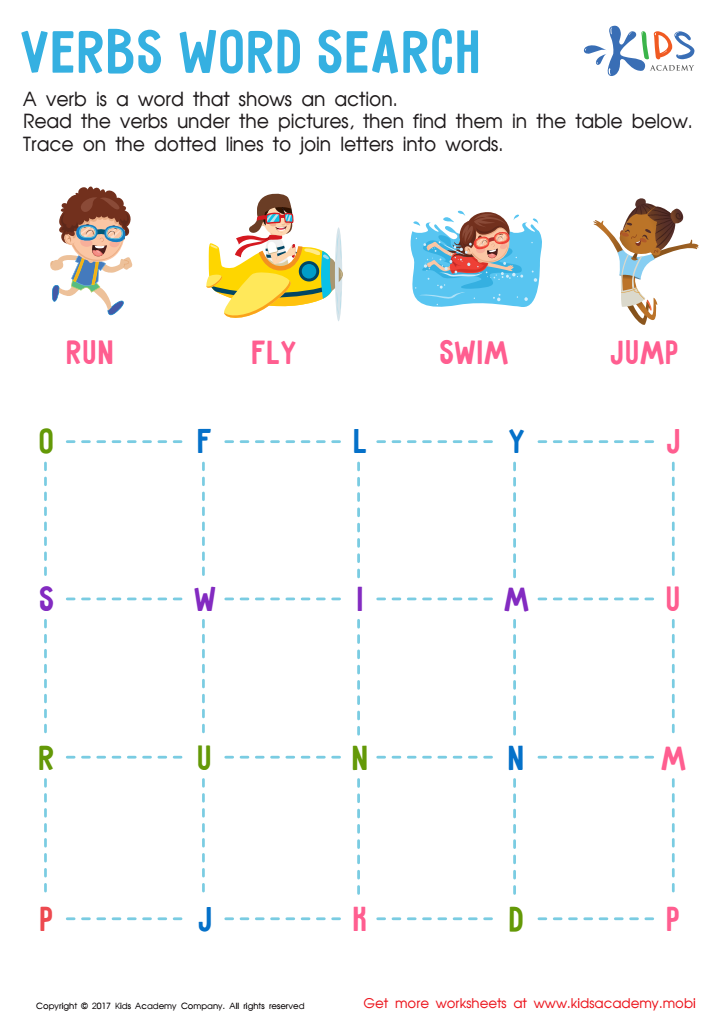
Verbs Word Search Worksheet
Ask your child if they understand the meaning of the word "verb". If not, explain that it's a word that shows an action. Give examples of familiar verbs. Then look at the pictures in the tracing sheet and read the words. Ask your child to follow the dotted lines to find the hidden words. Perfect tool to teach spot and use verbs!
Verbs Word Search Worksheet
Worksheet
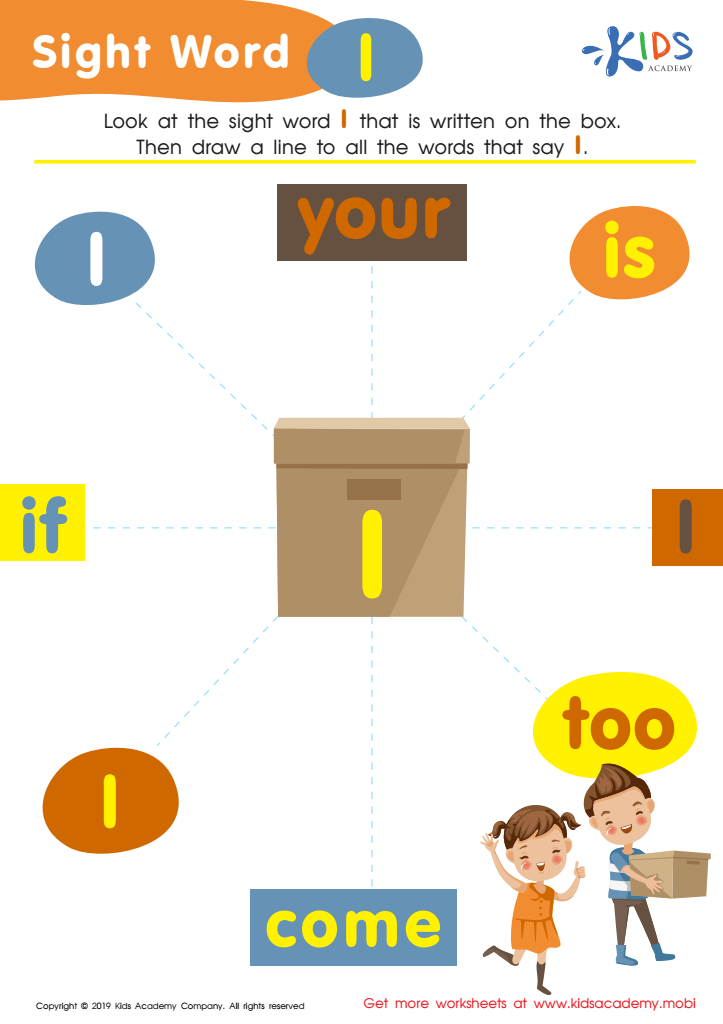
Sight Word I Worksheet
Recognizing the sight word 'I' is harder than it looks! When kids are learning to read, they understand 'I' by its sound, not as a word. This free worksheet gives them practice with 'I', letting them work on their fine motor skills too. They'll join 'I' to shapes containing the same letter. It's a great way to give kids confidence in their reading skills!
Sight Word I Worksheet
Worksheet
Join Kids Academy for Free
Who is primarily going to use this learning content?








Reading skills development in children ages 3-4 is crucial for several reasons. First, early reading proficiency lays the foundation for academic success. During these formative years, children absorb language and literacy skills that will significantly impact their future learning experiences. Engaging with books enhances vocabulary, comprehension, and language structure, essential components for later reading fluency.
Second, reading fosters cognitive and emotional development. As children explore stories, they learn to follow narratives, identify emotions, and develop empathy through characters' experiences. This cognitive engagement strengthens critical thinking skills, encouraging creativity and imagination.
Moreover, reading skills also enhance social interactions. Sharing stories facilitates discussions between children and their parents or caregivers, fostering a deeper connection and encouraging communication. It allows parents and teachers to gauge a child’s interests, providing valuable insights into their learning preferences.
Finally, improved reading skills can inspire a lifelong love for books, nurturing curiosity and encouraging independent exploration. As educators and parents invest time in cultivating these skills at an early age, they empower children not only to excel academically but also to develop as well-rounded individuals ready to navigate an increasingly complex world. Thus, prioritizing reading helps build a solid groundwork for future learning and personal growth.








