
Understanding suffixes Reading Worksheets for Ages 3-4
3 filtered results
Difficulty Level
Grade
Age
-
From - To
Subject
Activity
Standards
Welcome to our "Understanding Suffixes Reading Worksheets" page for ages 3-4! Designed to enhance early literacy skills, these engaging worksheets introduce young learners to the concept of suffixes through fun activities. Children will explore simple words and discover how adding suffixes changes their meaning, promoting vocabulary development. Each worksheet is crafted with vibrant illustrations and age-appropriate tasks that captivate young minds. Parents and educators can use these resources to strengthen reading readiness while inspiring a love for language. Foster your child's learning journey by utilizing our creative and interactive suffixes worksheets today! Dive in for a delightful learning experience!
Favorites
With answer key
Interactive
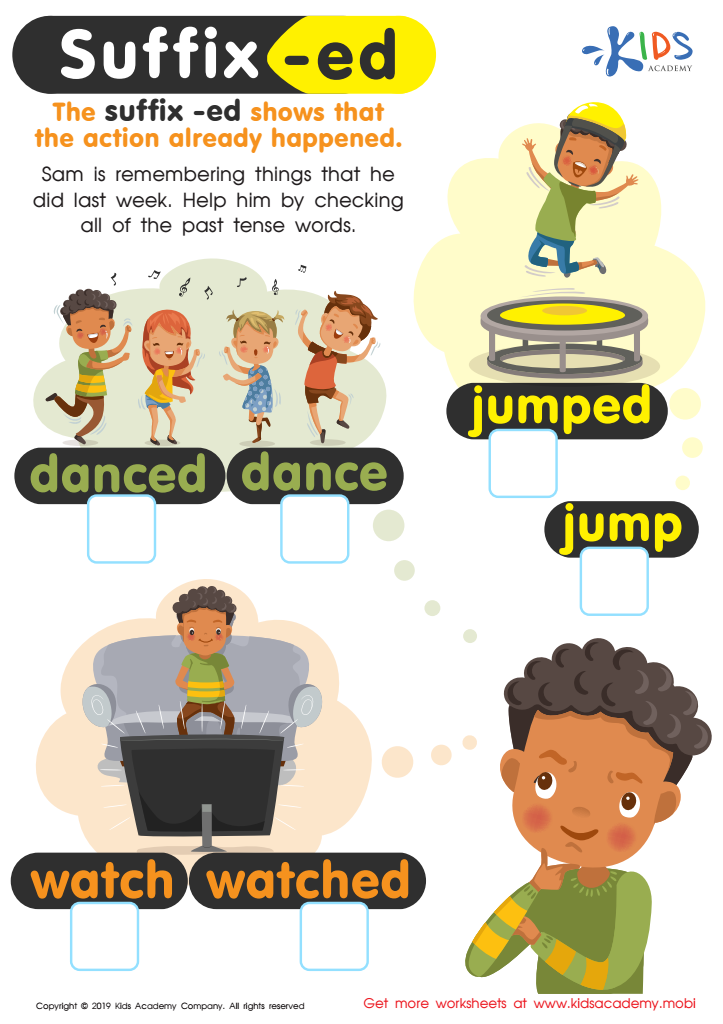
Suffix-ed Worksheet
Ask your kids if they know what suffixes are, and explain they are words added to the end of another word which changes the meaning. This worksheet focuses on the suffix -ed which shows something already happened. Help the kid in the picture find the past tense words.
 Assign to My Students
Suffix-ed Worksheet
Worksheet
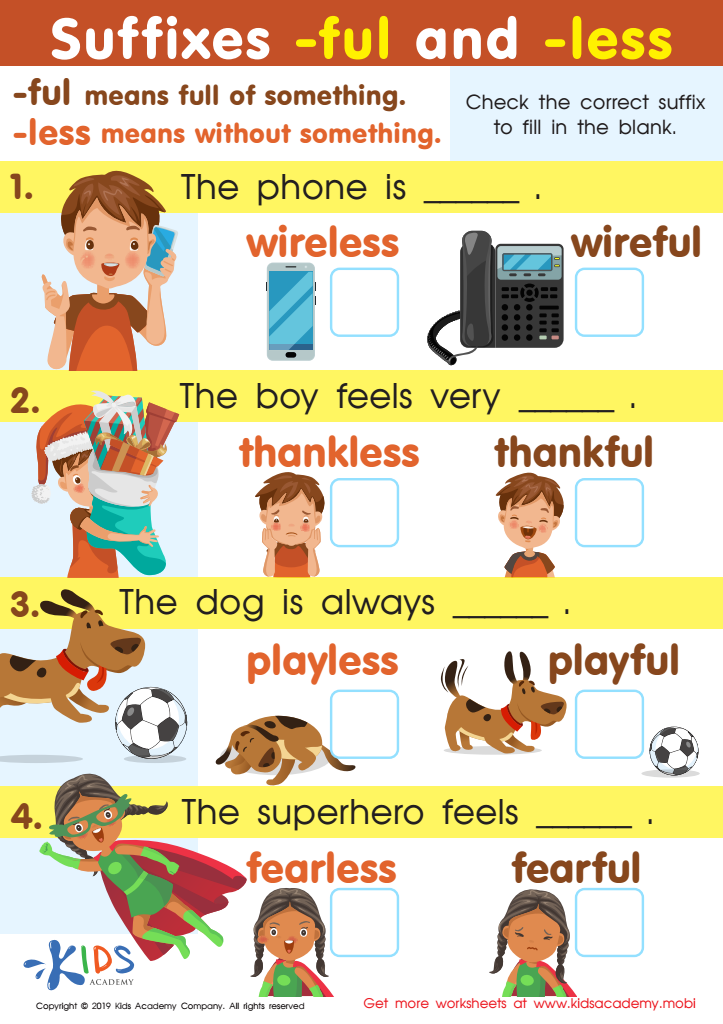
Suffixes –ful and –less Worksheet
Before you start this worksheet, make sure your kids know about suffixes. Explain that they're added to the end of words to change their meaning. In the worksheet, kids will learn about the suffixes –ful and –less. Look at the sentences in the picture with them, and help them to choose the right one for each blank.
Suffixes –ful and –less Worksheet
Worksheet
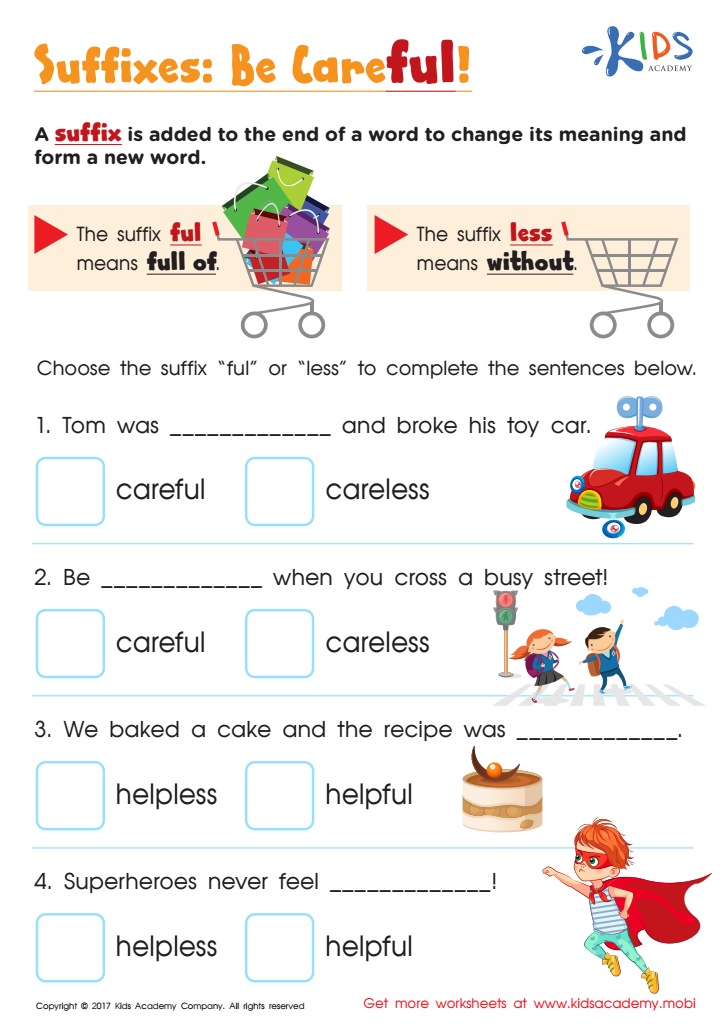
Suffixes Ful and Less Worksheet
Uh oh! Careful and careless might look similar, but have very different meanings. To avoid mix-ups, learn to spot and use the right suffixes. Use this suffixes ful and less worksheet to help your child master common suffixes!
Suffixes Ful and Less Worksheet
Worksheet
Join Kids Academy for Free
Who is primarily going to use this learning content?






Understanding suffixes is crucial for early language development in children aged 3-4, as it forms the foundation for vocabulary expansion and reading comprehension. At this age, children are beginning to recognize that words are constructed of smaller components, and introducing suffixes—like "-ing" and "-ed"—helps them grasp how these additions modify meaning. For instance, learning that “play” changes to “playing” or “played” reveals different time frames or actions.
Parents and teachers should prioritize this knowledge, as it enhances phonemic awareness, critical for reading fluency. By understanding suffixes, children can decode new words more confidently, fostering independence in their reading journey. Additionally, these skills support cognitive development, allowing young learners to categorize and synthesize information in richer ways.
Moreover, discussions around suffixes can motivate curiosity and creativity in language use, encouraging children to experiment with words aloud. Engaging with this facet of language through playful activities or games solidifies learning while promoting a passion for reading. Ultimately, teaching children about suffixes cultivates informed readers and effective communicators, laying the groundwork for their academic success in later years. Prioritizing this aspect of language at such a formative stage empowers children to thrive.








